We left Buenos Aires on a midnight bus from Retiro station. Our first experience on the luxury buses of Argentina we had heard so much about. The station was huge, with over 70 departure gates for internal destinations and more for international trips. And it was busy at this time, people coming and going, restaurants open as well as most of the stores. Our bus was two levels (as are most long distance buses) and our seats leaned far back and had foot rests that folded down from the seat in front. We were given bottled water and a snack bag, and took off into the dark.

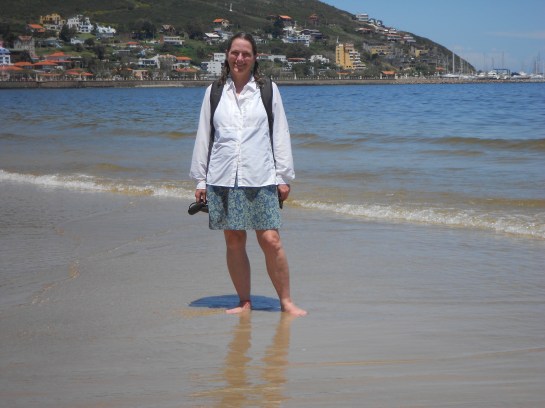
We arrived in Monte Hermosa at 9 in the morning on a Tuesday. The little bus station there was empty except for two attendants who gave us directions to our hotel. The morning was clear and sunny.  We put on our packs and walked into town. Monte is a sleepy little beach town on the Atlantic coast between glittery Mar del Plata and gritty Bahia Blanca. Facing south, the sun both rises from and sets into the ocean. Several kilometers of boardwalk lines the broad sandy beach, which was empty for the first three days we were there. Mike had found us the “Petit Hotel”, an older, 2 story spot right on the beachfront. We were the only guests when we first arrived. We had the best room of the place- a huge space with three beds, a kitchenette, and a large balcony overlooking the beach. It was the hammock that won my heart. We decided right then to stay 6 days instead of three.

Highlights of our stay in Monte included a five km walk down the beach to fossil beds in the sand revealed in low tide. We went there the second day at the beginning of a big storm, returning to the hotel in the teeth of the wind just before the lightning and rain. On our last day we climbed the 130 steps of an iron spiral staircase of the lighthouse at the east end of the beach.

The weekend brought thousands of Argentine visitors to town for the 6th annual Festival of Colectividades. These are societies of different ethnic or national origins representing the various groups of immigrants to Argentina. Dressed in typical costumes, each colectividad performed dances and music on a stage set up on a city street both Saturday and Sunday evenings. A court of food booths served food from various countries. The streets filled with people, traffic, laughter. The beach filled with umbrellas, fishermen, games played in the sand. Our hotel was host to the Asturiano colectividad. Tears came to my eyes to hear drums and gaitas being practiced beside the ocean.

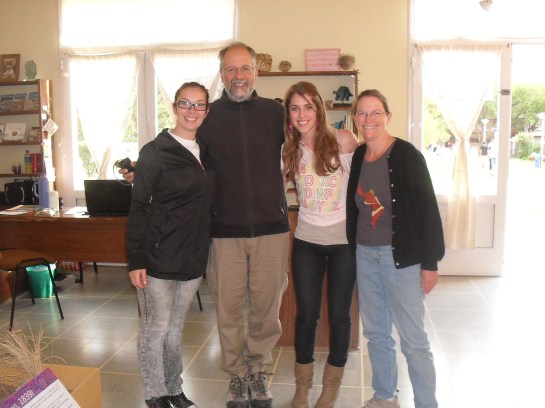
But undoubtedly our most memorable experience was making friends with Paz and Lucrecia who staffed the museum of natural history. It was they who sent us adventuring to the fossil beds and lighthouse, and we visited them almost every day at the museum, sharing mate and English lessons. We miss them already.

We had heard about the beaches of Uruguay for a while, and we wanted to see them, and to be on them, before heading south into Southern Argentina. More than anything, we wanted a break from the big city, a place and time where we could just sit and relax and reflect. Our Spanish teacher Nancy told us about a place in Uruguay called Cabo Polonio. From Buenos  Aires, you take a ferry across the Río de la Plata to Montevideo, then you can travel by bus up the coast. She said that it was near the Brazilian border, that it was very simple and basic, small and quiet, and a “hippie place.” That was enough for us. We googled it, got in email contact with a place called Posada Cañada, and reserved a room.

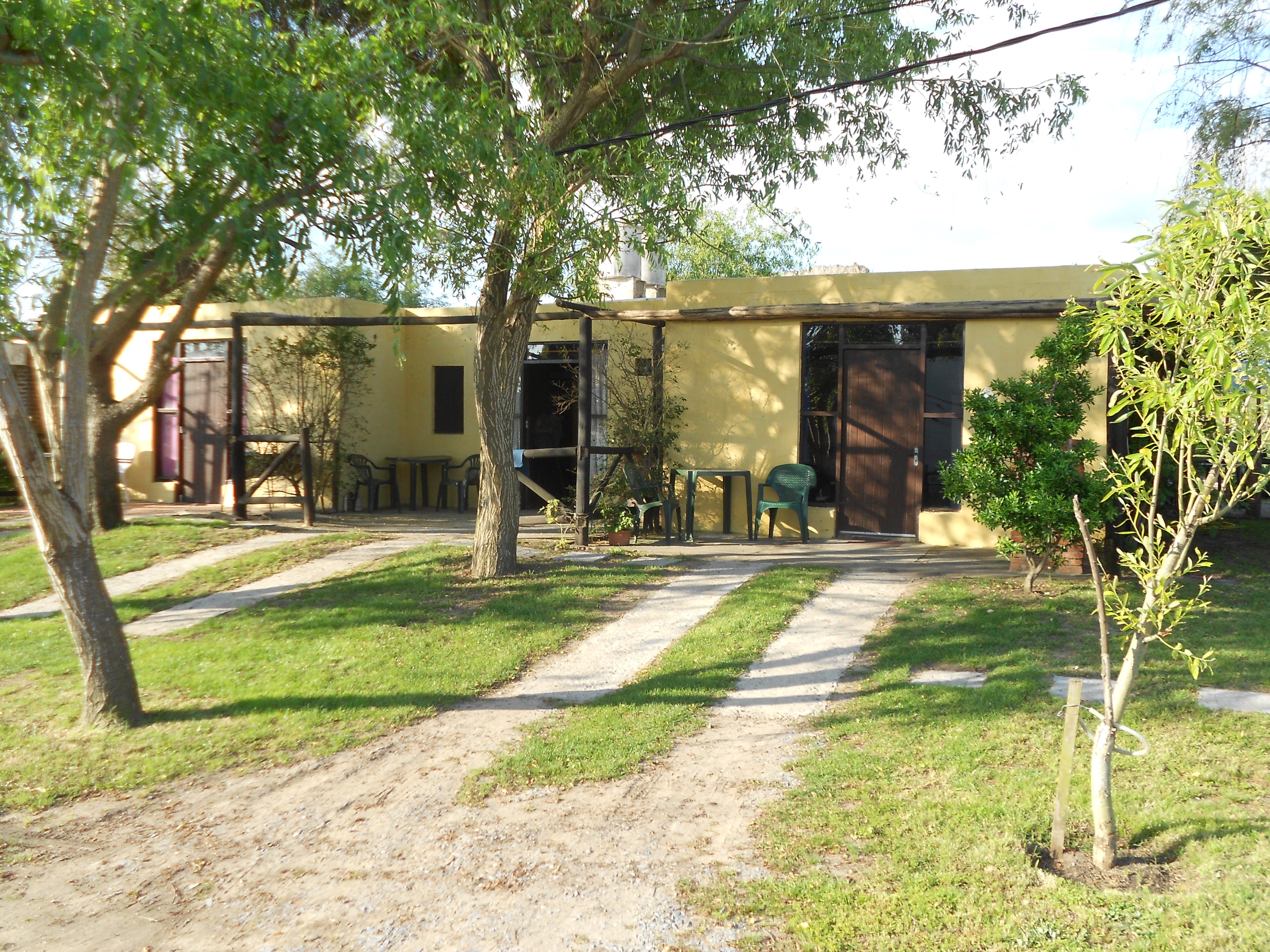
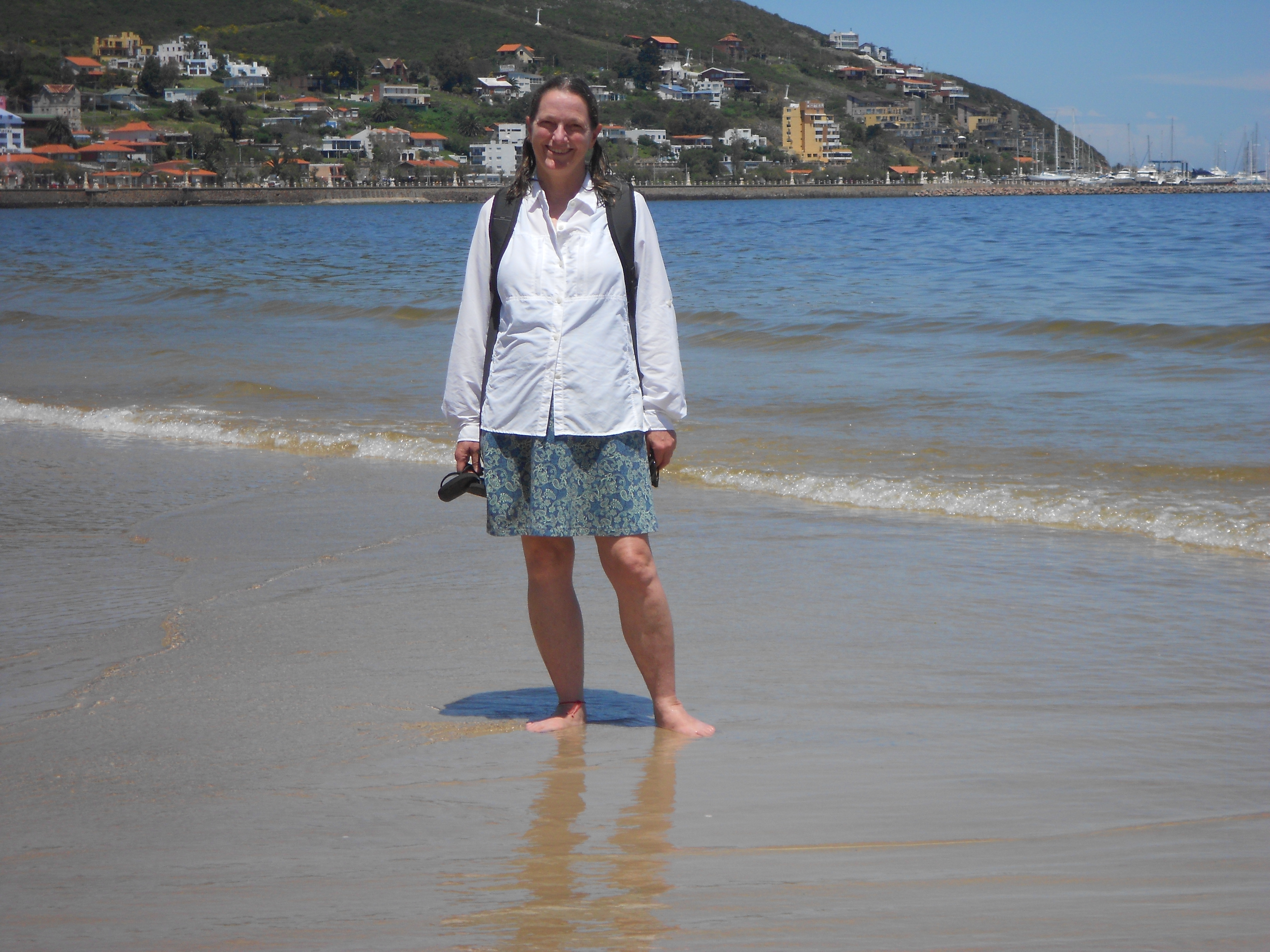
We left Buenos Aires on the 8:00 am ferry, and got to Montevideo at 11:00, then took a bus to a small beach town called Piriápolis, where we spent two nights at a small home that rents out rooms.

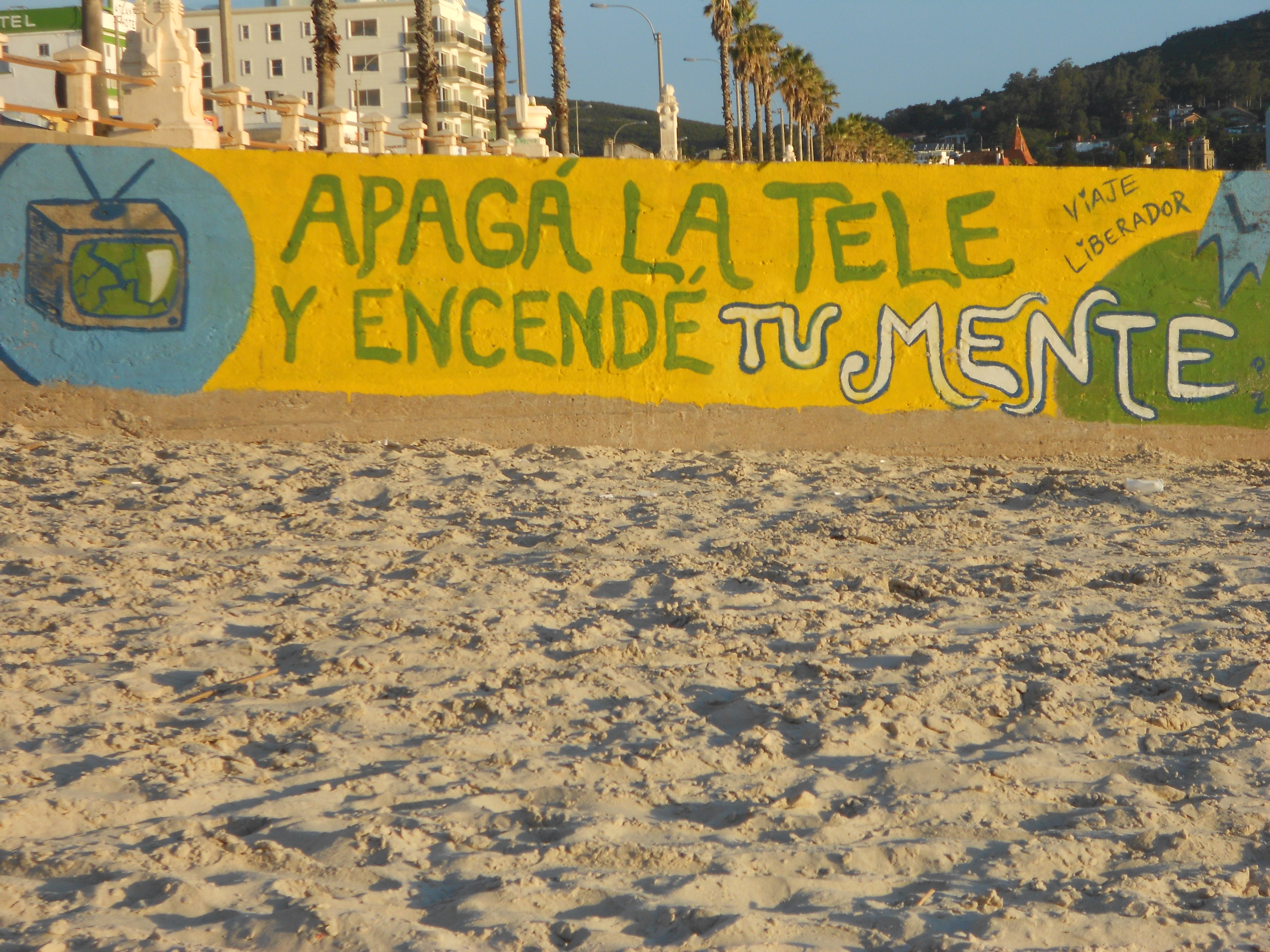
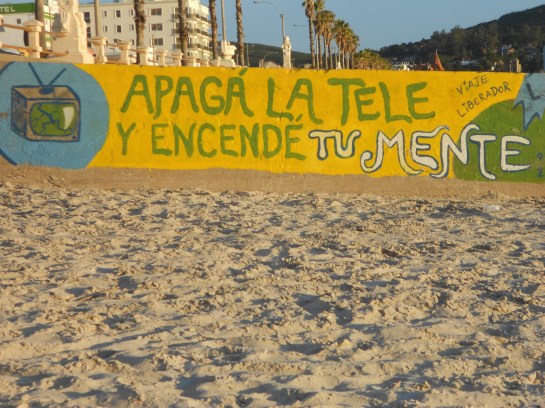
The beach was right down the road from our room, and we appreciated the message waiting for us there.  Turn off your TV, Turn on your mind.
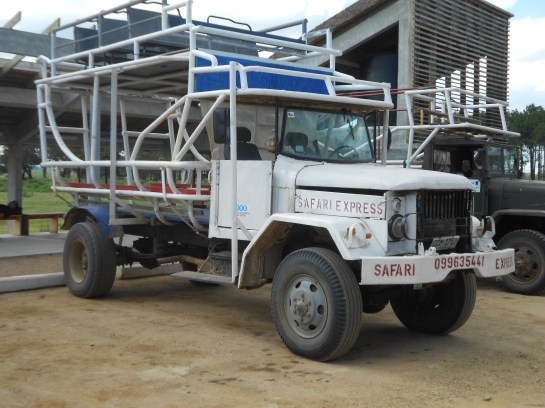
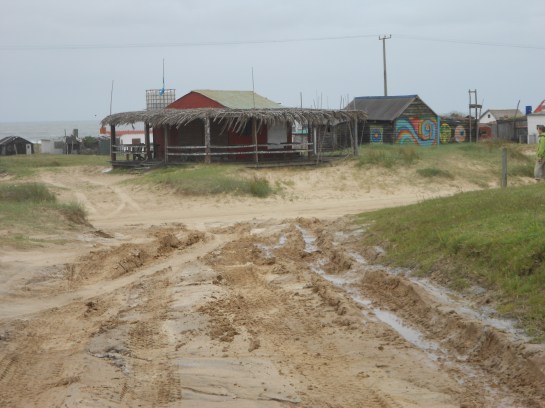
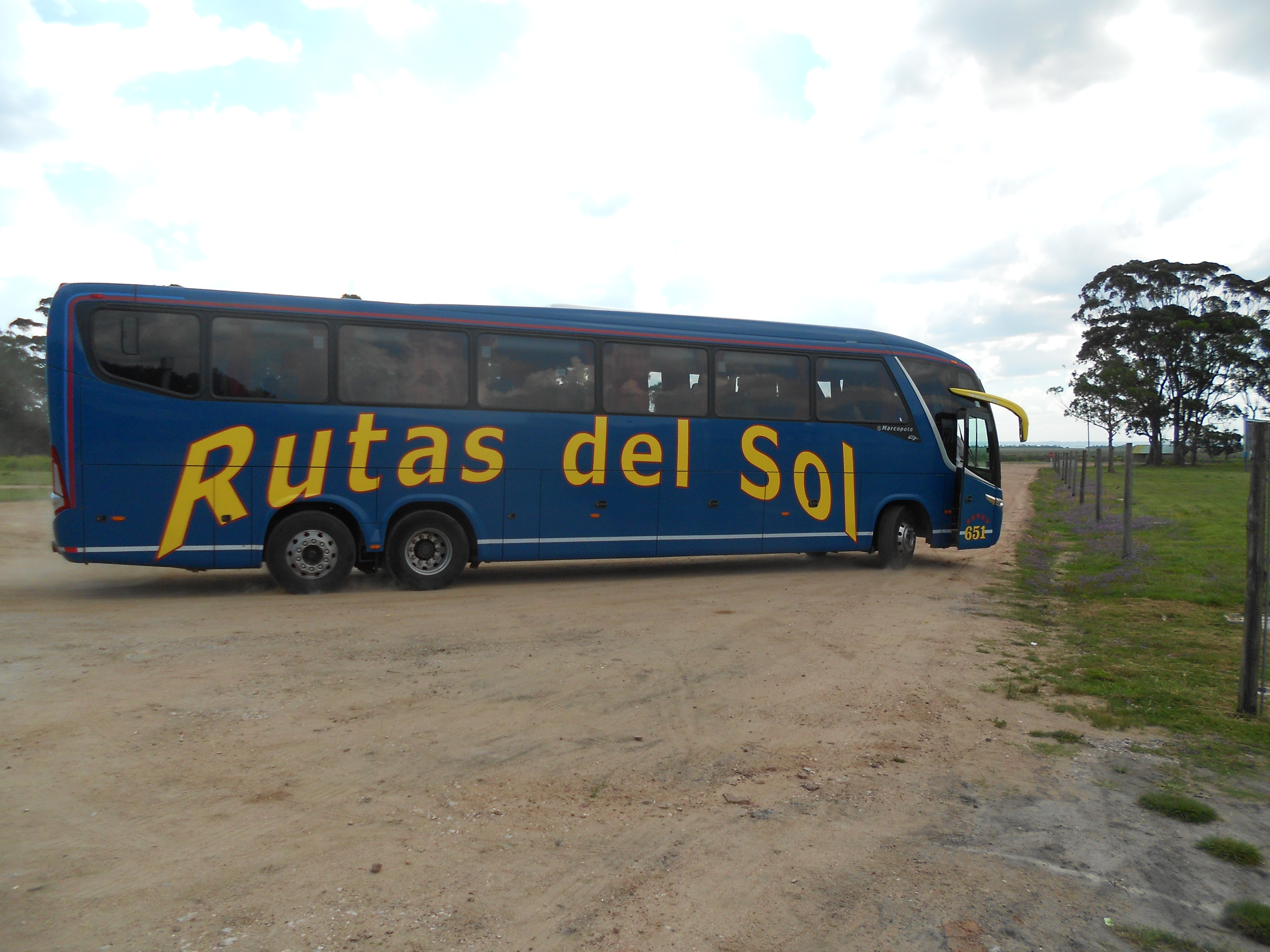
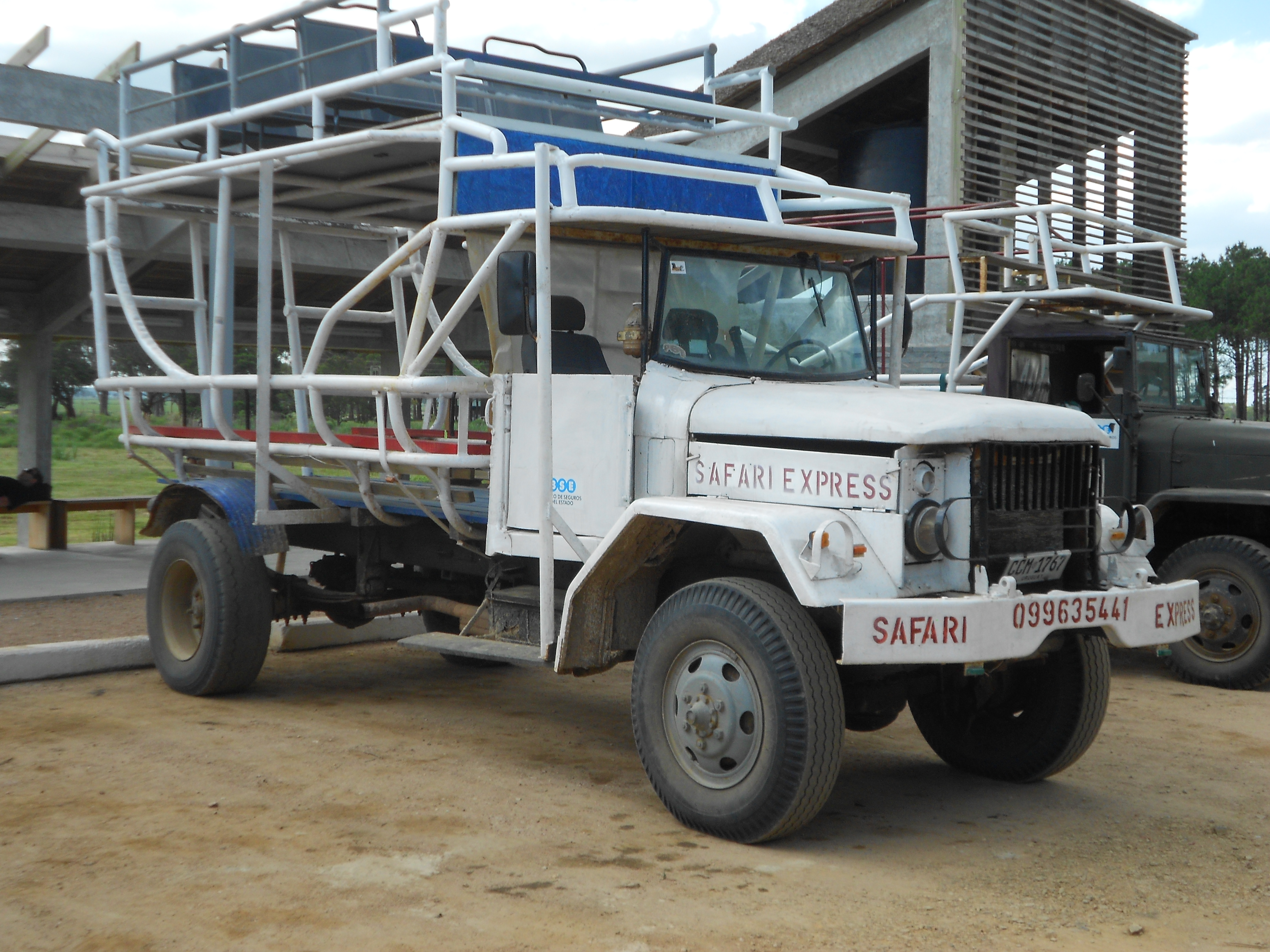
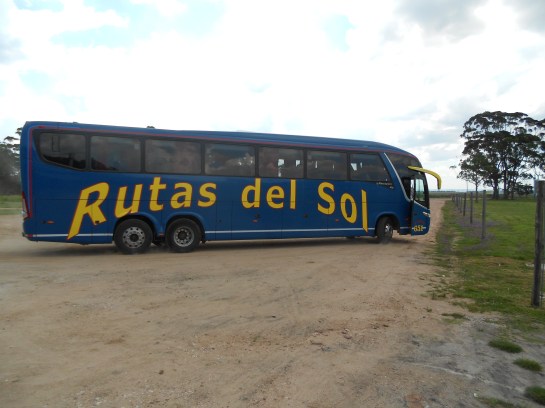
After a couple of days in Piriápolis, we headed for Cabo Polonio. First, we took a local bus to another small town, called Pan de Azúcar, then another bus for three hours. The bus drops you off on the highway, then you climb onto a four-wheel drive truck to drive you over the dunes into Cabo Polonio.¡¡¡CABO POLONIO IS AWESOME AND TREMENDOUS!!!
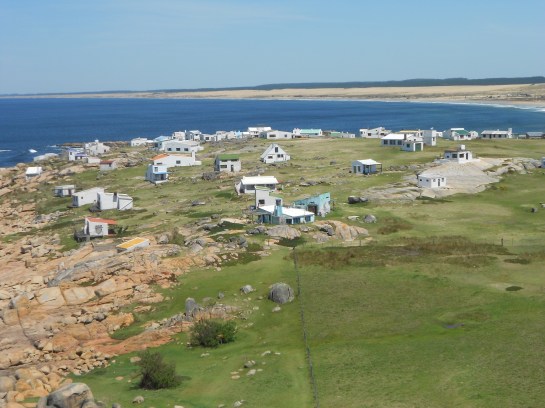
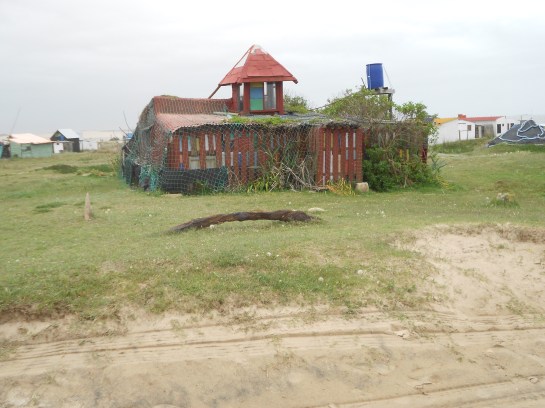
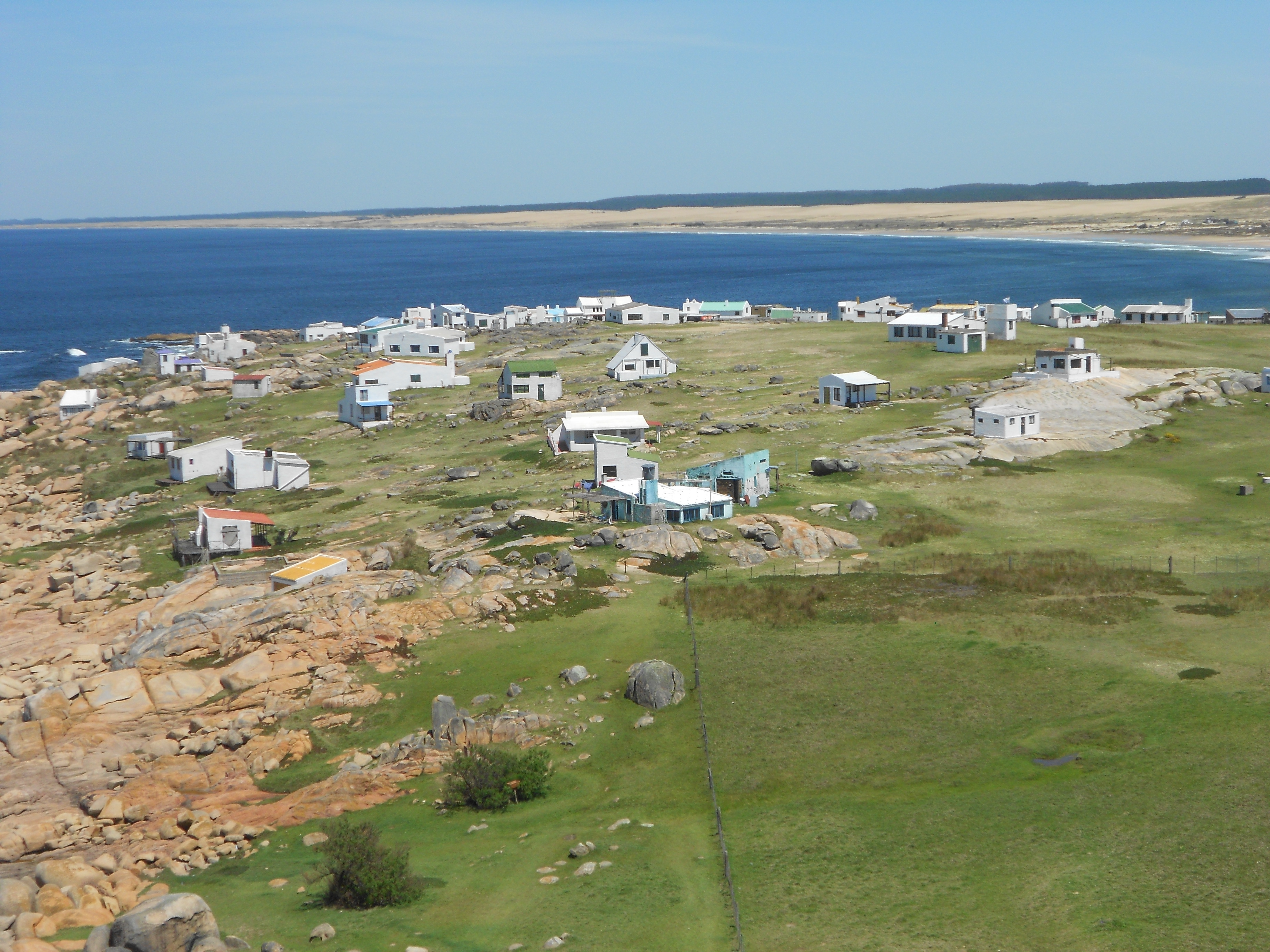
Cabo Polonio is a national park. There are no cars. The only electricity is solar and wind powered. There are people living there, but there is a moratorium on new building. No more. In the summer, (December, January, and February) it explodes with people from Montevideo and Buenos Aires. In the winter, it´s a town of fifty four people.

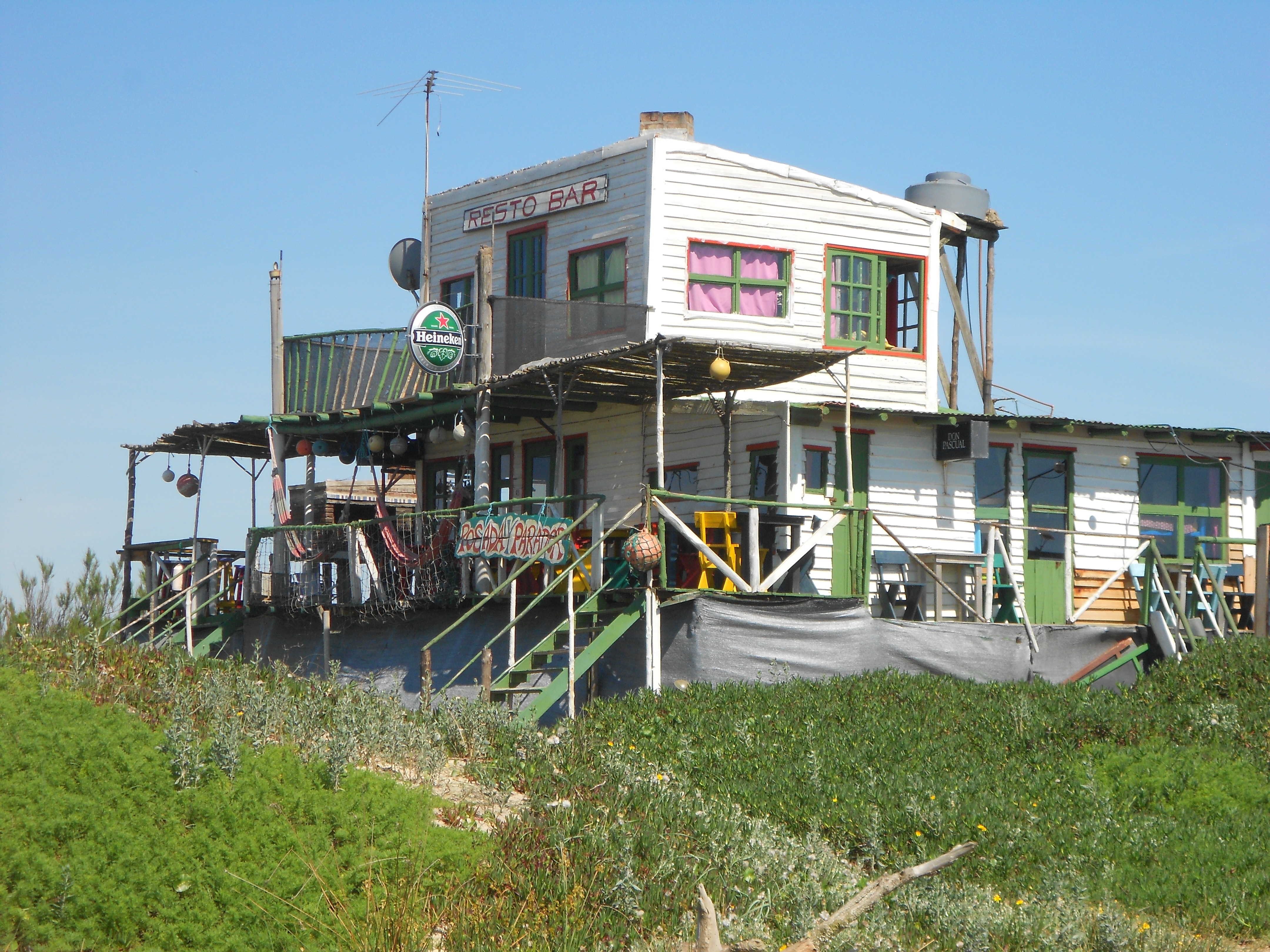
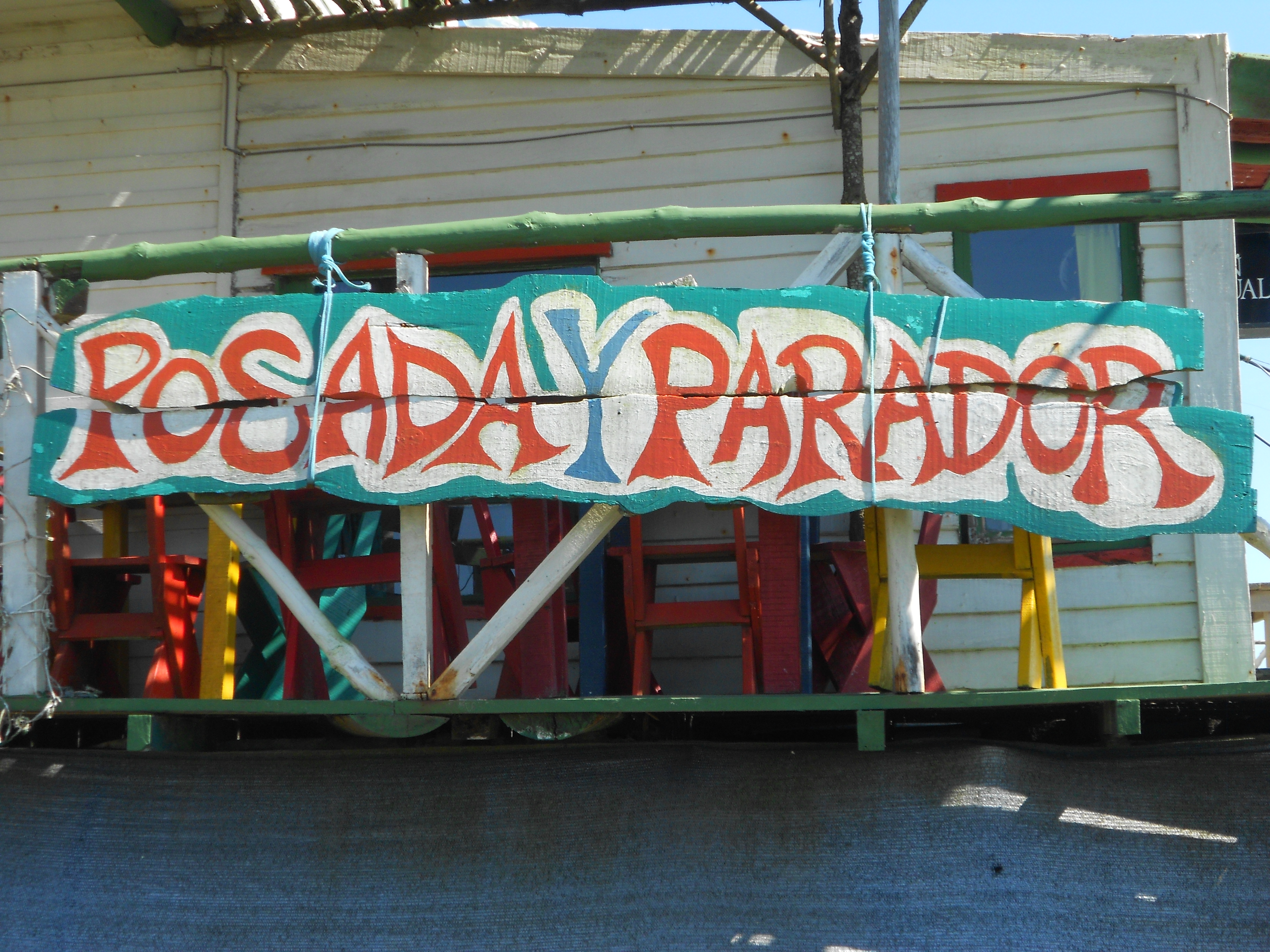
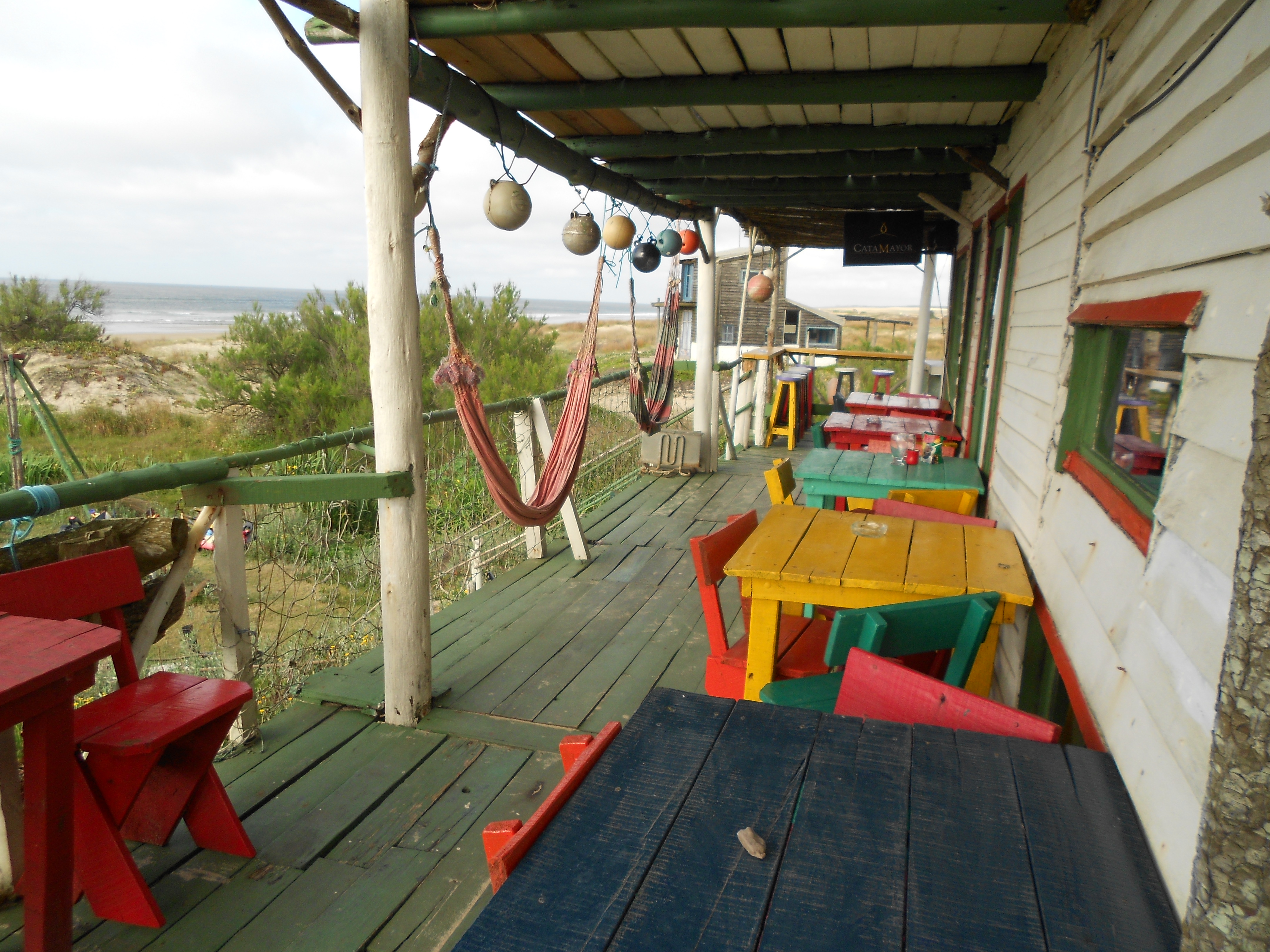
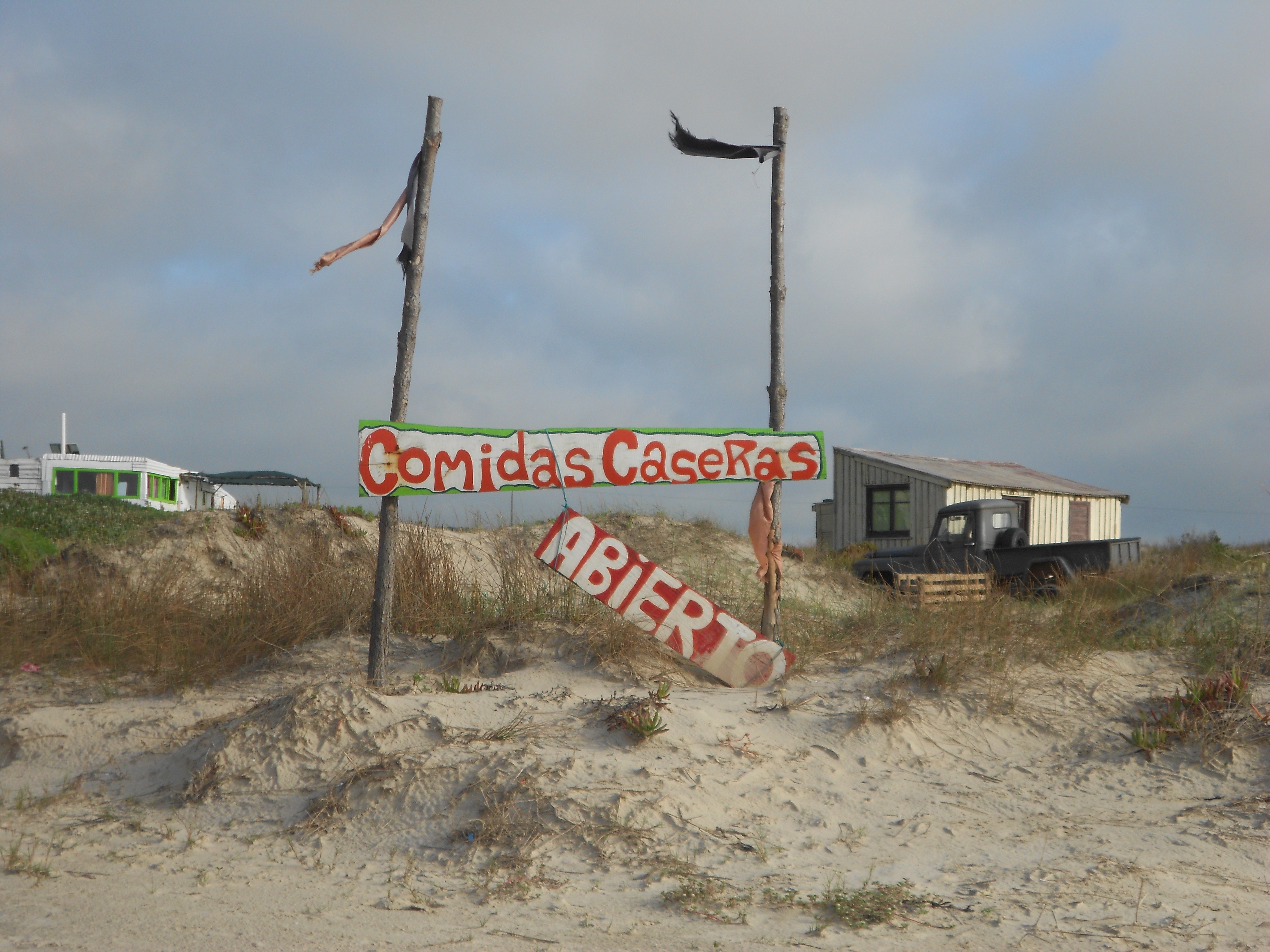
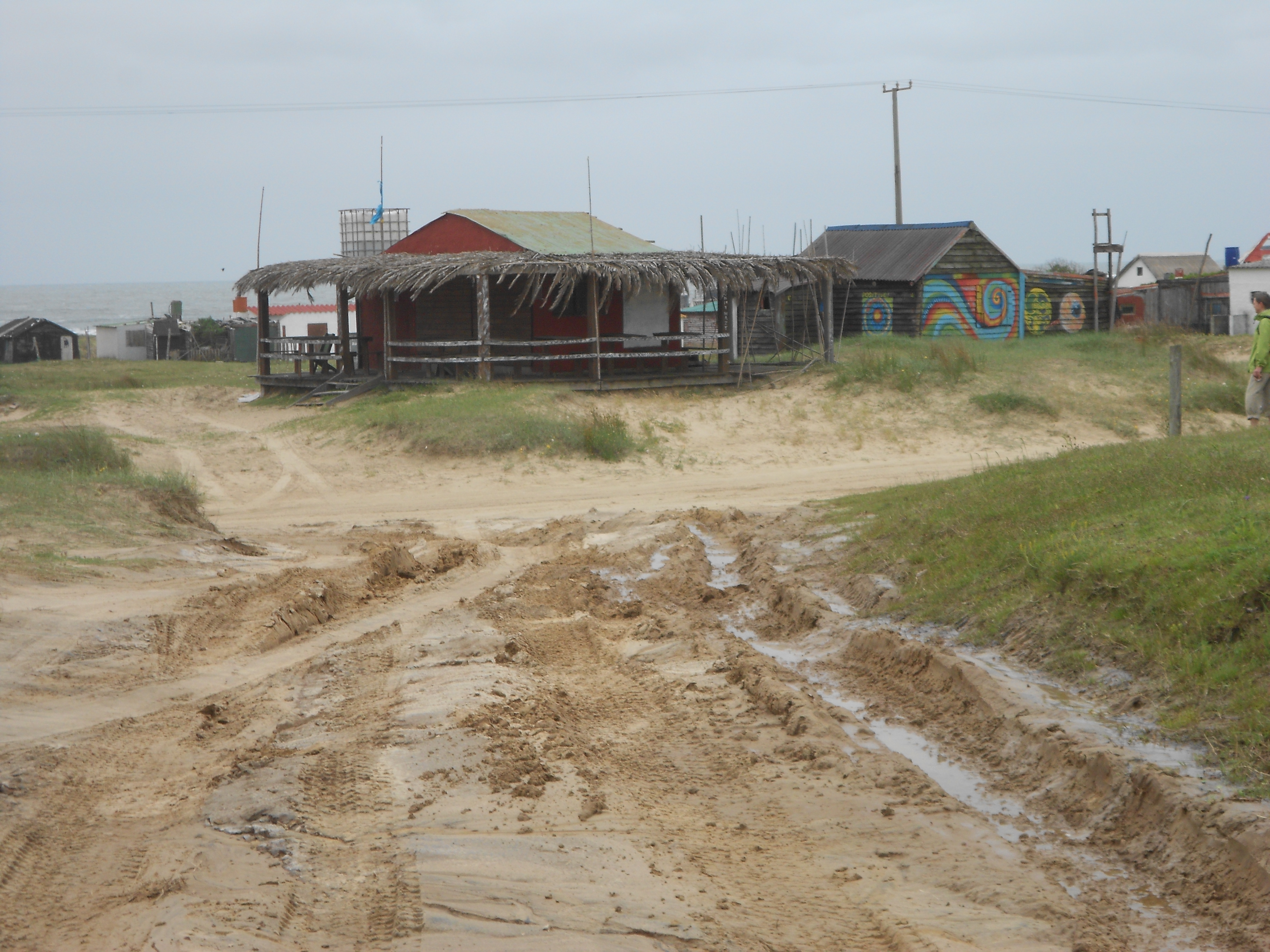
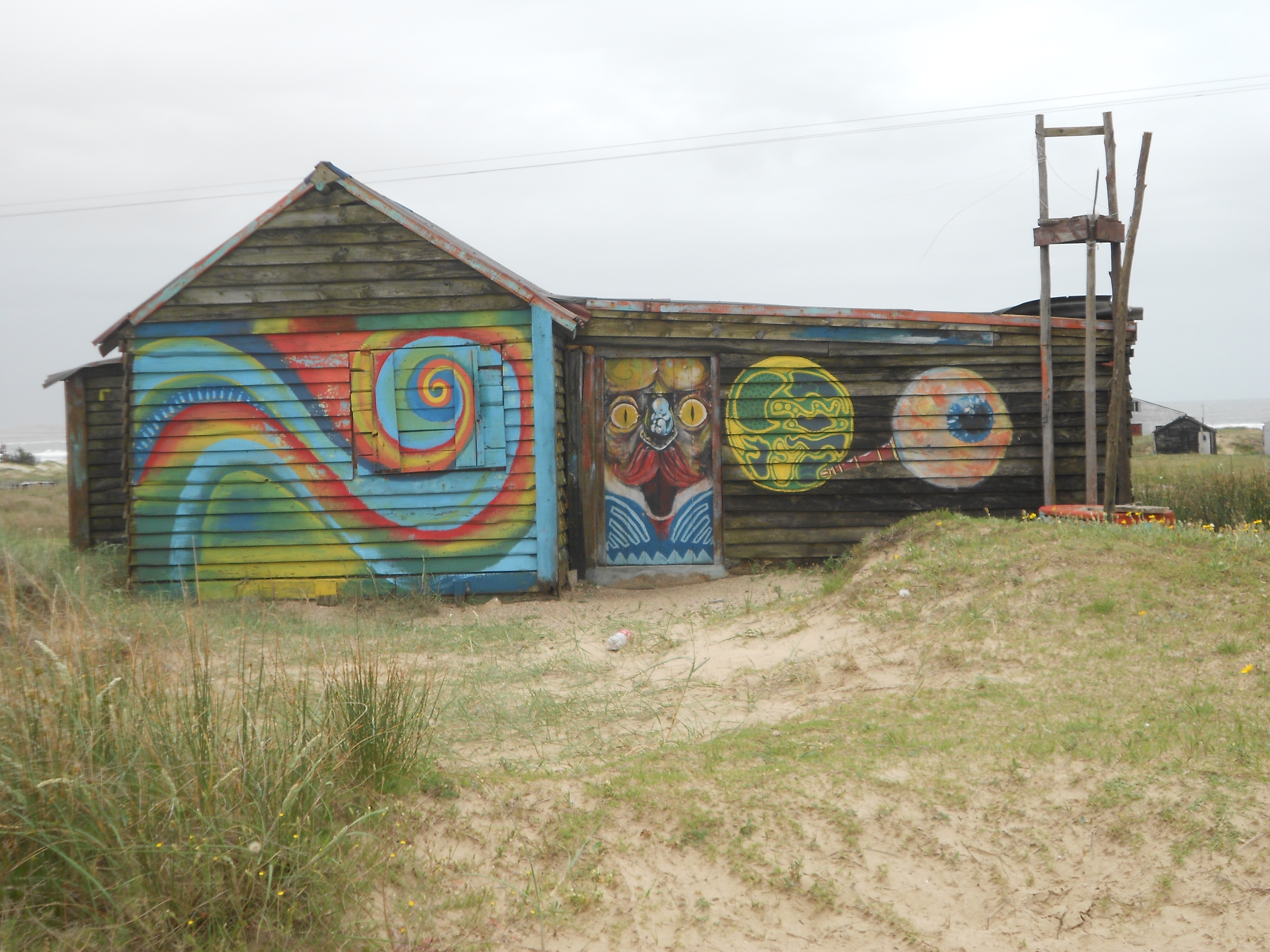
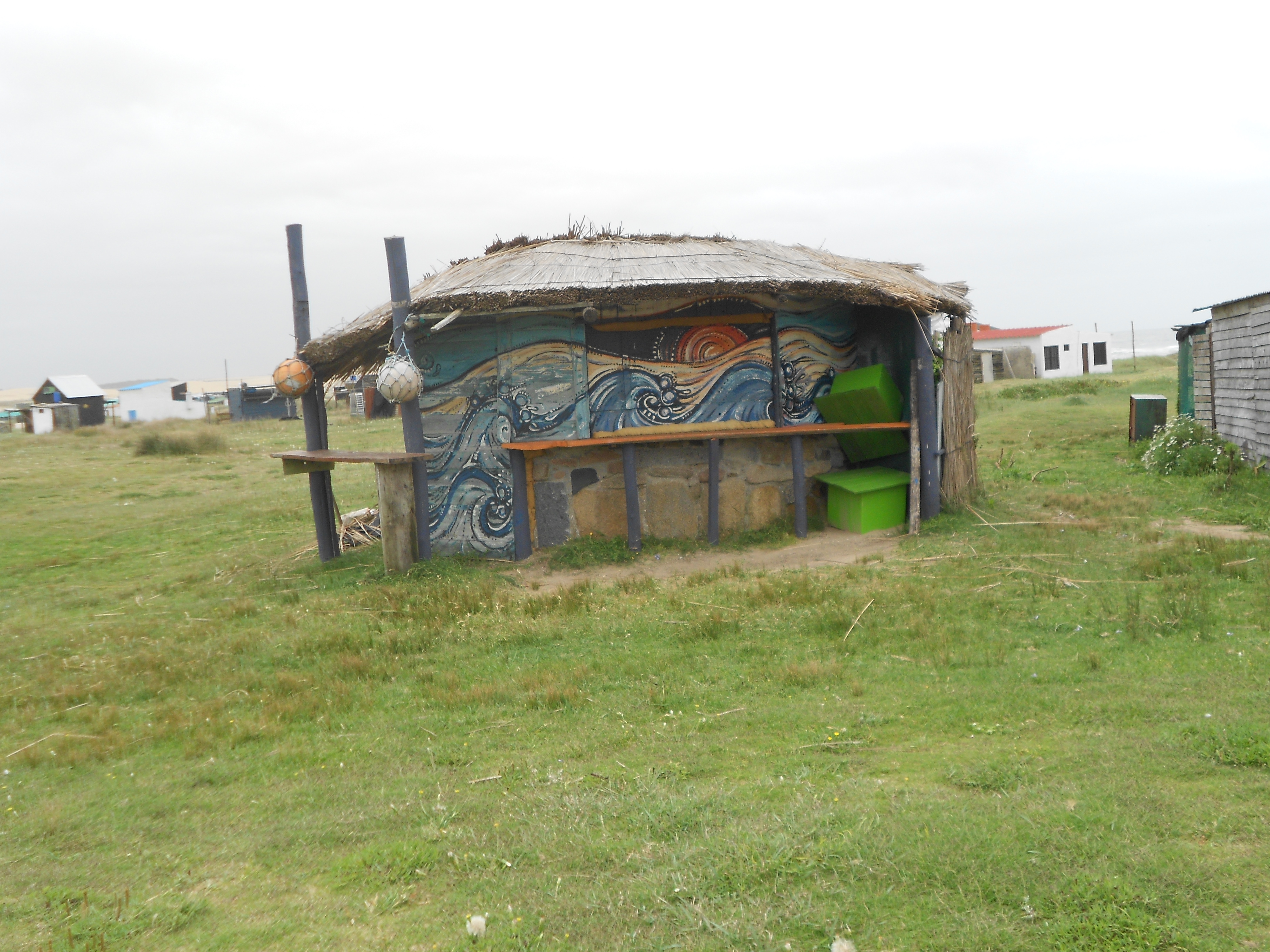
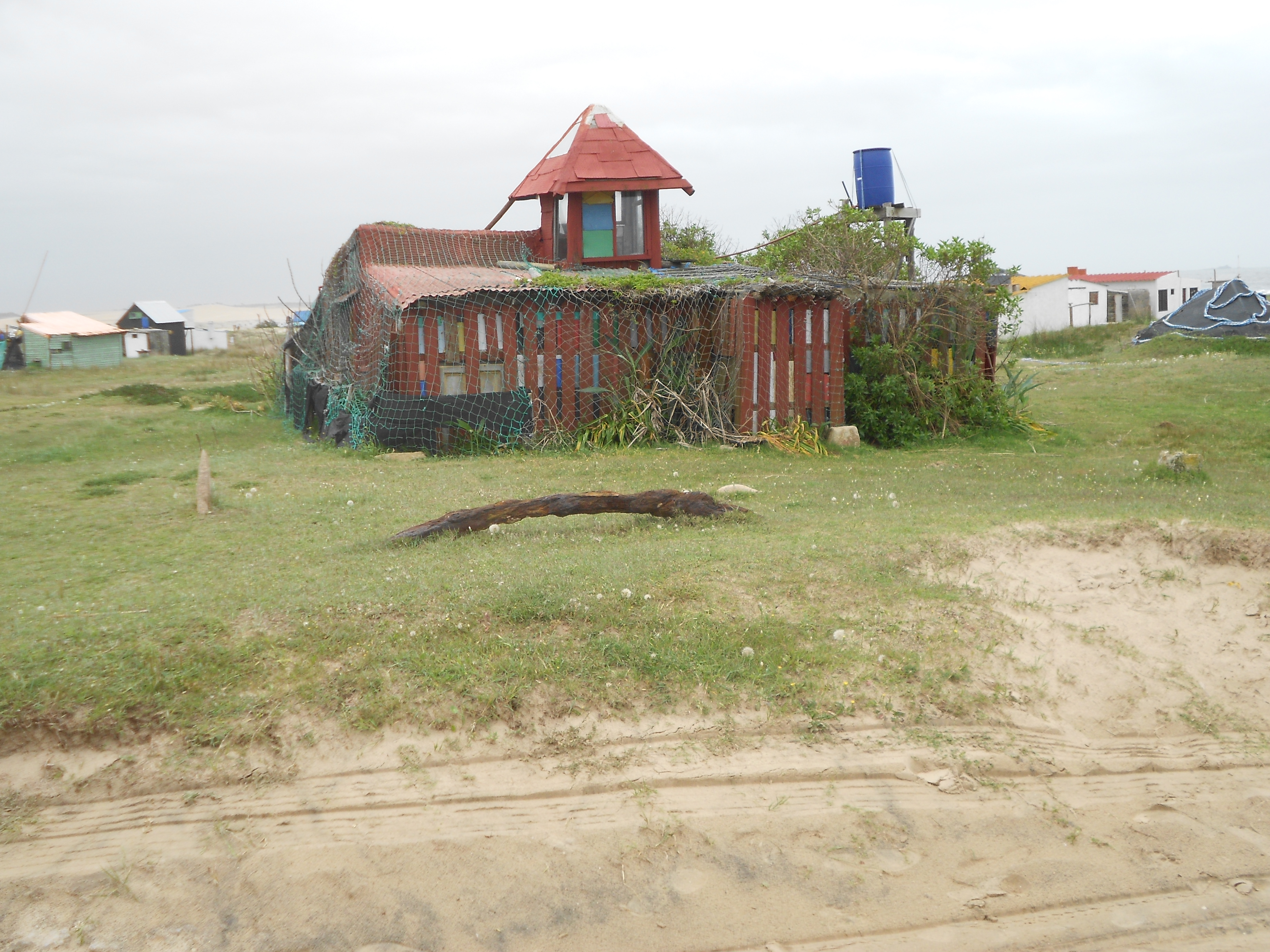
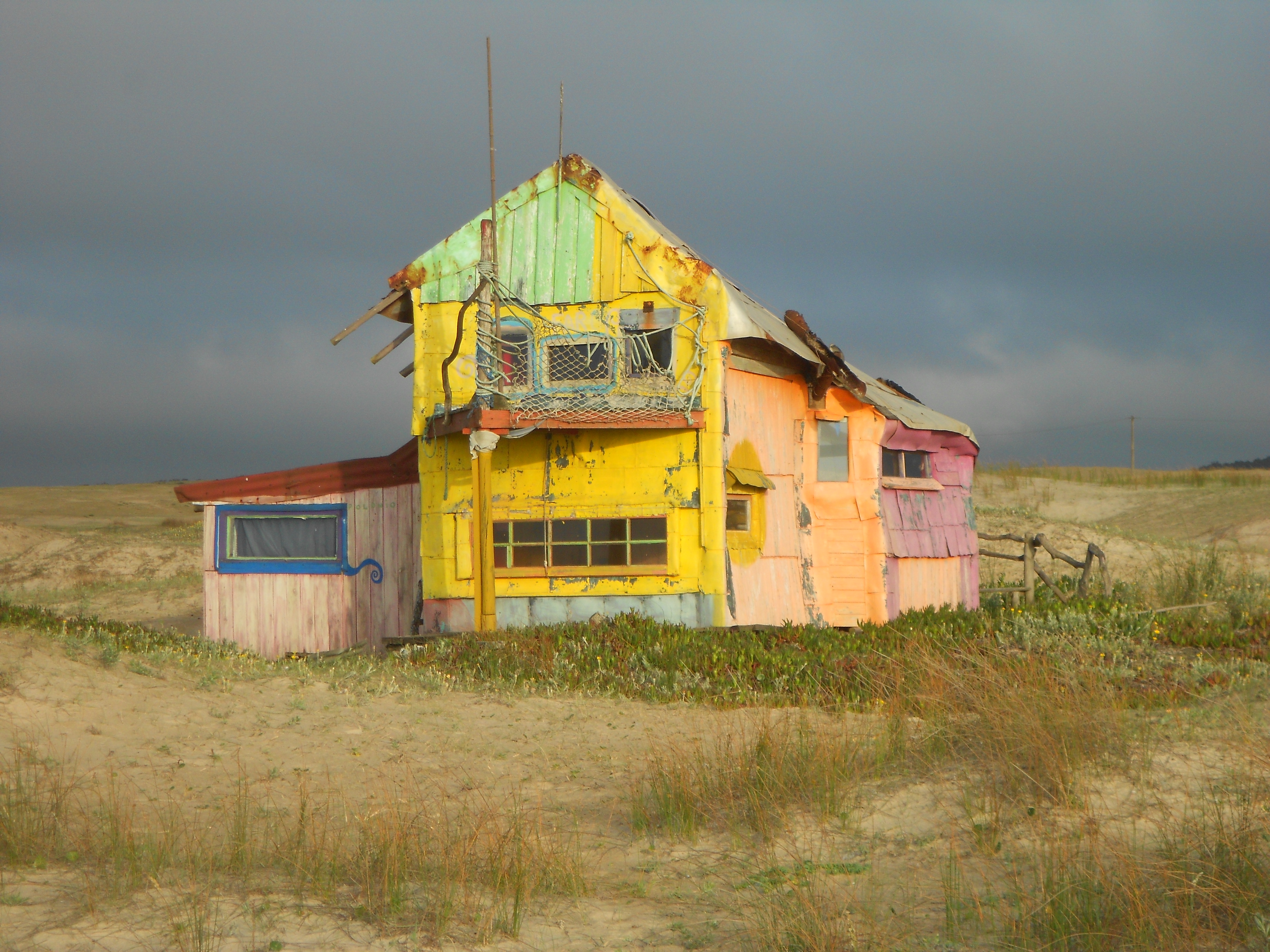
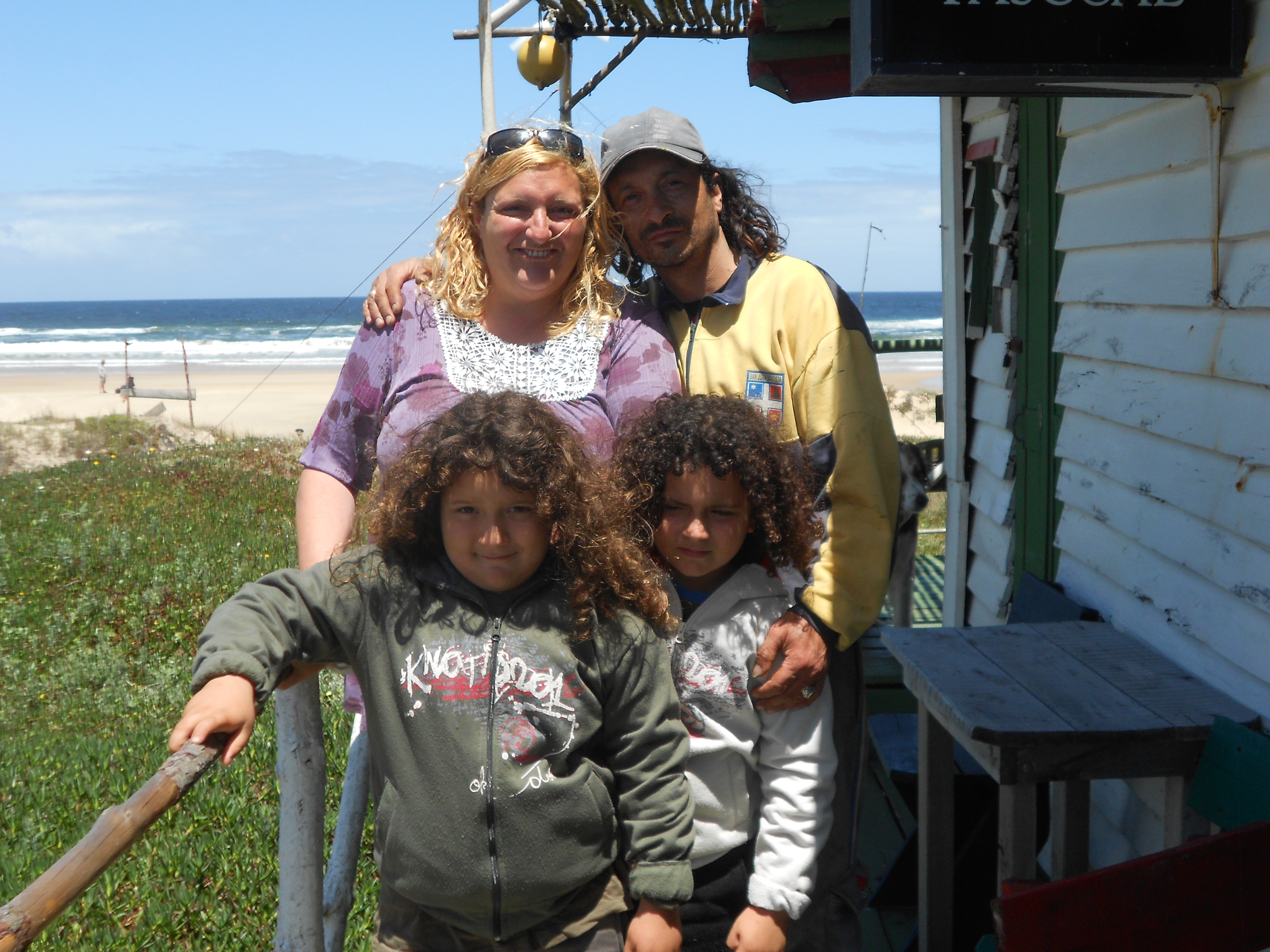
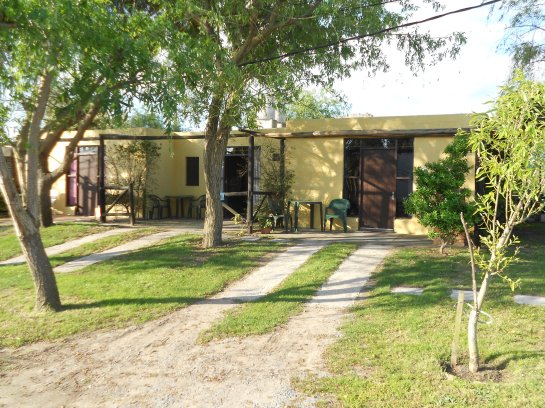
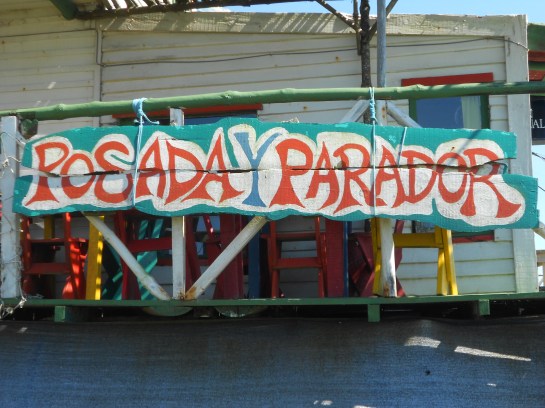
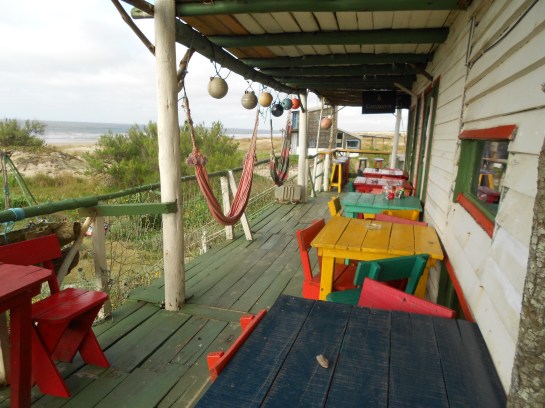
We stayed in a little posada, a half-hour walk from town down the beach. Nancy and Marco built the place and they were our hosts, along with their two sons, Luka and Tato, aged five and seven. The truck dropped us off in front of La Cañada, (canñada means springs, and there are two fresh water springs that flow around their house.) and Nancy came out to greet us with a kiss.She gave us a choice of two room, la grande or la chiquita, then opened up a bottle of beer for us to welcome us. Posada and Parador means that there are rooms to rent as well as meals to buy. Comidas Caseras means “homemade meals.” They have room for about twenty people when they are full, and it is easy to imagine people from all over the world spending a delightful afternoon on the porch.
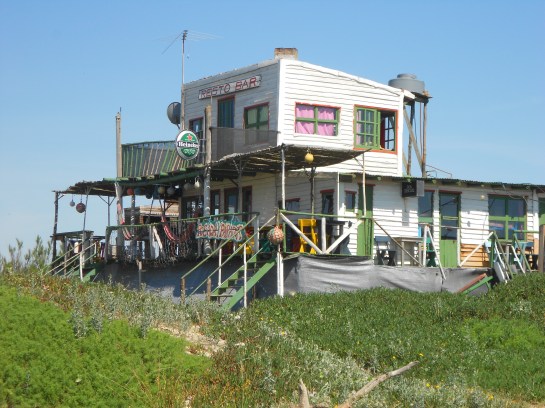
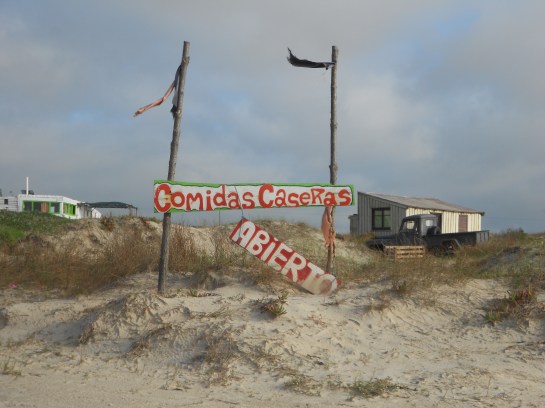
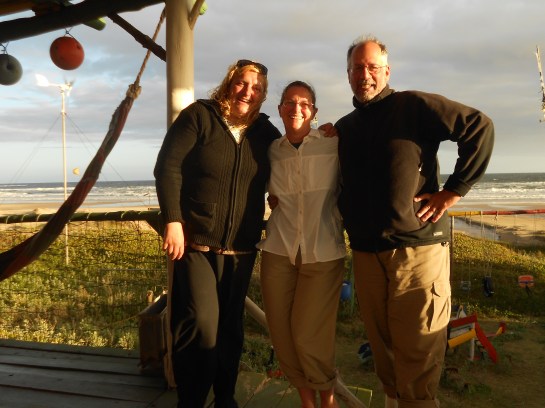
 Nancy put out some appetizers (picadas) for us, and gave us a great welcome. Very soon, Marco came home with the boys, after picking them up from school. He immediately rolled a joint to share with us. We decided to stay two more nights.

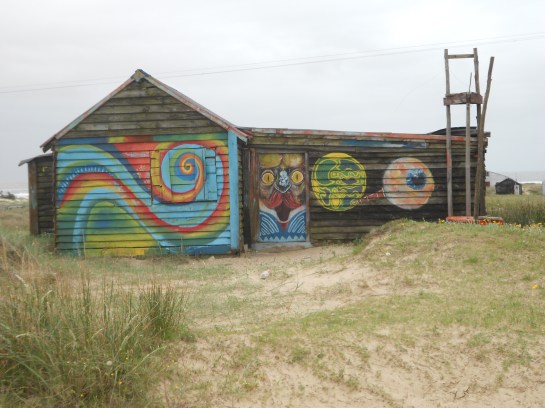
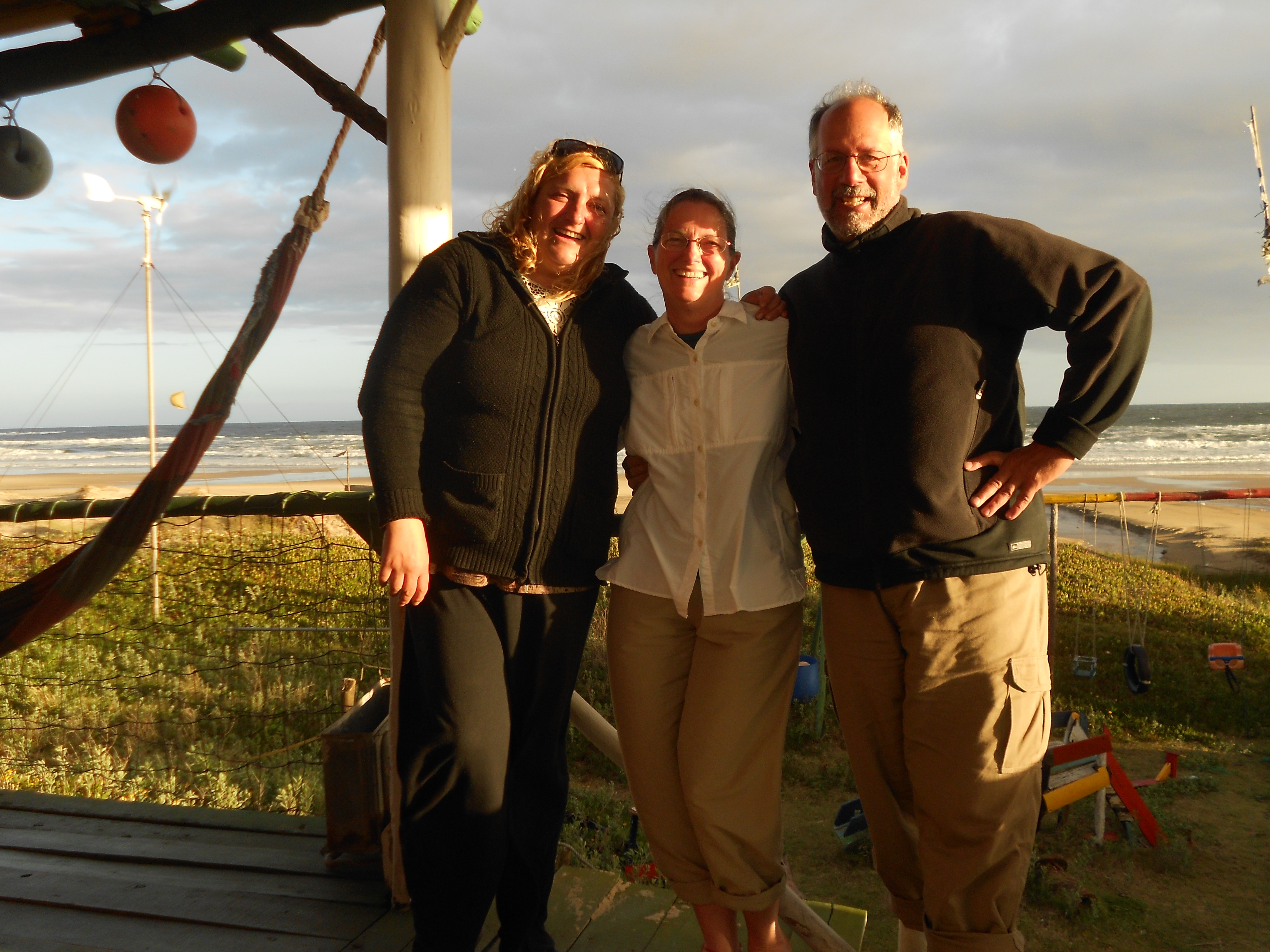
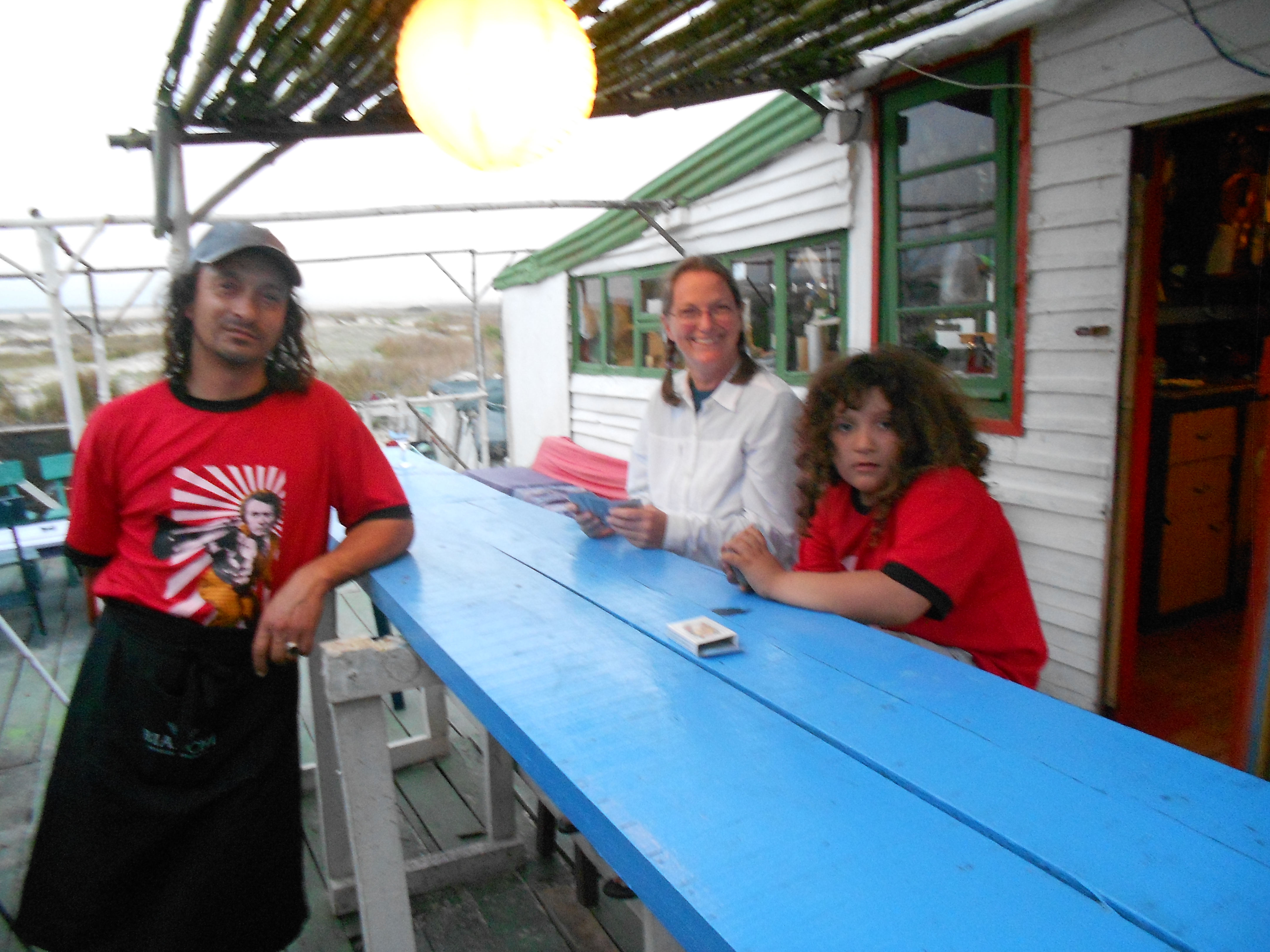
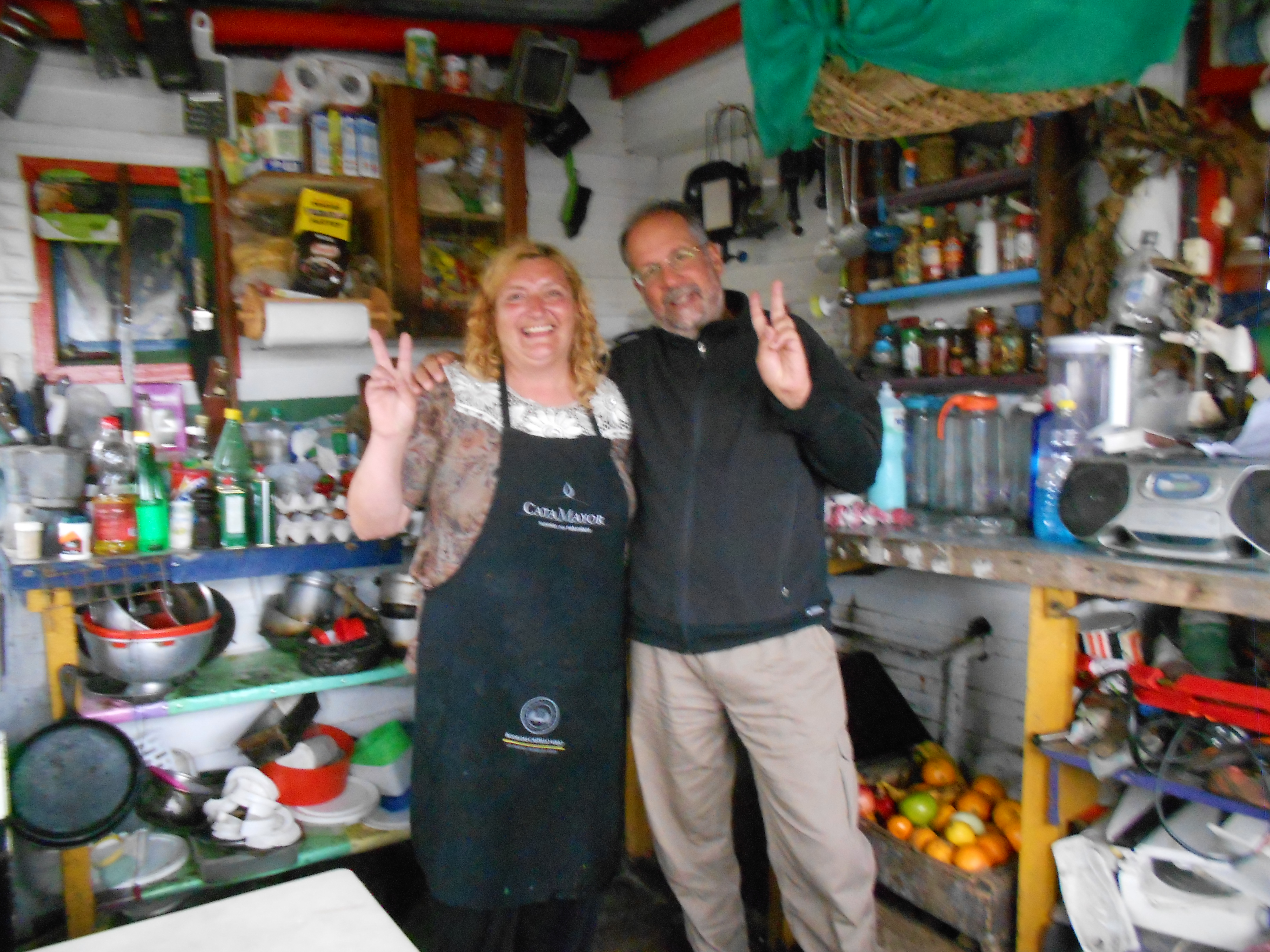
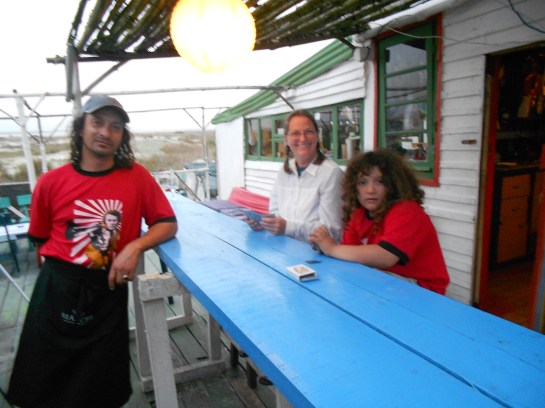
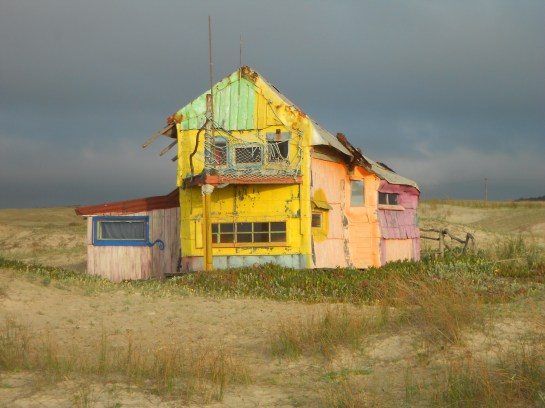
We stayed for seven nights in all. The cost of the room (about forty dollars a night) apparently included all the porros that we wanted. La Cañada is beautiful. It is right on the beach, hand-made, colorful, with Nancy´s warm loving spirit infusing everything. We became part of the family pretty quickly. We were the only guests, and we helped out in the kitchen and swept the floors, and had a great time with everyone. Monica liked to play cards with the kids, outside on the porch. Soon after Marco arrived with the kids, they went down to the beach for a swim. Beautiful sunny weather. Monica and I followed them to the beach, waved to them, and walked down the beach. You can walk for at least twenty kilometers down the isolated beach before running into anybody. The next day, Luka, who is seven, looked at me very seriously and asked me why we hadn´t gone swimming with them yesterday. (This in perfect Spanish. They learn Spanish so young down here.) I was touched and taken aback. Up to that point, thekids hadn´t really communicated much with us. I told Luka that we didn´t swim because we wanted to take a walk, but if they go swimming this afternoon, I´ll go with them. He answered, “Bien.” So, later that afternoon, I joined them in the water, swimming and surfing, while Marco was the lifeguard and Nancy watched from a beach chair. After that, we were best friends with the boys.
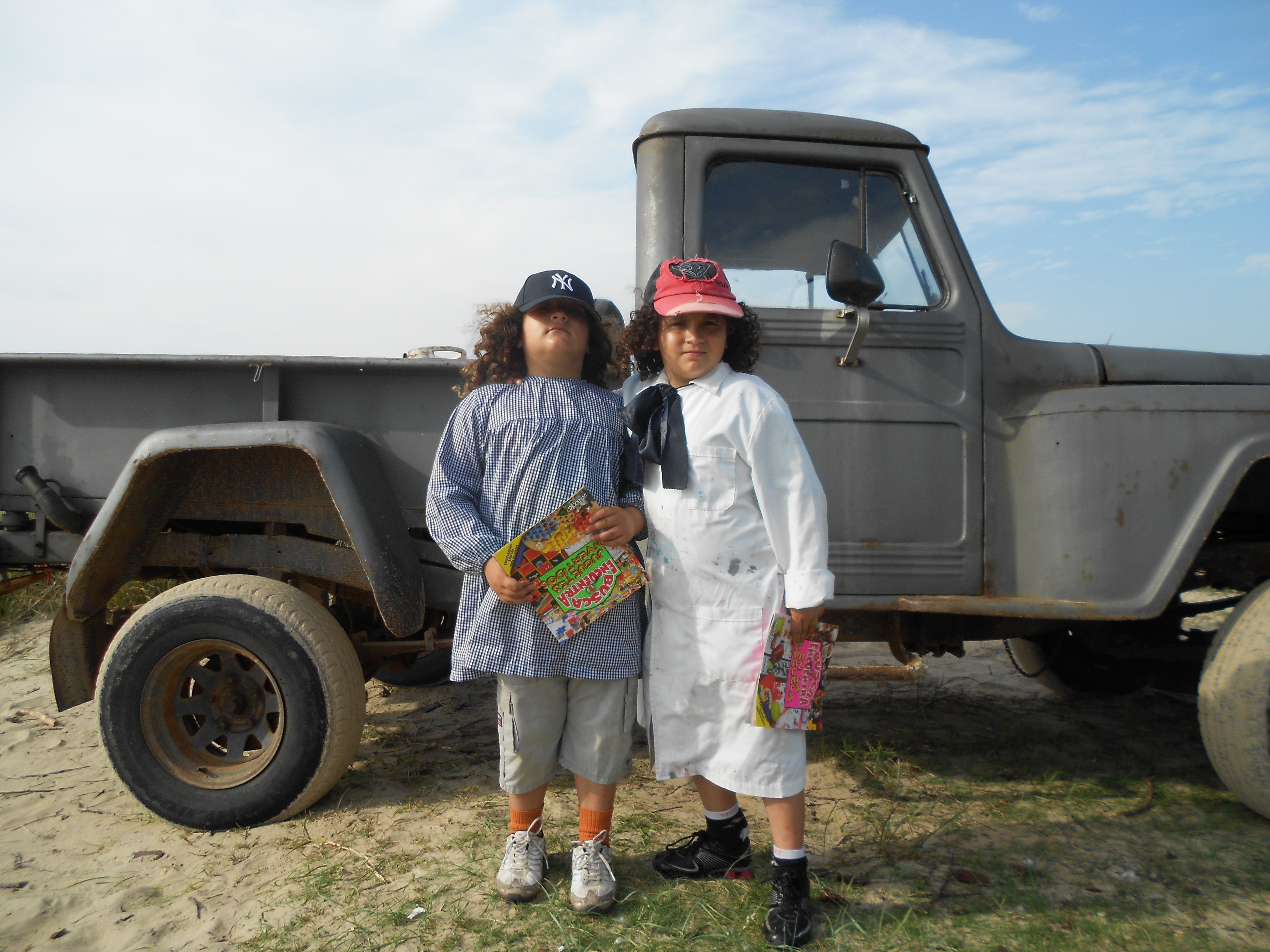
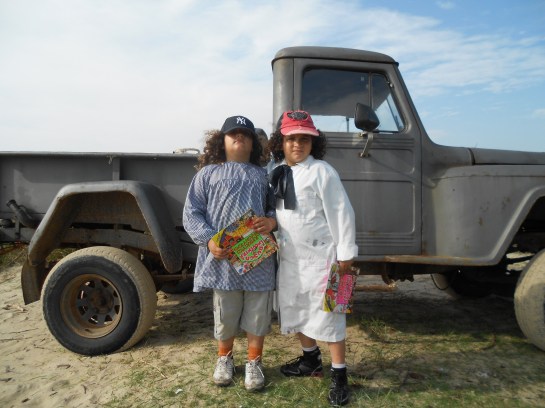
They go to school in town. There are a total of six students at the school, with Tato and Luka being two of them. All the school kids in Uruguay and Argentina wear smocks (guardapolvos) to school. Luka and Tato usually got driven down the beach in the pickup truck and then got picked up in the afternoon. Here, they are ready for school. School is usually from about 10:00 to 2:00, but it depends on the bus schedules and the teacher´s schedule. She lives about 30 km from town, and she travels by bus to get there and go home.
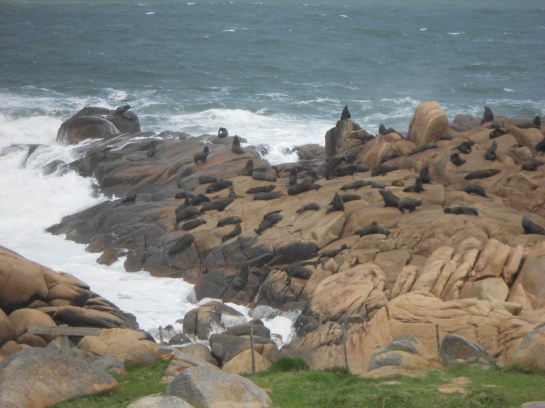
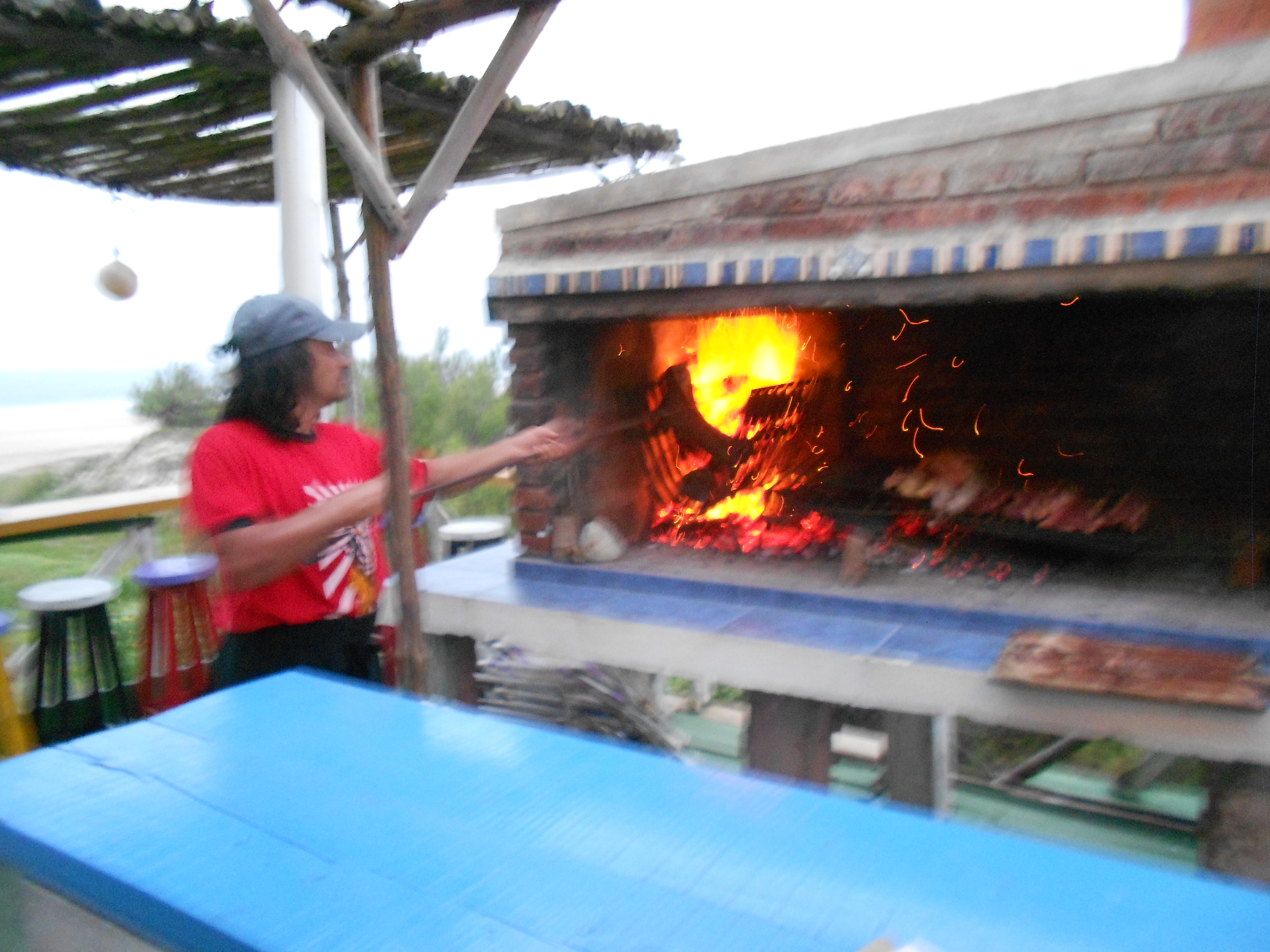
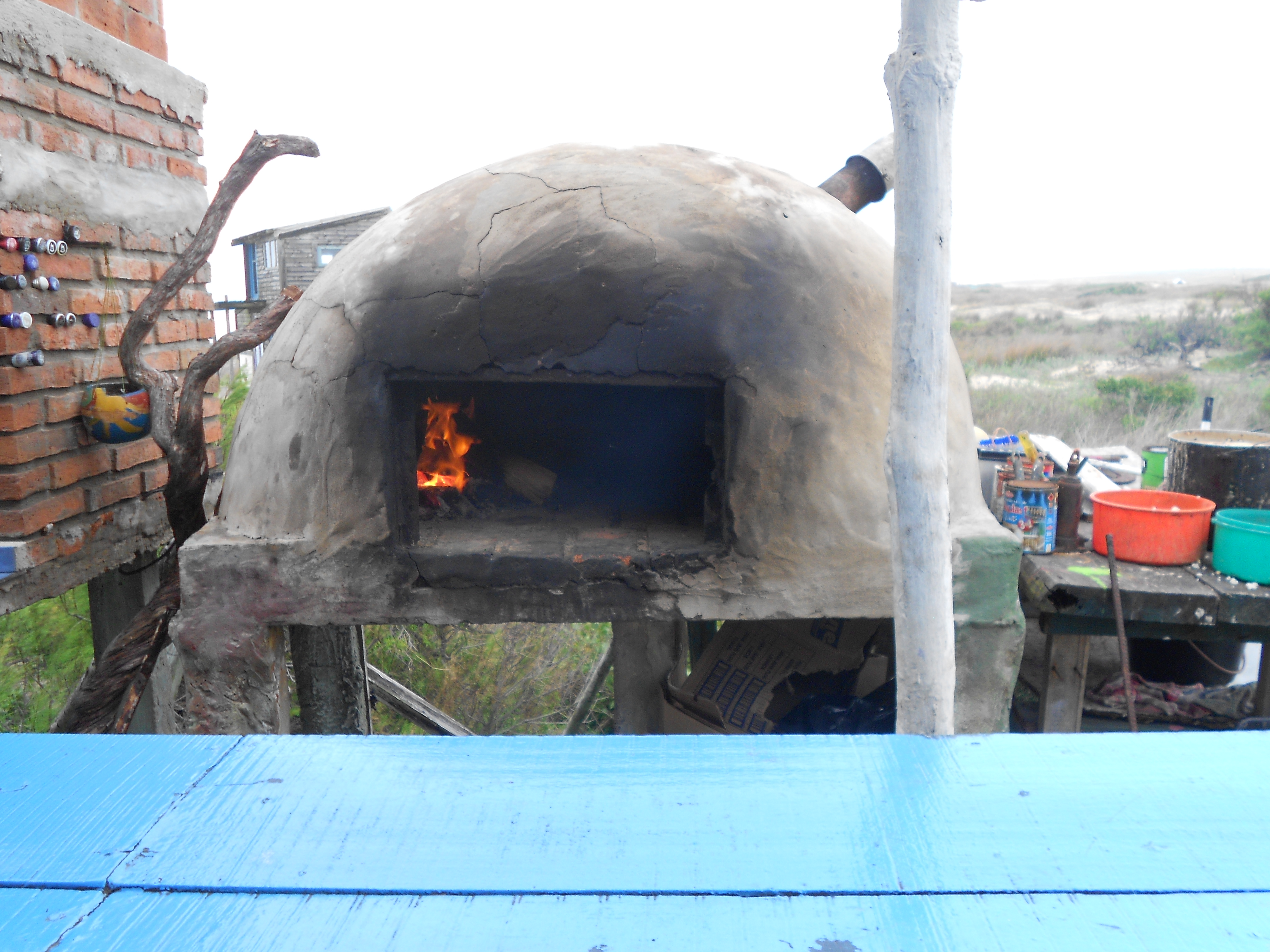
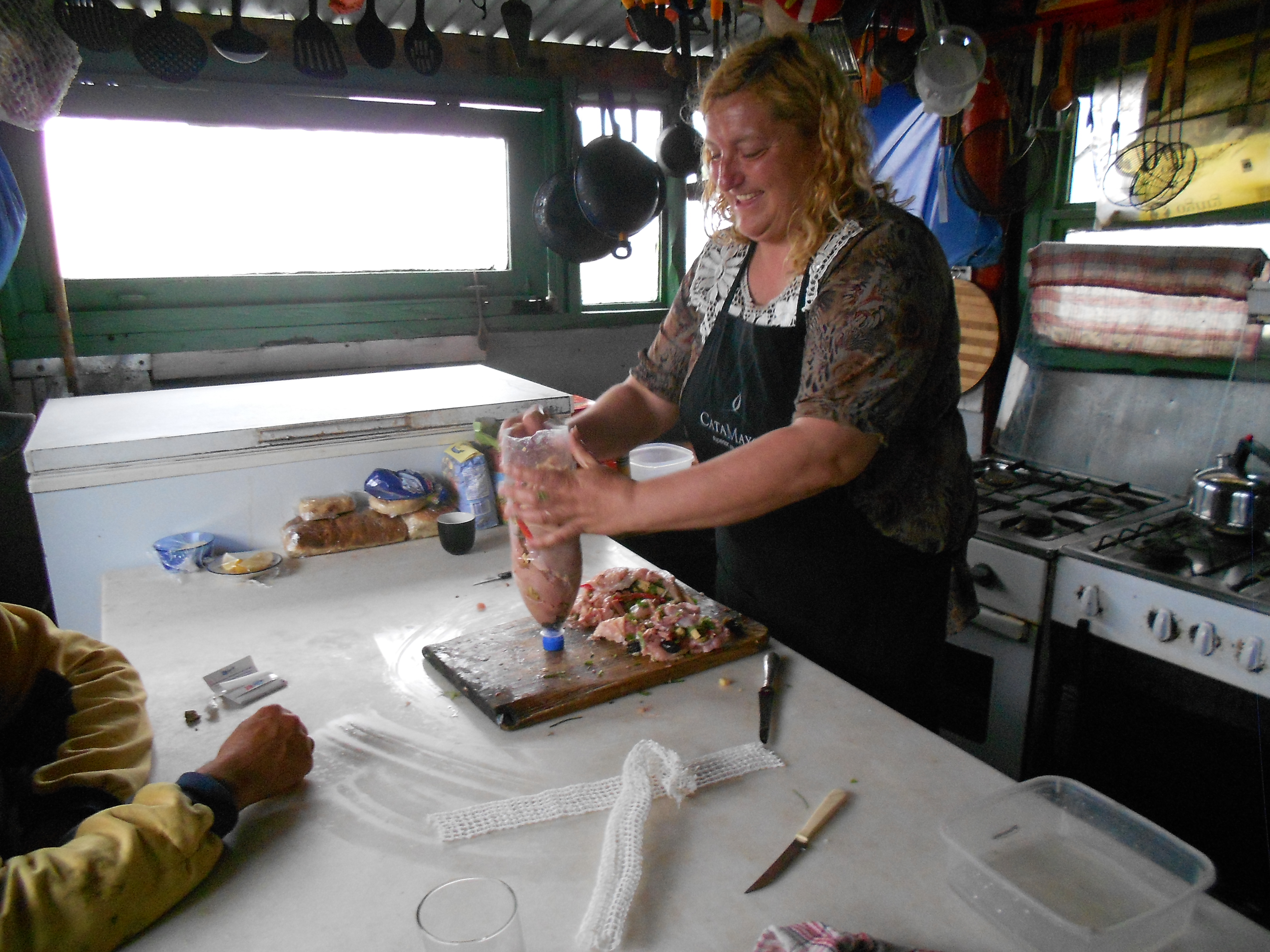
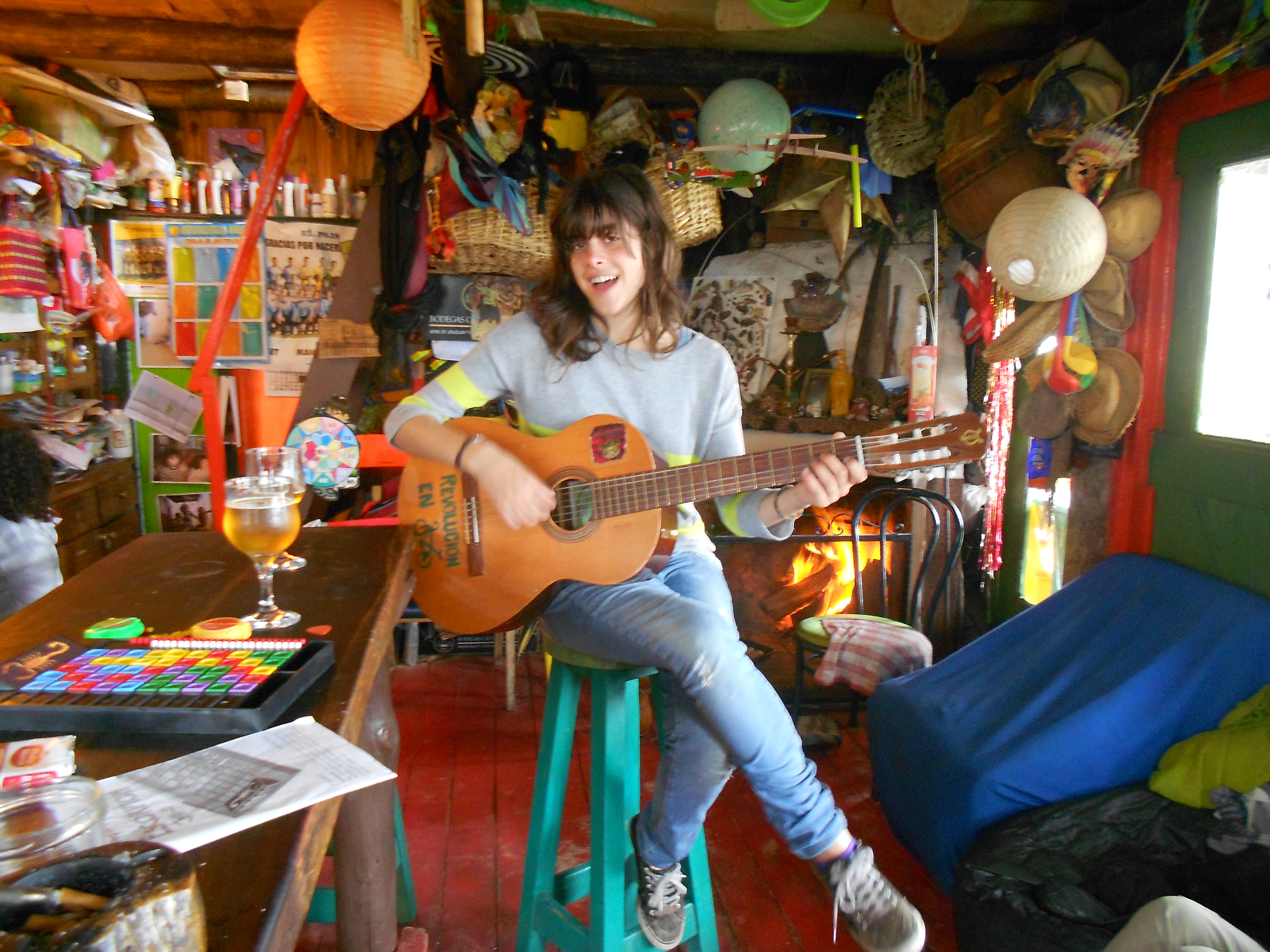
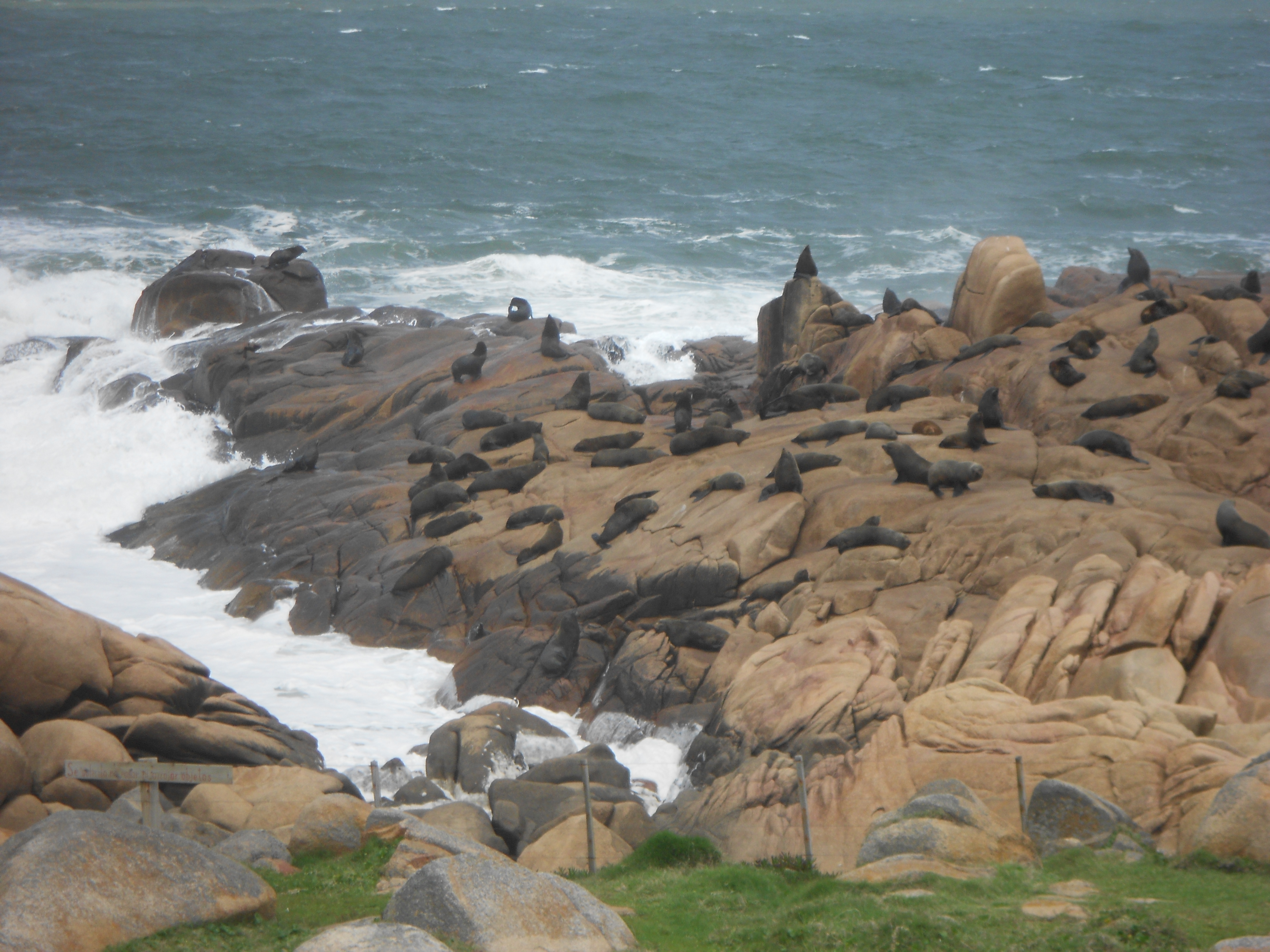
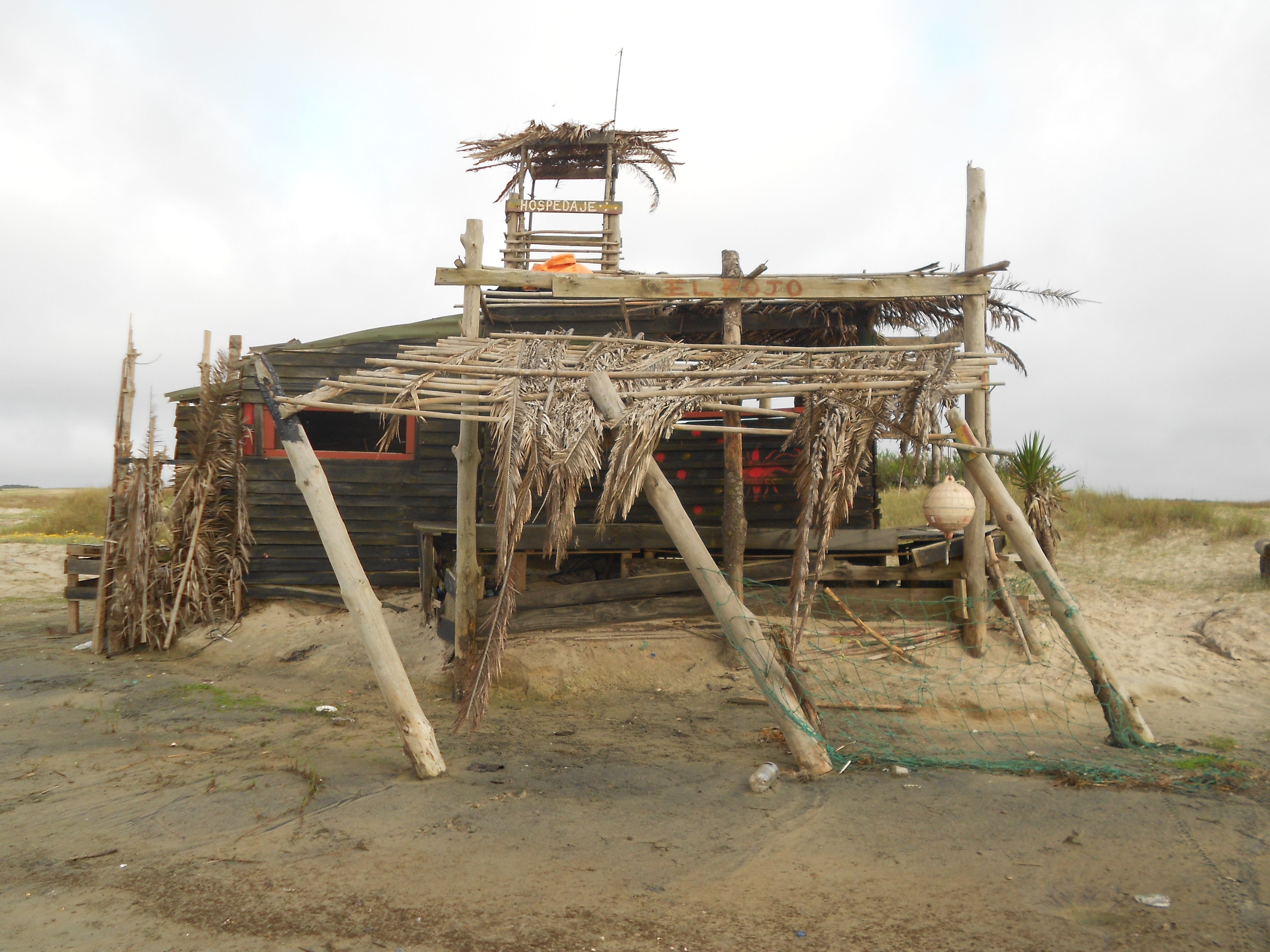
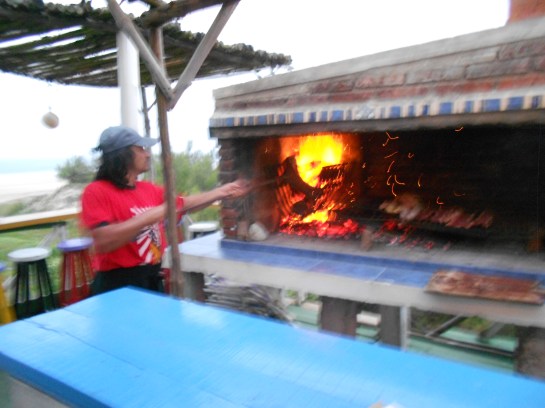
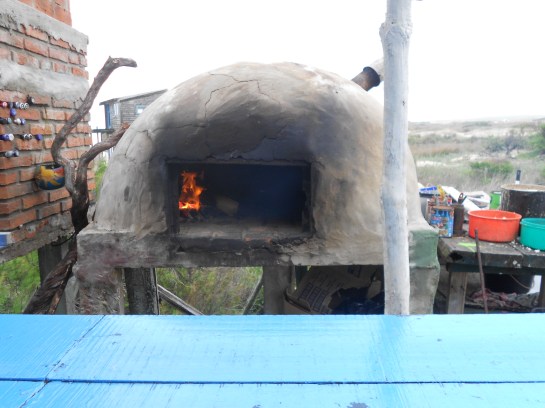
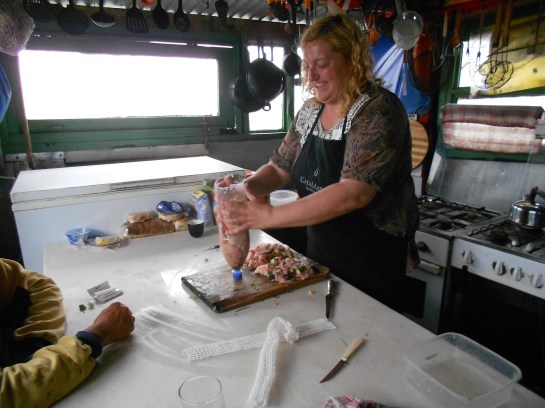
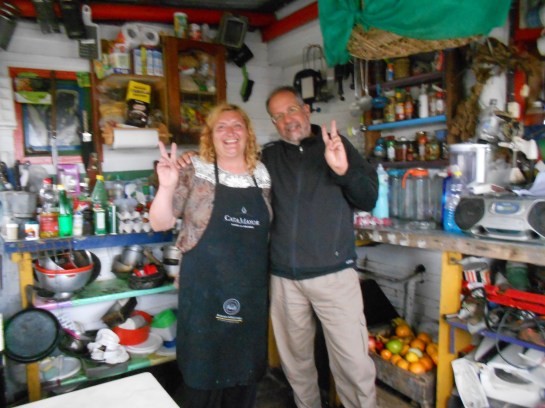
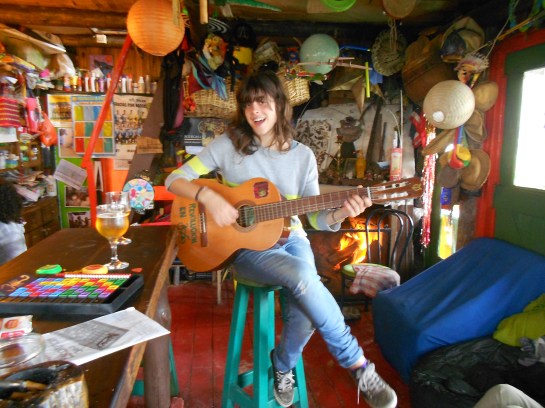
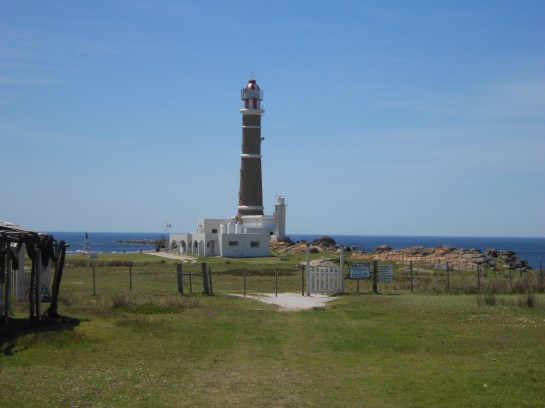
Nancy and Marco are both great cooks, and they both put their heart into preparing food for their guests. Breakfast was always cheerful, with coffee and a chapati, (kind of a grilled quesadilla) They put a lot of effort into dinner, which was usually served around 10:00 at night. They have a beautiful parilla for grilling meat, and a beautiful brick oven for baking breads and pizzas. Nancy kneads all the dough. In the summer, when they are full with guests, Marco can fill the parilla with enough meat for twenty people, at the same time baking pizzas in the oven. The oven is made with bricks and covered with mud. It holds the heat. It is solid. They built the parilla and the oven before they built the rest of the house. I appreciate their priorities. One night, Nancy de-boned a chicken, sliced it thin and rolled it out, and filled it with prunes and cheese, ham and spices, then stuffed it into a plastic water bottle, then put a baking net over the bottle, and slipped the bottle out. They baked the chicken for three hours. Delicious. I told Nancy and Marco that I´ll do it in Oregon and call it Pollo Cañada.I asked if I could knead the dough for pizza and bread one night, and it was very nice being part of the production instead of just being served. I loved their kitchen, with that big marble work table in the middle. I was very impressed with how much food they are able to turn out, and all with such love and cheer. We arrived on a Tuesday (election day). On Friday afternoon, after days of sunshine, the sky turned black and the clouds moved in, and we had a real storm. Lighting over the ocean, strong wind, heavy rain. The rain stopped during the night, but the wind blew for three days. It was more than a gale. The ocean kicked up, and the wind was powerful. It stayed that way until the day we left. On Friday, besides the storm, three other guests also arrived. Gabriel and Florencia were a young couple, he from Montevideo and she from Buenos Aires, and Frederic was from Paris. Frederic had already been traveling for two years, following a spiritual path, with stops in monasteries and with Thich Nhat Hanh. Gabriel and Florencia loved to sing. The day after the storm, with the fierce wind blowing and the ocean riled up and rollicking, Flor gently played the guitar and the two of them sang and filled the house with music all day long. We walked into Cabo Polonio a few times during our stay. The main part of the town is the lighthouse. There are beautiful little homes there also, and at the base of the lighthouse, there is a colony of lobos marinos (sea lions). There are no cars here. The people arrive by the big trucks, as well as the supplies for the restaurants and hostels. The restaurants use gas tanks for cooling and freezing, and most of them have solar and wind power for lights. At night, looking at the town from a distance, the only thing you see is the lighthouse. Along the beach, there are also some houses, although they were empty. I think that once the summertime hits, there will be people here.
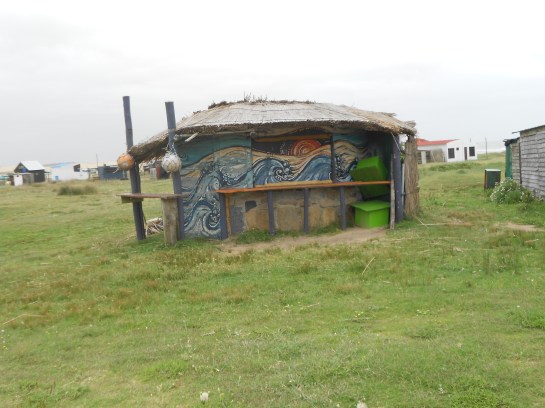
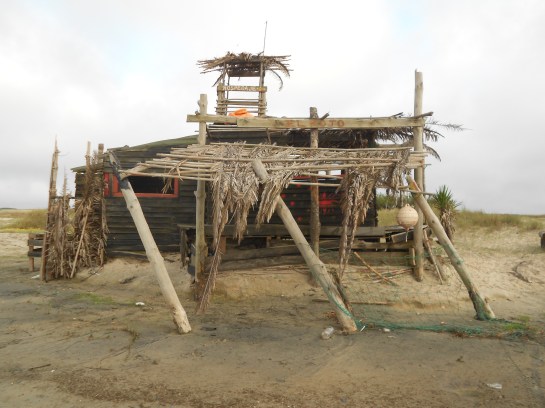
This next one always reminded me of Robinson Crusoe.
We loved our week at Cabo Polonio. It was very sad to say goodbye to the family, and we hope to keep in touch. Uruguay has been great. Now we look forward to new places.
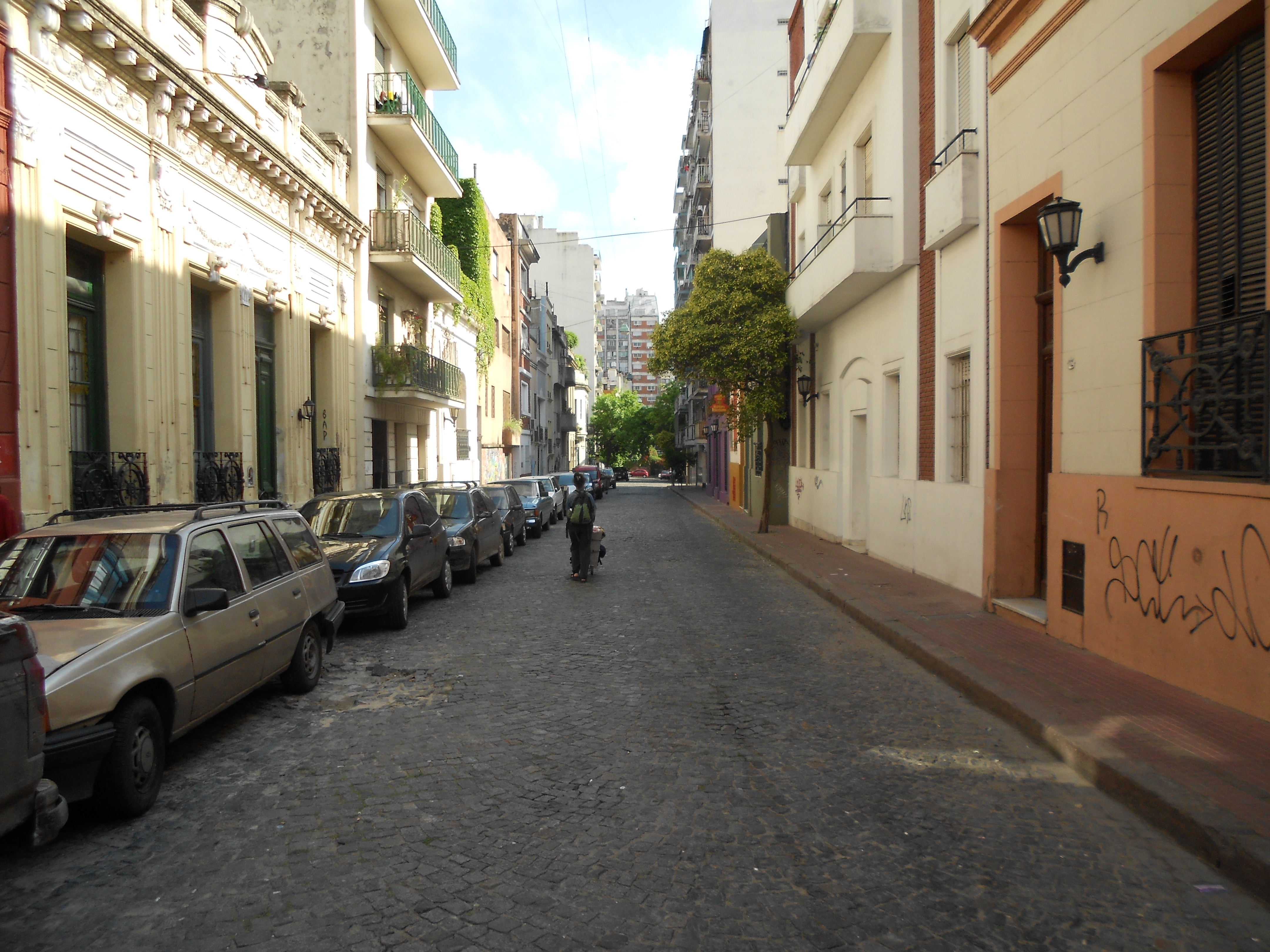
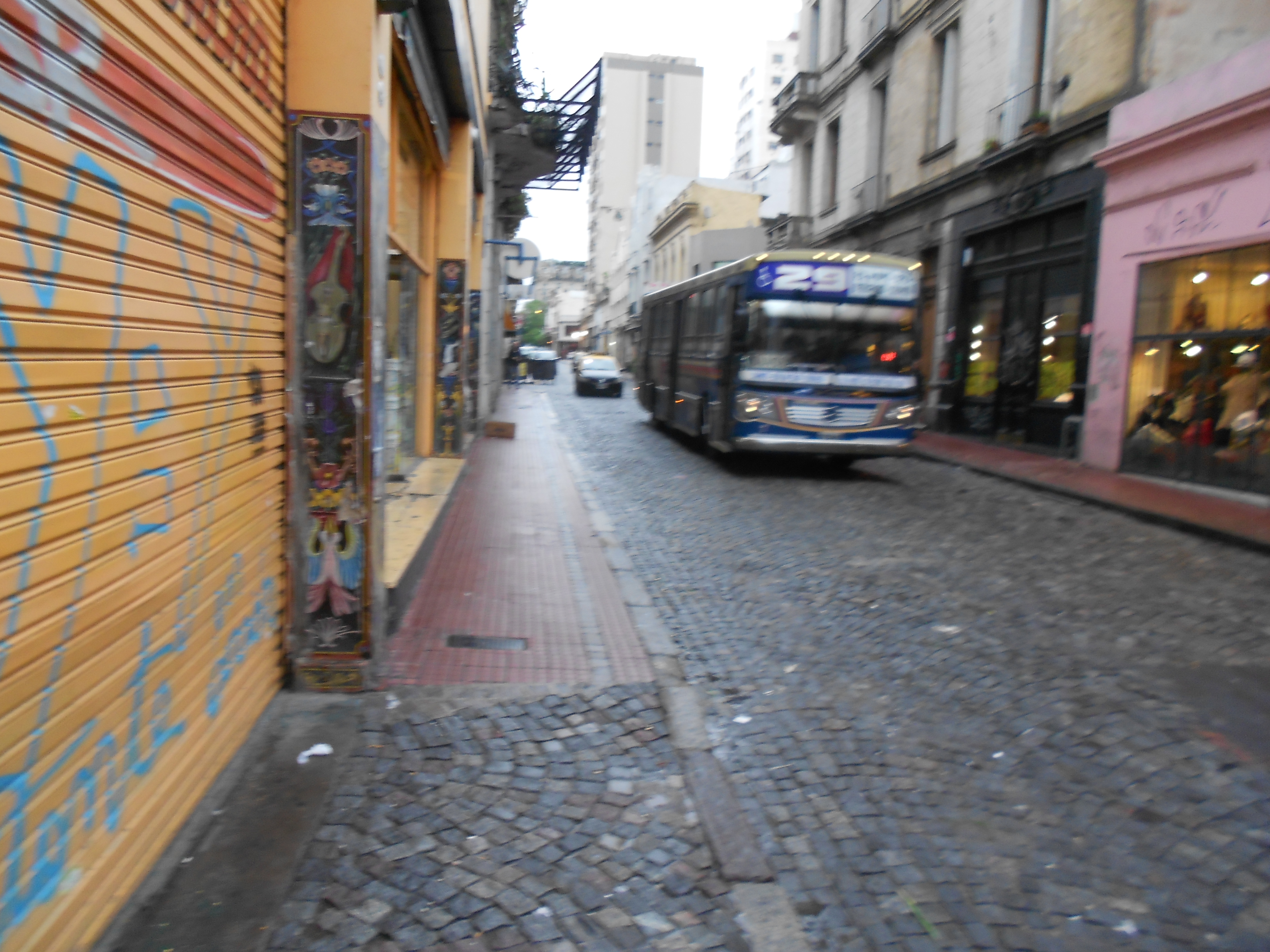
We´ve been living in a little apartment in San Telmo during our stay in Buenos Aires. San Telmo is the oldest neighborhood in the city. It was mostly built in the beginning of the 1800´s, and the streets and many of the buildings are still the same. The streets are narrow cobblestones, and it´s always exciting to see the city buses recklessly barreling down the narrow streets. You learn quickly to step back from the curb.    Above is a photo of our street on a quiet Sunday morning.
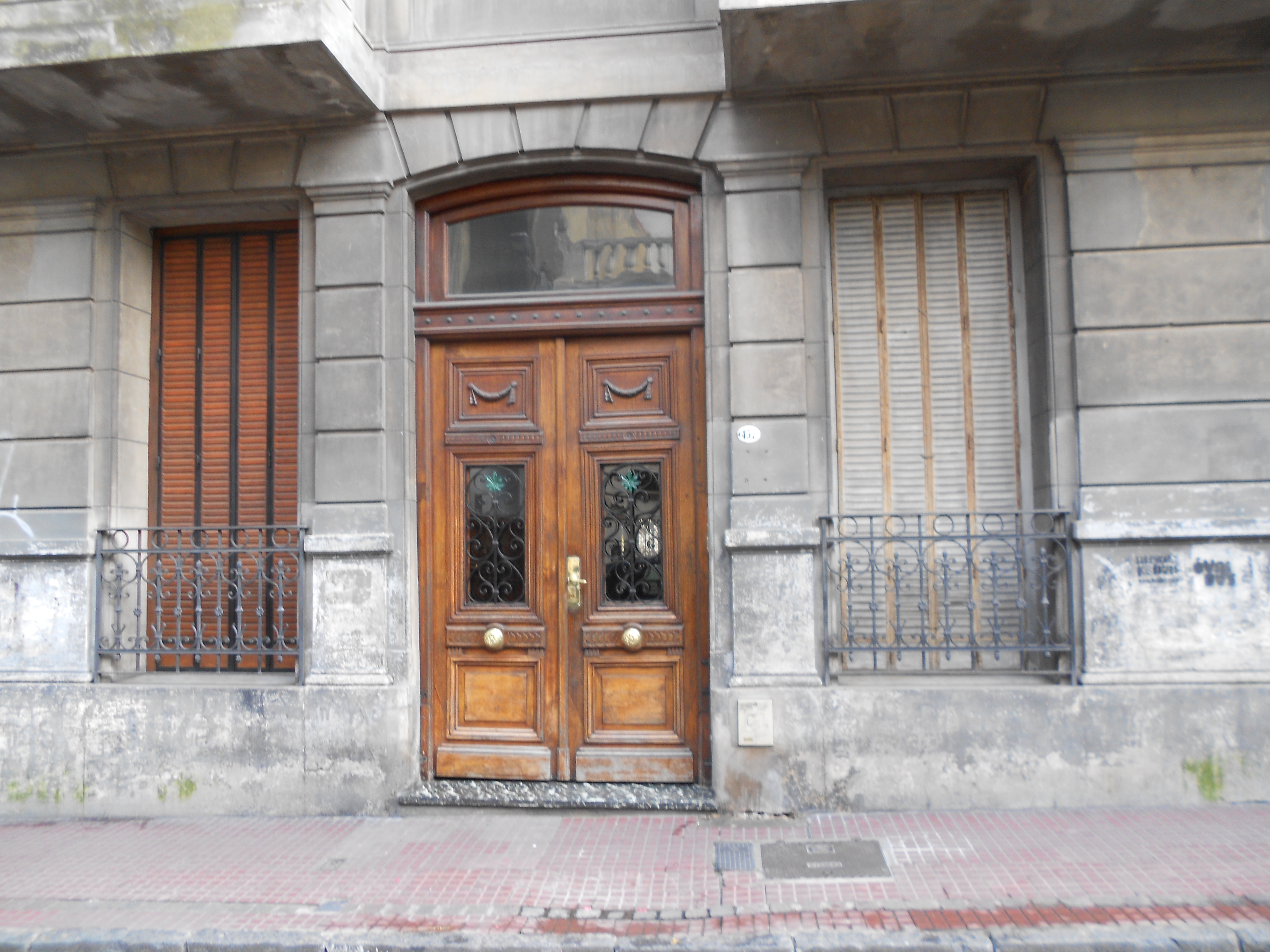
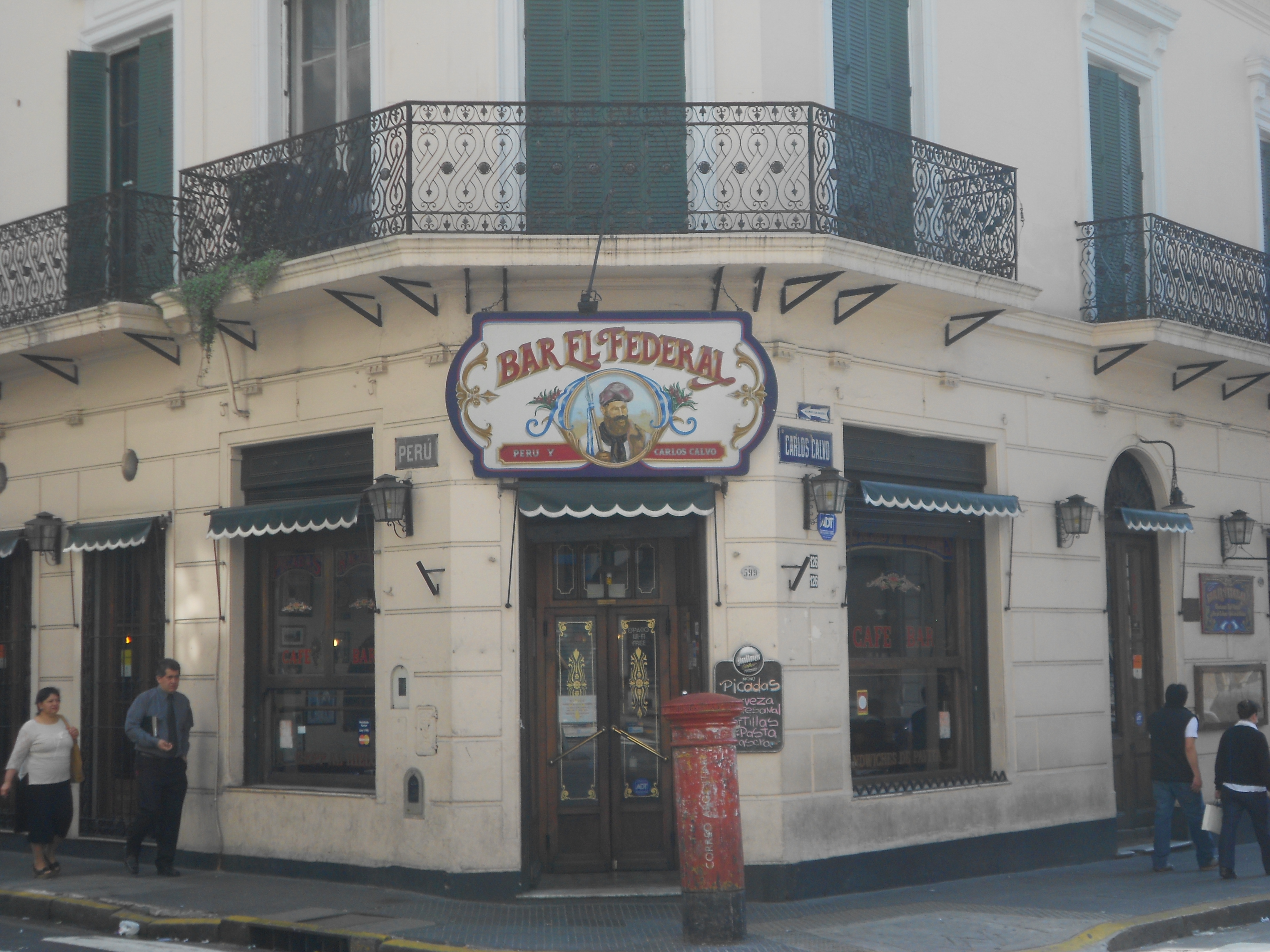
Many of the buildings have ornate, ten-foot high doors on the outside and elaborate marble staircases on the inside. The neighborhood has bars and cafés that are 150 years old, next to modern, hip restaurants and stores geared toward the young, modern, and hip. There are lots of tourists, because the neighborhood is so unique and beautiful, and lots of residents and families, because this is where they´ve always lived.

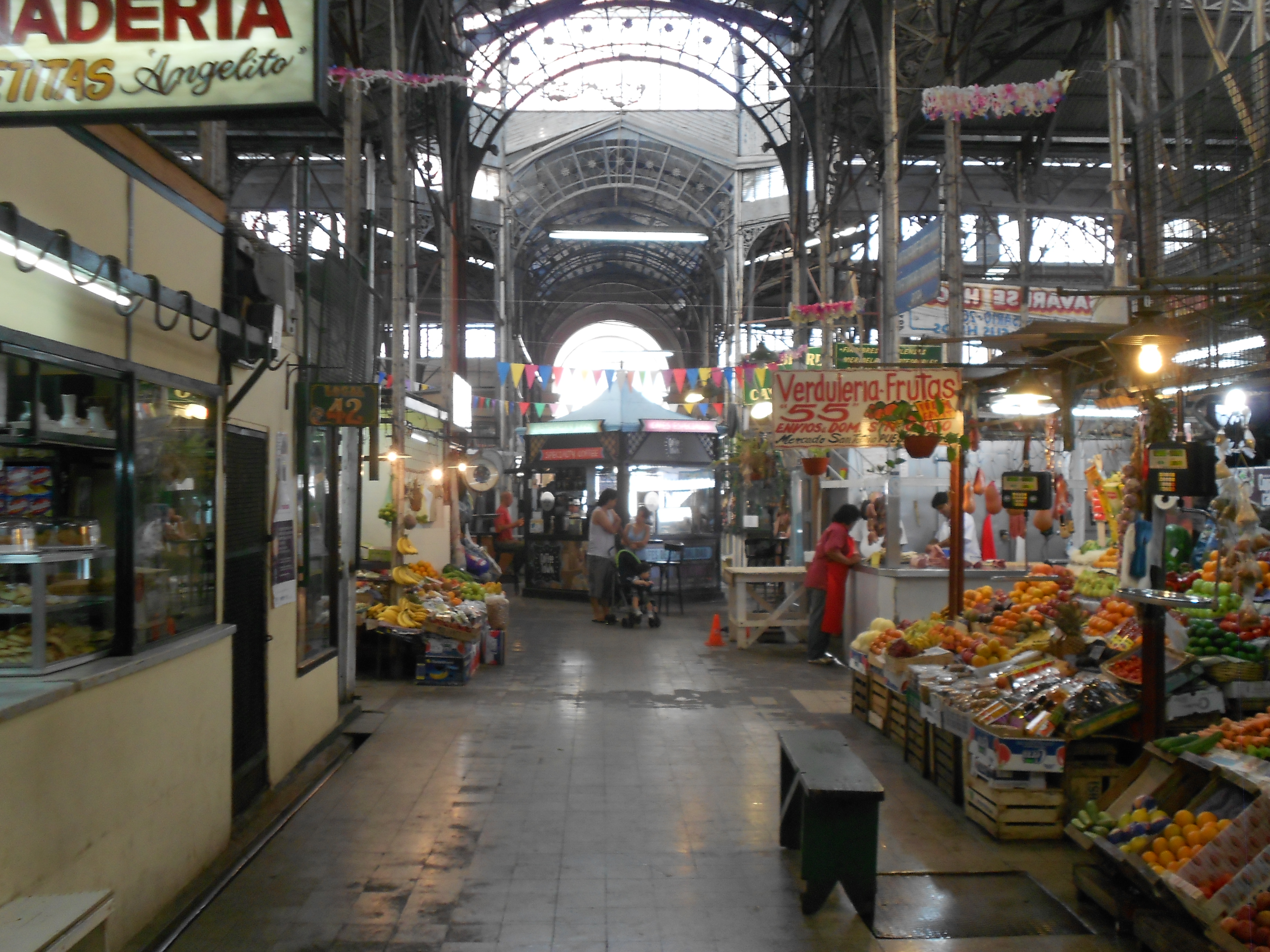
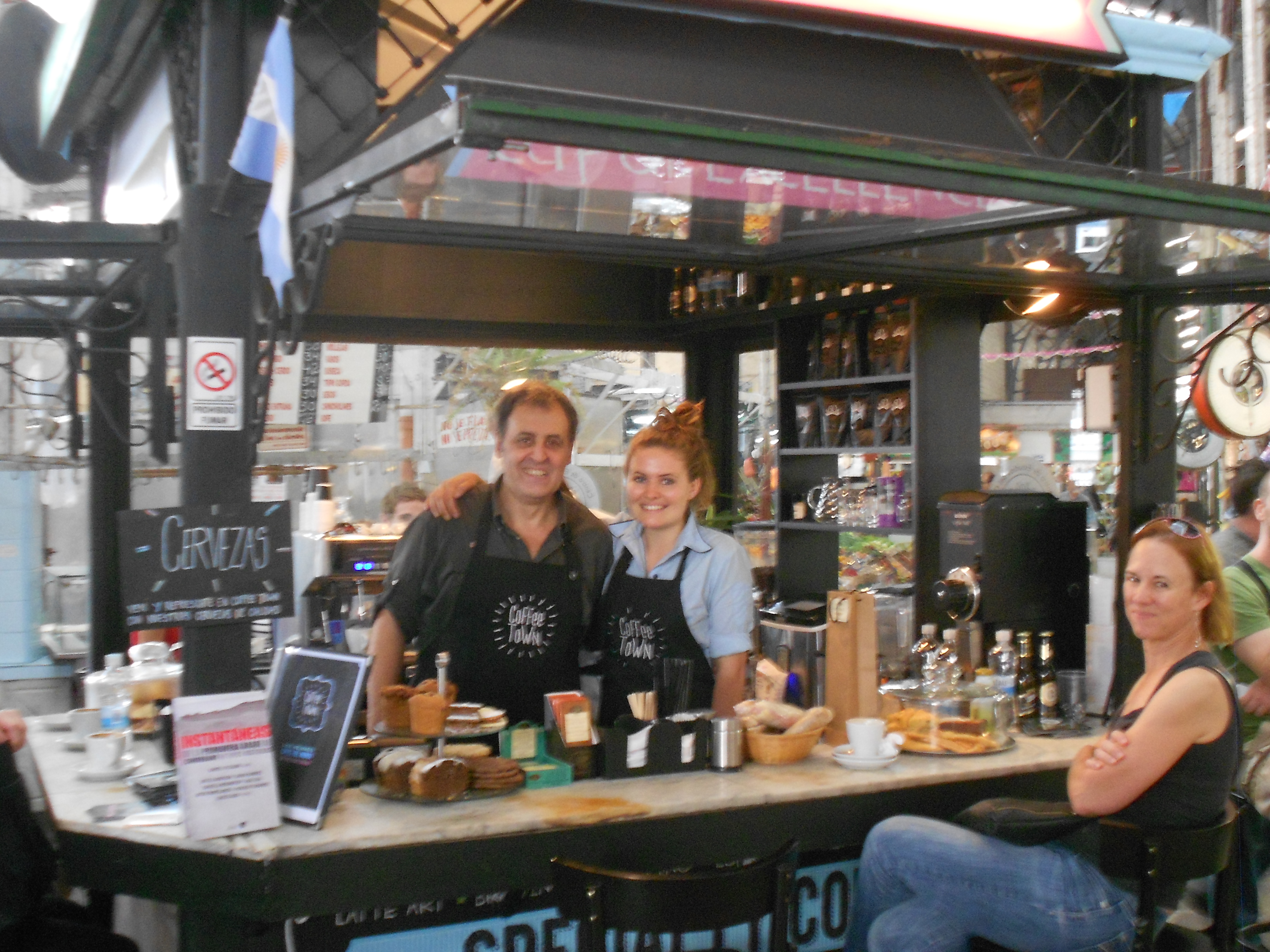
The San Telmo Market is open every day. It has little vegetable stands, butchers, bakers, clothing shops, and a little coffee kiosk, very similar to the ones back in Eugene. “Coffee Town” is owned by José, and is starred in by Hannah, the chica from New Zealand.

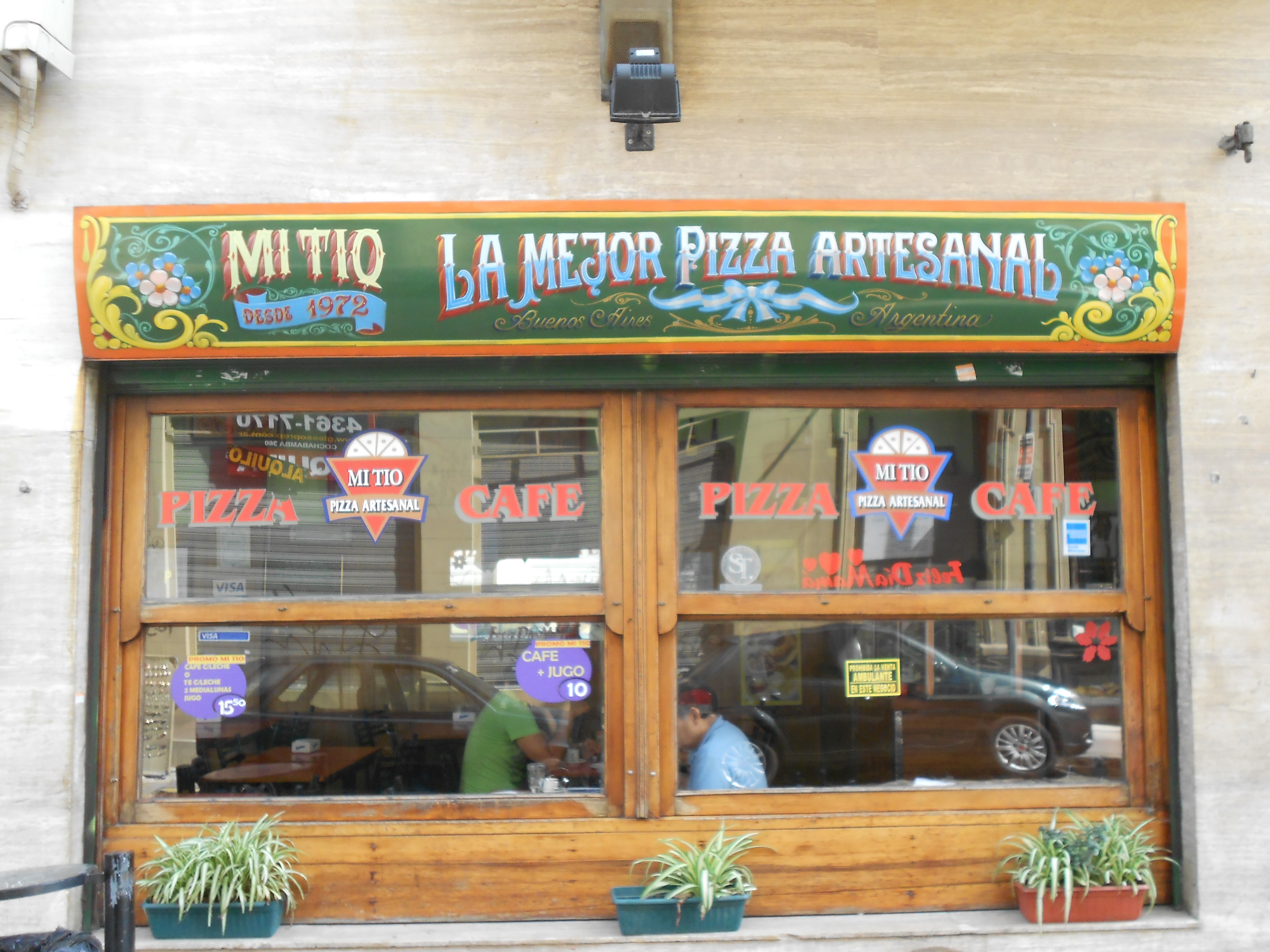
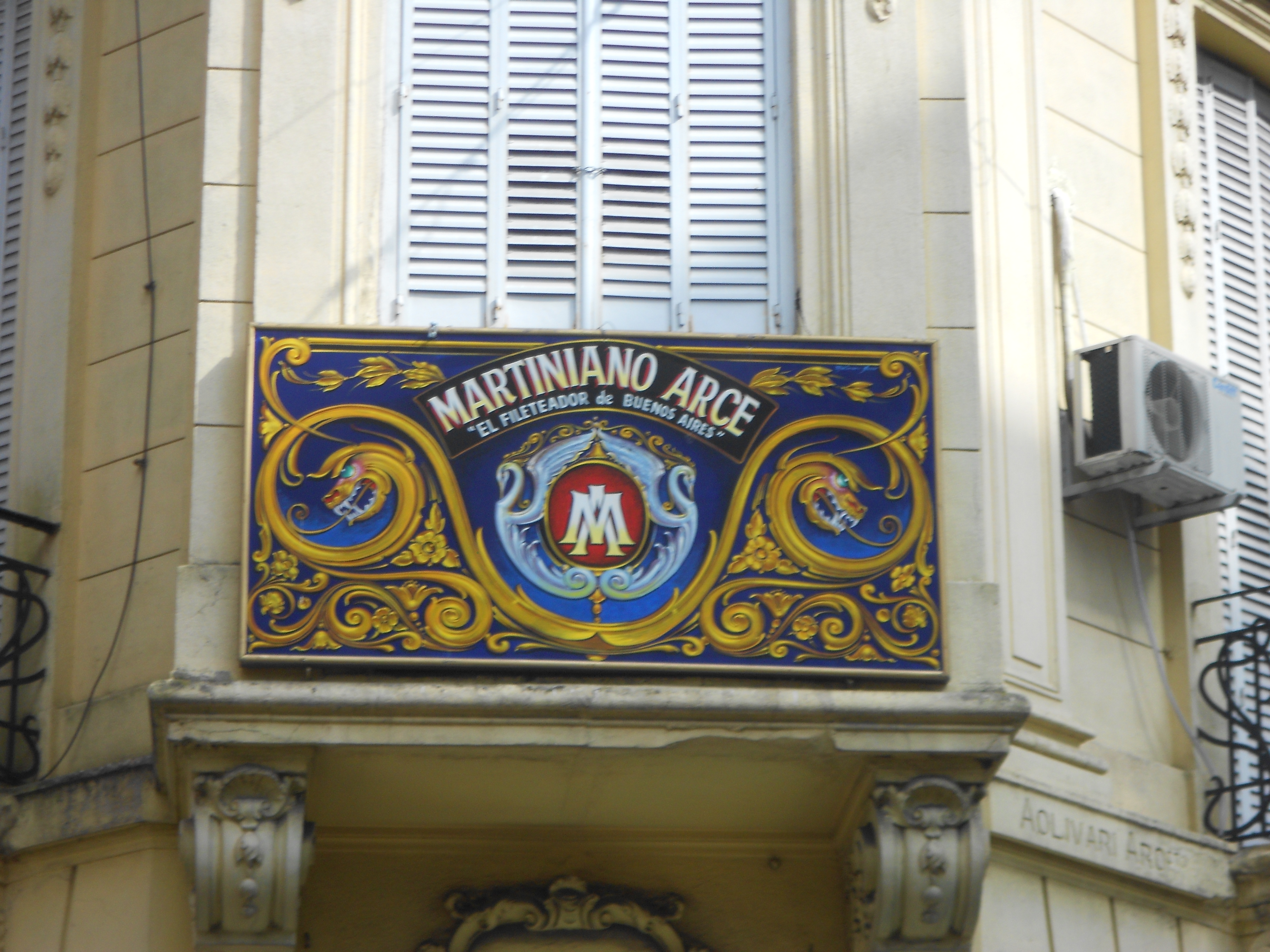
Buenos Aires has had at least three major contributions to world culture: Tango, Filteateado, and Submarinos. So far, Tango is the only one that has become international. Fileteado, (or filete)  and Submarinos are still very “Argentino.” The submarino is a culinary revelation. You can go into almost any café, sit down, and ask for a submarino. Soon, the waiter appears with a glass of hot steaming milk, and a chocolate bar shaped like a submarine. The idea is that you sink the submarine, then you drink a delicious glass of hot chocolate, perfect for a rainy afternoon. To make it a bit better, they also bring you a cookie.

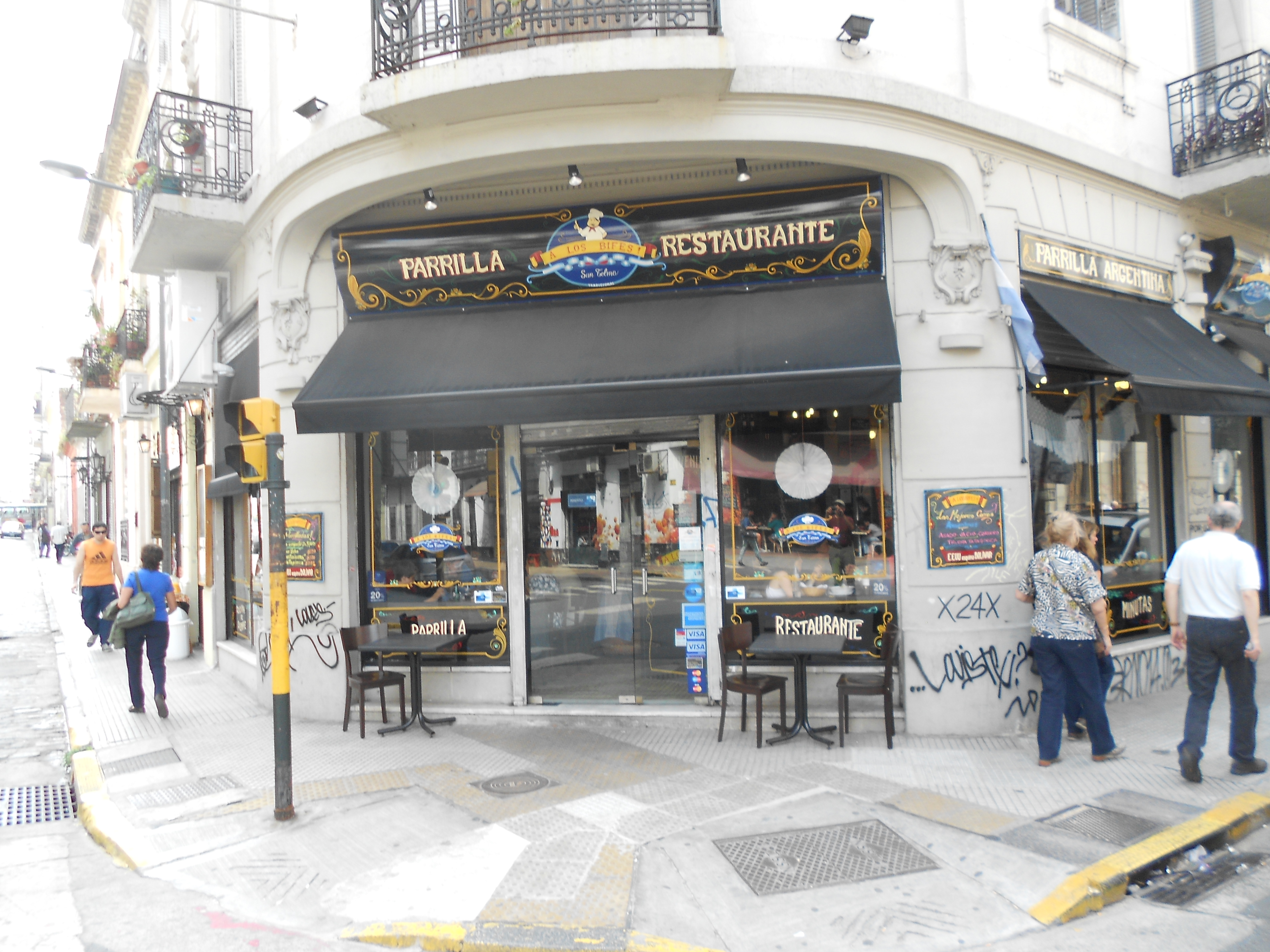
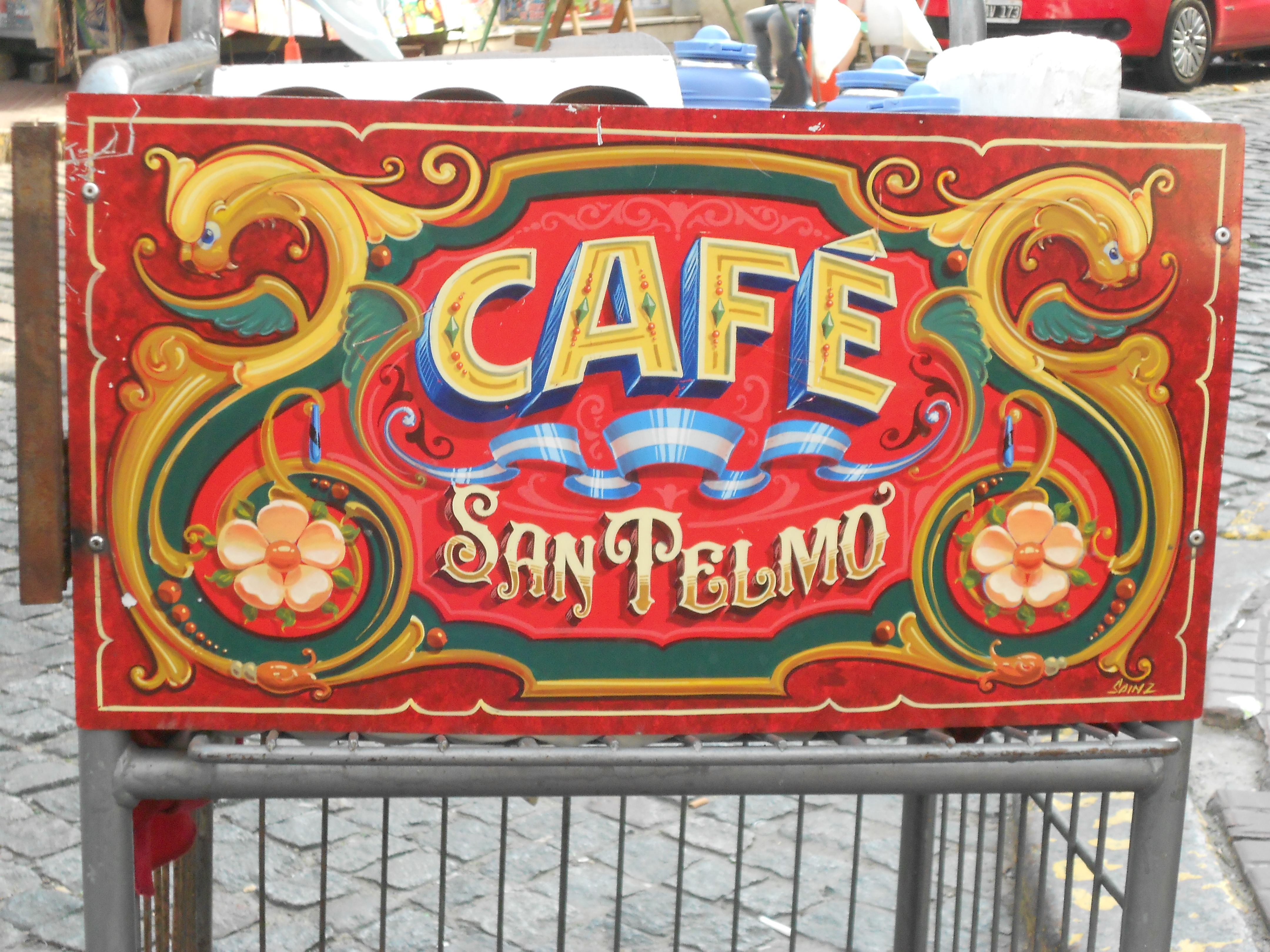
Fileteado is a Buenos Aires art. It is a decorative and cheerful art that now is painted on business signs, doorways, and restaurants.In the past, trucks and delivery wagons were decorated with it, until it was banned during the military dictatorship of the 1970´s. It is fine, detailed work, full of colorful curlicues. You can see it all over San Telmo. There´s a saying that compares Filete to Tango: The tango is a sad feeling that you dance, and filete is a happy feeling that you paint.

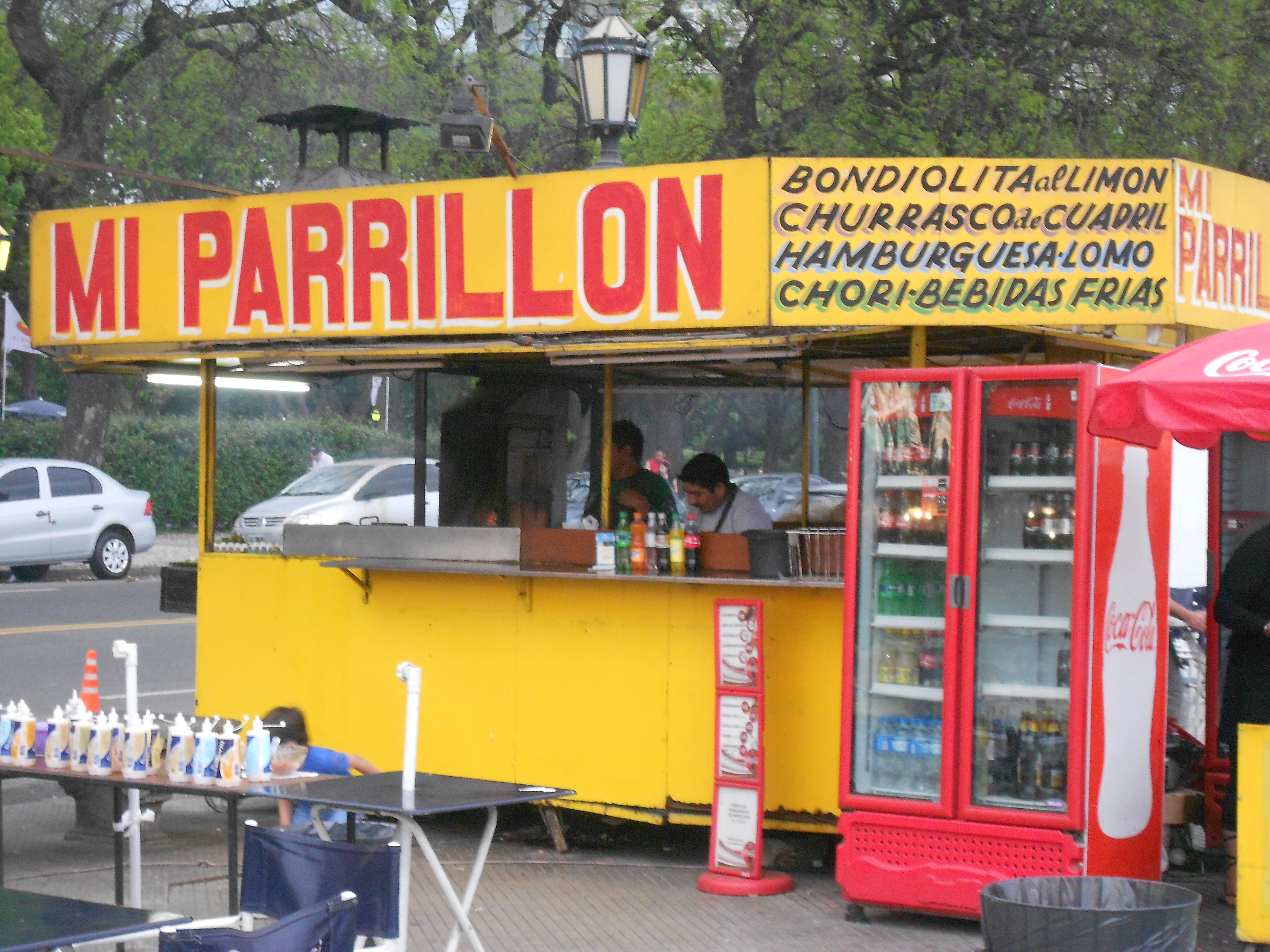
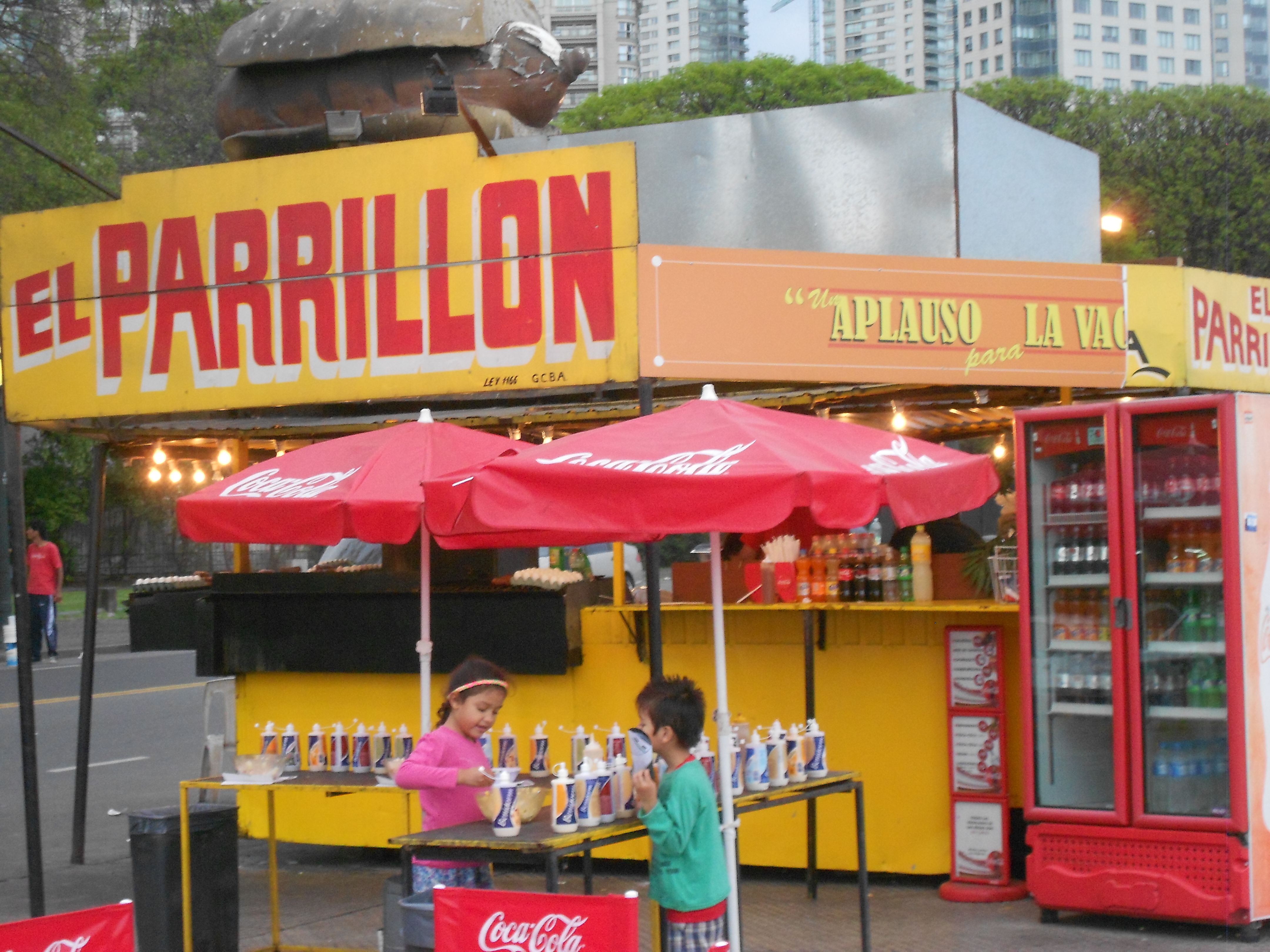
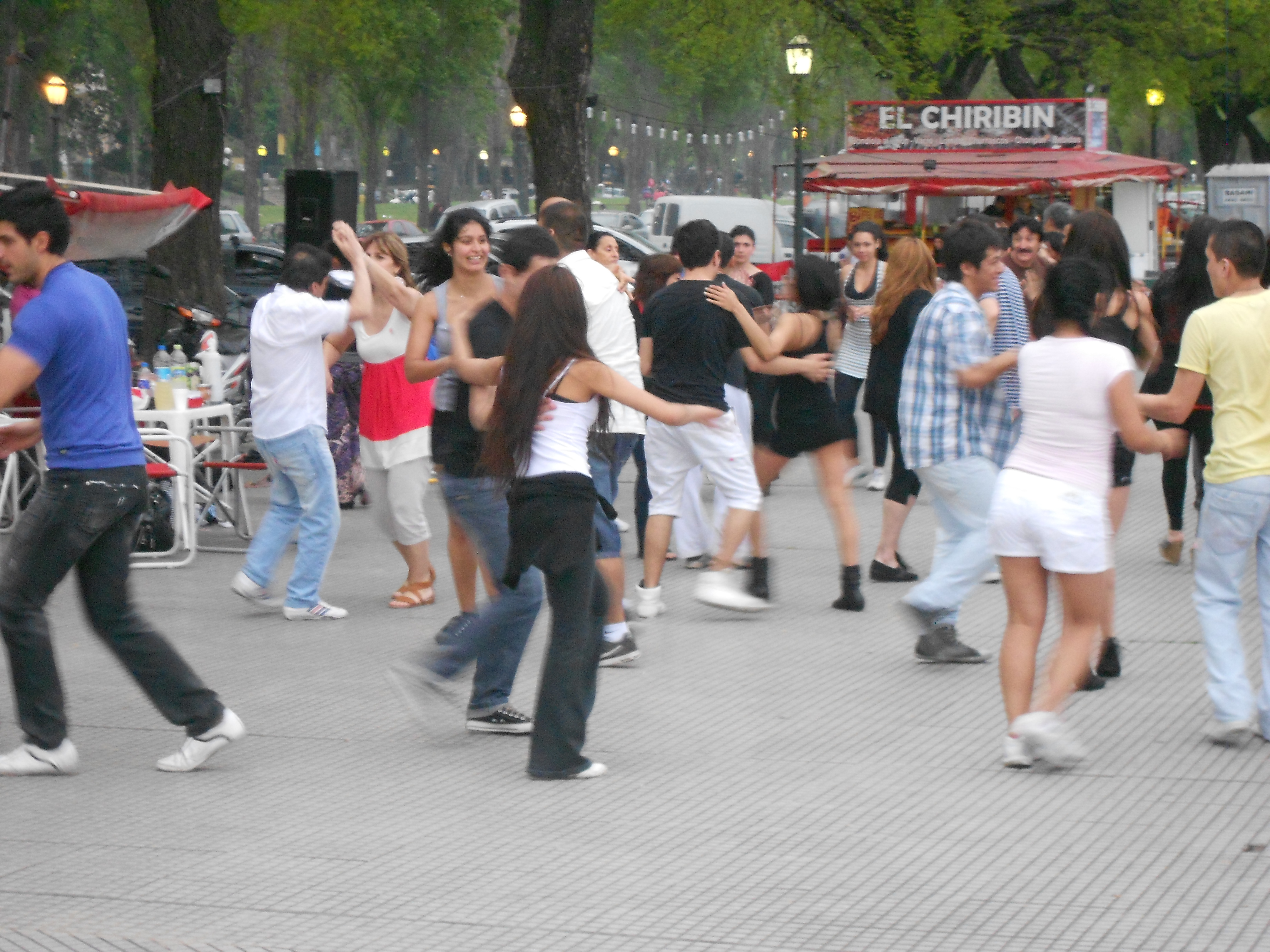
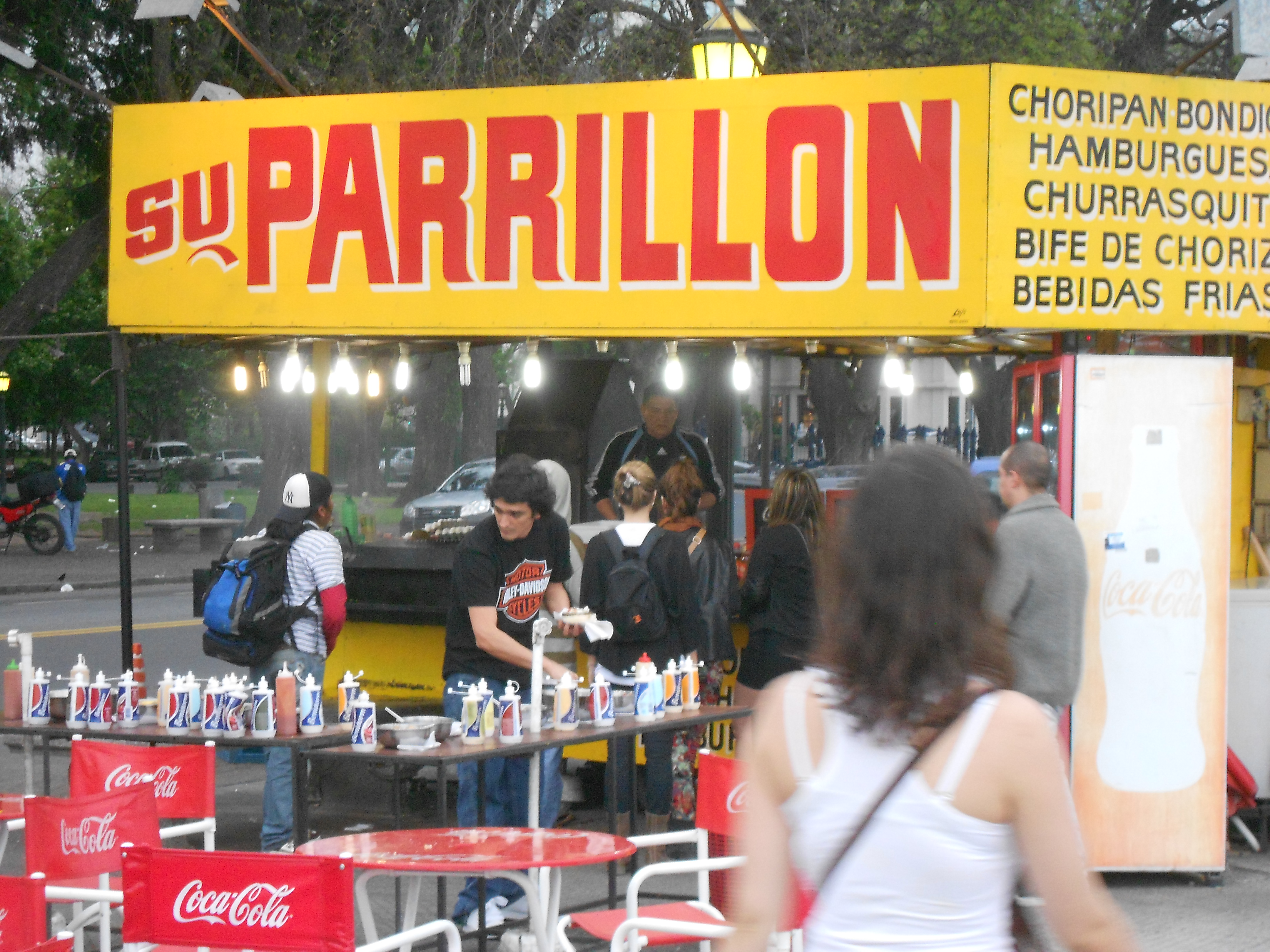
San Telmo has a street fair every Sunday, full of artists and music and crafts.Here is a picture of a small coffee cart that a woman pushes through the fair, selling cups of coffee. We canwalk fifteen minutes from our apartment to arrive at a pedestrian walkway along an open green area that is called the Reserva Ecológica. It´s a haven that borders the Río de la Plata. It is pleasant to walk along the wide walkway. On the weekends, it’s full of people, eating at the parillas and dancing to the music from the boomboxes. After “your parillon” and “my parrillon” here is “the parillon.” This next one also has a partially covered sign, saying, “Let’s have a hand for the cows.”Our apartment has been great. It has everything that we need, namely a kitchen, a place to wash clothes, and a great location.  As we prepare to leave Buenos Aires, we will think of all the people we’ve met, the subway rides, the vibrant music and the late nights, two attempted and unsuccessful pickpocket attempts in the same day, (You can’t take it personally. Details upon request) and our schedule working at the English school and taking Spanish classes, and we´ll miss our apartment. BA has treated us really well. ¡Mi Buenos Aires Querido!  Soon, we’ll be heading for the Uruguayan beaches near the Brazil border, then down toward Patagonia.

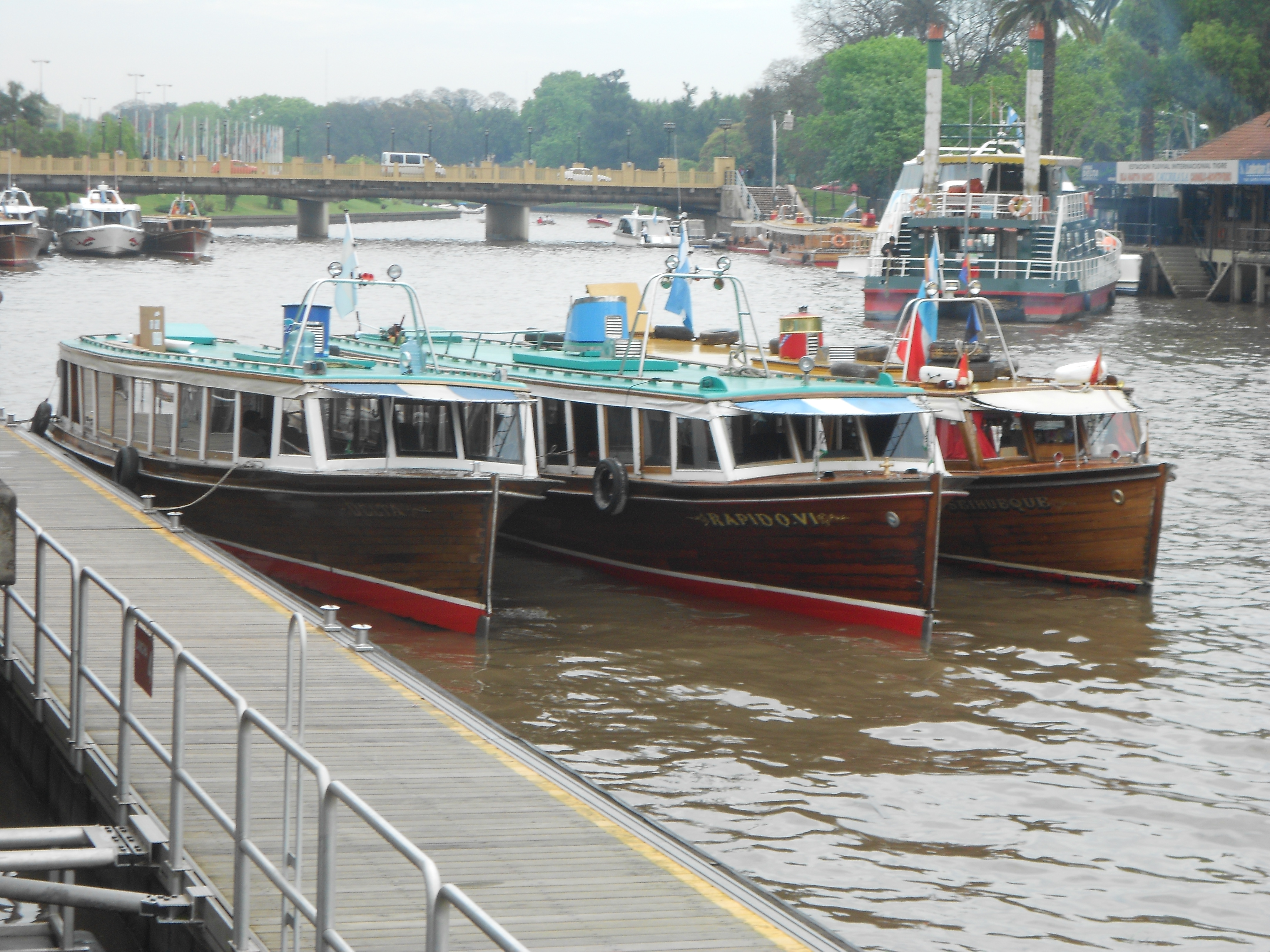
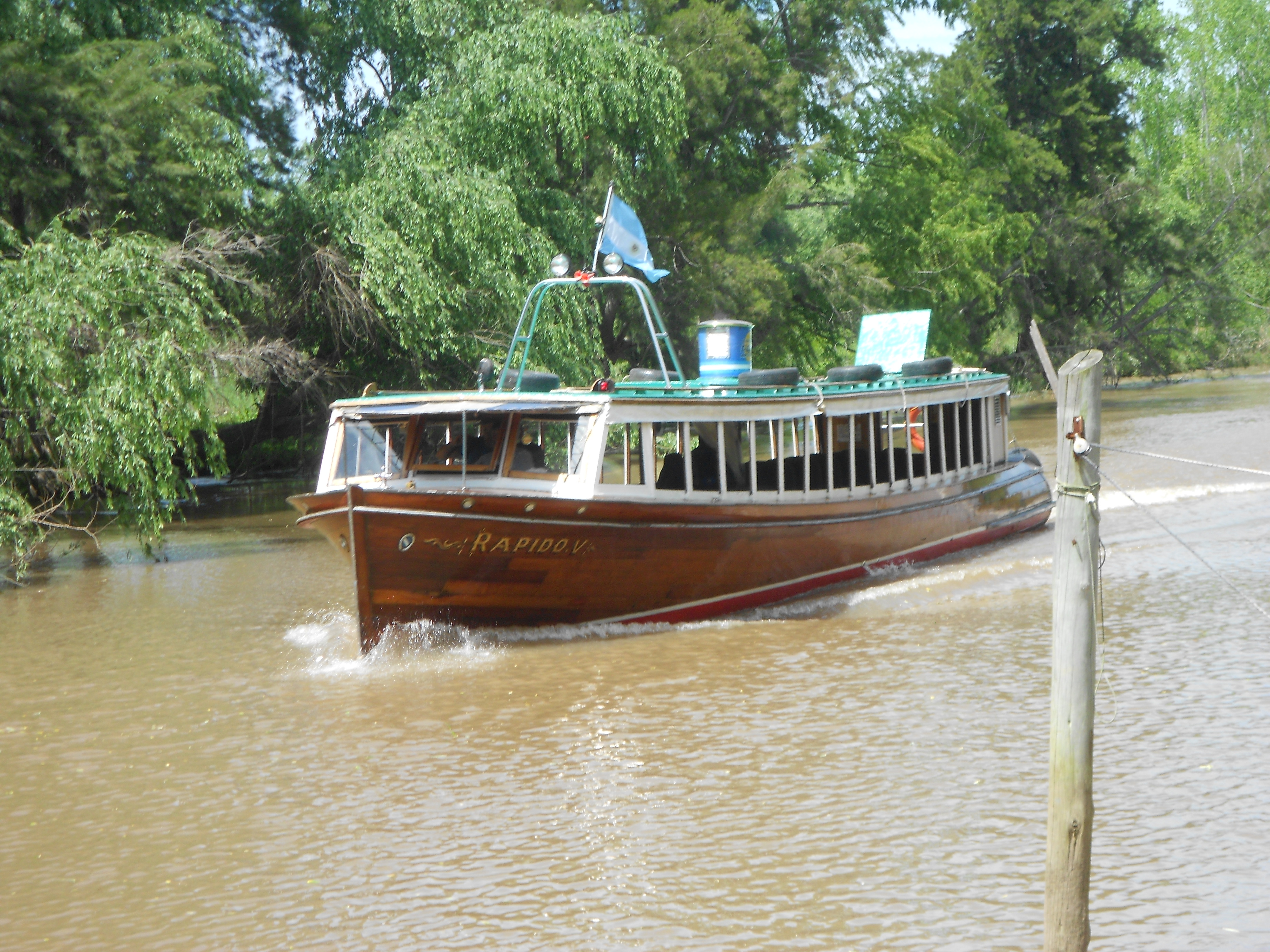
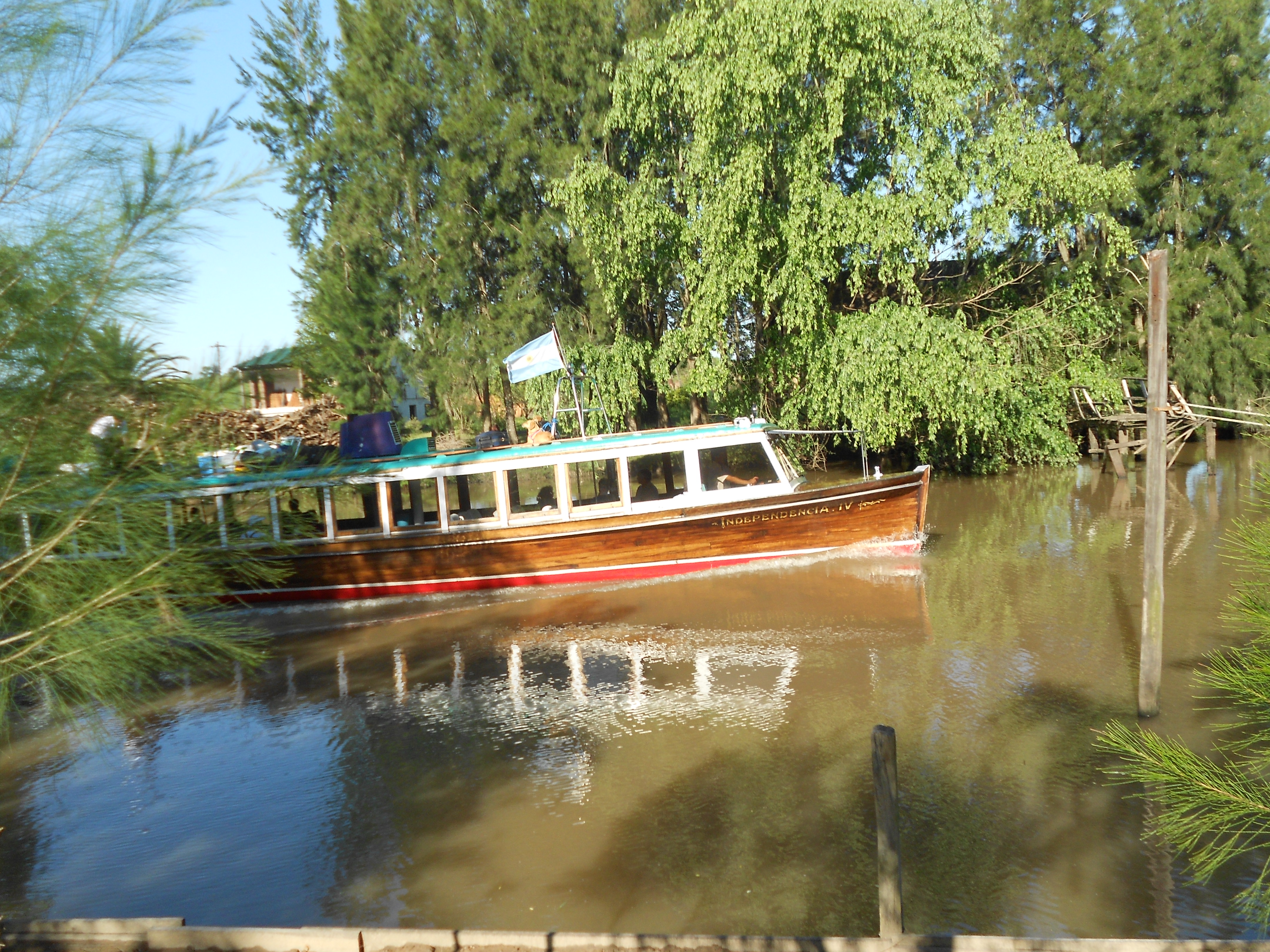
We spent last weekend out on the Delta, with Susana and Julio. They have a home on the Parana Delta, which is outside of the town of Tigre, about an hour’s train ride from Buenos Aires. The delta is a huge system of water and islands, formed as the Río  Paraná fans out and interweaves before joining the Río de la Plata. There are thousands of little islands, and thousands of people living on the delta, and they are reached only by boat. The “lanchas” leave and return to Tigre, which is the home base for all the island people.

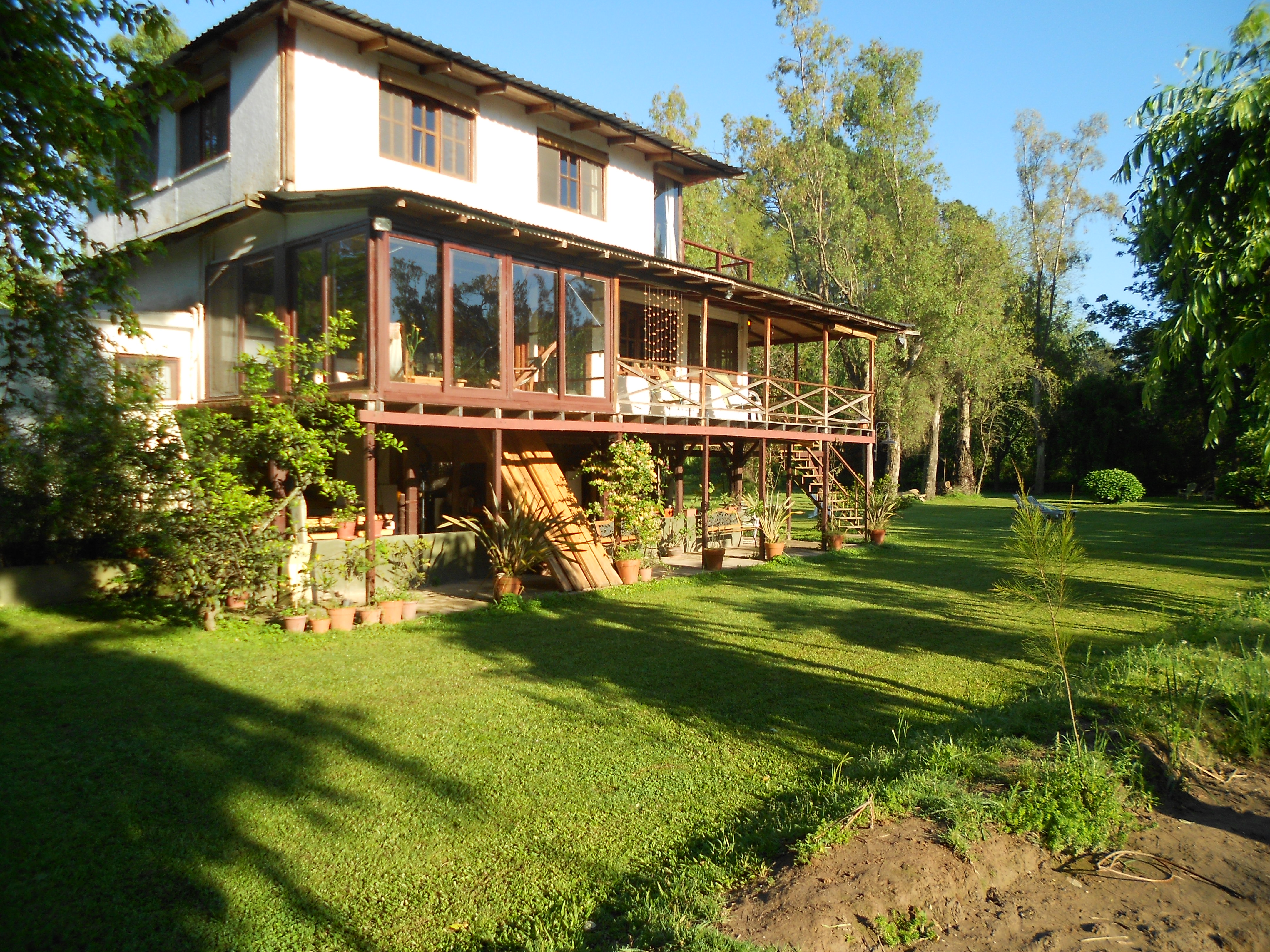
Susana and Julio built their own home on a piece of land that they bought after the economic crisis of 2001. Some of their friends went to Brazil. Some of them went to Spain. They decided that this would be a good time to try to achieve their dream. A time of crisis can also be one of opportunity, and they slowly started to build their home. Julio said that when you don’t have anything to lose, it’s easier to take a risk.

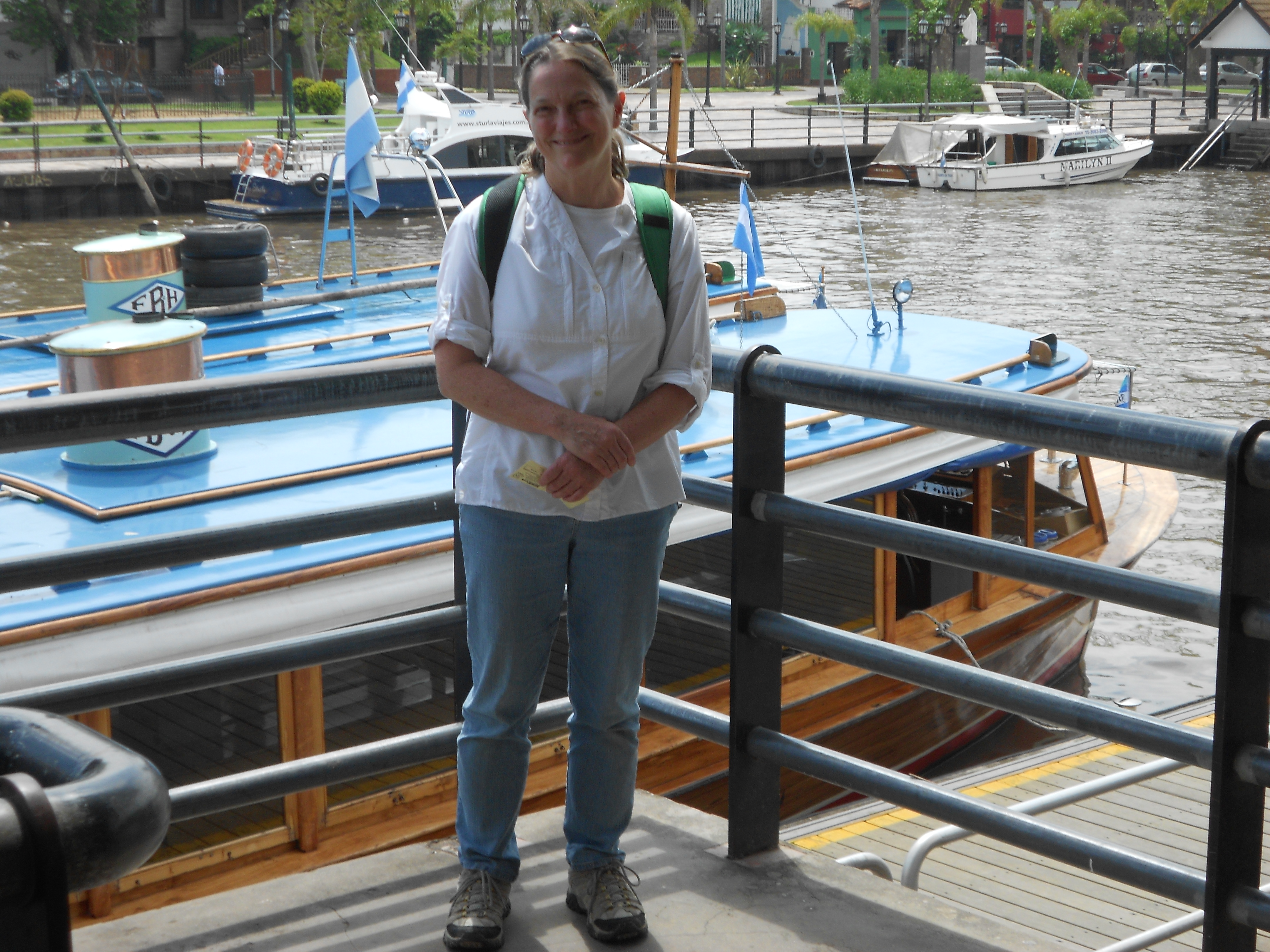
The boats are the life of the delta.They depart from Tigre every few hours, and different boats follow different routes. Some travel up this river, some travel up that river. Susana and Julio live on the Caraguata River. We bought our tickets, then it was a little confusing knowing which boat to get on. There were about four boats being loaded with people and gear. We told the boatman (el lanchero) that we were going to Caraguata, and he showed us which boat to get on.We got on, found a seat and sat down, and soon we were on our way. There was room for about thirty people on the boat, and there were about twenty. There were banks of seats along the windows, and rows of seats facing forward. We sat along the window, and we could reach out and touch the water, the boat was so low on the water.

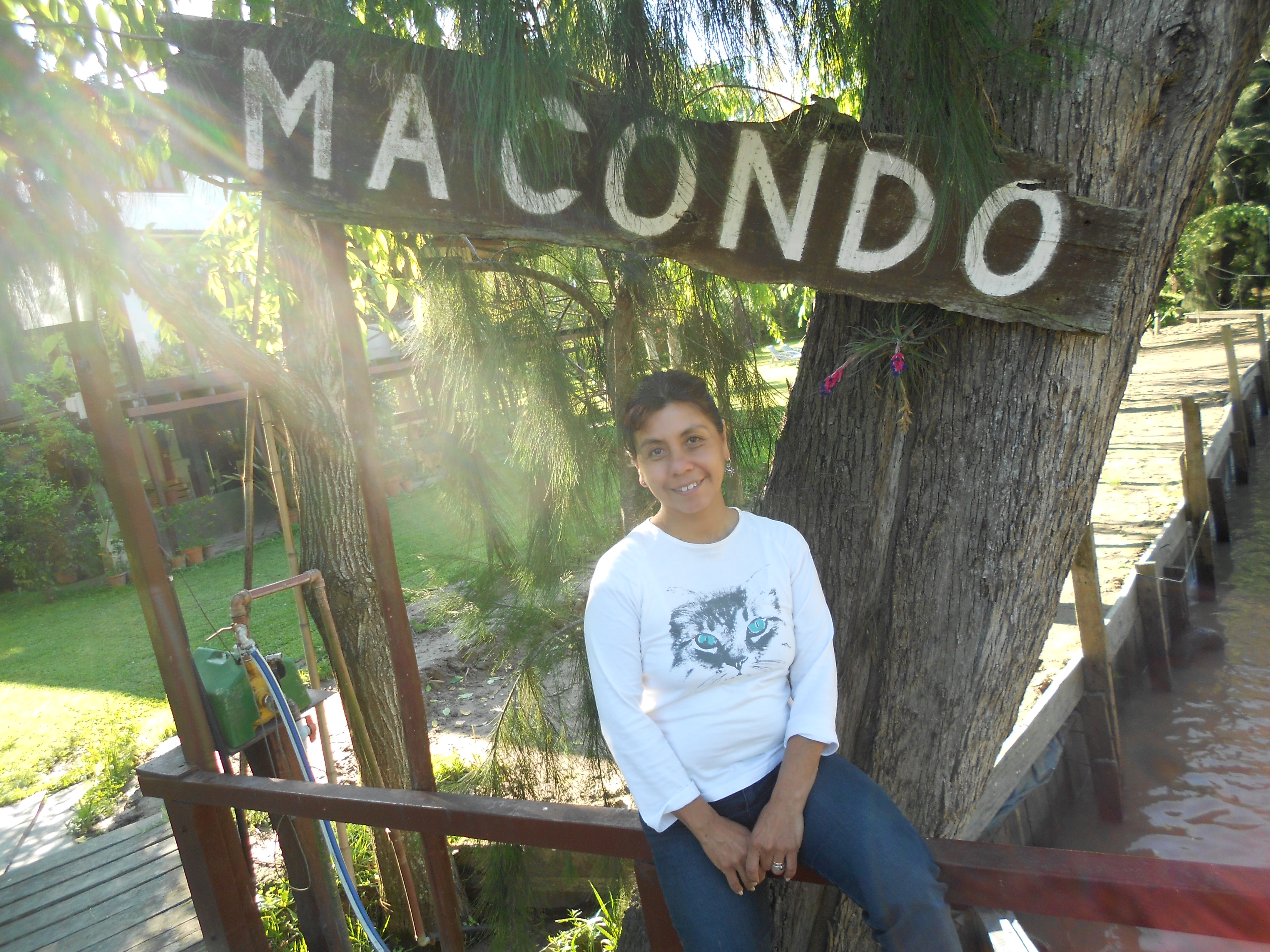
We motored away from Tigre, and soon veered off at a fork. Now we were on the Río Caraguata. I went up and asked the lanchero if he could notify us when we reached our destination, the island of Macondo. Julio named his little spot Macondo, because he had read One Hundred Years of Solitude, by Gabriel García Marquez, when Julio was a hippie selling bracelets on the beaches of Cartagena, Colombia in the 70’s. The water in the delta is cappuccino brown, but it is clean. It is full of minerals from the inland jungle. The Paraná is South America’s second longest river, after of course the Amazon. By the time it reaches the delta, it´s already gone over 2000 miles. It´s the only delta in the world that empties into fresh water, el río de la plata. The water system is huge, and each river is only a small part of it.

As we made our way up the river, we passed hundreds of docks. Usually we just kept going,but every now and then the boat would pull up to one, go into reverse and get right next to the dock, and somebody would jump off the boat, onto the dock, and they would be home. I wondered how the driver knew which docks to stop at. He didn’t have a list. Nobody called out to tell him. He just stopped, and somebody was home. I asked Julio and Susana about it, and they smiled and said that the driver knows who’s on board, and he knows where they live. Every home has its own name, and there are hundred and hundred of homes, each with a name and each with a dock.Pretty personal service.

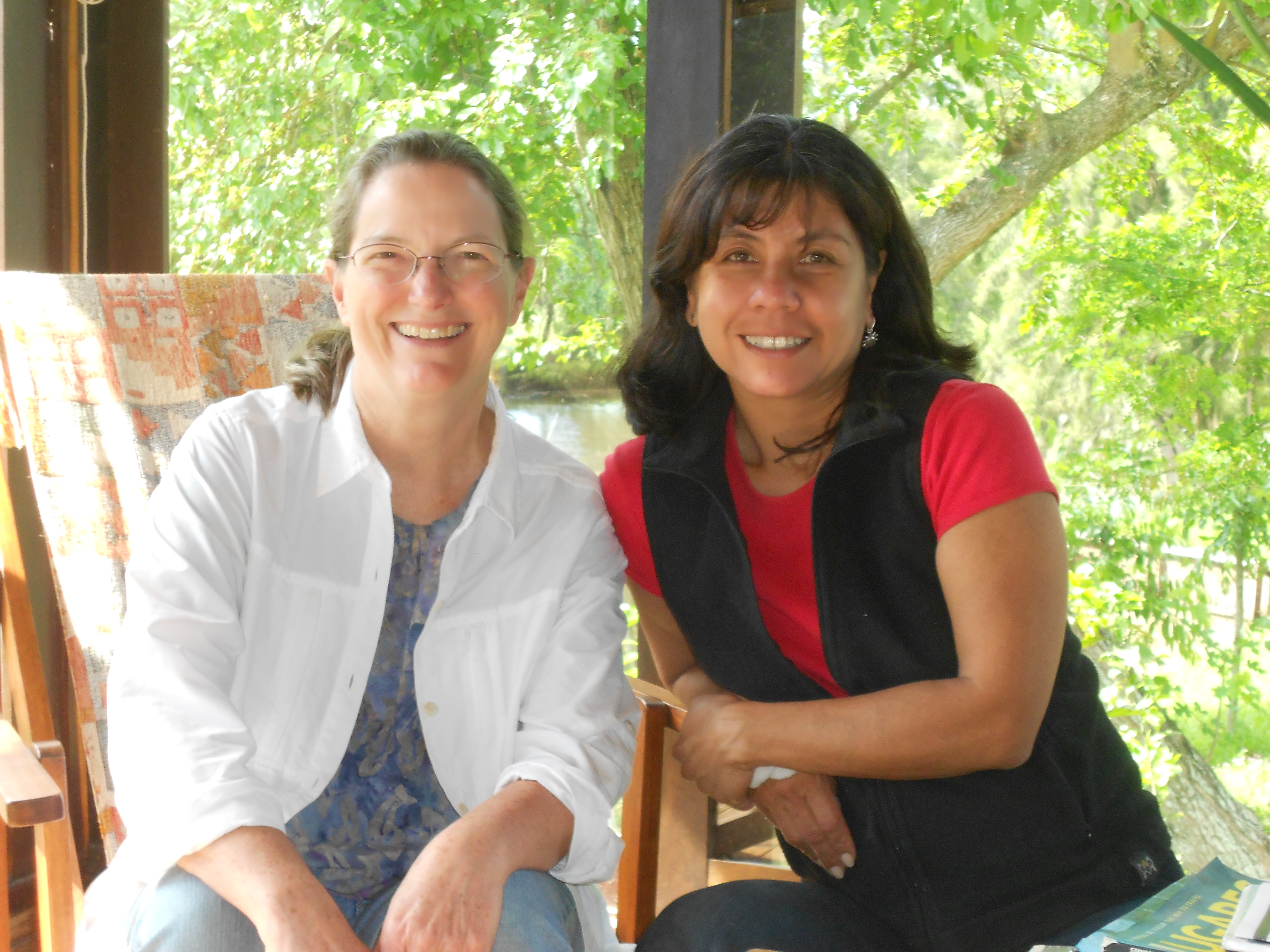
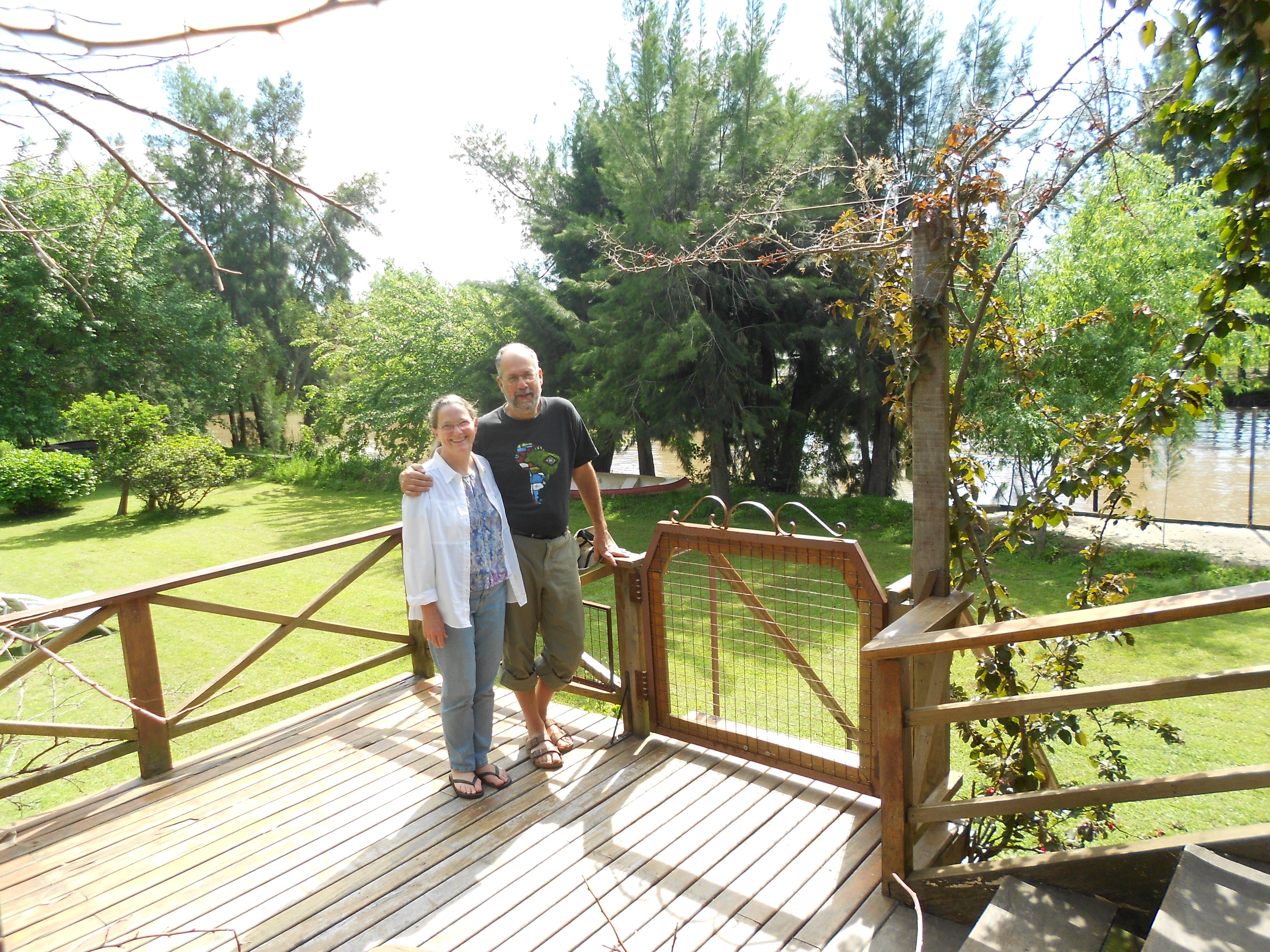
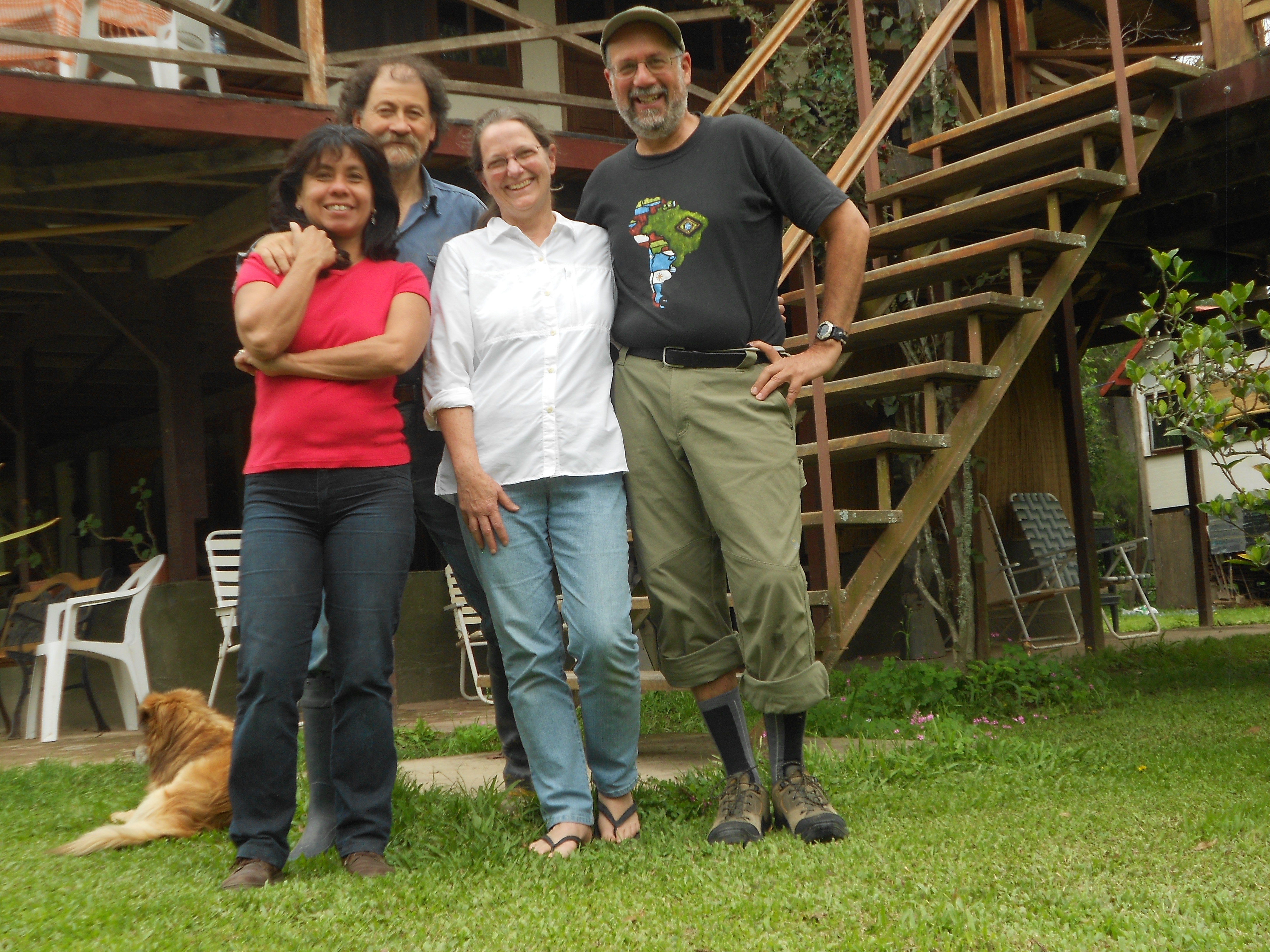
Susana and Julio greeted us at the dock and welcomed us to their beautiful home. We looked at their photos of when they were building the house. It took them five years, bit by bit. All the building material had to come in by boat. When they were building it, there was no electricity. Julio did almost all the work by himself. Now they have a little piece of heaven, and they are happy as can be. They take in guests during the summer to supplement their income. (Susana is a professor) They are able to share a little bit of the Delta experience.

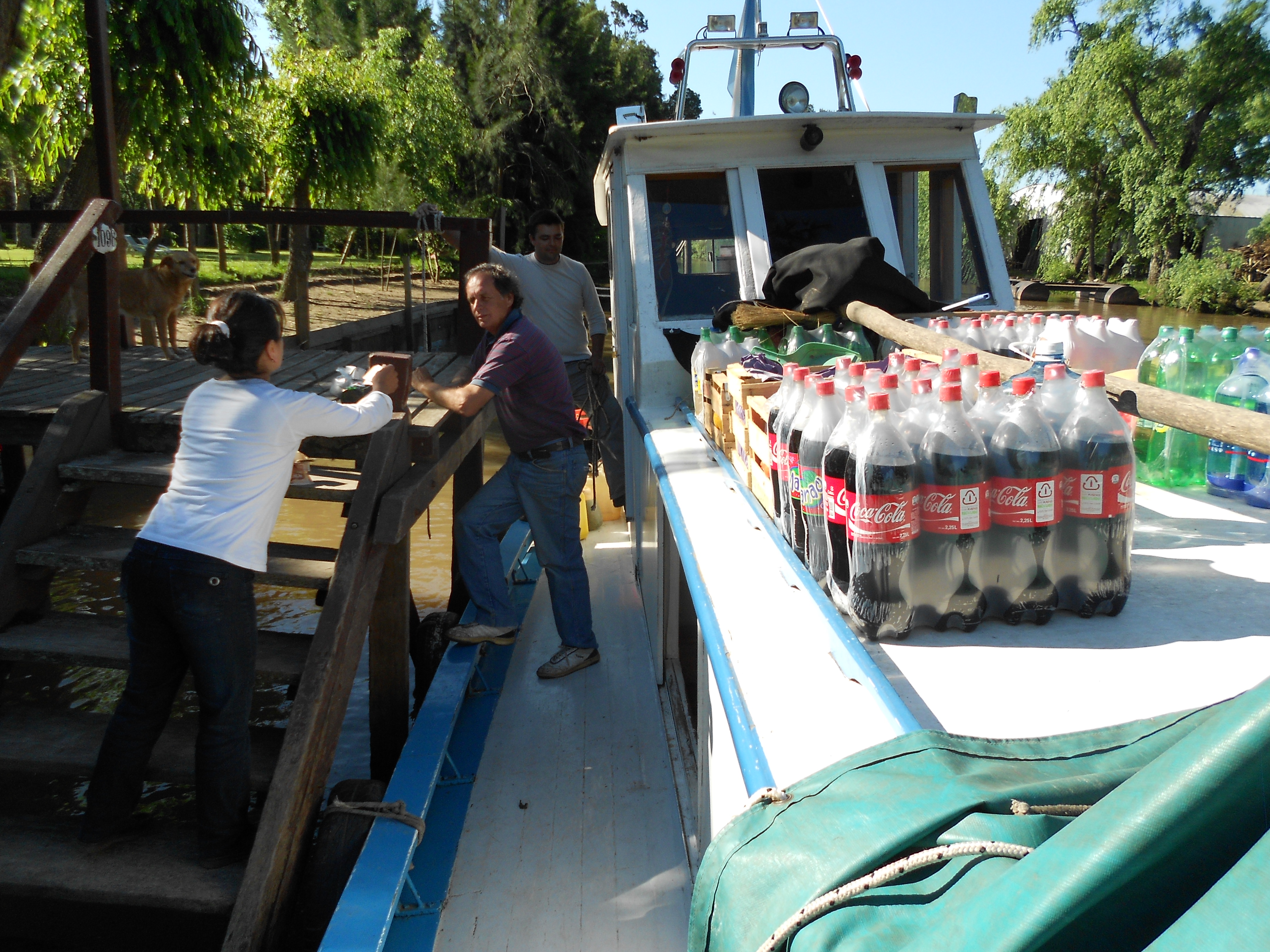
Soon, we heard a horn from out on the river. The “lancha almacen” was coming. This is the mobile store. It passes by, usually once a day, and it sells things that the people might need. A lot of coca-cola and beer, and also propane tanks, bottled water, canned goods, eggs and some produce. All you have to do is run down to the dock and wave to them. They’ll stop and bring you what you want. Susana was happy to see it coming. We spent a peaceful afternoon sitting on the dock and watching the river. Boats would pass, coming and going. Lots of parrots.We shared a pizza for dinner with our hosts, and spent a few hours talking. Lovely evening in the candlelight. Susana served us an elegant breakfast in the morning, and we relaxed and talked and lounged away a few hours until our boat came to take us back to Tigre.

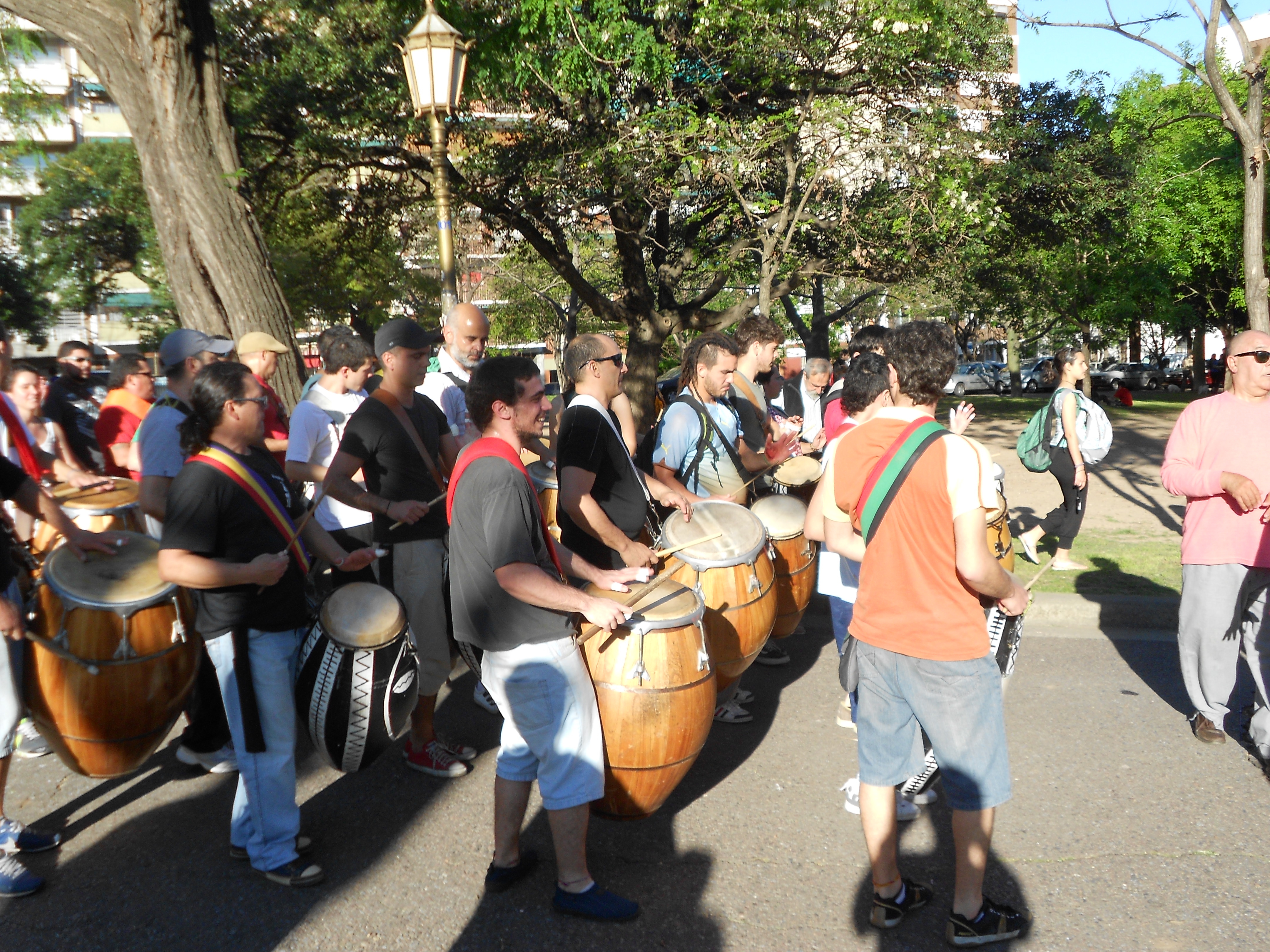
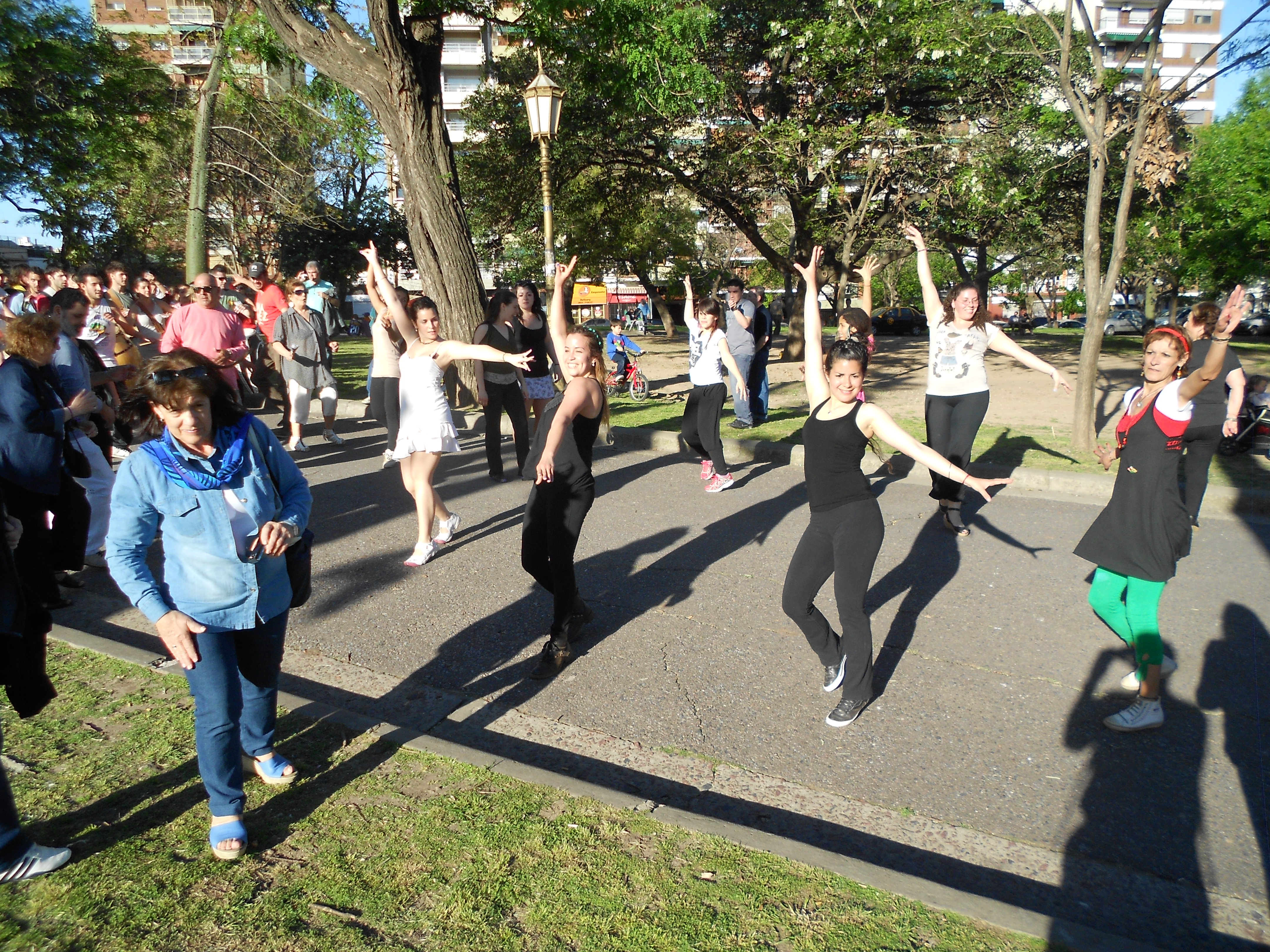
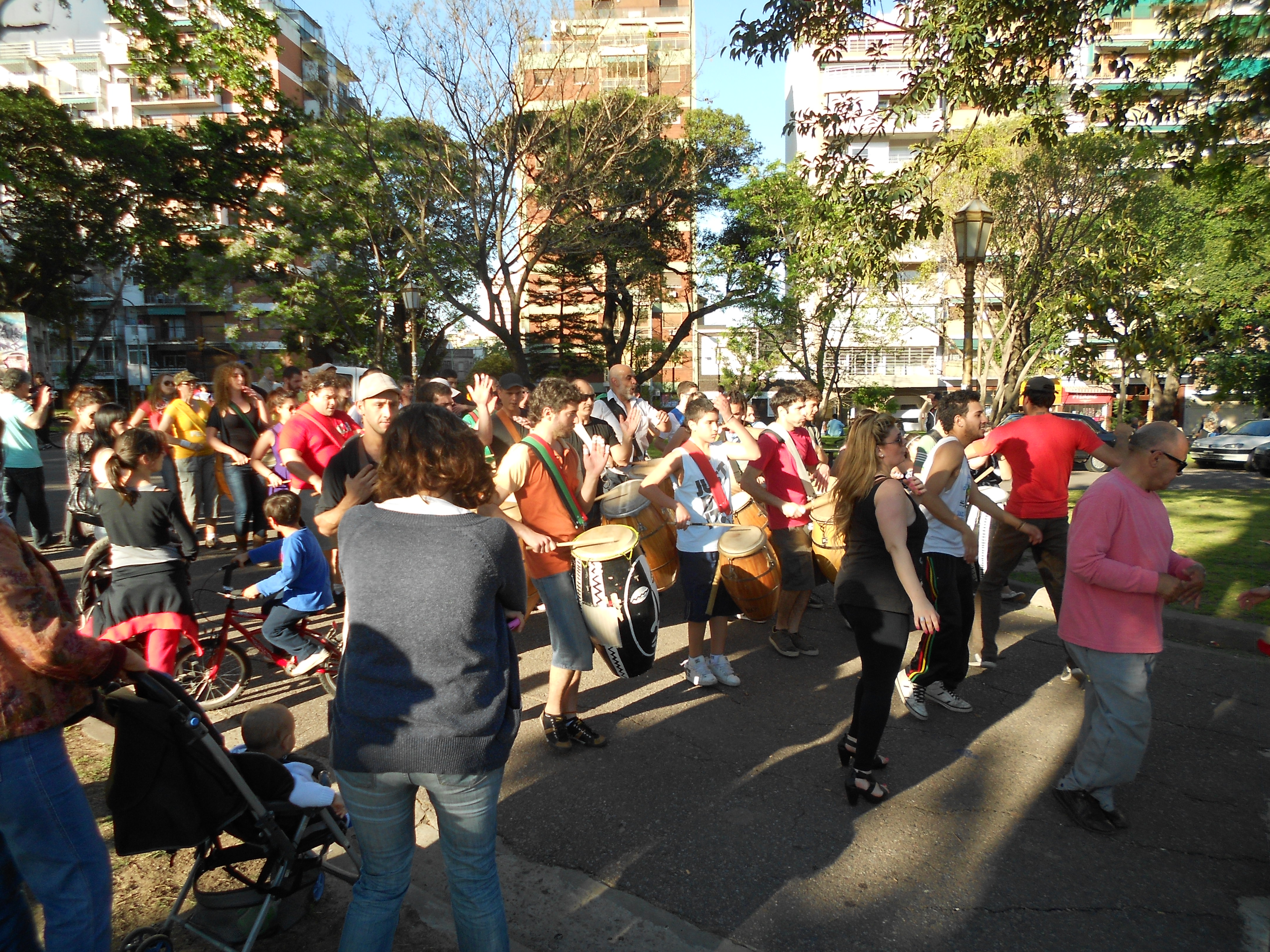
Last Saturday, we went to the park in search of trees, peace, and quiet. We went to Chacabuco Park, which is  pretty big park, away from downtown, right at the Emilio Mitre subway stop. There are some beautiful parks in and near Palermo, which is a beautiful (and touristy) part of Buenos Aires, and there are some parks scattered here and there throughout the city. Parque Chacabuco is in a residential area, and it’s a pretty popular spot for nearby Portenos to come for a picnic, or to just sit on the benches. We had the afternoon free on Saturday, so we went over there. And yes, it’s a beautiful park, and yes, on most days, it’s a good destination for some green tranquillity, but not on Saturdays. Saturday is the day that the drummers meet to practice with the dance groups.

Murgas are drum and dance processionals. They originated in Uruguay, but have become very popular here in Buenos Aires also. We see them, experience them, feel them, and celebrate with them in our neighborhood in San Telmo. Saturday nights, sometimes at midnight or later, or whenever, depending on where you are, the murgas might be parading down the narrow cobblestone streets, the rhythms colliding against and bouncing off the buildings. Whether people consider them a nuisance and an unwelcome midnight racket, or whether they go down from their apartments to dance with them, there is no denying their presence. They are loud. They are cheerful. The cars have to wait for them. It’s a parade filled with noise and dancing and celebration, just out on the street for the phun of it.

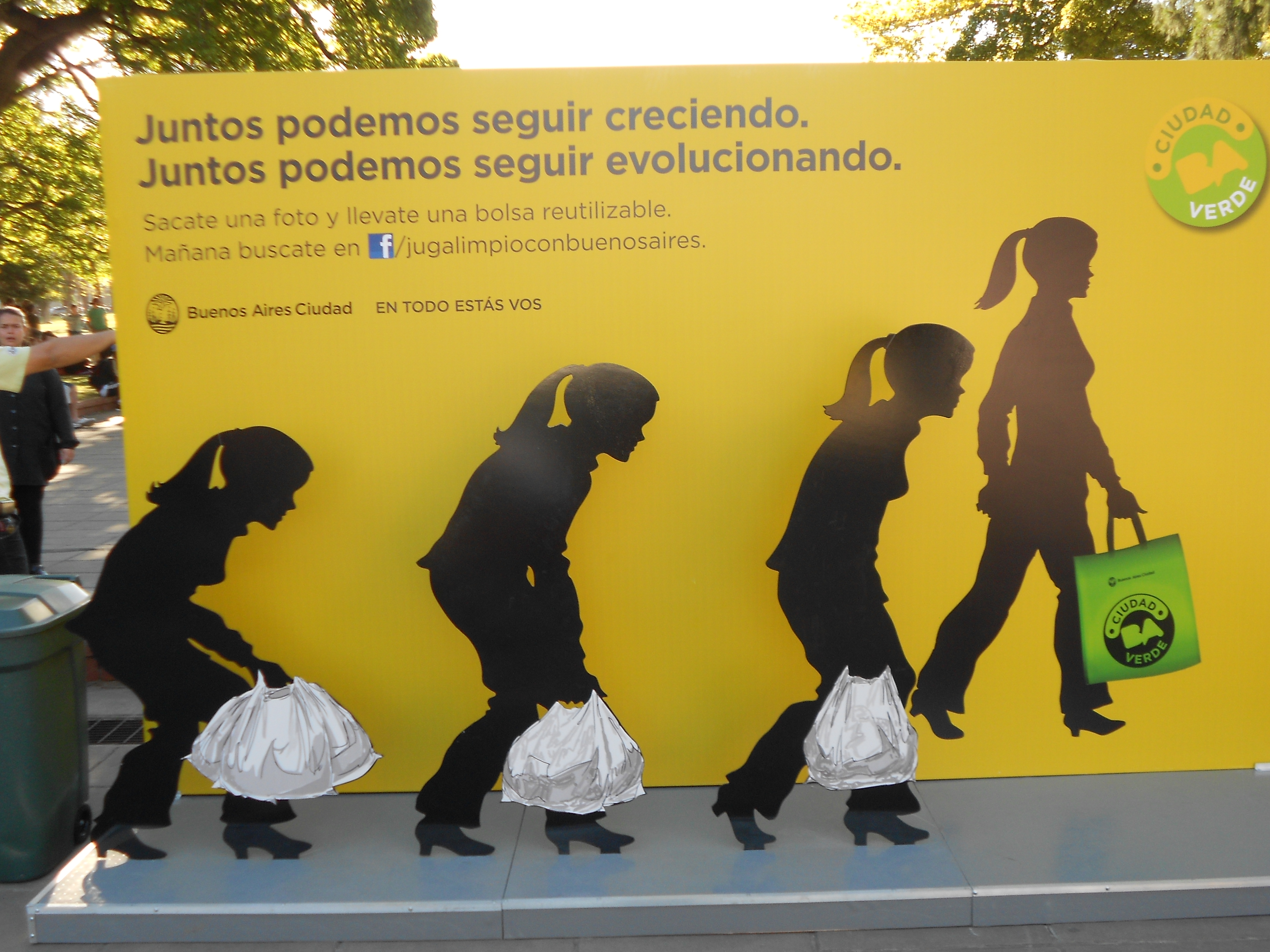
They were drumming and dancing in the park. The drummers do not lightly tap their drums. They bang them as hard and as loud as they can. It’s deafening. The dancers are in front of them, and they make their way through the park.There were three separate drum groups in the park. This one above was made of bass drums. There was another one with bass and snare drums. There was another one with other combinations. The park is big. They parade all through it, for hours. The drummers keep drumming. The dancers keep dancing. There is joy and celebration, but not really any quiet picnics.This wasn’t a holiday. This was just a normal Saturday. There was also a rock and roll band with their giant speakers, trying to be heard over the drummers. There is a difference between life and between parks in the USA and in South America. The USA seems tamer and quieter. The parks are fuller in South America. The public places are used more. There is more life on the streets. Generally, the public spaces are cleaner in the USA, but in Argentina at least, that consciousness is changing a little. In addition to the drummers, there was also a campaign in the park that day to encourage people not to use so many plastic bags, and instead to use durable bags. We see signs in the subways encouraging the same. There are more and more garbage cans on the streets, and people are encouraged to use them. There is a new law stating that all marketing handouts need to have printed on them, “Do not throw this paper away in a public place.” The campaign in the park was giving away durable “Green City Buenos Aires” bags. Monica and I stood in line, got our picture taken in front of the billboard, and we got our bags. Together we can continue growing. Together we can continue evolving. A Green City. Not a bad sentiment for a Saturday afternoon.

One of the things that we wanted to do with our time in Buenos Aires was improve our Spanish. There are lots of schools that teach Spanish, and a few of them are listed in our trusty Lonely Planet guidebook. One of the schools they listed is in San Telmo, a few blocks from our apartment. Their website said that they offered classes to all levels, with a choice of how many hours per week. You could either take classes for two hours a day or four hours a day, with five students in the class being the maximum. We walked over to the school, located on Chacabuco Avenue, and rang the buzzer. There was no sign indicating that this was a school; it was just like all the other apartment buildings. An old building, probably from the mid-1800s, with a ten-foot wrought iron door. A voice came through the electric answerer, and we explained that we were here to find out about classes. Soon, Alejandro appeared at the door, explained that yes, in fact this was the school, he was the director, and could we come back later because he was ocupadisimo right now. (extremely busy) It turned out that he was in the middle of a class. We were expecting a receptionist or somebody, but this is a very small operation. We came back in a couple hours, and sat and talked with Alejandro, and Monica signed up for classes to start next week. You can sign up for one week at a time. I told him that I was also interested, but in a more advanced class, and Ale told me that perhaps the week after, there might be one for me.

Monica started her class, along with two young guys from England and another from Austria. Students from the USA are rare. Usually the students are from Europe or from Brazil. The two English guys, Nick and Alex, are in their mid-twenties, and they are in Buenos Aires to learn the tango. They go to milongas (tango clubs) every night, and they take lessons also. Tango is intimidating, especially for guys who are learning it, because it is a very male oriented dance. The man is in charge. he always leads, and the woman always follows. Nick and Alex have to get very confident in their skills before they ask a woman to dance. She doesn’t want to dance with somebody less skillful than she is.

Learning a language takes a lot of time. It’s not a consistently upward learning curve. There are times when you learn, but then you forget what you learn. There are periods of plateaus when you think you are not progressing. There are backward slips when you know what you should say, but you say it wrong. It can be frustrating, you have to be patient, and you also have to be comfortable with abiguity. We won’t understand everything, and we won’t always be able to express exactly what we want. Nevertheless, our Spanish is improving, mostly through practice. The classes teach and solidify, but you have to use what you learn in class outside of class. If you don’t practice, you don’t improve.

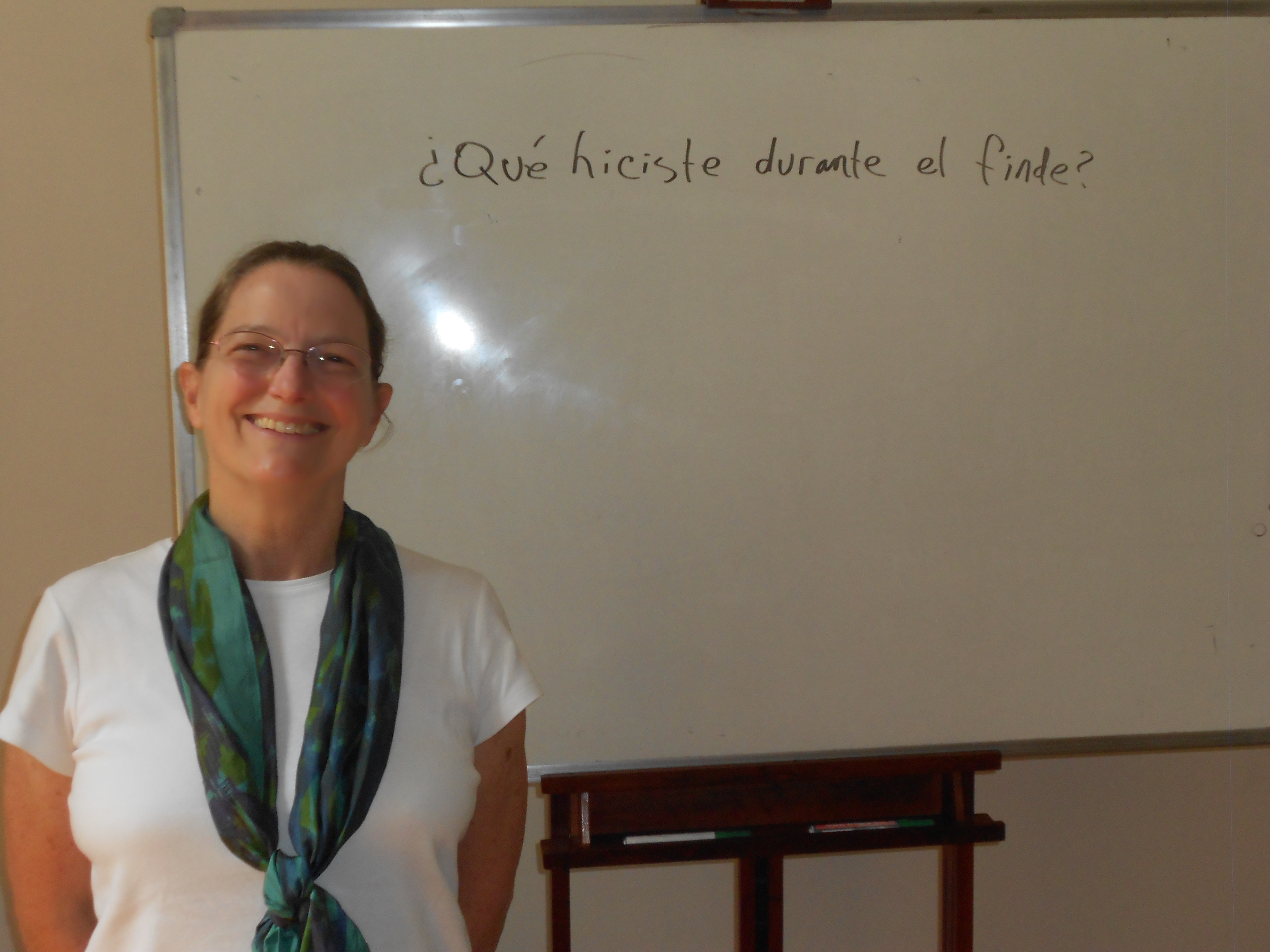
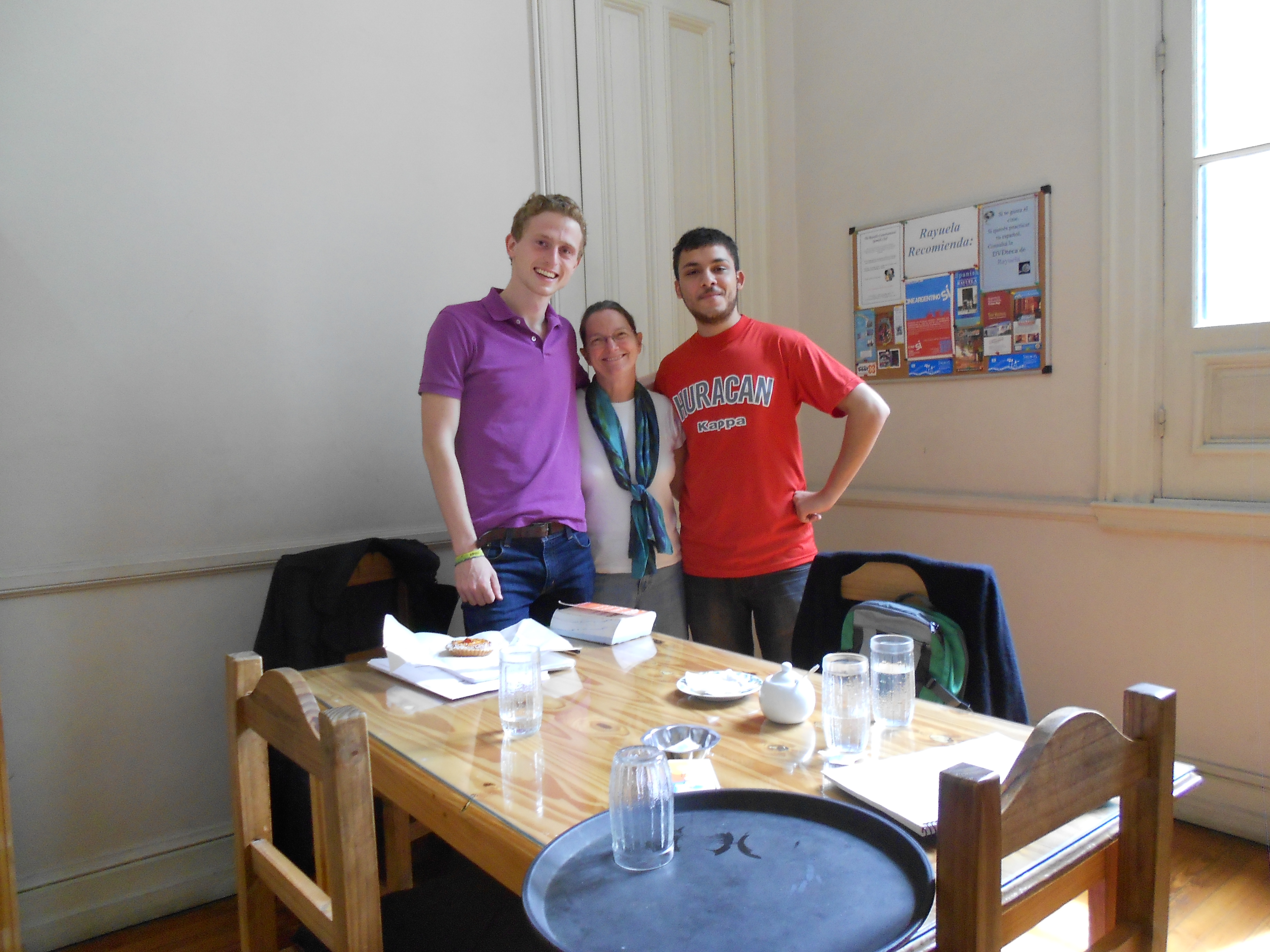
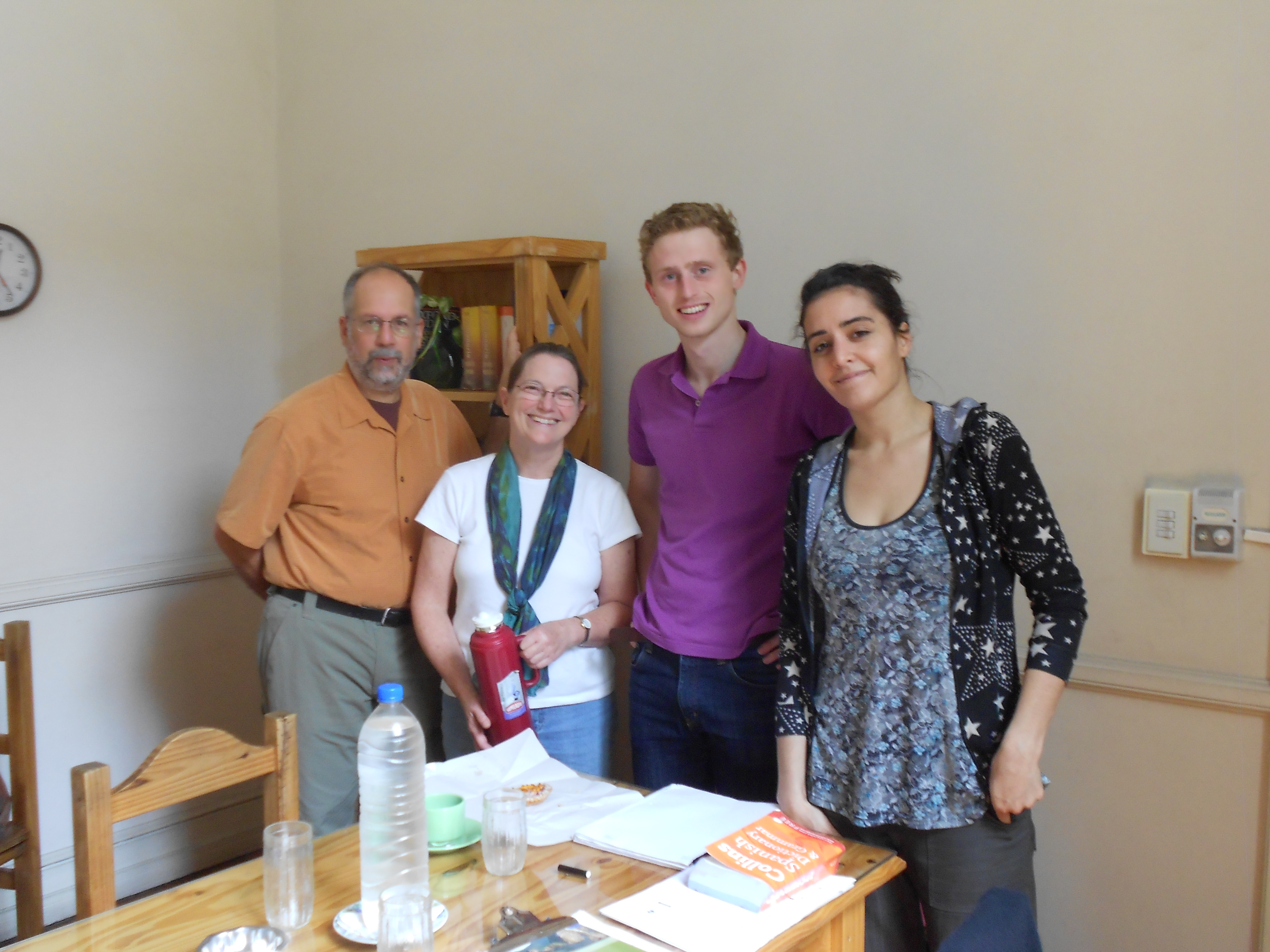
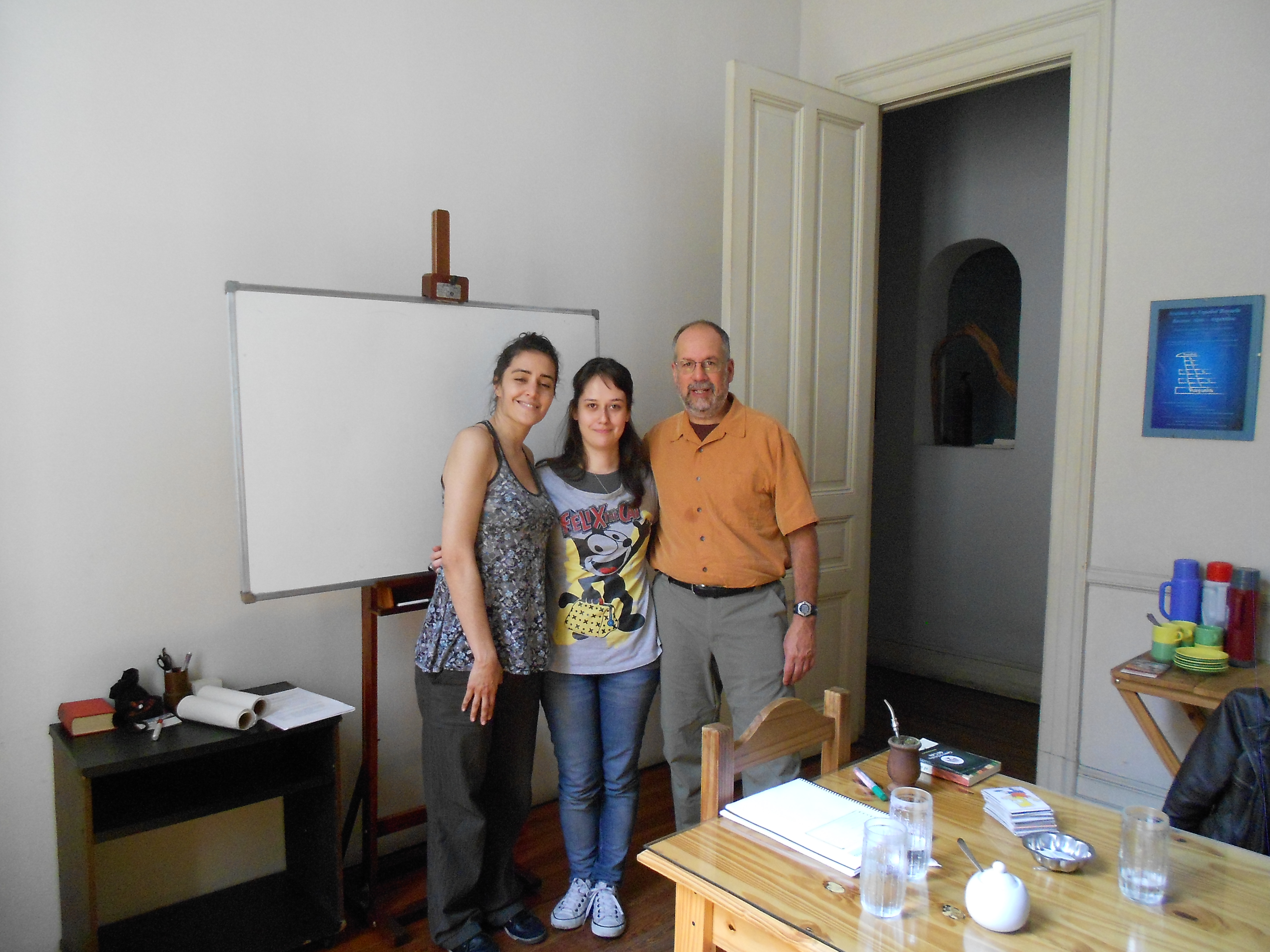
Monica is speaking in the past tense now. It is really fun to listen to her and to hear her improvements. This week, they are concentrating on the past tense in class. Here is Mon, standing in front of the board that says, “What did you do this weekend?” Weekend is translated as “fin de semana,” but everybody just shortens it to “finde.” It sounds great.The classrooms are really small, with one whiteboard. We sit around a table, with coffee or water or pastries, and talk it over. Our classes are two hours each day. Mike’s class is from 10:00 until noon, and Mon’s is from 12:15 until 2:15. Nick is the blond guy from England, and Lautauro is there in the school to help out with whatever we need. They are both pretty tall. Nancy is a portena (born in Buenos Aires) and she loves languages and grammar. She teaches Castellano (Spanish) here in our school (Escuela Rayuela. This means “Hopscotch.” It’s a title of a book written by Julio Cortazar, one of Alejandro’s literary heroes.) and at another school. She’s cheerful and very clear in her explanations. Both of us love her classes. Mike started classes a week after Moni. His classes had one other student, a girl from Sao Paolo Brazil named Natalya. Natalya is here in Buenos Aires to study Marketing, and she hopes to stay here. After a week, Natalya left, and now I am taking individual classes, just me and Nancy. It is great. It’s thrilling (really) to be able to speak, using complex grammar, and have someone to explain your mistakes and help you. It’s thrilling to be able to say, “We went to a tango show because we didn’t want to get back to the USA and realize that we had been in Buenos Aires for two months without going to at least one.” In Spanish.  Here, Natalya is in the middle, after her final class.We each have one more week of class. Hopefully, we’ll learn some new grammar, and more importantly, hopefully we’ll remember how to use it.

Before we left Eugene, we contacted a private English school in Buenos Aires and arranged to be volunteers in the school. Some of our friends thought that we were kind of nuts (you can delete the ¨”kind of” from the sentences to make it more realistic) and they told us why. Why would you want to work when you’re in Buenos Aires, when there is so much fun ot be had? And why wold Mike, especially, want to work as a teacher, when he’s taking a break from teaching? Some ofour friends (thinking of you, Jayne) still wonder why we would choose to work instead of play.

Our reasoning is something like this. First, we see our time in Buenos Aires as kind of an acclimazation period. We see it as an opportunity  for us to land in South America and get centered before we take off traveling through the continent. We can take some time to get used to the sights and smells and sounds of South America, while living in the same place and getting more solid with the language. We wanted to begin to feel comfortable here, instead of just dropping down from a spaceship and not knowing where we were.

So far, it’s working. Buenos Aires no longer feels all that foreign to us. We are still surprised by things that we see, like the dog on the subway (that’s another story) and it does not feel completely normal to step around people sleeping on the street or see families searching through the garbage bins for things that they can sell, but we are feeling at home after being here for a month.

Volunteering at English House has helped us to feel at home. We work there three afternoons a week, Tuesday, Wednesday, and Thursday, for three and a half hours each day. This schedule gives us some definition to our week without overloading us. There is still plenty of time for fun. Working at the school gives us a sense of belonging.

This sense of belonging is important for us. I don’t really consider myself a tourist in the strict sense of the word, but everyone else here thinks of me as one. And tourists always live in an “us” and “them” paradigm. They never fit in; they are always different. This otherness can wear on you after a while. It feels good to have this work routine, where we are a part of a whole, recognized and welcomed as a contributing member of a group. Everybody likes to be part of a tribe. For Monica and me, it is really nice to walk into English House and be greeted with, “Hello Monica!! How are you” It’s nice to belong.

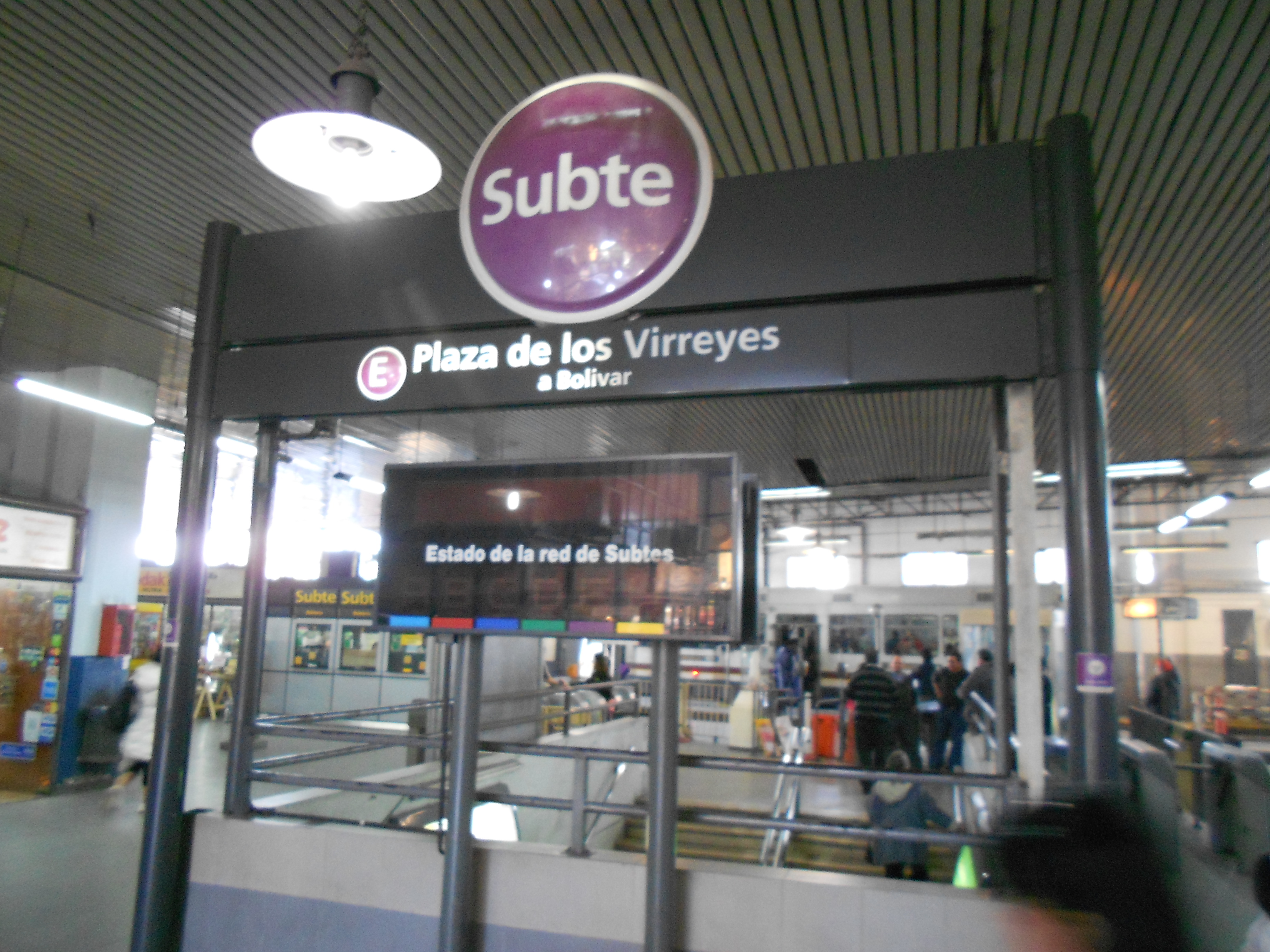
We are classroom assistants. We take the subway to Plaza de los Virreyes, and Gaston picks us up at 4:30 in the afternoon

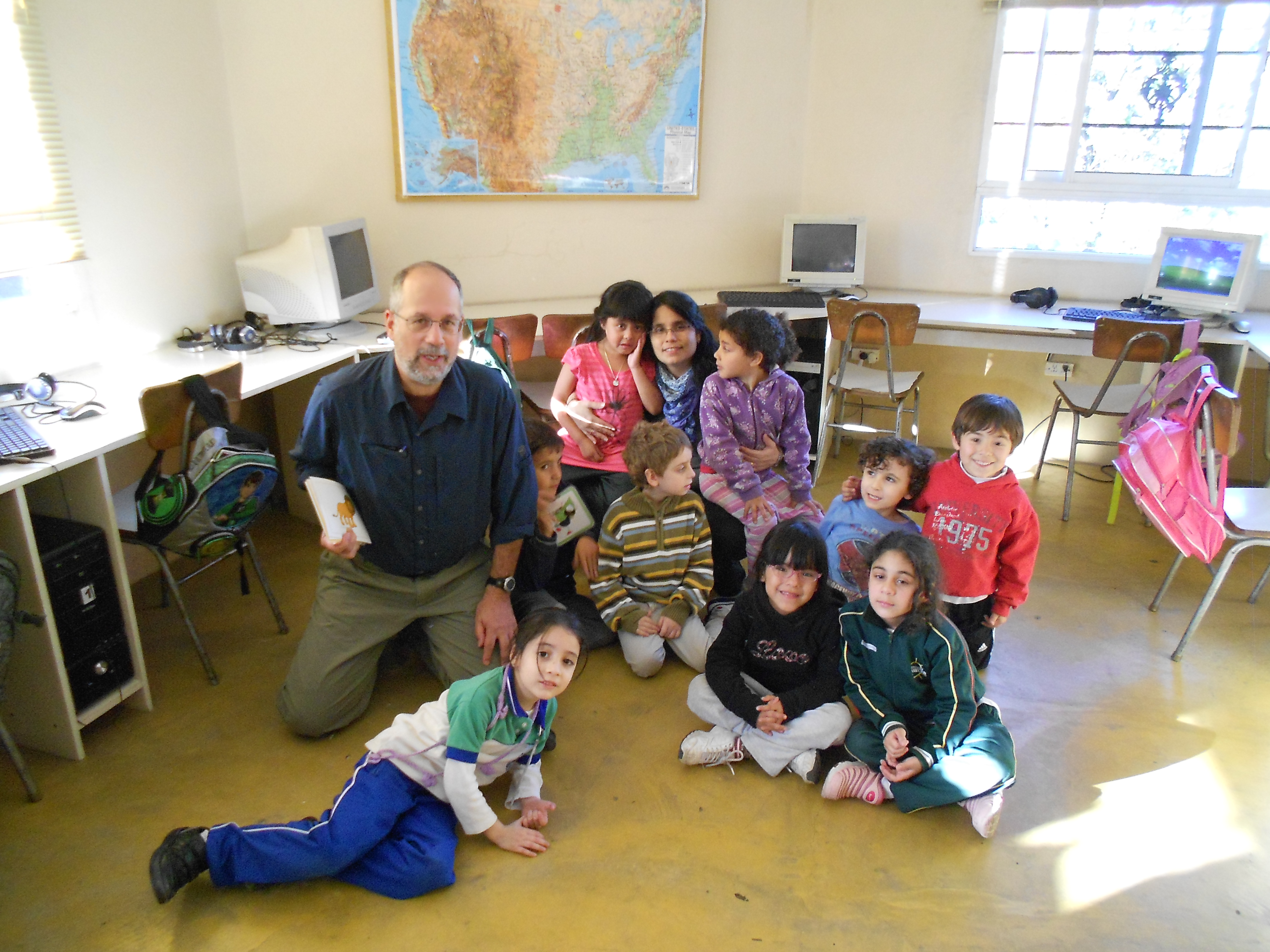
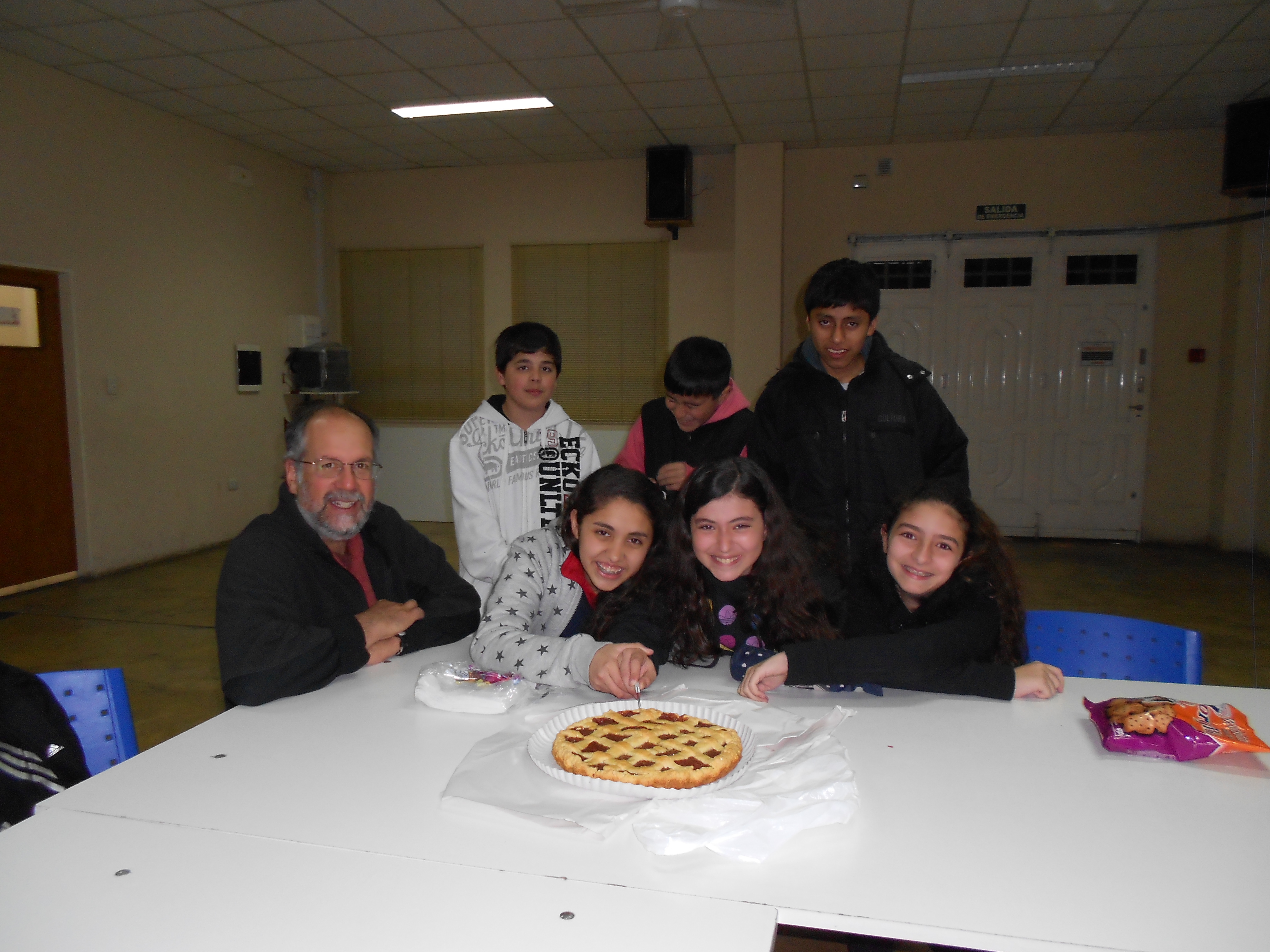
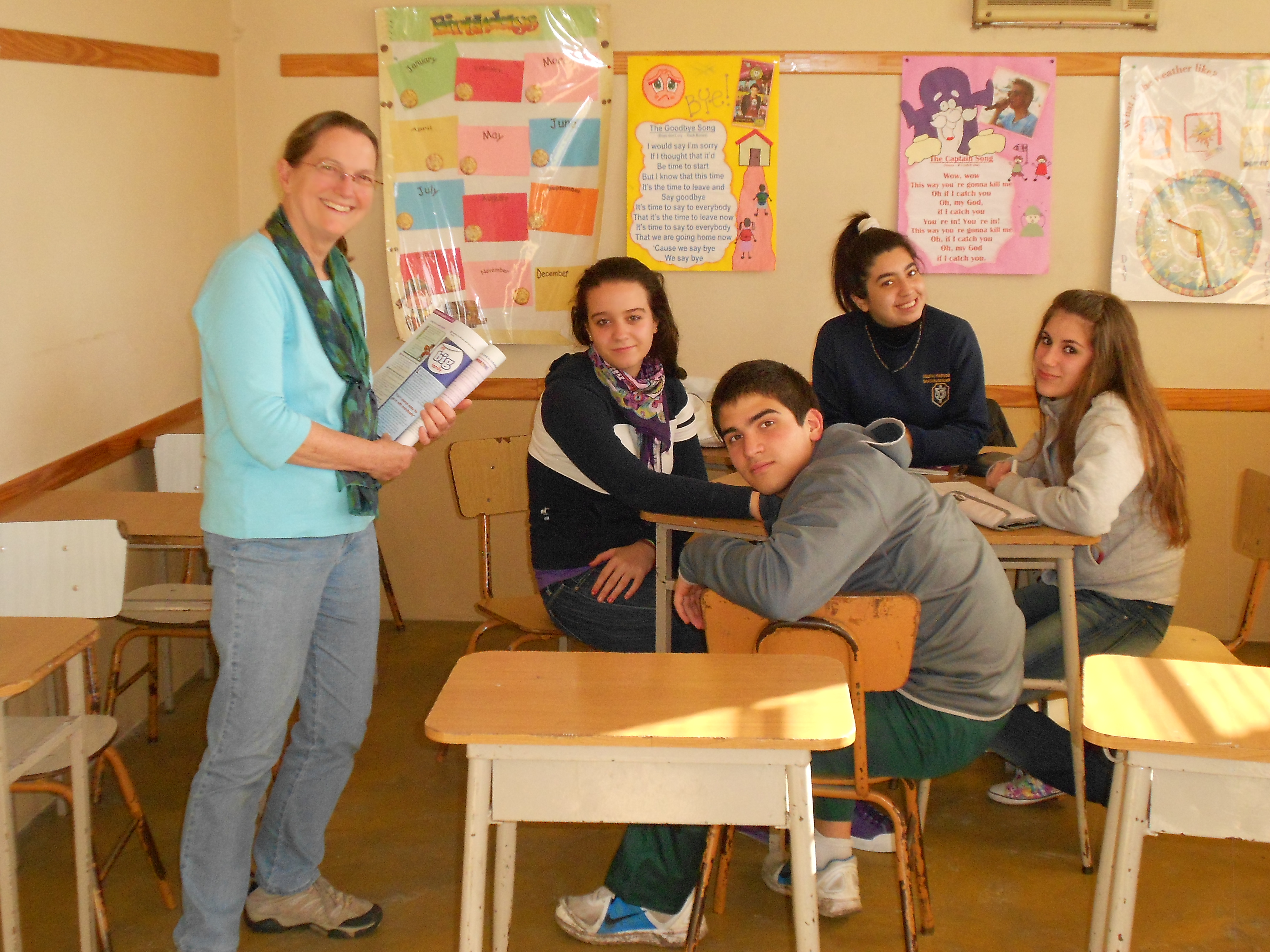
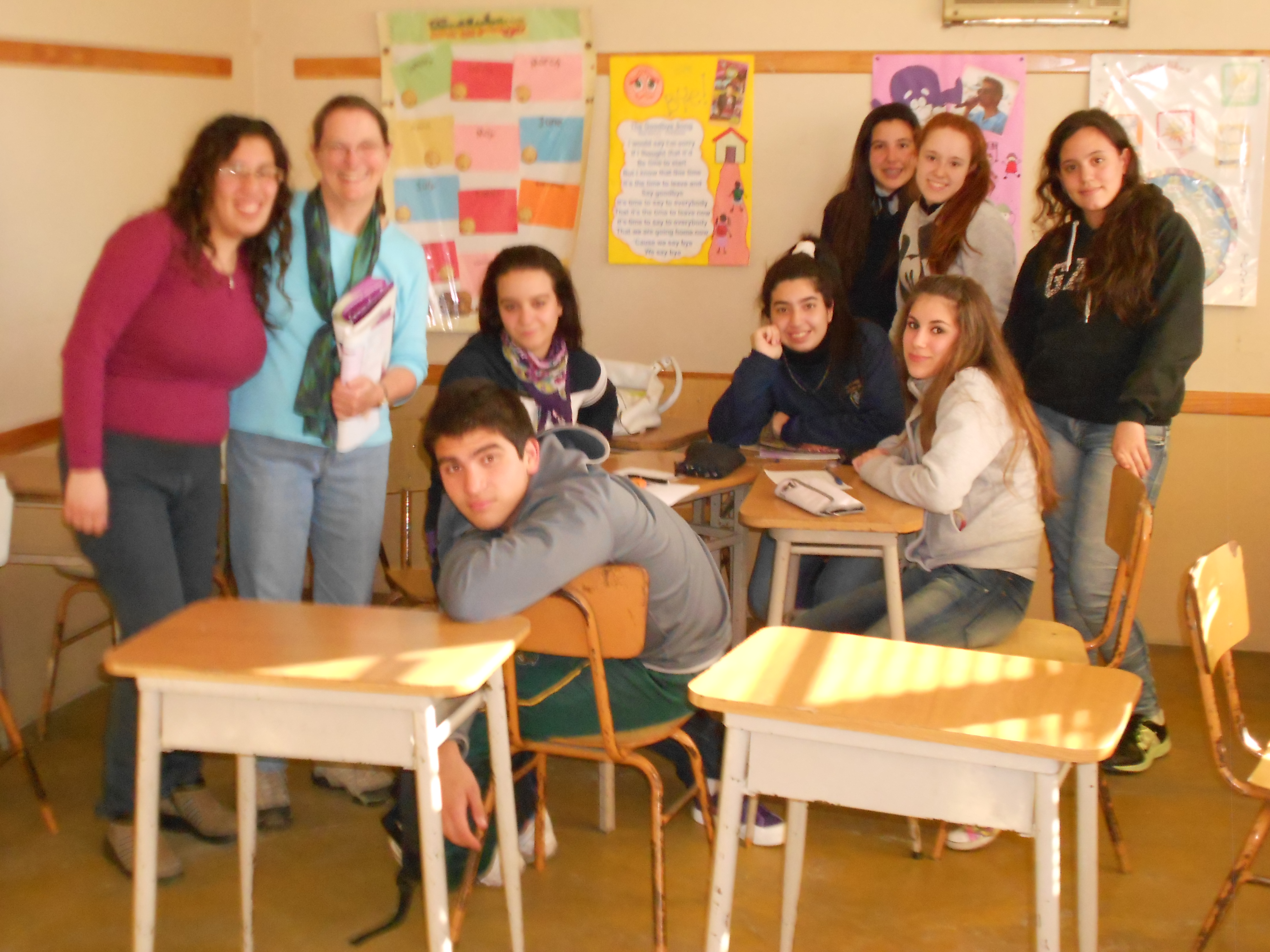
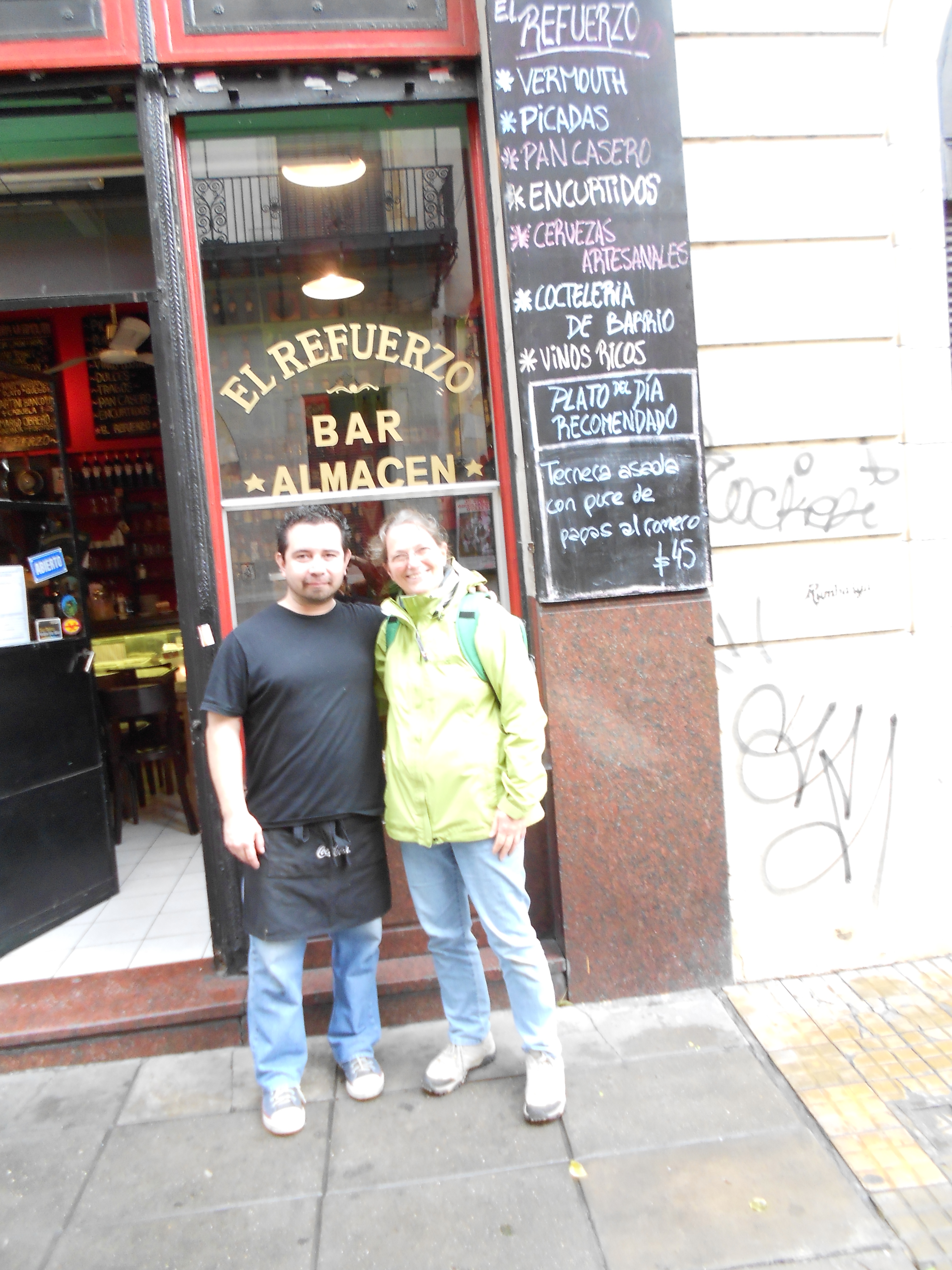
We usually get to the school around 5:00. Monica works with a teacher named Natilya and I work with Pat. The classes last for an hour, and we help out in three or four classes during our time. The youngest students are four years old!! There are middle-school aged kids, high-school aged kids, and there are also adults who come in for classes at 8:00. Sometimes the kids are just wild, very loud and unruly, but not disrespectful. We wonder sometimes how or if they actually learn English, but they do. Some of the students who are 12 and 13 and older speak really well. My favorite group is the adults, because there is more communication, but at times I help out with the youngest groups also. Pat really likes it when I’m there, but sometimes I find other things to do.Like all teachers, I like some classes more than others. I really enjoy working with the young high-school kids. We often do role-plays where they invent dialogs and act them out. They also read some reduced English novels and then describe what they read. It’s really not so different than my teaching ESL in Eugene. My second week there, one of the girls, named Felicita, brough me a big cake that her grandmother had baked. It’s called Pastaflor. We cut it up and shared it with everyone. Very nice. Felicita wanted to give Monica a piece also, so we found her in a different classroom and called her out so she could get a piece.Th teachers, as well as the kids, appreciate having us there.Monica often sits on the floor and reads to her students. The older students-highschool age- are reading “Twilight.”  Monica helps  out and leads classroom discussions. Portenos everywhere greet each other and say good-bye with an air kiss on the cheek. You see it everywhere. Boys and girls, men and women, girls and girls, boys and boys, men and men. It doesn’t matter. It is surprising to see two burly guys talking things over in front of a hardware store or the corner kiosko, then kiss each other goodbye when they depart.The waiter in El Refuerzo, one of our favorite spots, kisses us when we come in. We ran into the waitress from another cafe, and she kissed us hello and goodbye. It’s always a surprise for us (and somewhat delightful) when the kids file in for class, and come up and kiss us before sitting down, then again after class on their way out. They do it with each othertoo. It’s hard to imagine being a high school teacher in Oregon, and the boys coming up to give their teacher a kiss before class. Here, it’s just another part of the phunn.

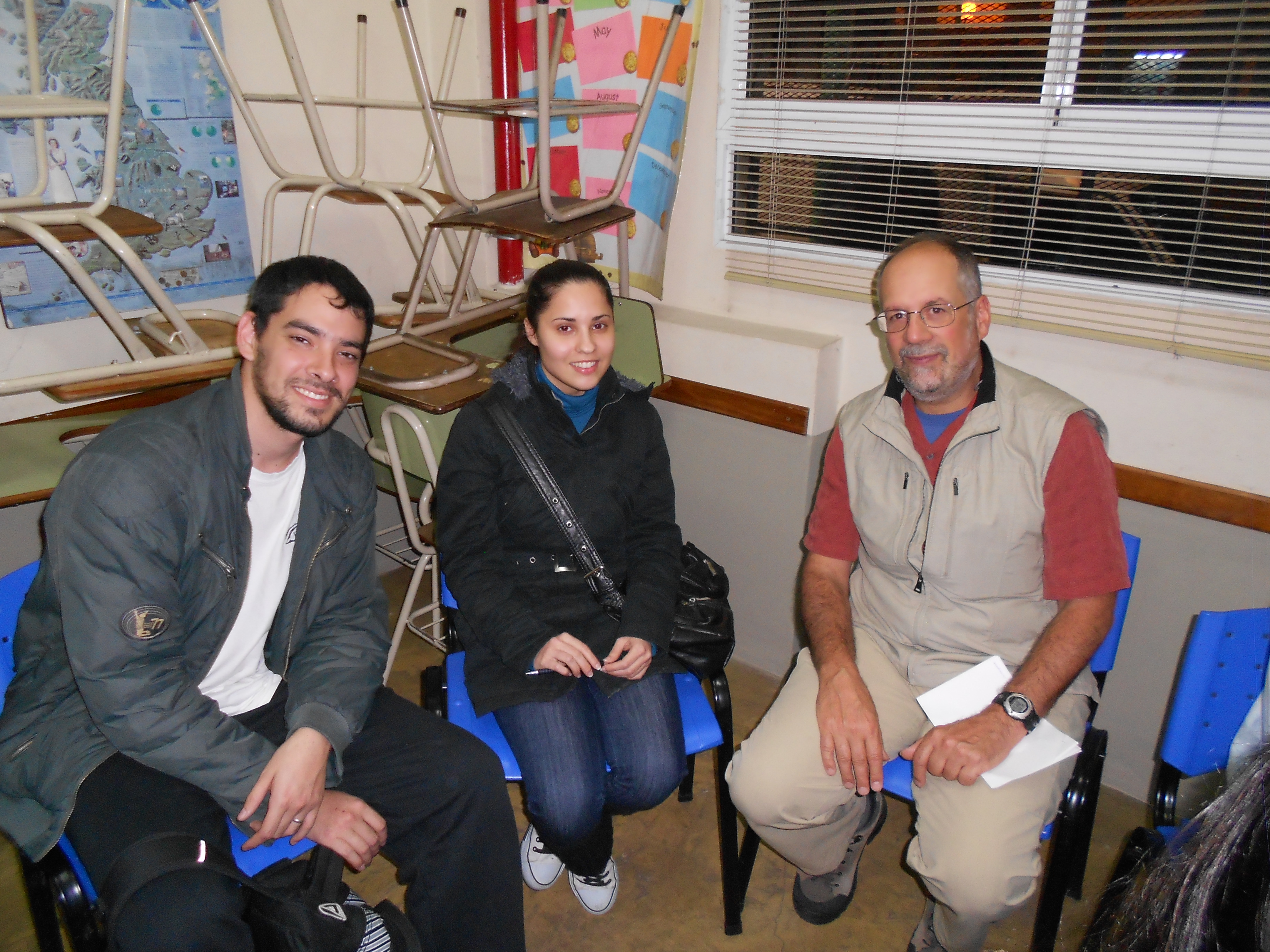
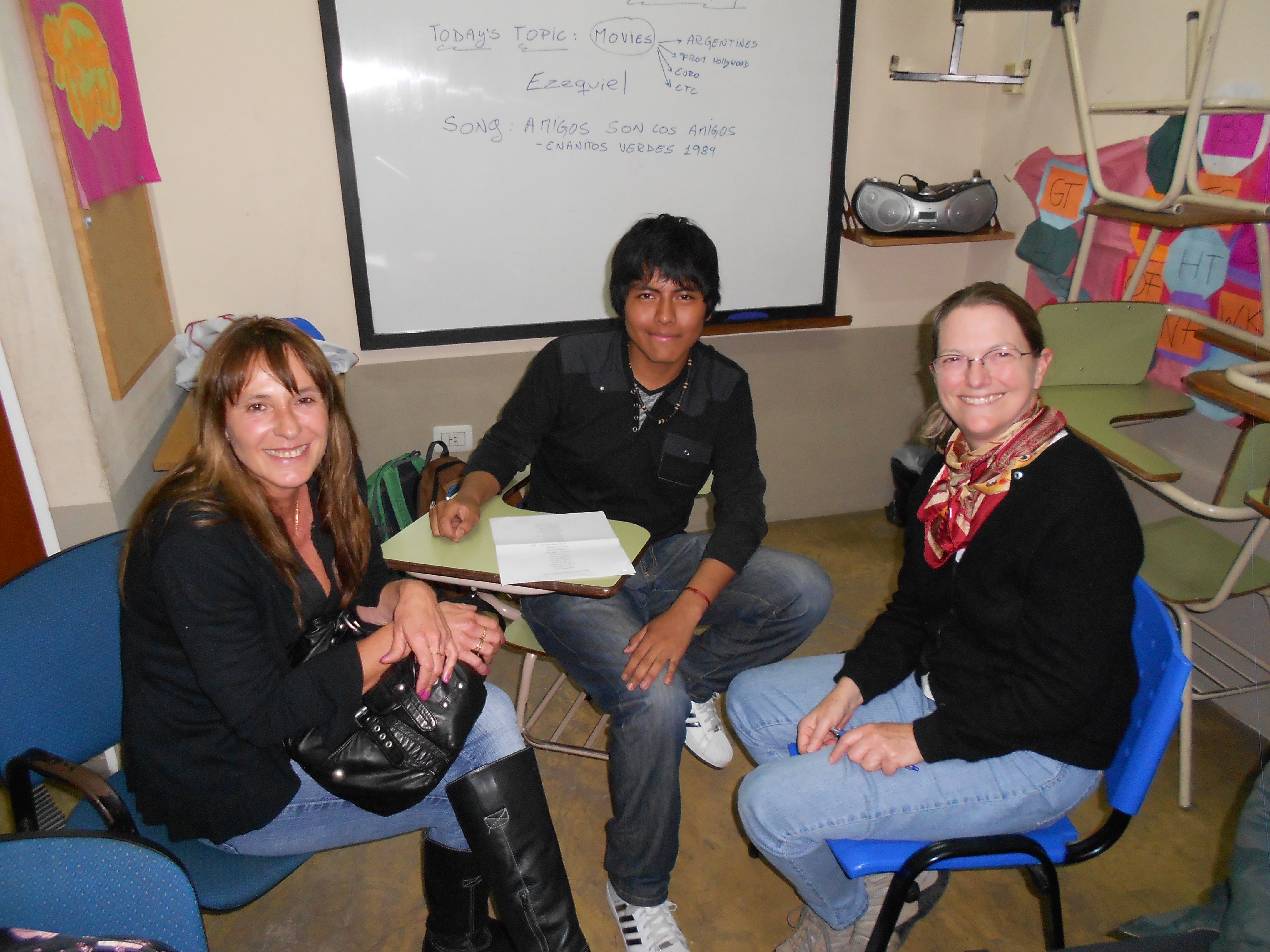
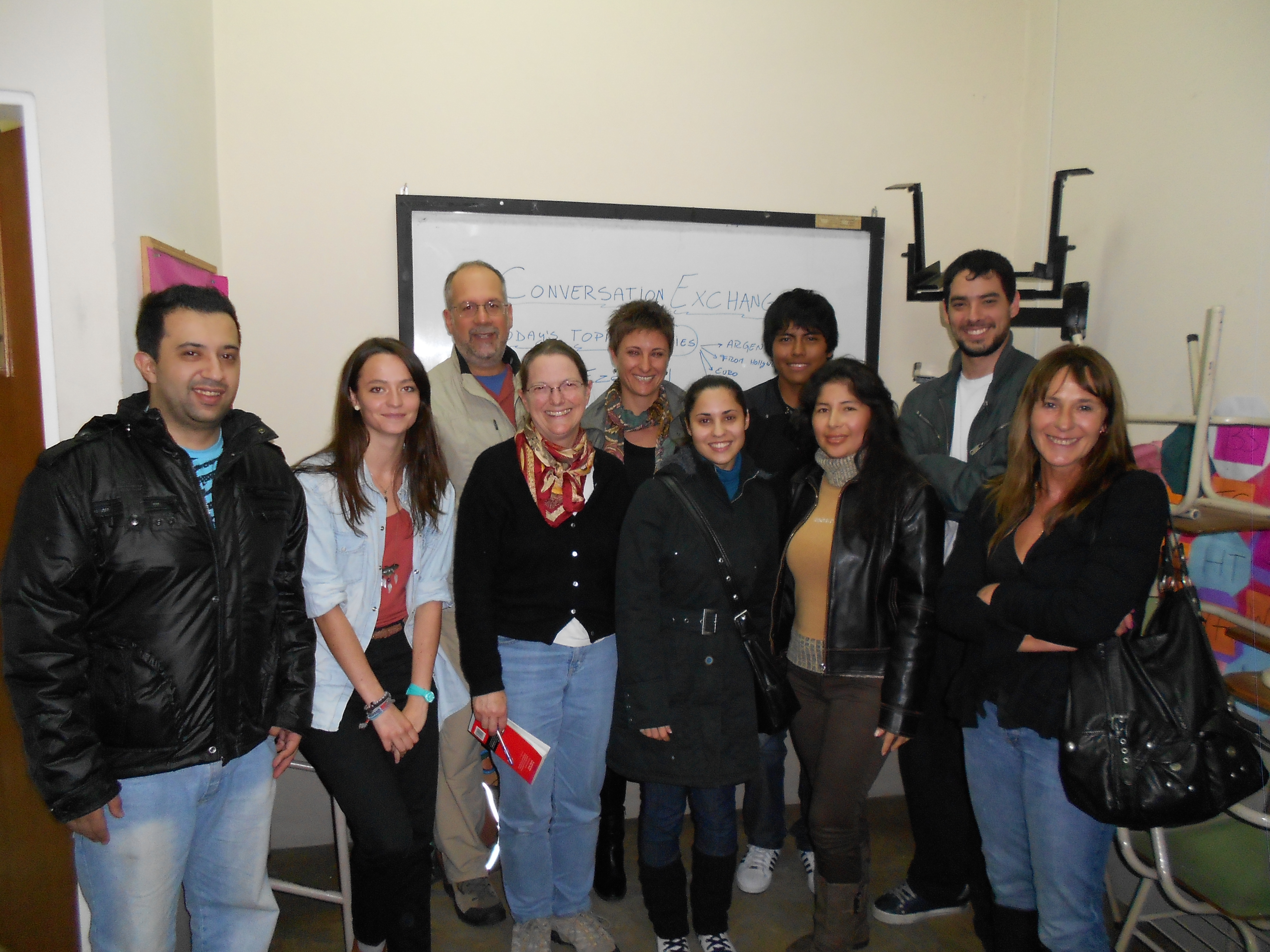
We are working as volunteers in a private English school, every Tuesday, Wednesday, and Thursday afternoon. We take the subway to the end of Line E, which is Plaza de los Virreyes. Gaston picks us up at 4:30 and drives us to the school, and at 8:30, he drives us back to the subway for our trip home. During our time there, we help out in classrooms, with students ranging in age from six to adult. Working with the middle school aged kids, the high school kids, and the adults are our favorite classes. We actually speak a lot of Spanish there, as well as English. If we have questions about how to say something in Spanish, we often ask our teachers who we are working with, because they speak excellent English, but they are Argentinians. Every Wednesday evening, there is a conversation exchange, where anybody in the school (I think just the adults) can come for an hour to speak in English, and we can speak in Spanish. It’s always interesting to find out about their lives, and to talk about whatever subject anybody is interested in. Here is Mike, talking with Frank and Guadaulupe. Guadalupe wants to become an English teacher, and her English is perfect. Frank works in the banking industry, and has to know English for his job. Monica had her small group also. They were talking about movies and TV shows. Here’s a photo of the whole group that was there this week. It’s a pretty big effort for some of the students to come to the sessions. They are very grateful for the opportunity to speak with native speakers of English, and of course, we are grateful also, to get to know new people, and to practice our Spanish with them.

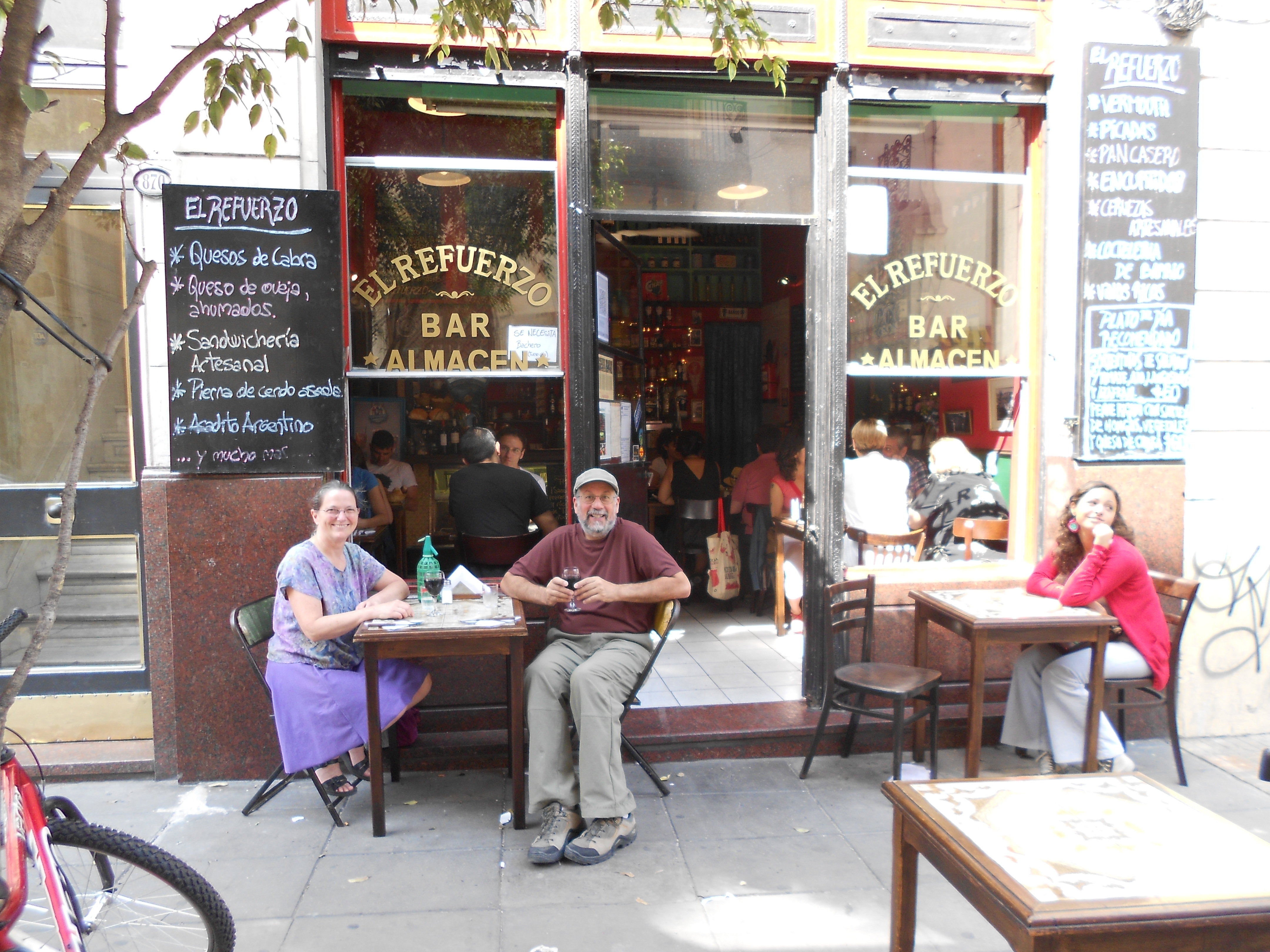
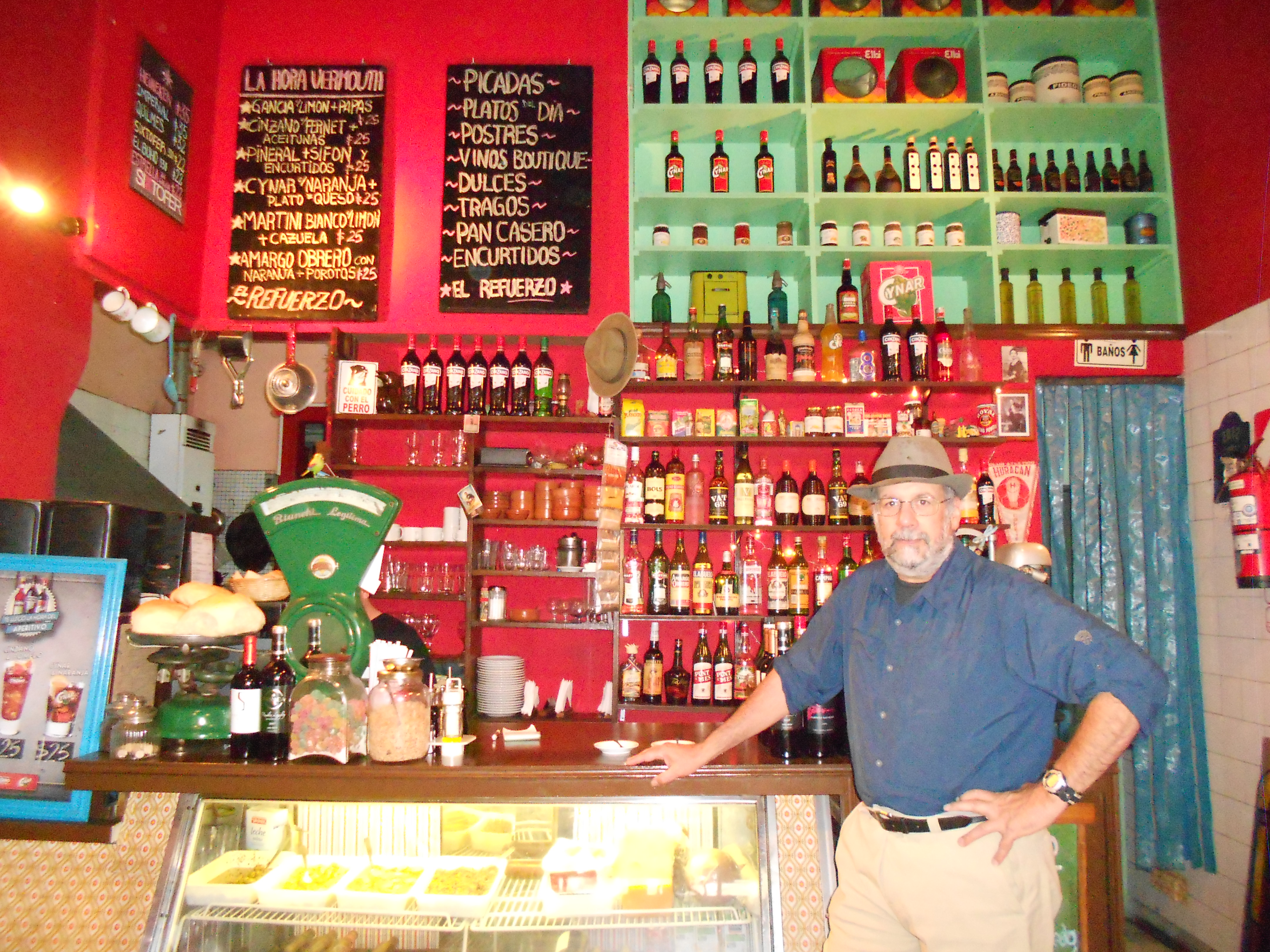
Our Spanish classes are held in an old building on a cobblestone street. There isn’t a sign, or any other indication that is in fact a school, and we have to ring the bell, then somebody (usually Alejandro, the director) has to run down to open the door for us and lead us upstairs. Two doors down from the school is a little bar called El Refuerzo. It’s a tiny place, with about four tables inside and two little tables outside. Sometimes, after Spanish class and before we head for the subway to go to our English school, we go into El Refuerzo for lunch, and there we get reinforced for the rest of the day. They cook up great food. Alejandro is the waiter who works there, and he became our friend the first day that we stopped in. There are little cafes like this everywhere. At first glance, sometimes they seem kind of dark and divey, but this is where people go to meet, and once inside, they don’t seem dark and divey anymore. People sit and eat, or get a coffee (just about every place has espresso machines) or a glass or a bottle of wine. People do business or talk or relax. Guys in suits and ties, women in high heels and makeup, lots of people in t-shirts and blue jeans.

The waiters never bring you the bill here until you ask for it. You can sit there for hours. The hovering waiter is not a problem here. Nor are there many waitresses. There are a few, but mostly they’re men. When finally you are ready for the bill, first you have to get his attention, and then most people use their fingers to scribble in the air, which means they’re ready to go. Often, they bring you the bill and expect you to pay them right there, so you’d better be ready before you signal them. Our friend Diana, who is from Argentina but who lives half the year in Eugene, told us that she thought the waiters in the USA were extremely rude, because they brought the bill so soon.

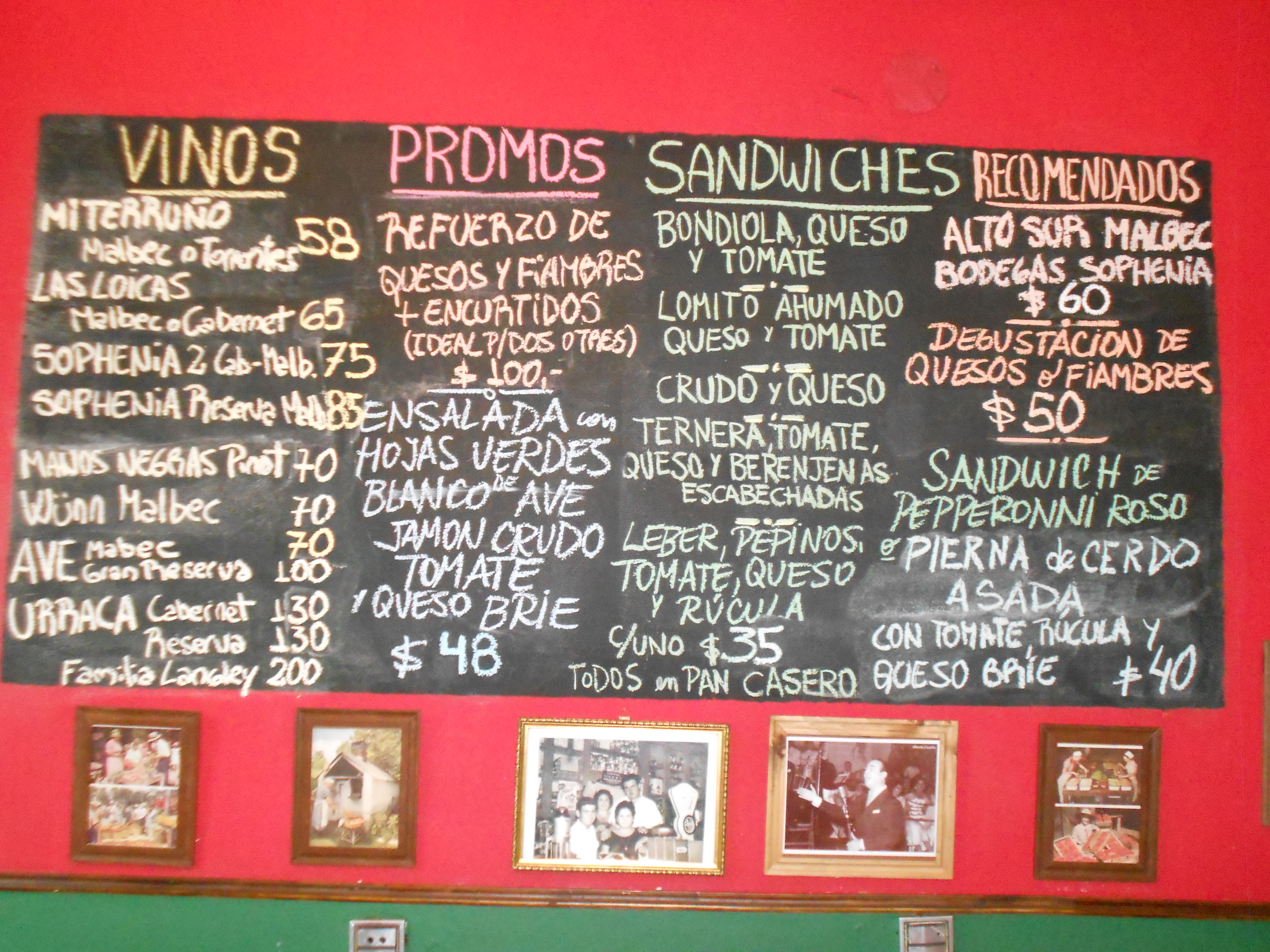
The menu of EL Refuerzo is written on a blackboard. The bottles of wine are listed on the left. They serve stews, pasta, soups, sandwiches. The kitchens are always tiny, and I’m always surprised that they can produce such good food in such tiny places. What El Refuerzo really is, though, is a bar. They are busy at night, serving all kinds of drinks. We walked by last night about 10:00, and there was a crowd of people, saying goodbye to each other on the street, after having probably spent a long and happy time drinking whisky and a drink that they make called “El obrero amargo.” That could be called, “The bitter worker.”

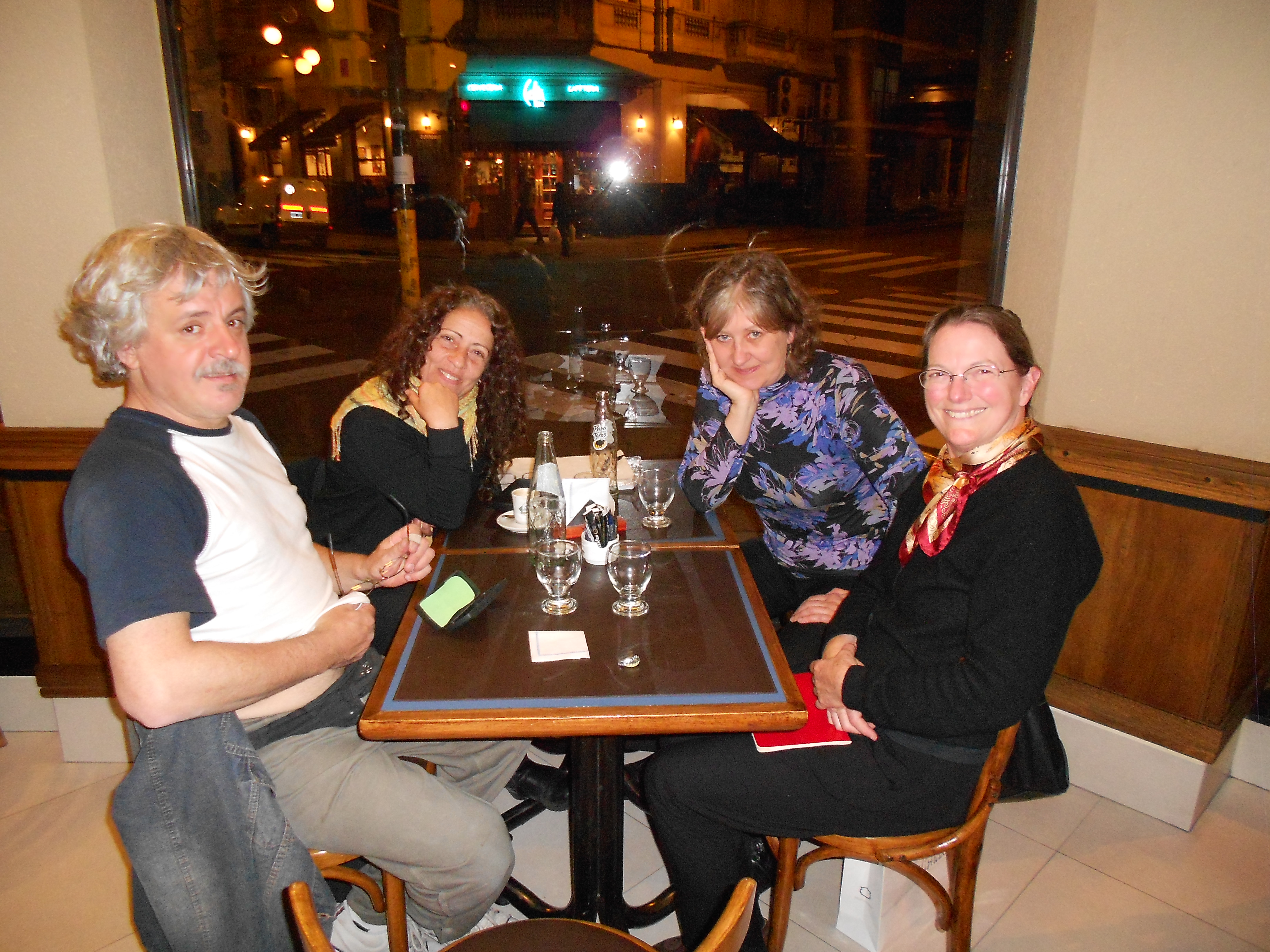
Monica woke up early on Saturday to go out and sit zazen at the dojo at the Japanese Association. There was a strict Japanese monk in charge of things today. They sat for forty five minutes. Moni came back home all zenned, then we ate some lunch and got ready to go out on the town. We had a date to get together with Silvana, Ana, and Fabian at a restaurant downtown at eight o’cloc. This was really early, because Ana had to take a bus, then a train back to her home, and we didn’t want her to have to be out too late. As it was, Ana didn’t get on her bus until 1:30 a.m. but at least we tried. The restaurant where we met was called “Bodega Campo.” It specialized in rustic country food, mostly from the north of Argentina. The area in the northeast of the country borders with Bolivia, and it is the least developed area of Argentina. Small mountain villages that still retain their traditions. We look forward to getting there some time in the next few months.

We had hours before we were supposed to be at the restaurant, so we decided to start the day by taking the subte, then walking to a super-modern shopping mall called “Galerias Pacifico”–just for kicks. The ceiling is painted with murals by French painers, and it is quite impressive.

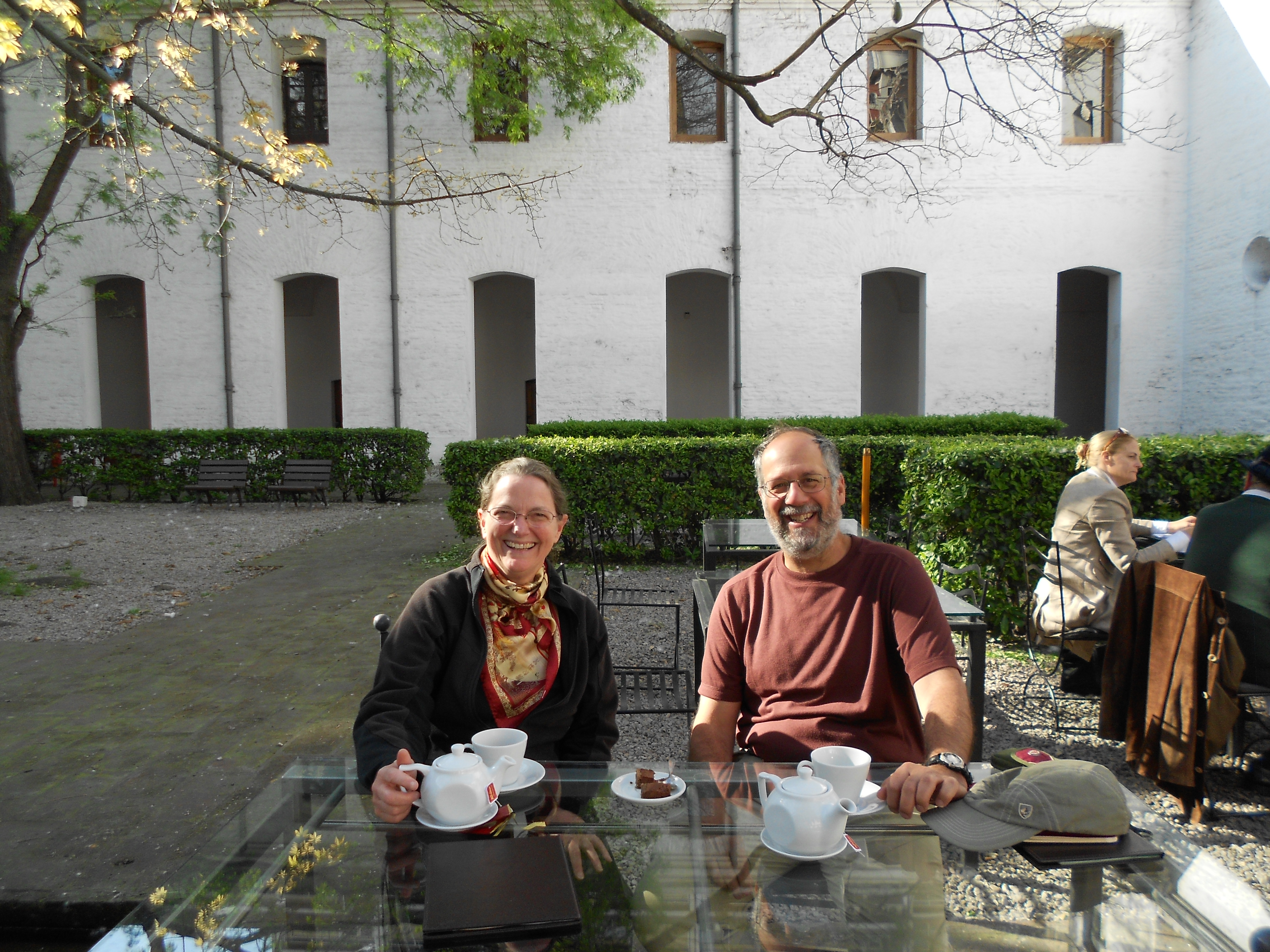
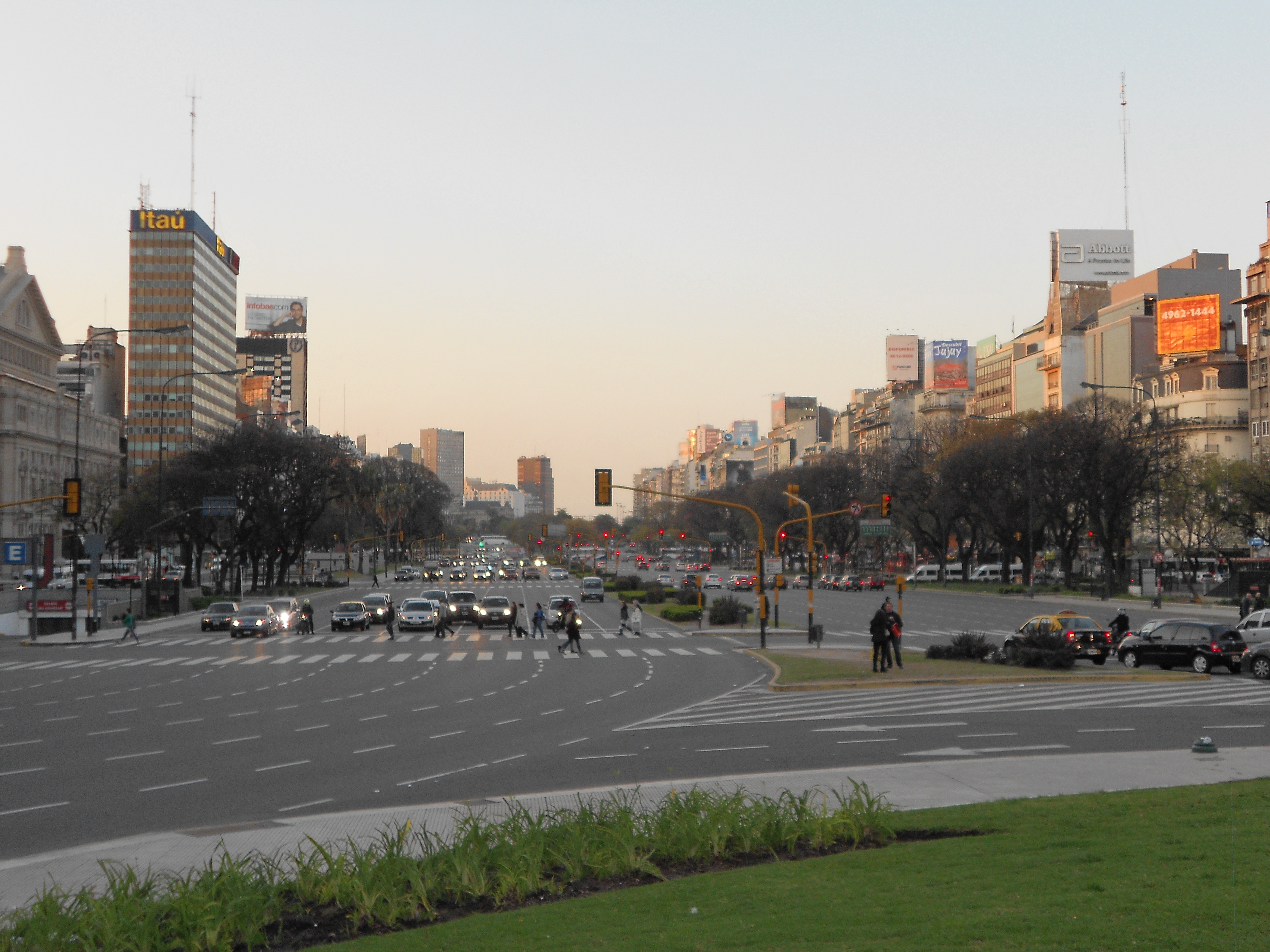
After the mall, we had to recover. There were too many people, too many stores, everything was in hyper-mode. We walked out of the mall, and right across the street, there was a church, La iglesia de Santa Catalina. Santa Catalina is the saint of nurses. There was a little courtyard where you could sit and drink tea. There was a sign that said that its mission was to attend to the spiritual needs of people working in the neighborhood, and those passing through. How could we go wrong. We stayed there in the beautiful afternoon light, drinking tea and enjoying the springtime, until we were ready to head for Bodega Campo.We walked down Corrientes Avenue on our way. Corrientes is one of the main arteries in the city, and we were walking toward El Obelisco–The Obelisc–Which is perhaps the most well-known sight in the city. Maybe it’s not as impressive as the Eiffel Tower, but it serves the same purpose. It’s the landmark of Buenos Aires. It is located in The Plaza of the Republic, at the intersection of Avenida 9 de Julio and Corrientes. This has to be one of the most awesome intersections in the world. Usually I’m not impressed by city scenes, but when we arrived at the intersection, we had to sit down just to look, boquiabierta. (open-mouthed) We were overwhelmed by the immensity, by the lanes of traffic, the openness, the size, the giant TV screens, everything. Avenida 9 de Jlio has twenty lanes of traffic, ten in each direction, and Corrientes is no slouch itself. The plaza where they meet is huge and round, with the obelisk soaring into the sky like a rocket. Monica said that finally she felt like we were in Buenos Aires itself, at the heart. Our neighborhood is quiet, with cobbled streets. The school where we work is in a working-class neighborhood. This at last was the world-class city that we had heard about. We continued on Corrientes, looking for the street where the restaurant was, Rodriguez de PeÑa. Corrientes was booming. The guidebook says that it is the Broadway of Buenos Aires. There were lots of bookstores, lots of pizza places (I think that if they eliminated pizzas and empanadas, half the city would die of hunger) and lots of theaters, large and small. Saturday night. People everywhere. Finally we found the street, and turned down it, looking for Bodega Campo. The street was kind of dark, and we walked right past it without seeing it. Finally, we backtracked, and I went into a hotel to ask where the place was. The concierge laughed, and said there it is, right across the street, but it’s only 8:00, and it’s not open yet. That’s why we didn’t see it. Soon, Silvana came along, then Ana, and we went to a little cafe across the street to sit and wait for Fabian. He was coming from work. We stayed there a few hours, talking and remembering. The lights on the whole block went out. Nobody even seemed to notice. Pretty soon, they came back on, and we left to go to the restaurant.We got to the restaurant at 11:00. Not bad for an eight o’clock date. The place was small and dark, with about fifteen tables. We sat down and ordered a bottle of wine. Everybody got a bowl of stew, served with bread. Very delicious, served in stone bowls. We stayed there for a couple more hours, and customers kept on coming in, well past midnight. Finally, we were ready to go, at one o’clock. Silvana asked the waiter what time they closed, and he said, well, maybe around three or four. Ana got on her bus, and the rest of us walked through town on our way home. There were lots of people out, and walking through the big city at 1:30 a.m. was very pleasant. We reached the street where we separated, and Monica and I walked home the rest of the way. We finally went to bed at 2.30, and we felt like verdaderos portenos!!