We crossed the border from Bolivia to Perú early Sunday morning, February 24. Again, we walked across the actual border as the bus dropped us off on the Bolivian side and recollected us in Perú. Leaving the Titicaca Lake basin, we spent another 7 hours busing through the high, dry desert of the altoplano and reached Arequipa at nightfall.
Our hostal was upstairs in a dark colonial building near the main plaza. Besides overcharging us, the taxi driver from the bus station tried to convince us to stay at another hostal. We learned this is a common practice as the taxistas receive commisions from the hostals. We were glad we did not change hostals. Our Park Hostal had a gracious owner and staff, and had a large roof top terrace where breakfast was served.
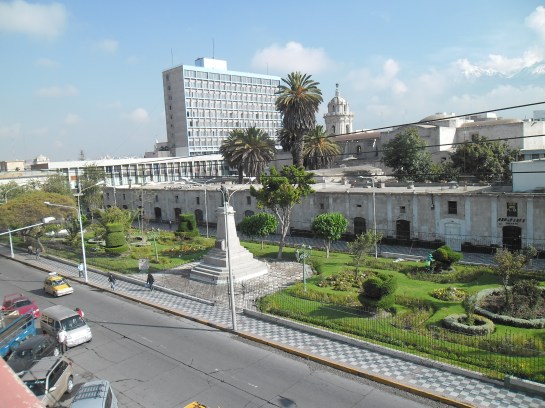
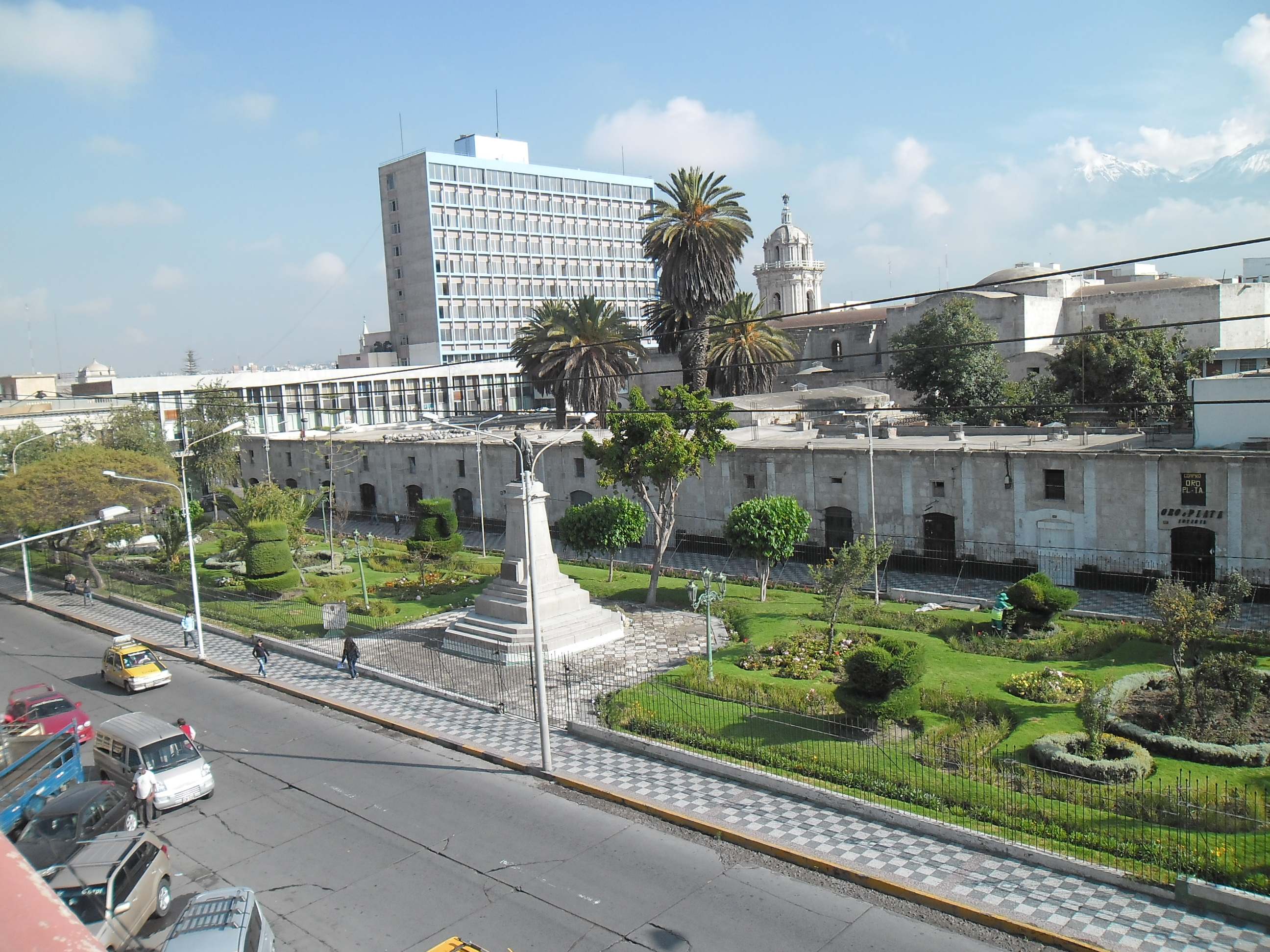
View from terrace
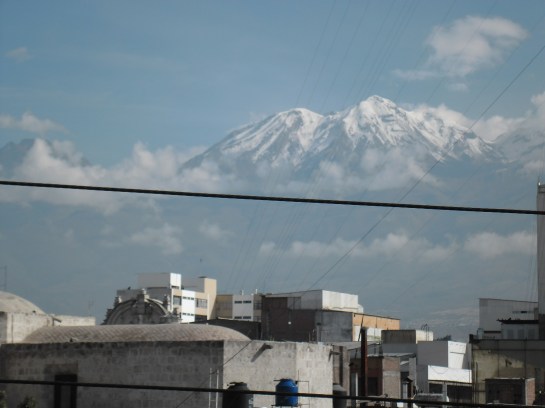
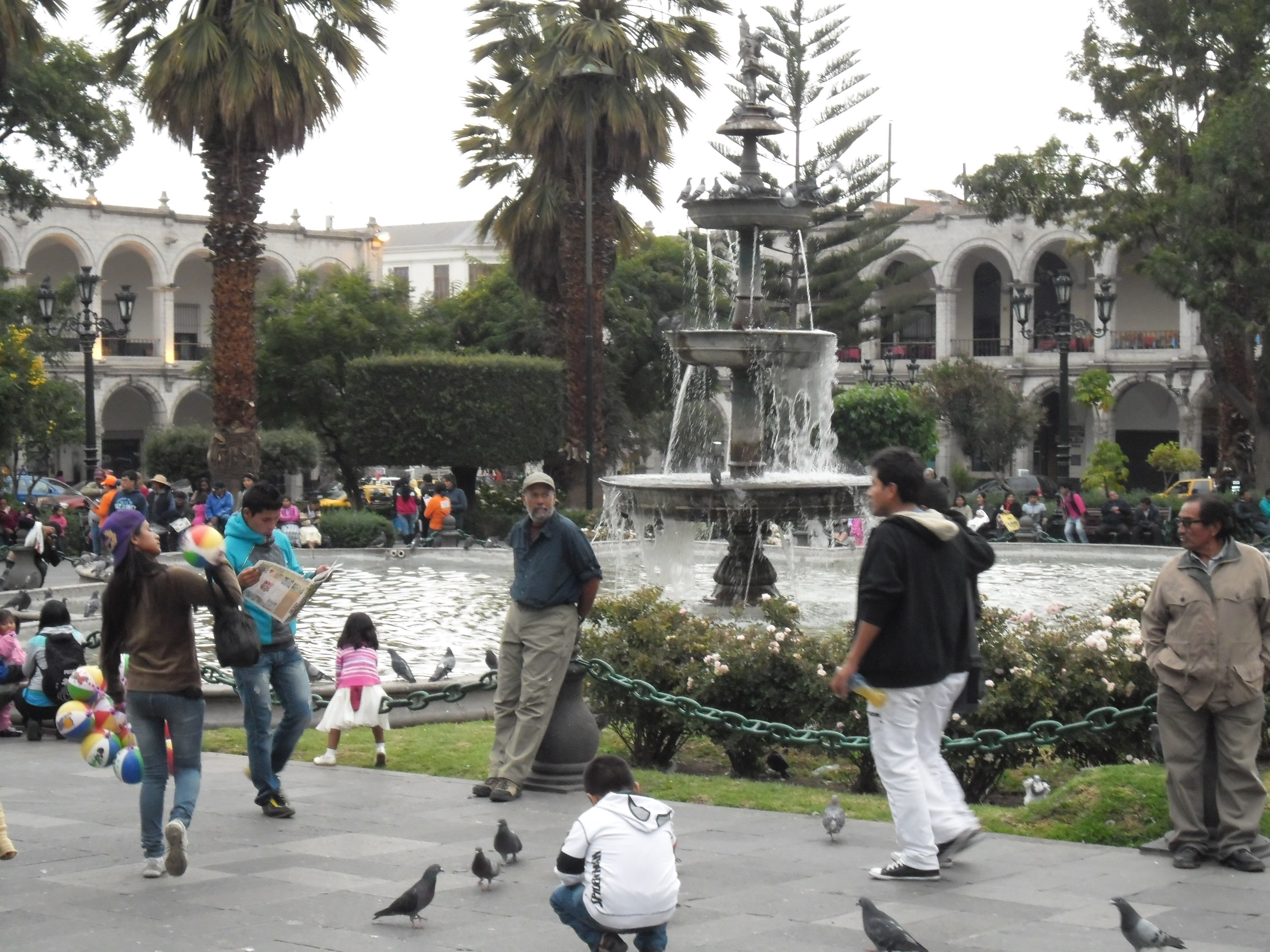
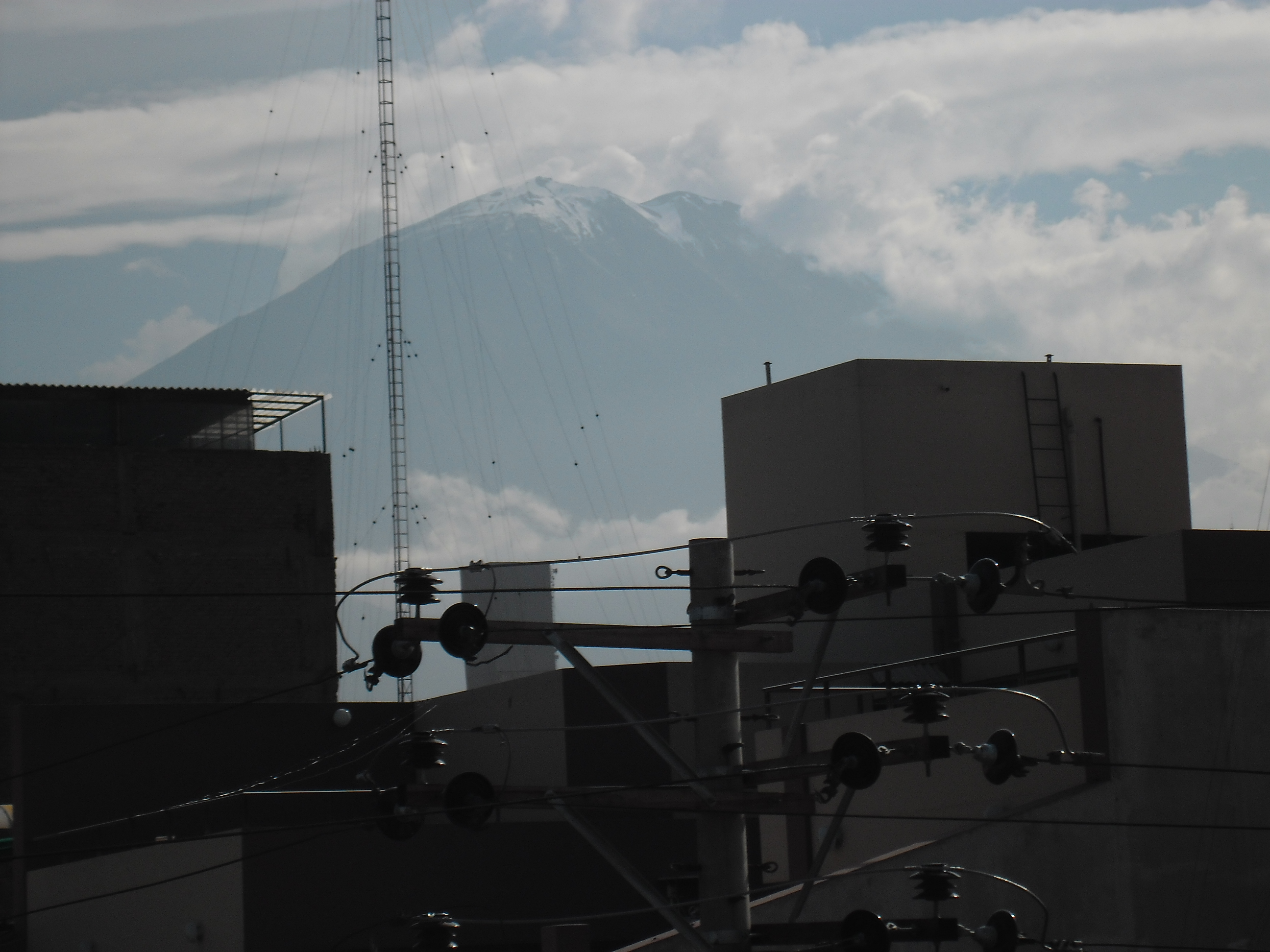
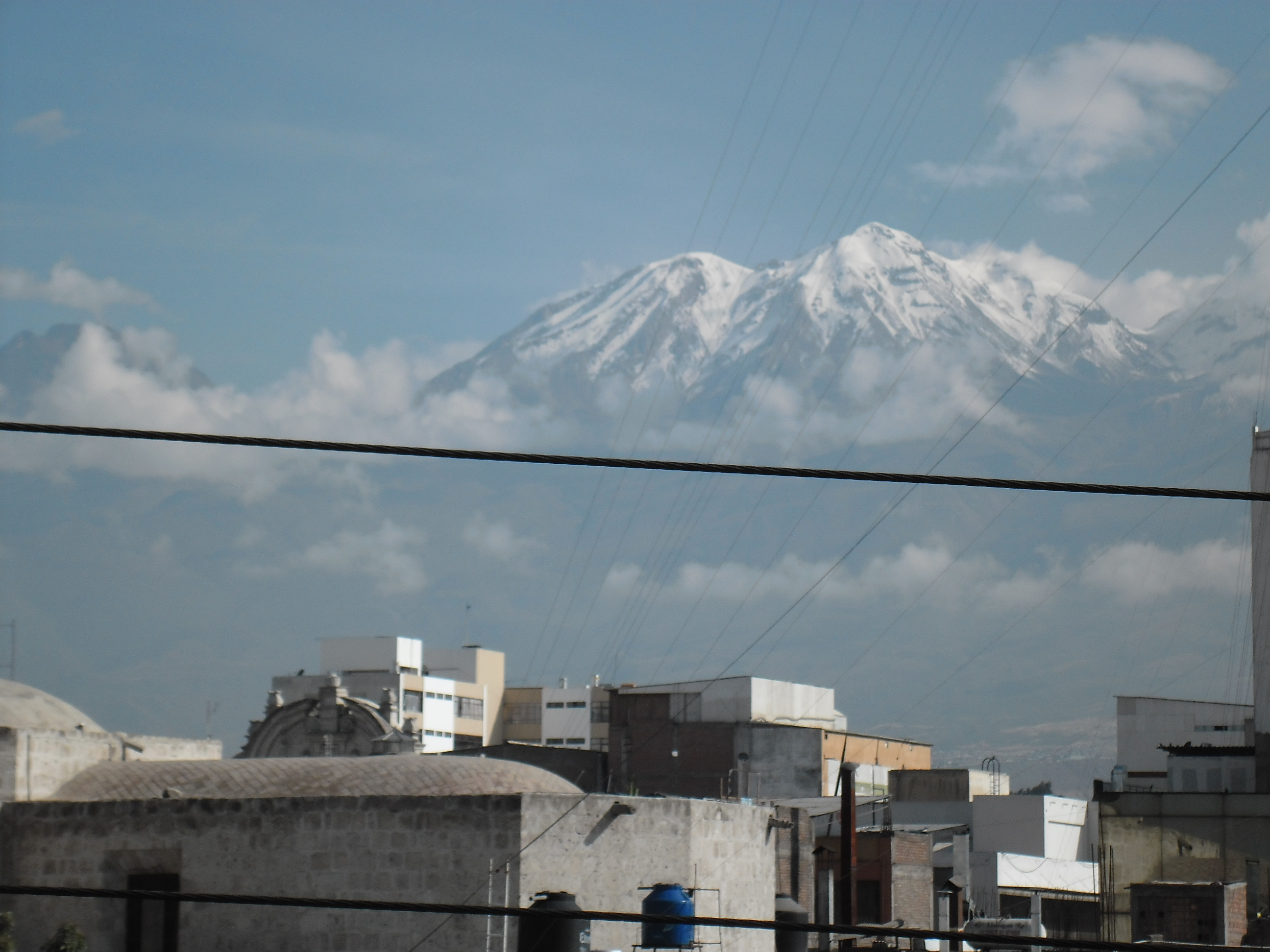
Arequipa is the second largest city in Perú. Three huge volcanoes tower over it. Known as “the white city”, many of the massive colonial buildings are built of white volcanic stone called sillar which glistens with silica flakes in the sunlight.
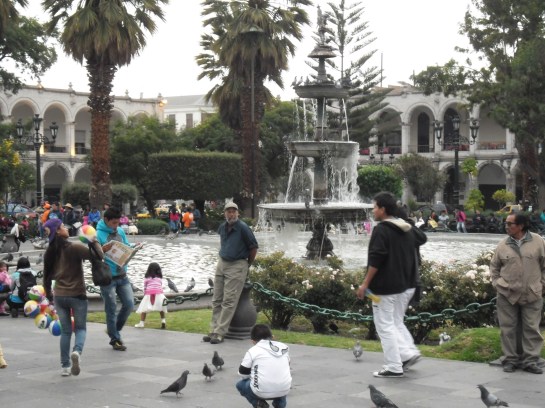
Plaza de Armas, Arequipa
It wasn´t until we returned to Arequipa a week later that the weather cleared enough to see the volcanos.
We explored the city for 2 days and then headed to the beach. Mejia is a beach town on the southern coast and a sumer spot for families from Arequipa.. Here we stayed 5 days in a small boarding house run by a retired couple, Luz and Manuel. We had the penthouse suite: a small room and bath on the roof of their house. Outside our room was a sitting area with couches covered with ripple roofing. Laundry lines crossed the rest of the roof where Luz hung her sheets and towels.
On the beach, the long flat sand is lined with rows of umbrellas and shade canopies. On three of our days there, we rented an umbrella and chairs and just lounged the whole day. The sun was strong, but the ocean was cold and there was a shore break. We never did go into the water, but lots of folks did. Once we watched the red and yellow clad life guards swim out to rescue a boy carried out beyond the surf. And we made friends with Olga, a young waitress at the beach-side restaurant, who greeted us with kisses and did little dance steps as she cleared tables.
When we left Arequipa the second time, we headed to Colca Canyon. One of the deepest canyons of the worls, maybe 60 miles long and 10,000 feet deep, it is famous for nesting condors. We stayed at the head of the canyon in the town of Chivay.
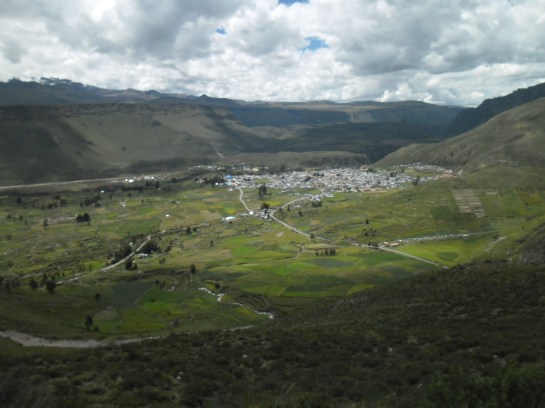
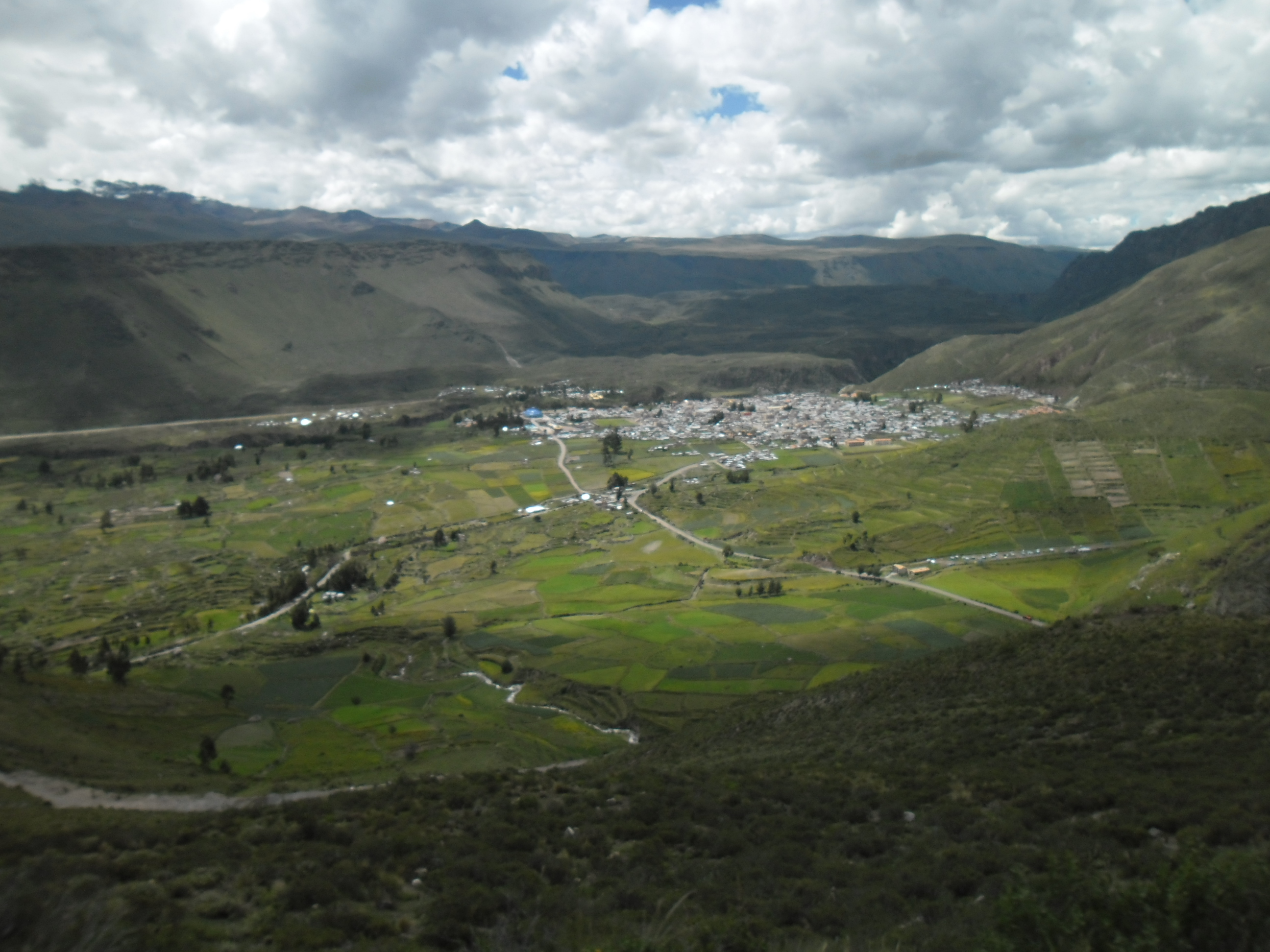
Chivay
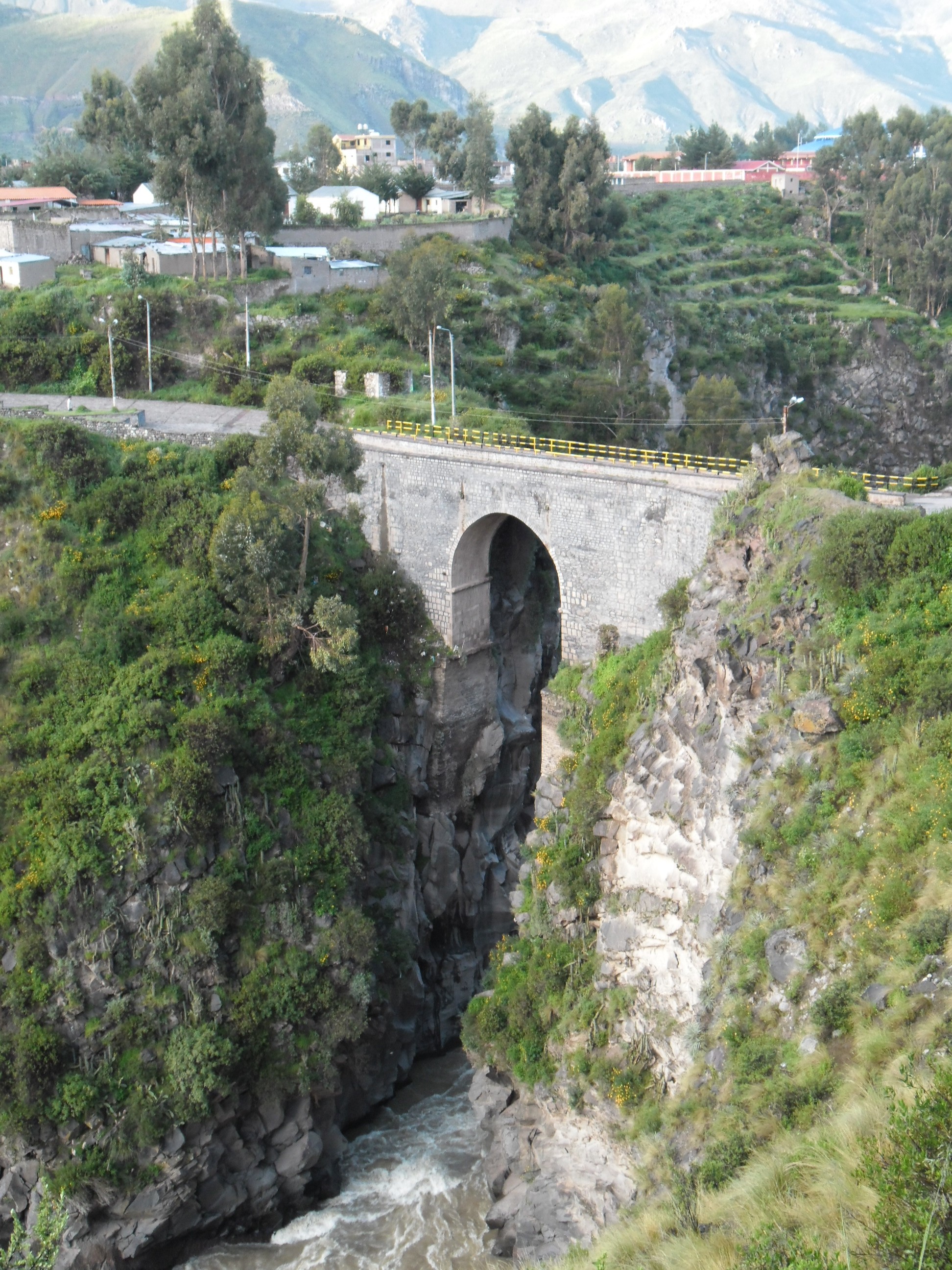
Once we arrived, we wished we had allowed ourselves more time. Chivay is spectacular. The canyon there is spanned by a bridge built on Incan foundations.
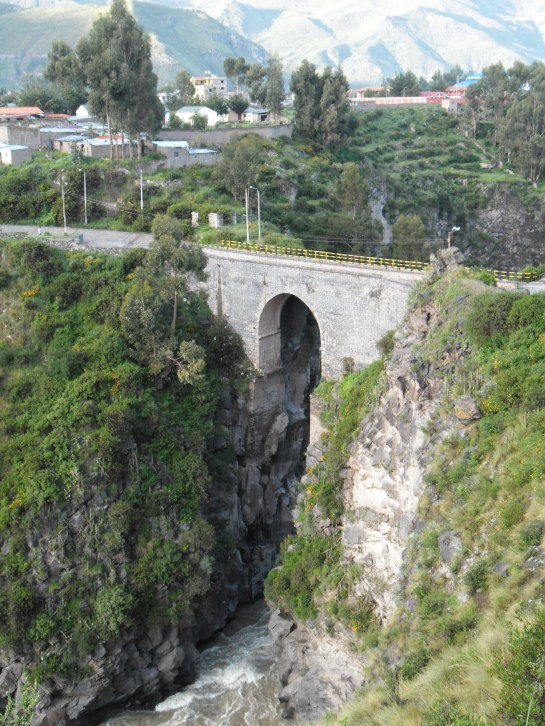
The Incans actually hung suspension bridges of woven fiber from the foundations. Some are still in existence.
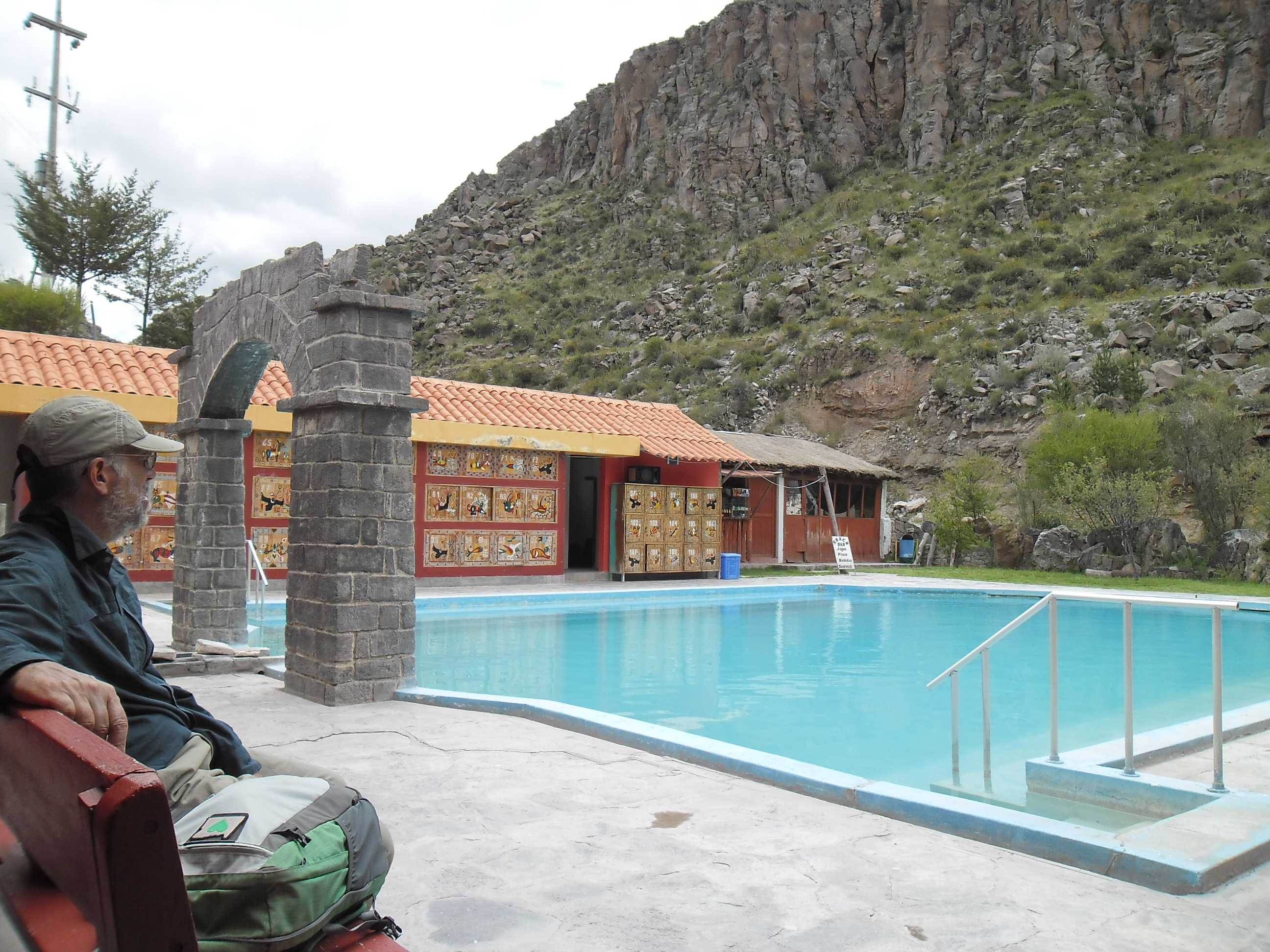
Three kilometers upstream is a hot springs that the community developed to now include 5 different pools. It opens at 4 am and townspeople go then to bathe.
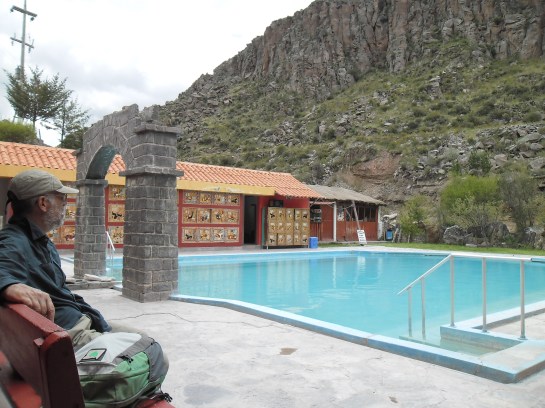
Pool overlooking river valley
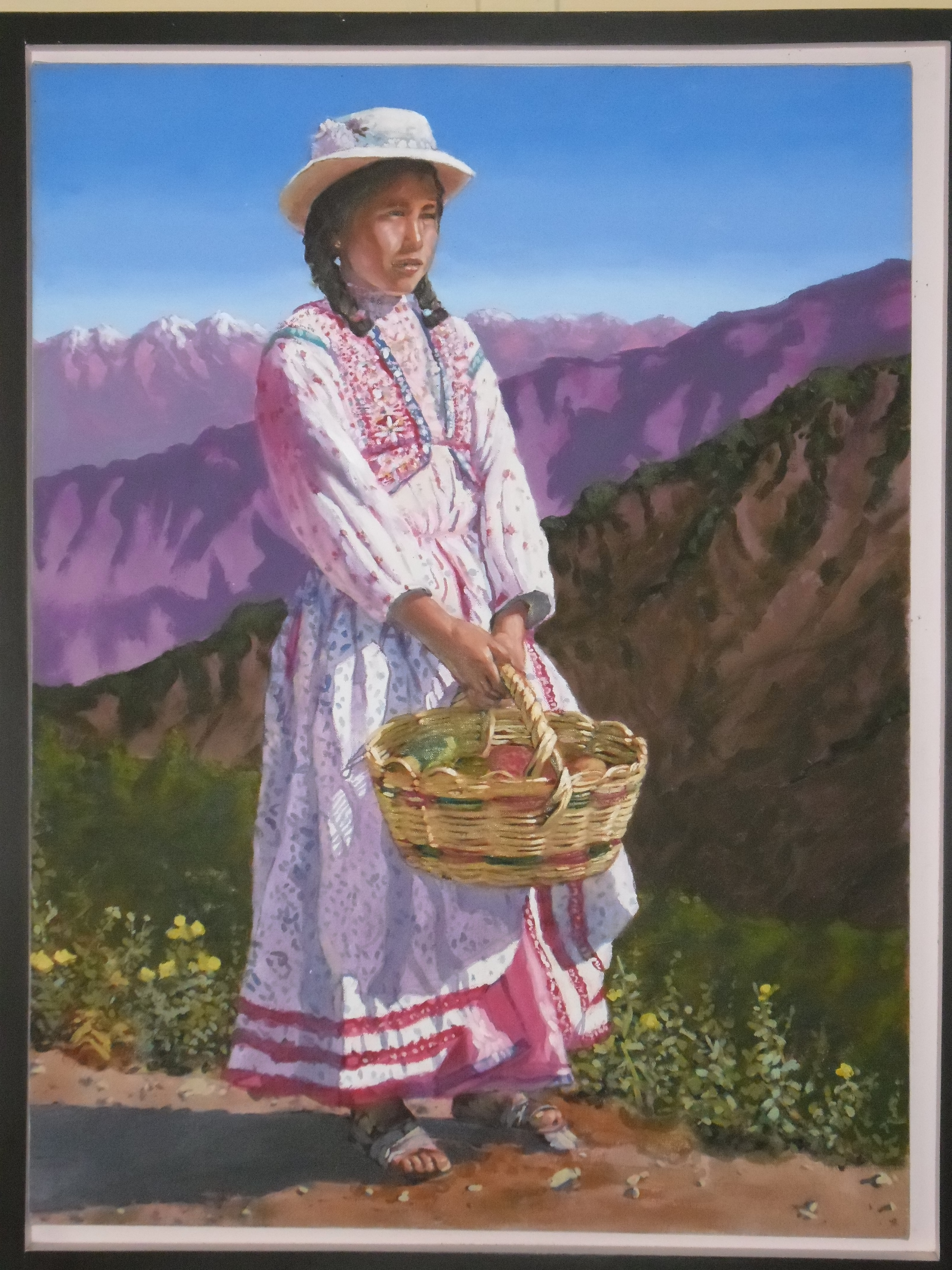
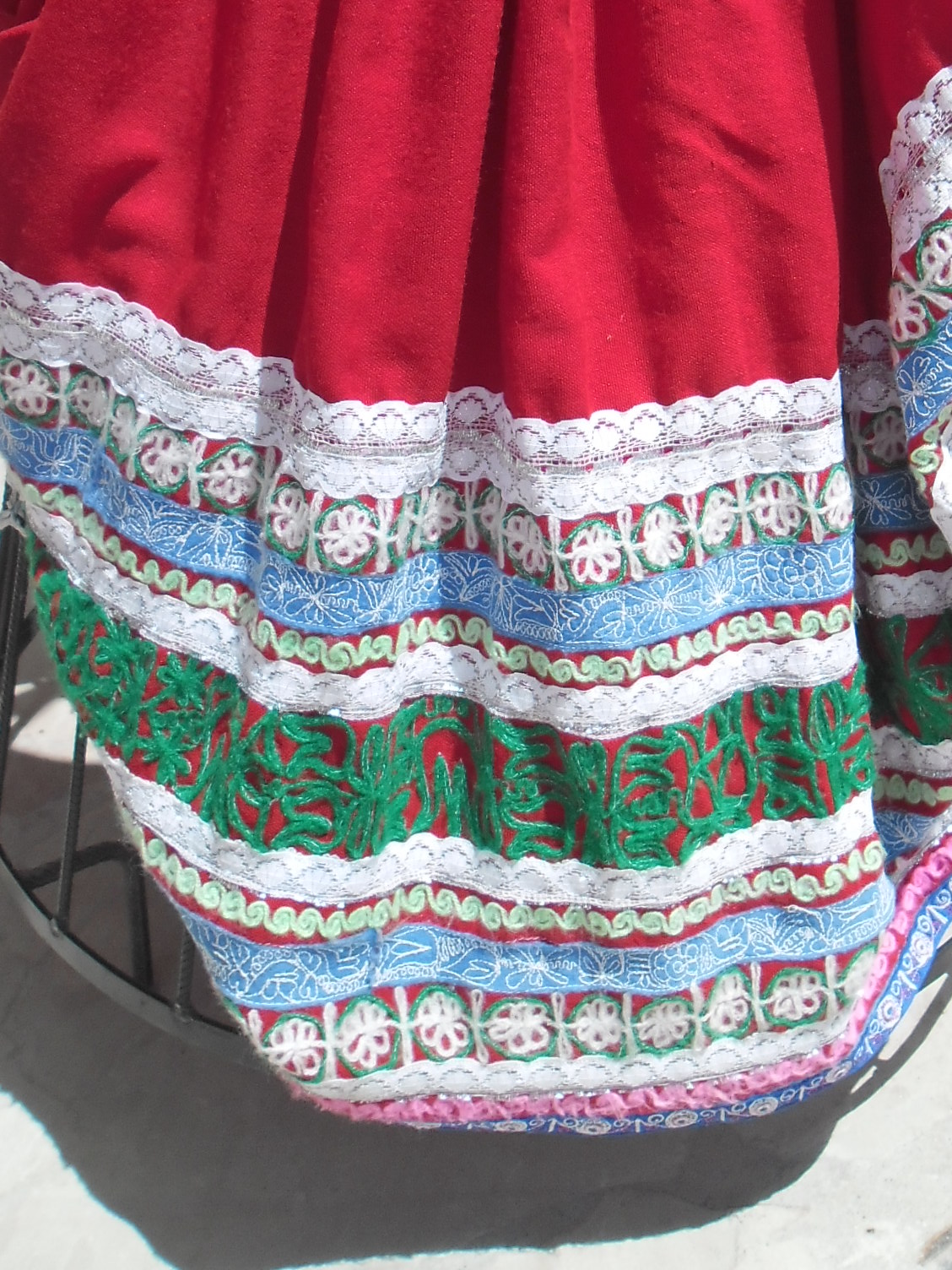
Colca Canyon is also known for its typical dress featuring dense embroidery. The women embroider on treadle sewing machines. We saw little tallers (workshops) with machines side by side in rows. We went shopping twice at one collective for girlfriend gifts!
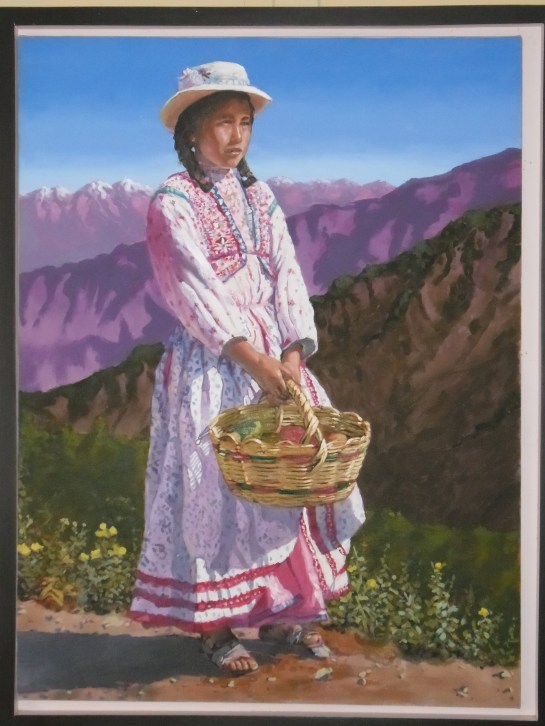
Representative painting, and people actually did dress like this, but we did not want to take pictures of them.
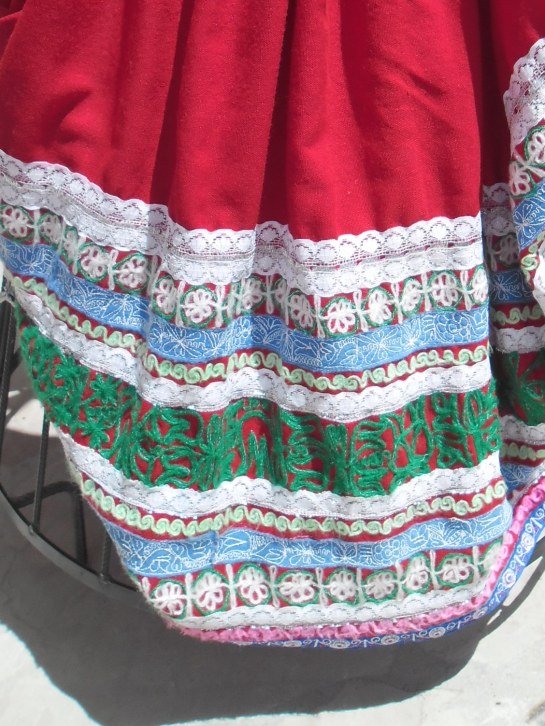
Detail from skirt border.
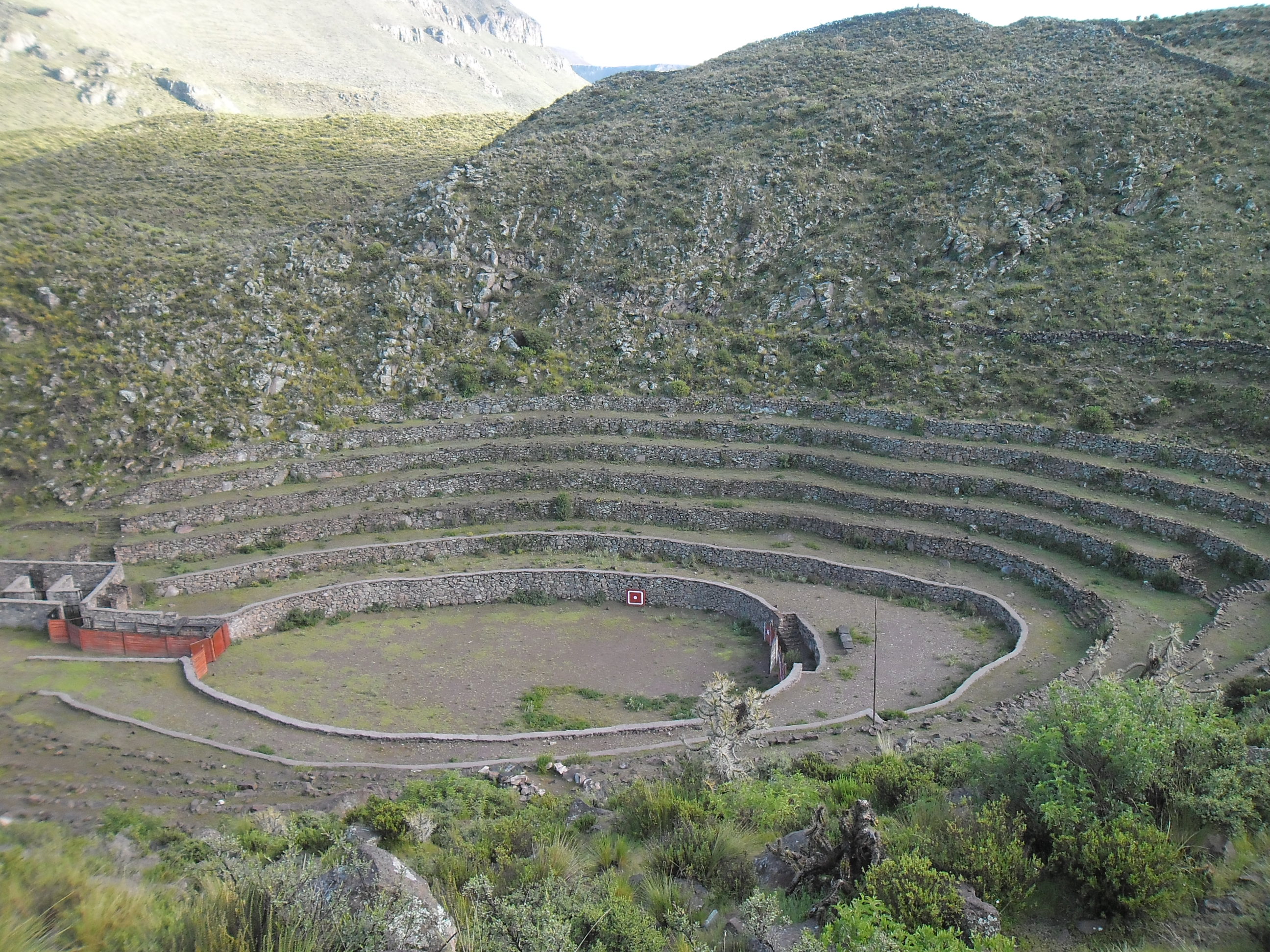
Our last morning in Chivay, we got up early to climb the mirador above town. Taking the wrong turn at one point, we came across a bullring in the mountains.
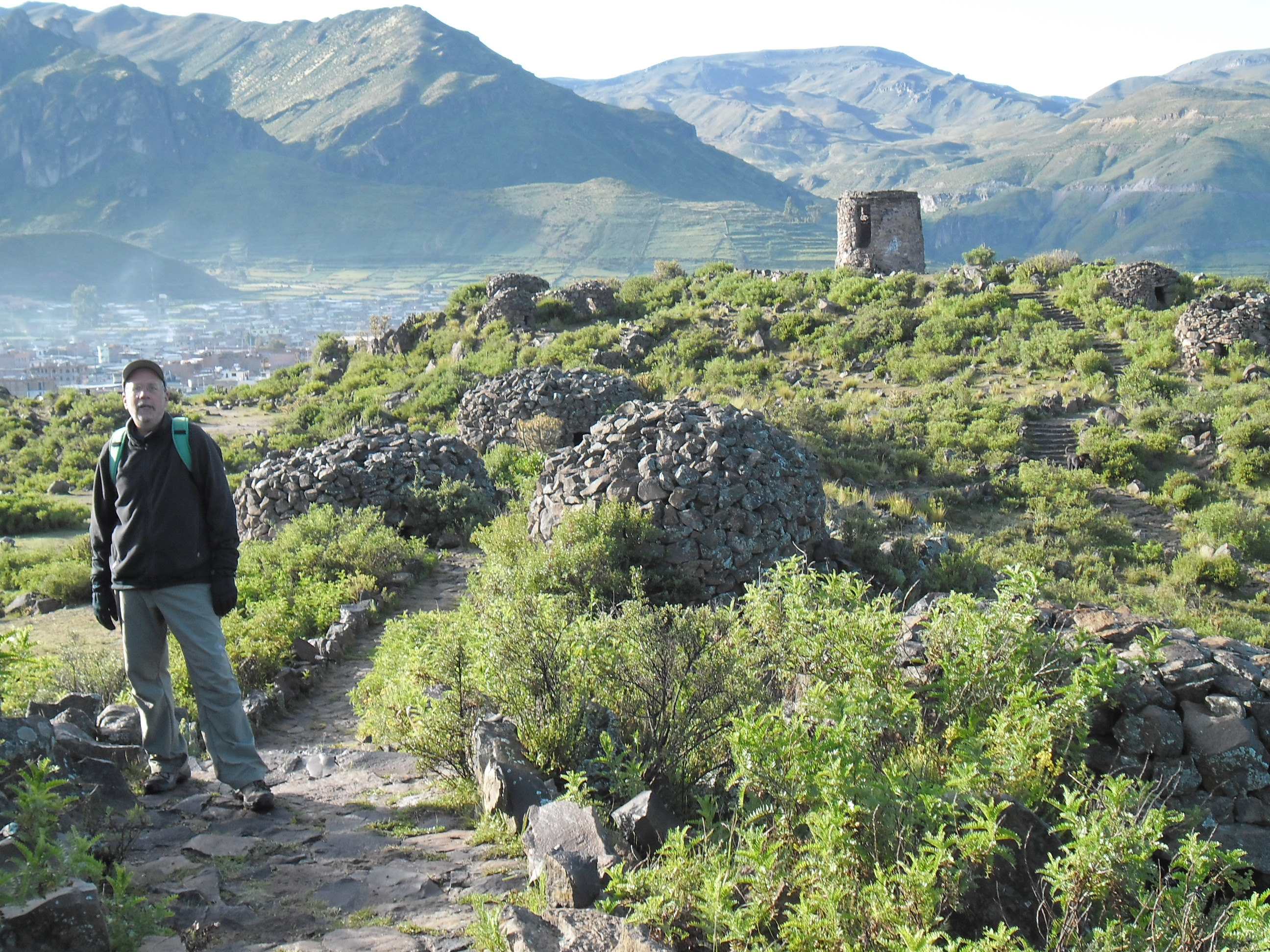
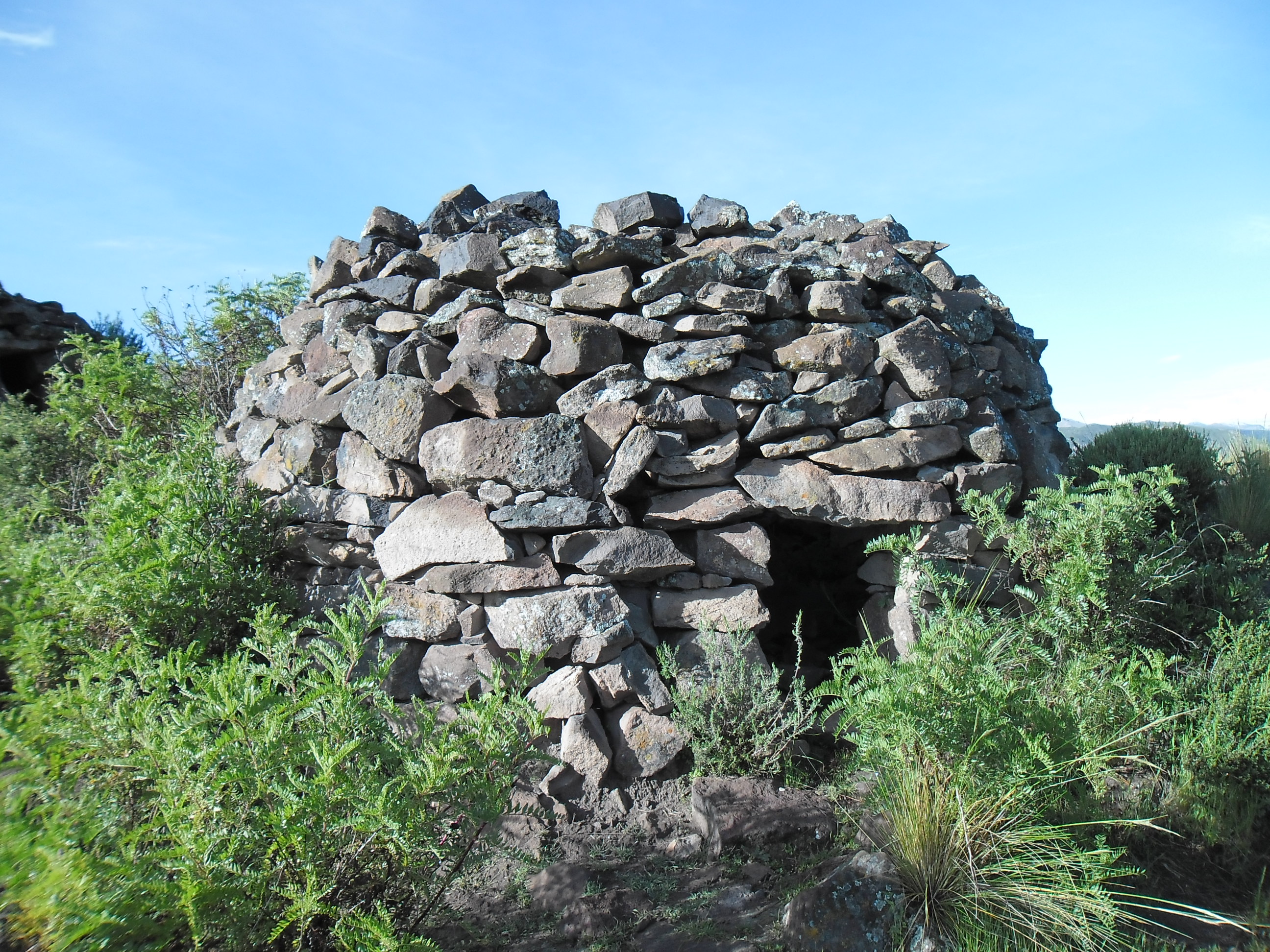
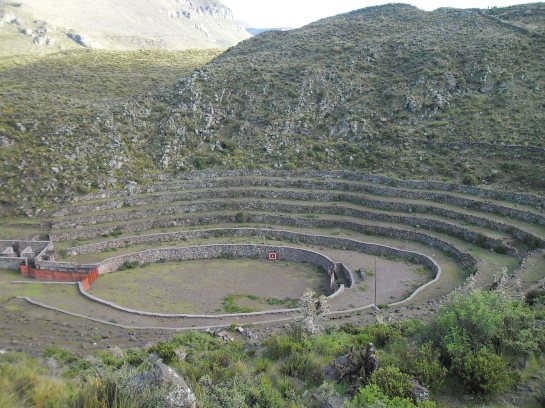 When we did reorient and head to the mirador, we found ourselves walking across a hillside of pre-Incan colcas. Colcas are circular stone structures used for food storage and/or burials.
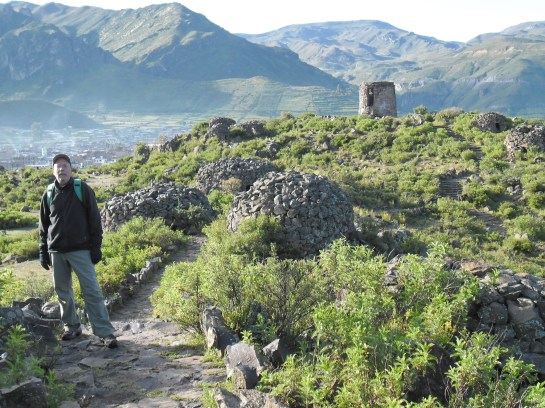
We counted more than 12 colcas on the hill. Mirador at top.
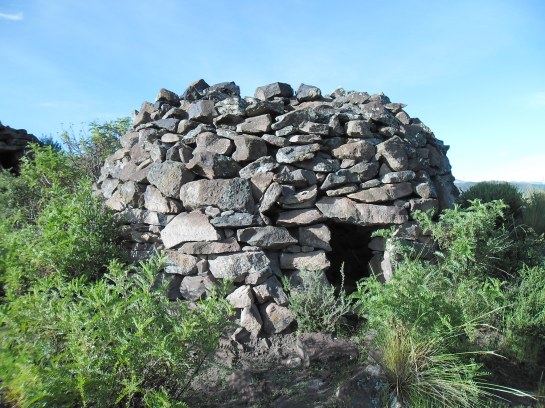
We did not crawl into one!
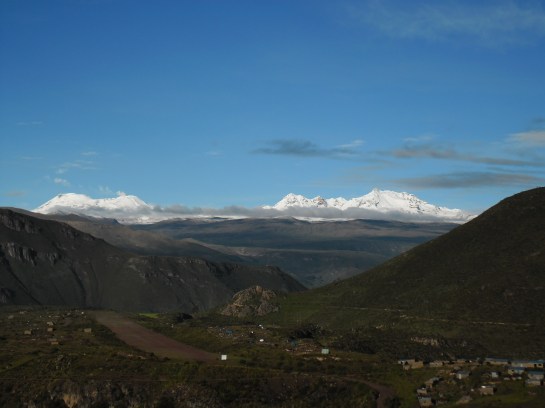
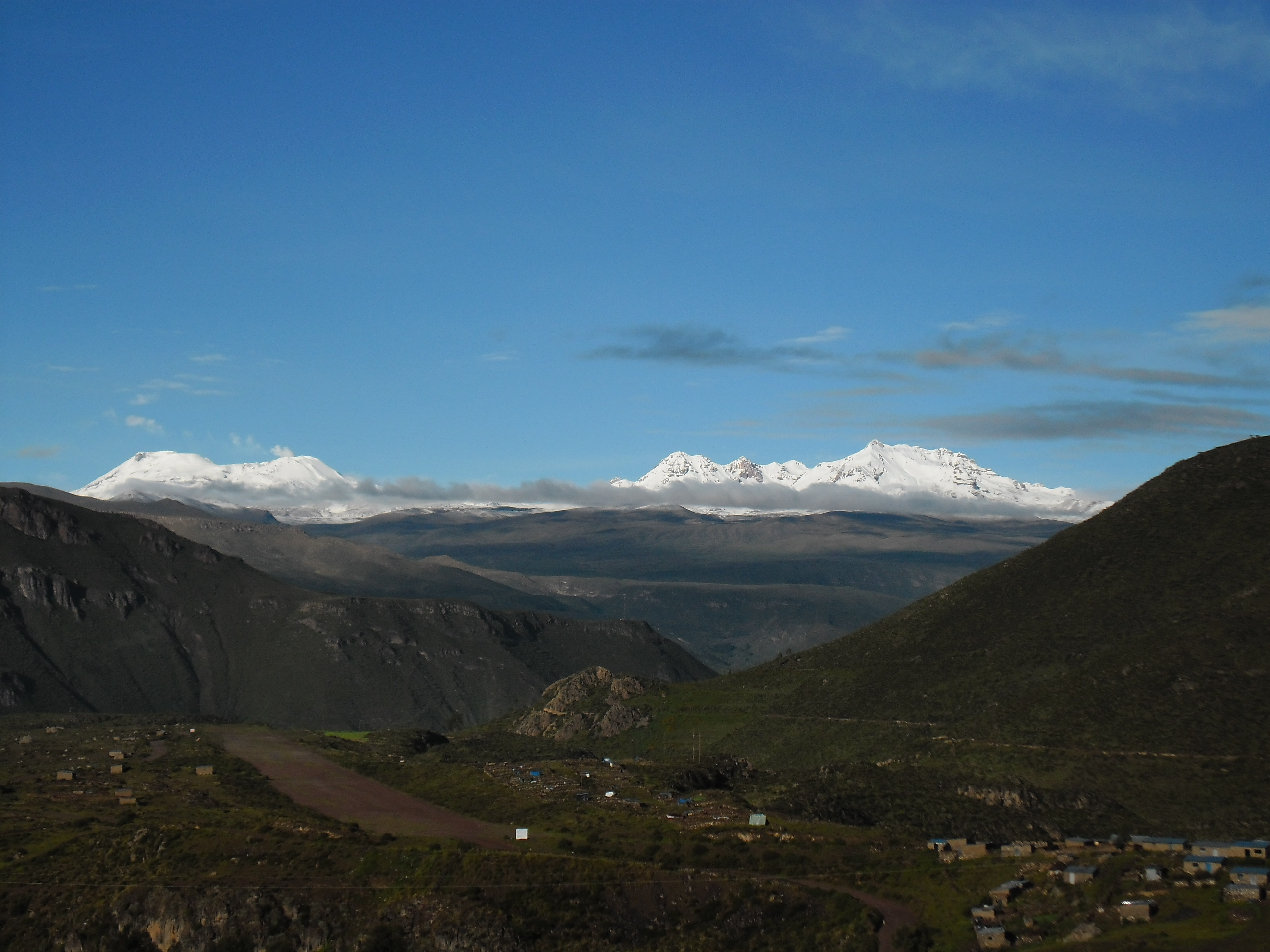
And from the mirador, we caught a view of the volcanoes down the canyon before the clouds covered them.
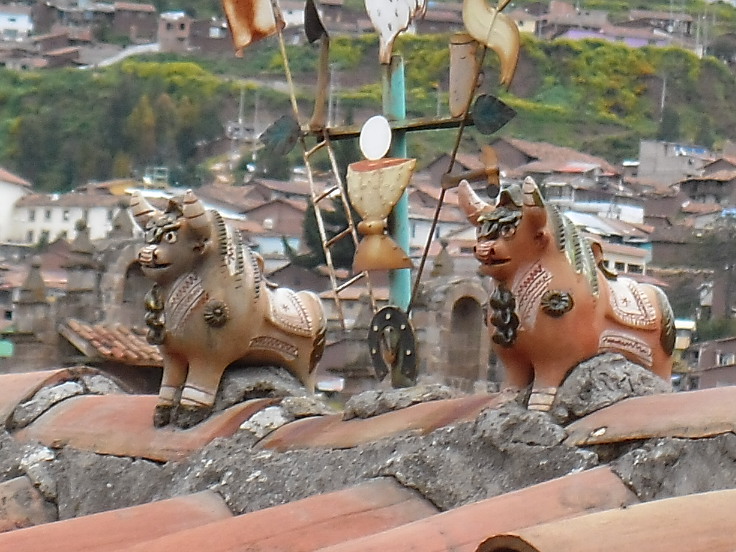
 We departed Chivay to catch the Inka Express, an archeological tour along the road to Cusco. The ten hour bus trip actually flew by. Ronald, our bilingual guide, spoke in detail about the history and current culture of the area we traversed. We made five stops. In Pucara, we learned about the practice of mounting ceramic bulls on roof tops for protection. Indeed, the tile roofs of Cusco Valley are full of them.
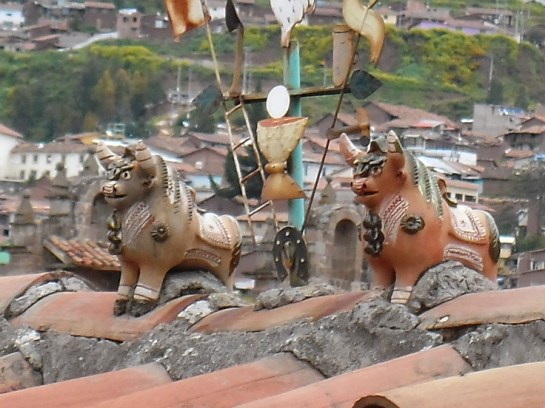
Our hotel roof in Cusco
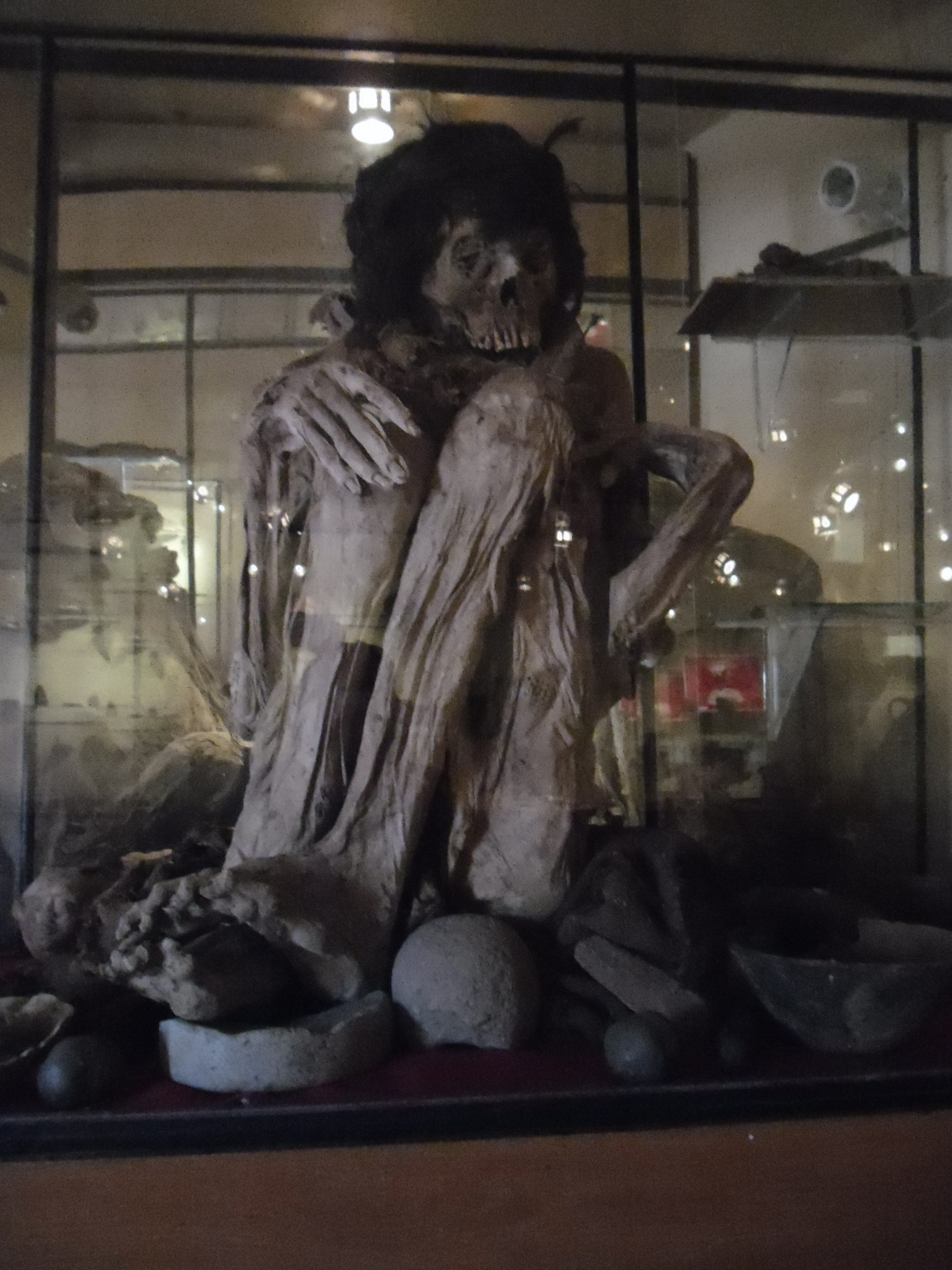
We visited two museums along the way with Incan burial remains including mummies.
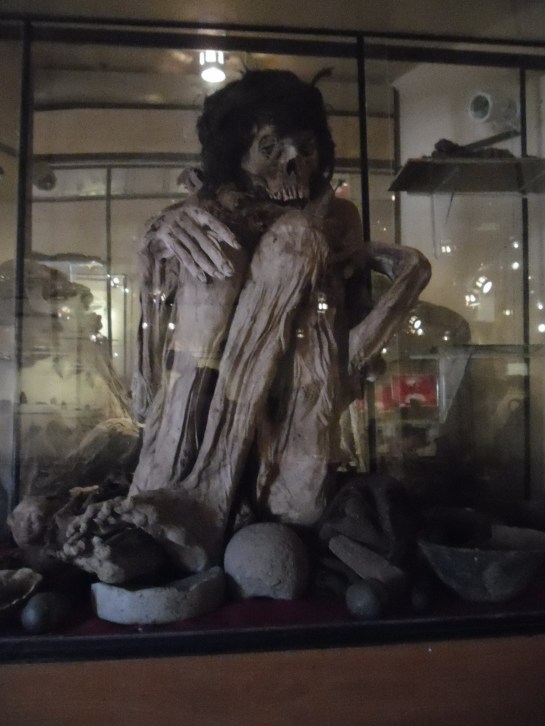
High born Incans were buried clothed with possessions for their life in the next world.
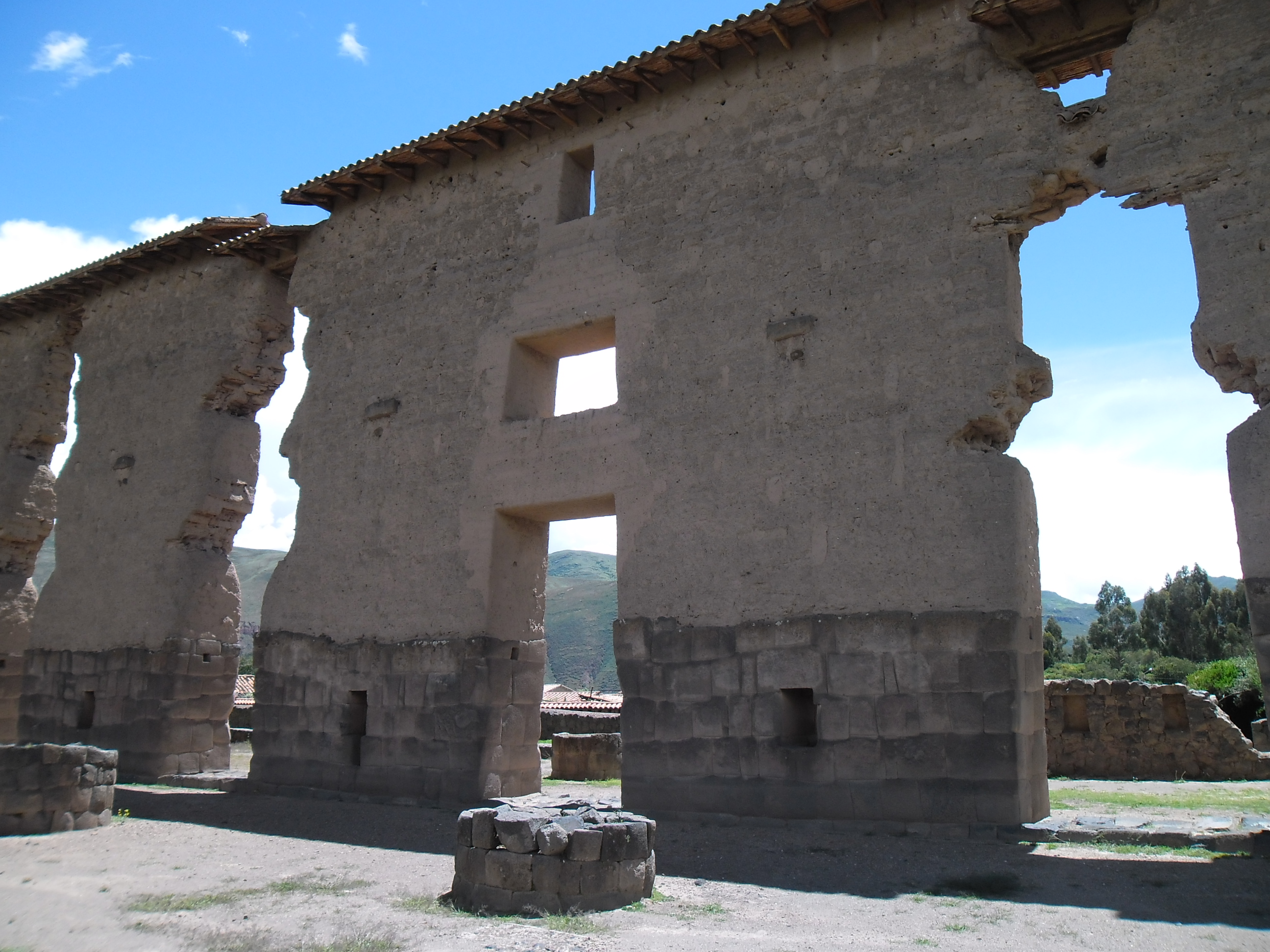
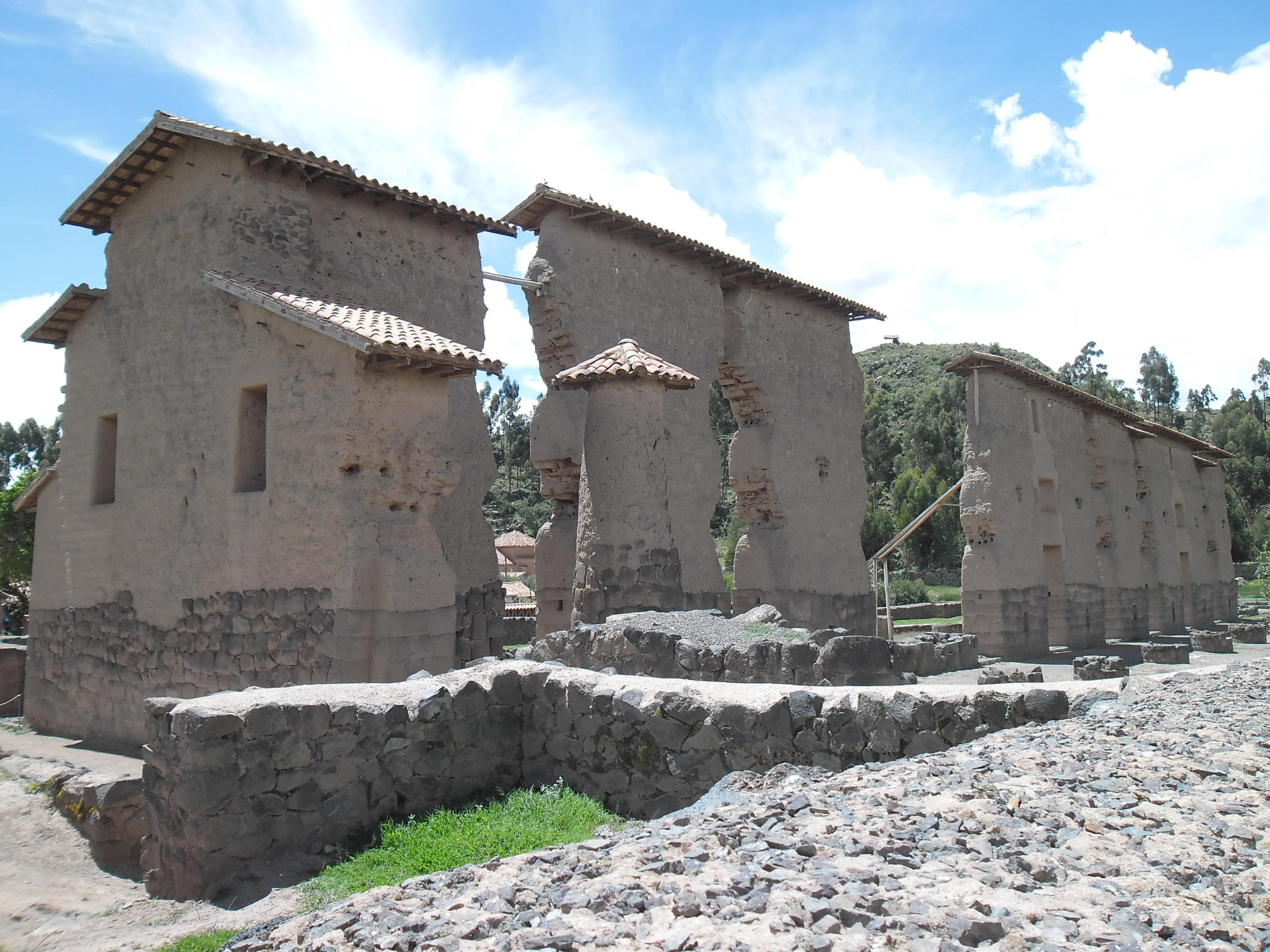
By far the most impressive stop was Rachqi. This was an Incan center, possibly an astronomical center, which combined Incan stone and Tiahuanaco adobe building techniques.
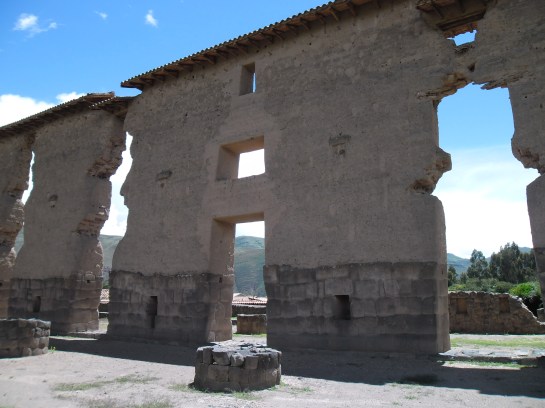
Adobe above, stone below
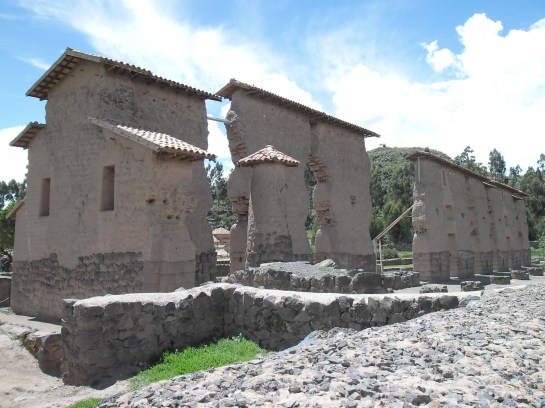
Temple? Astronomical observatory?
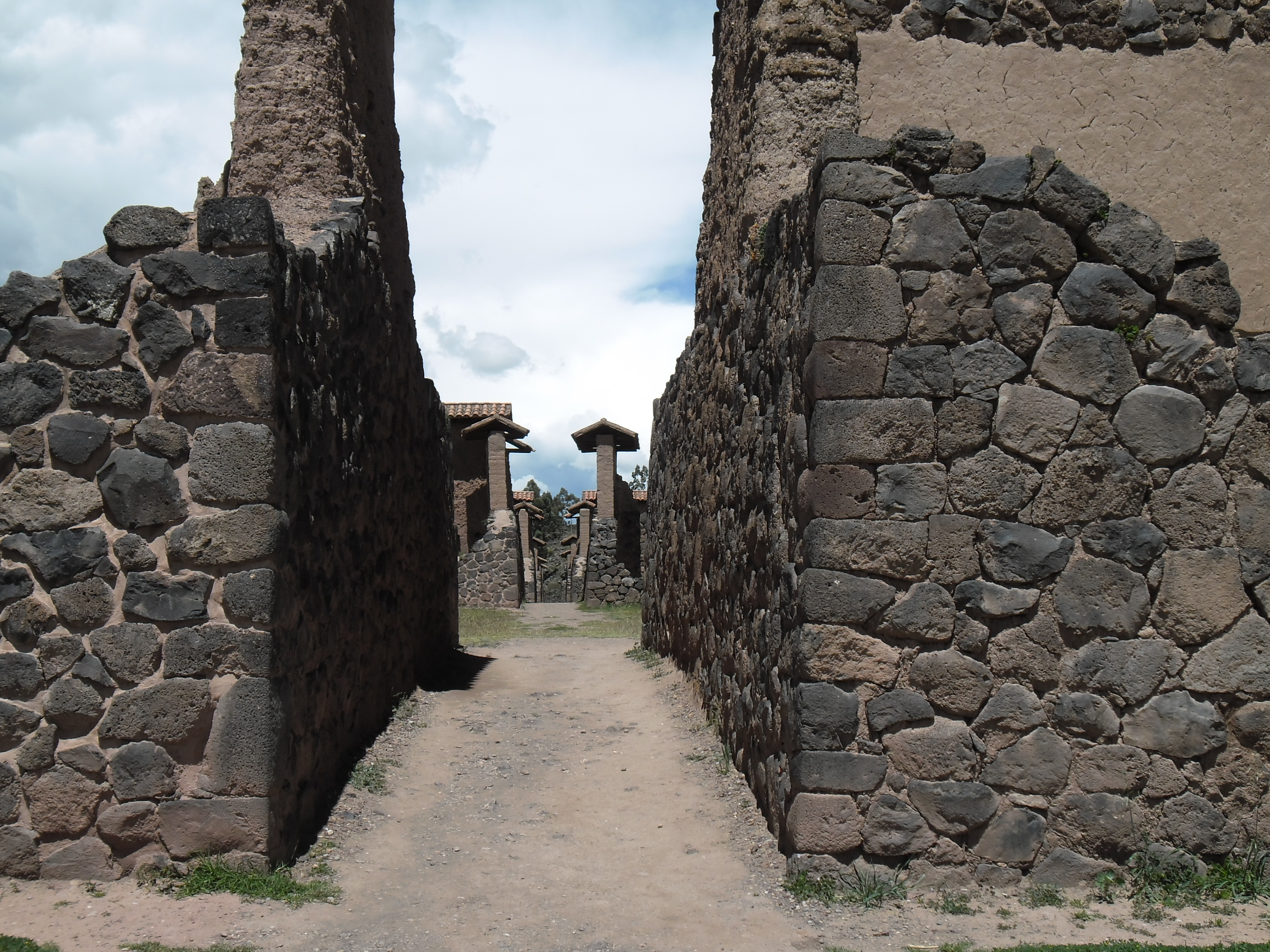
The doors and windows in the temple were oriented towards the sun, the moon and different constellations at different times of the year. Another example is this main passage through the residential district. On the winter solstice, the rising sun shines straight down the road.
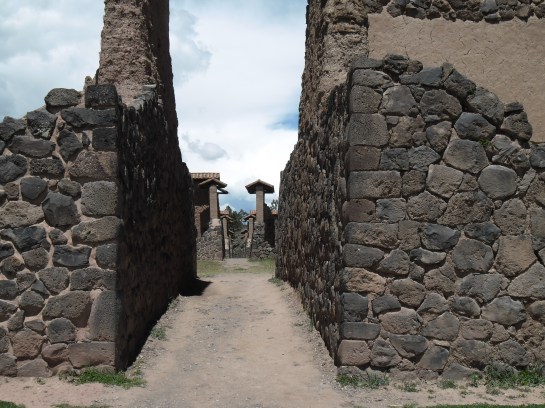
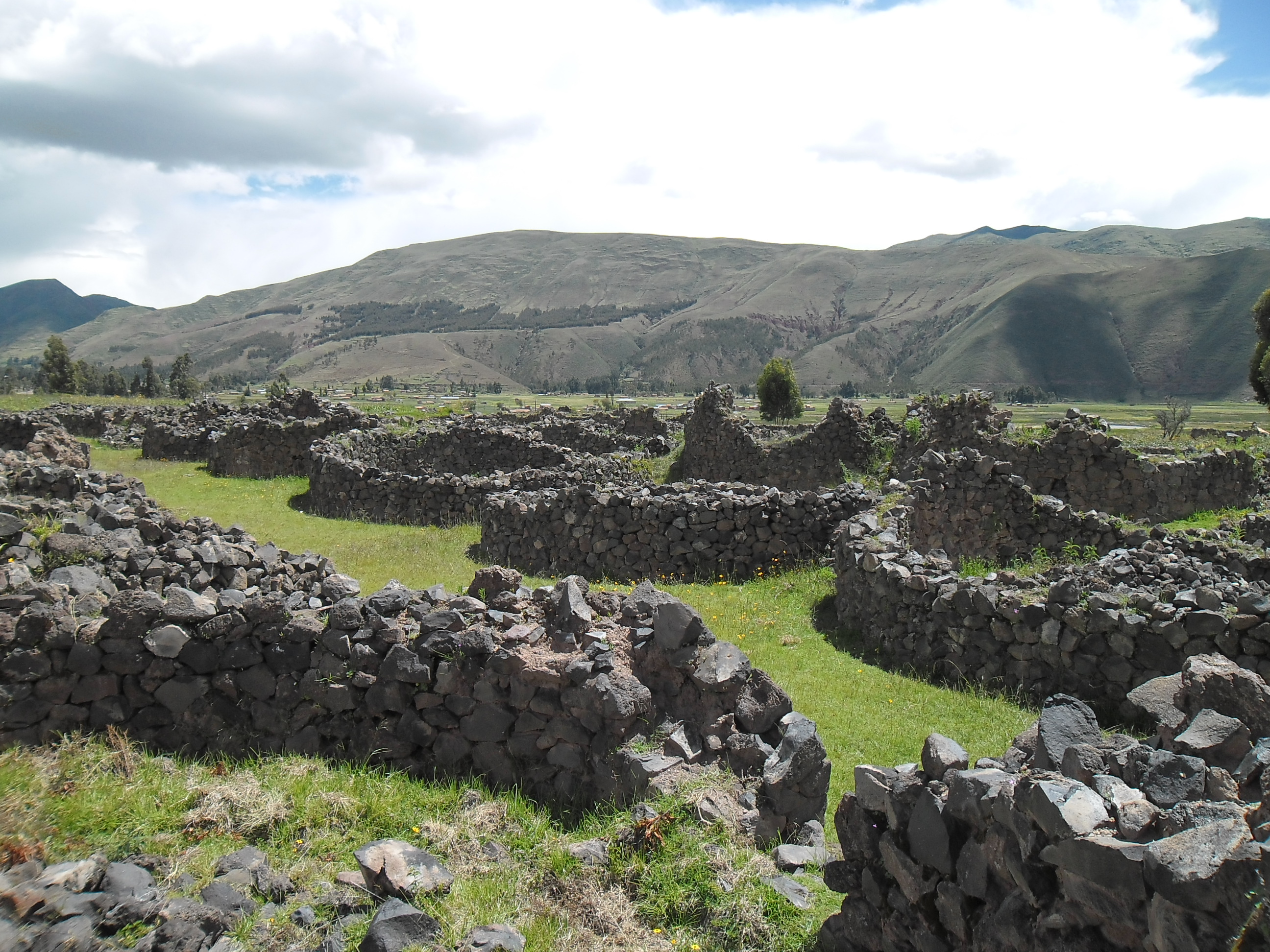
Extending over even a greater area than the housing were the storage colcas next door. Grains and dried potatoes were gathered from all over the valley and stored here to be dispersed later in years of draught. And the Incans could predict accurately weather in the coming year and plan accordingly.
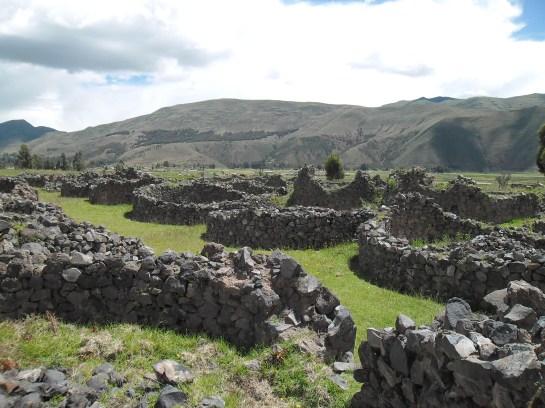
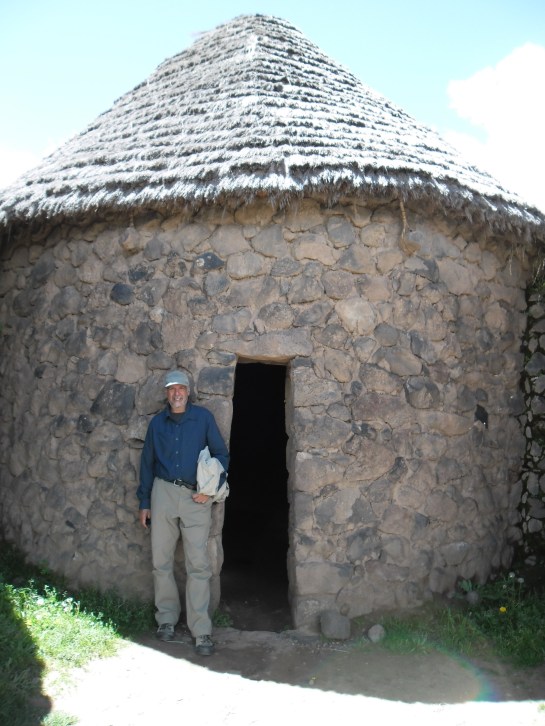
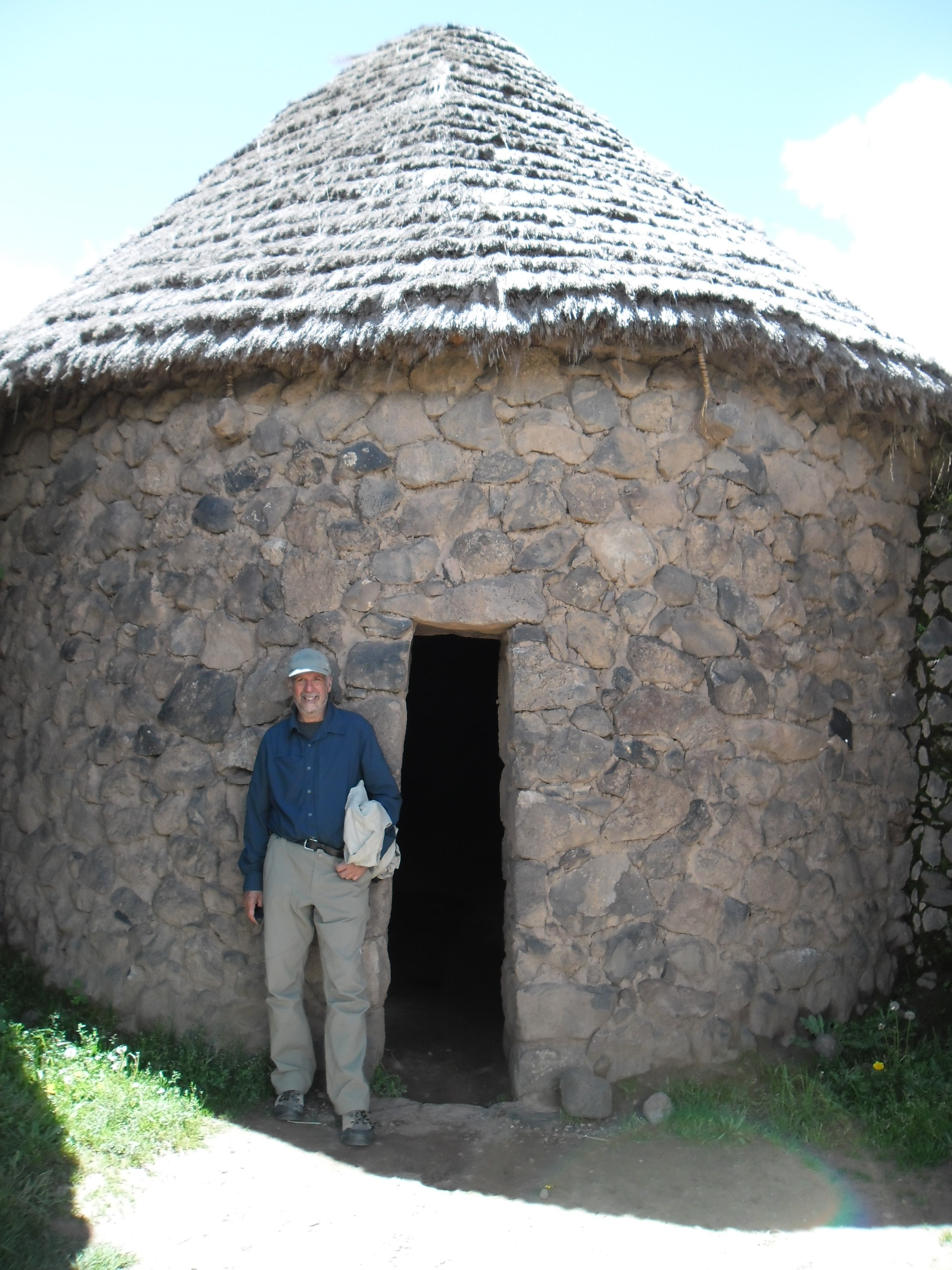
One of the fully intact colcas with a new roof. Conquering Spaniards dismantled many Incan structures to use the stones in their buildings.
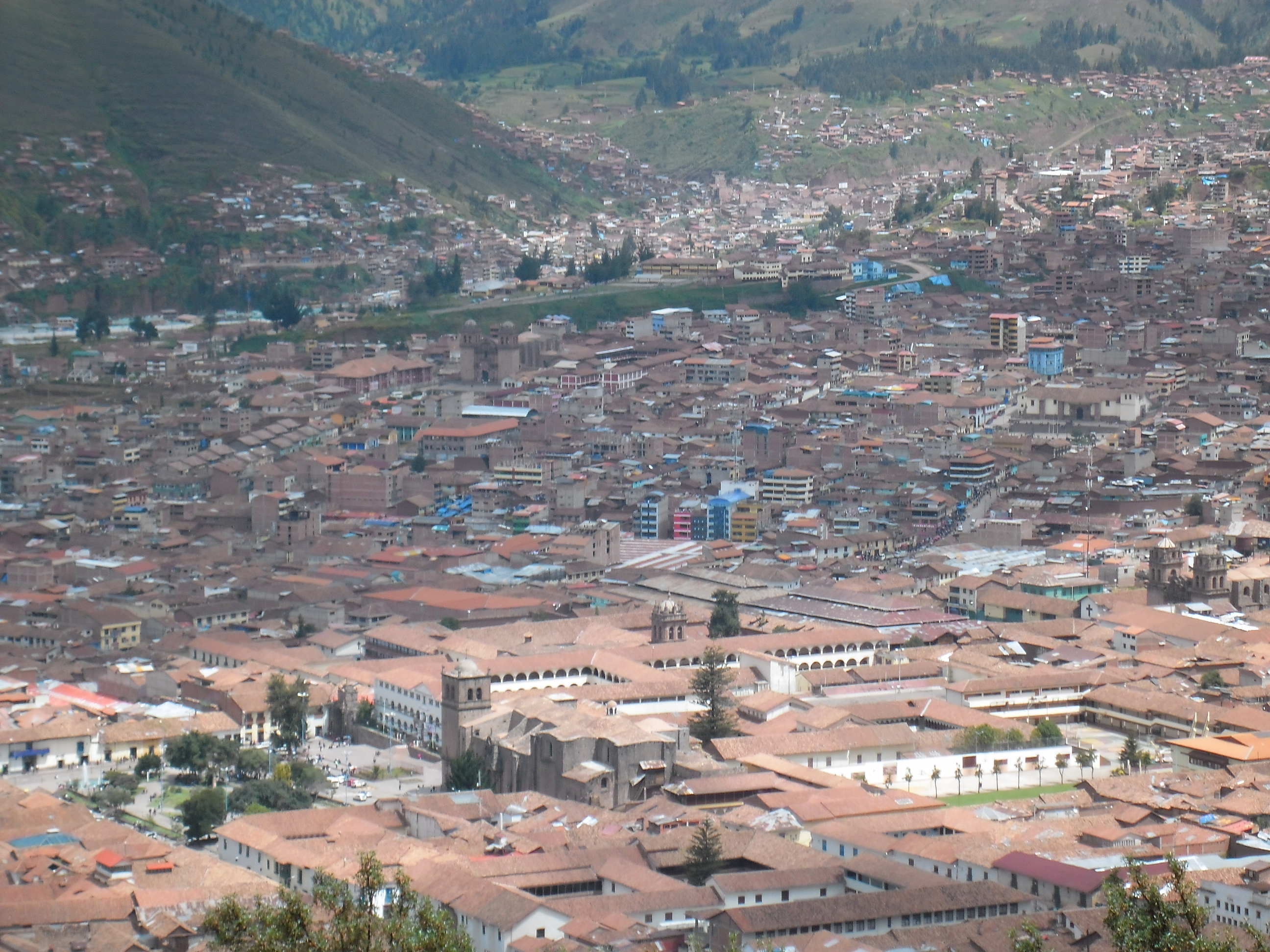
As we passed through the maiz and potato fields of the fertile Cusco valley, it was easy to appreciate the past and present abundance.
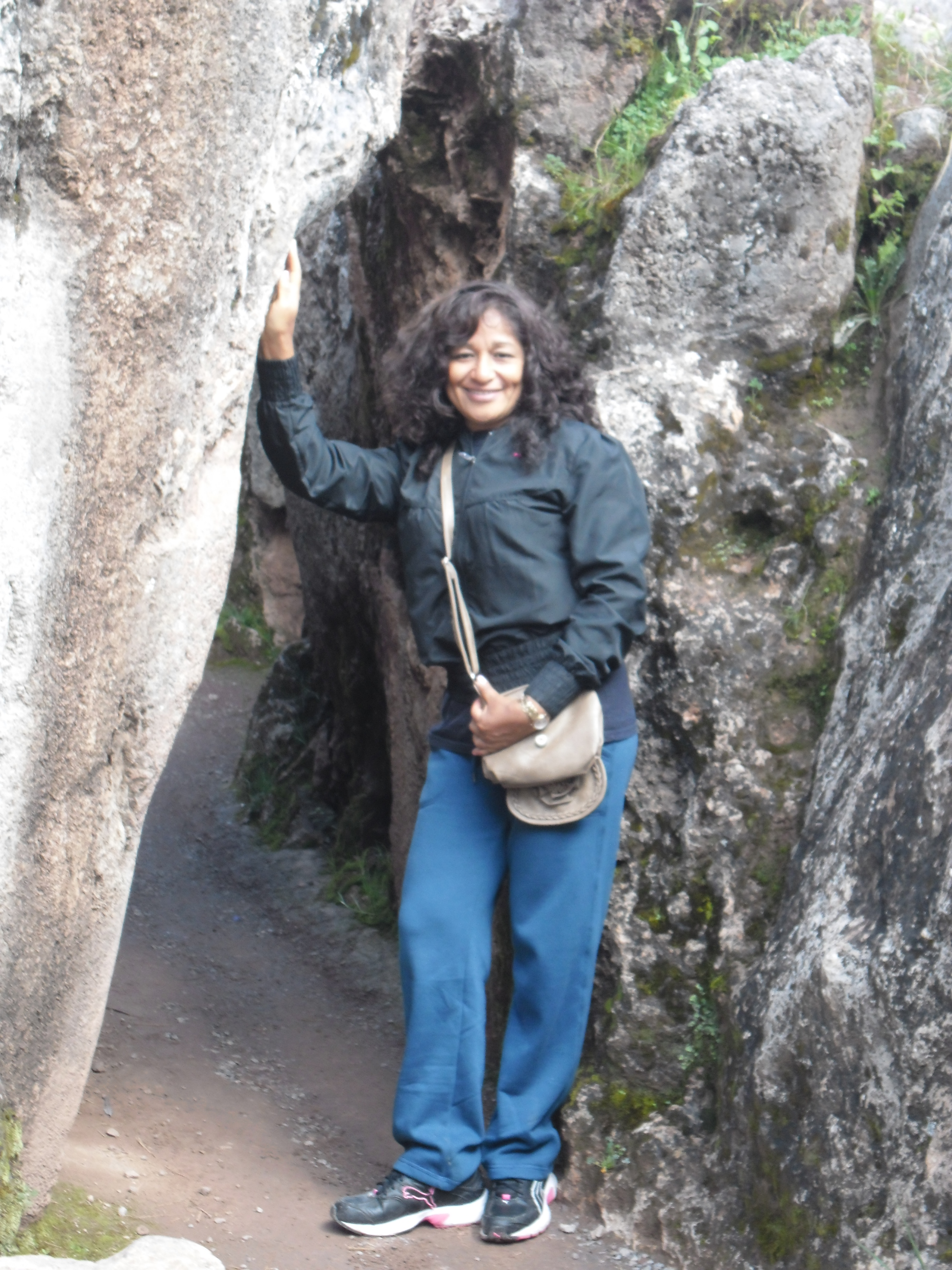
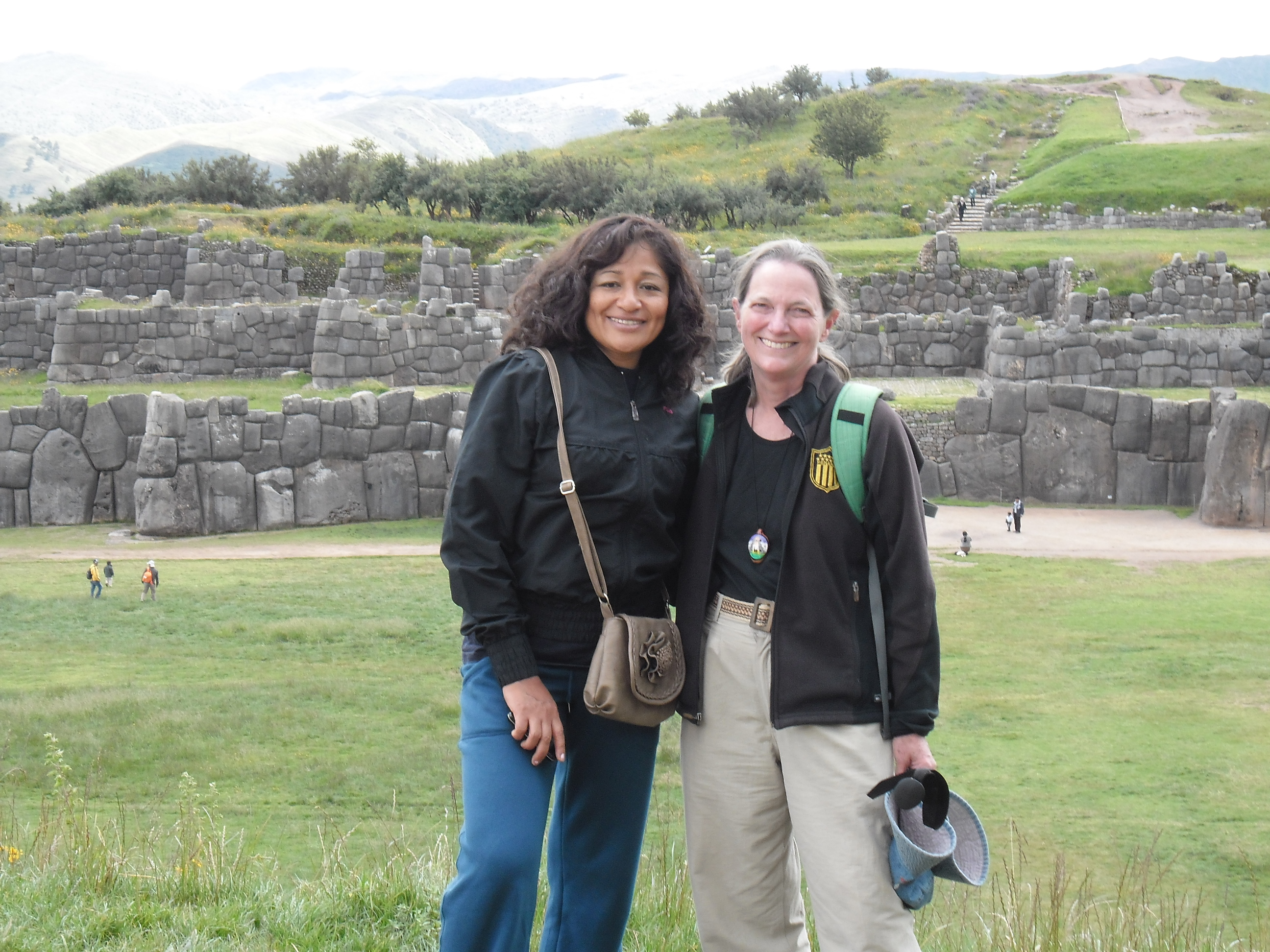
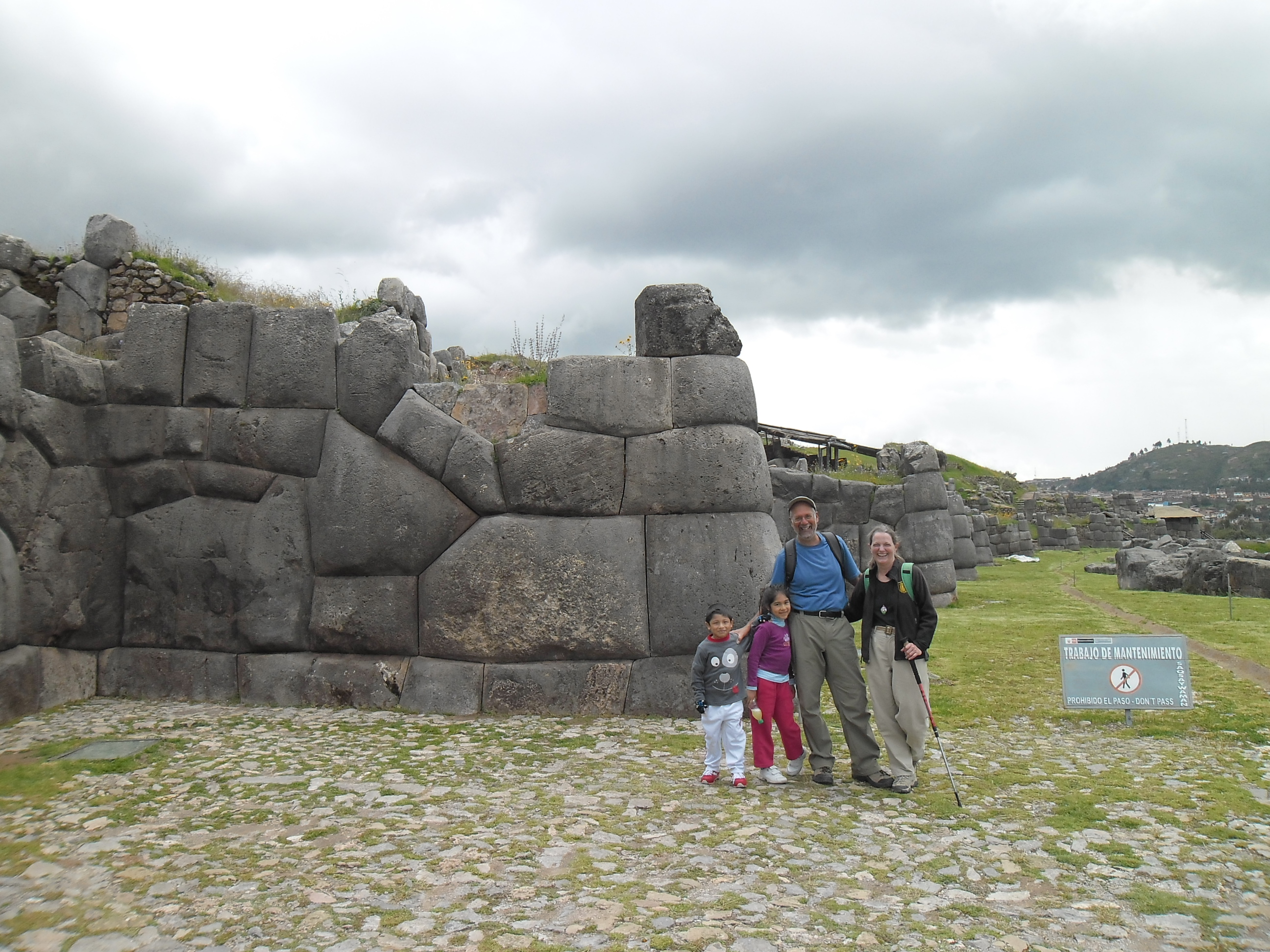
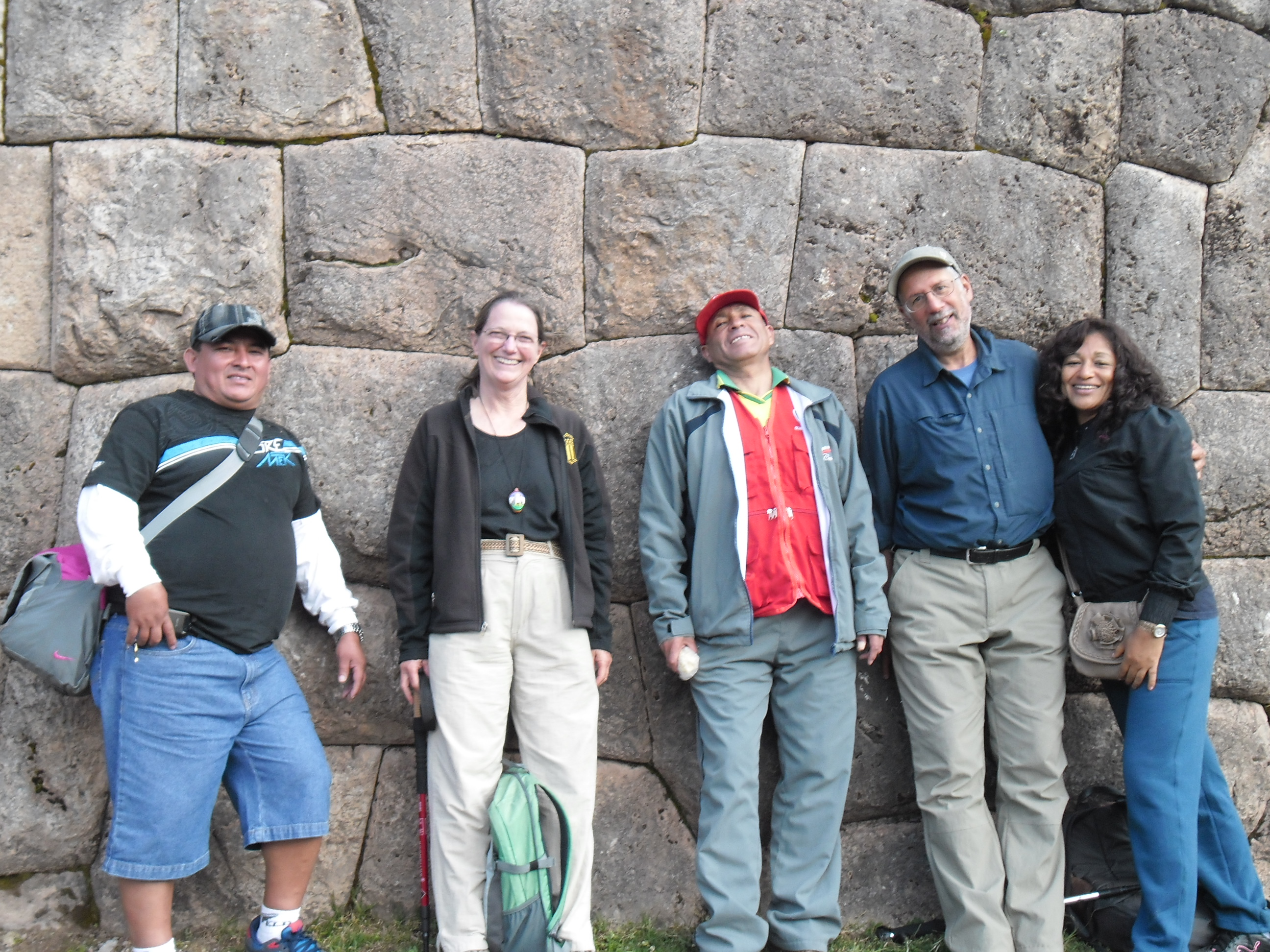
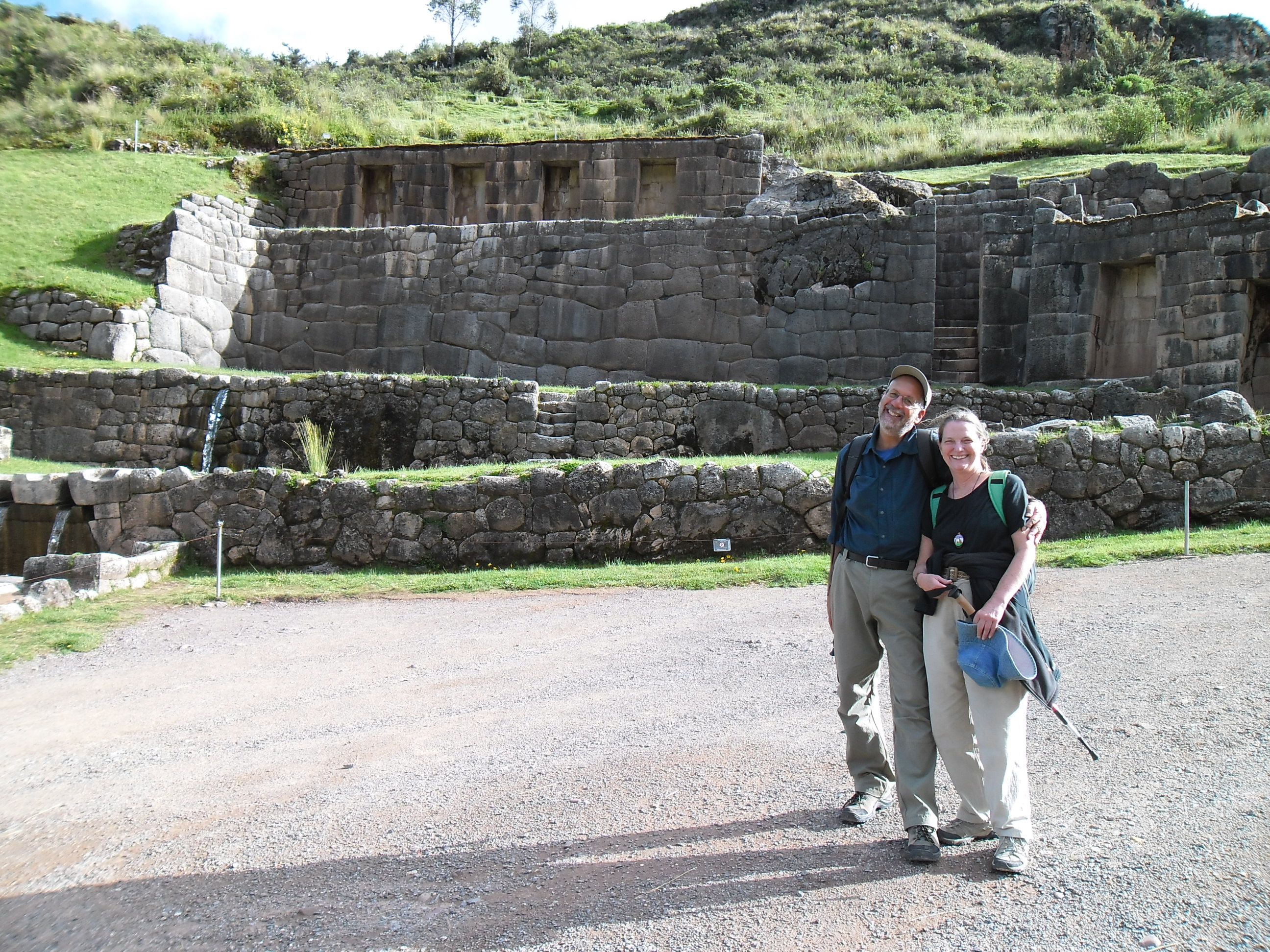
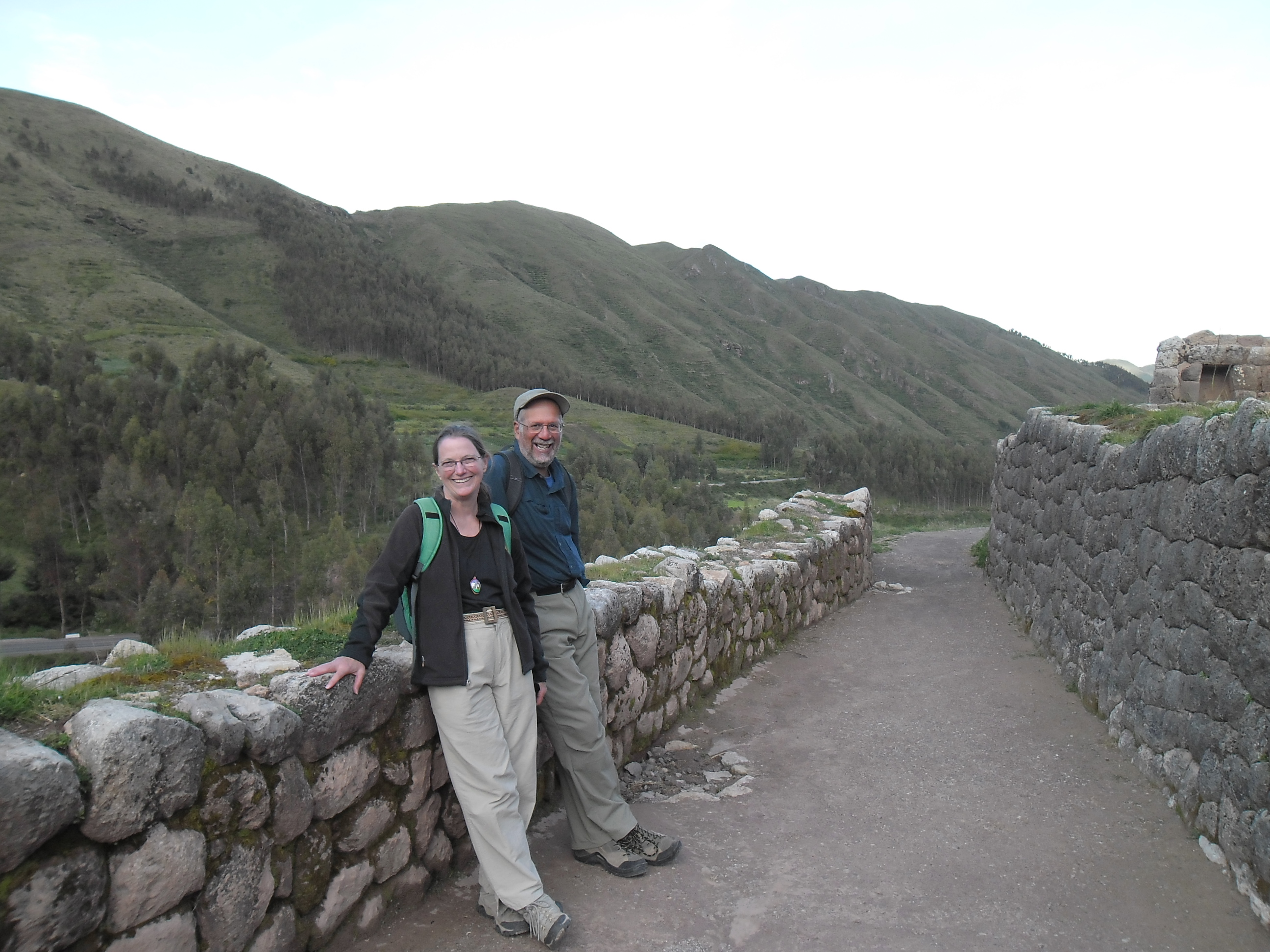
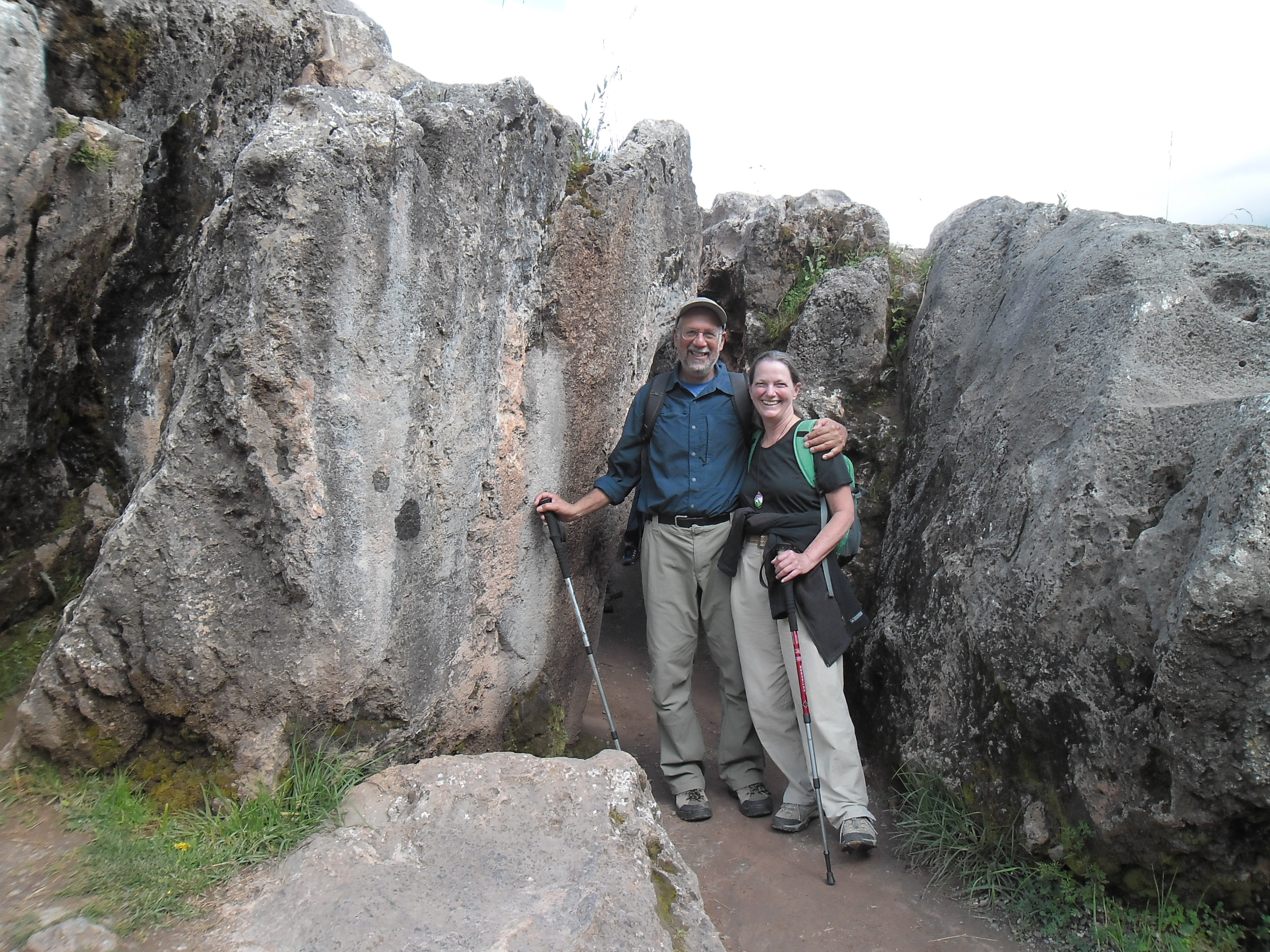
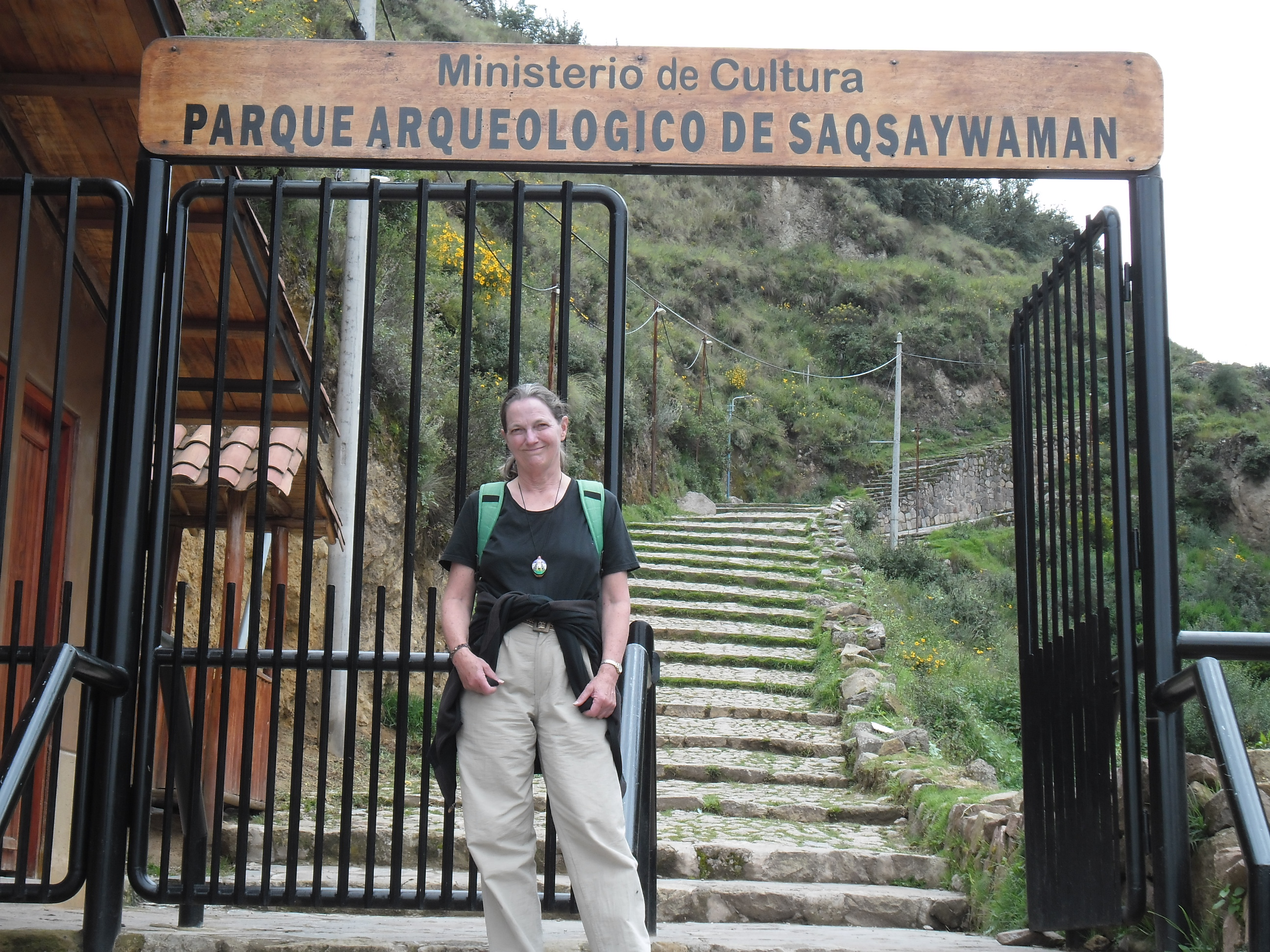 On our way up, we met a family from Lima, visiting their friend from Cusco. The friend from Cusco was Carlos, a high-school teacher who often brings his students to Sacsayhuamán. We spent the whole day with them, and Carlos was an excellent guide, as we not only walked through Sacsayhumán, but also three other archaeological sites nearby.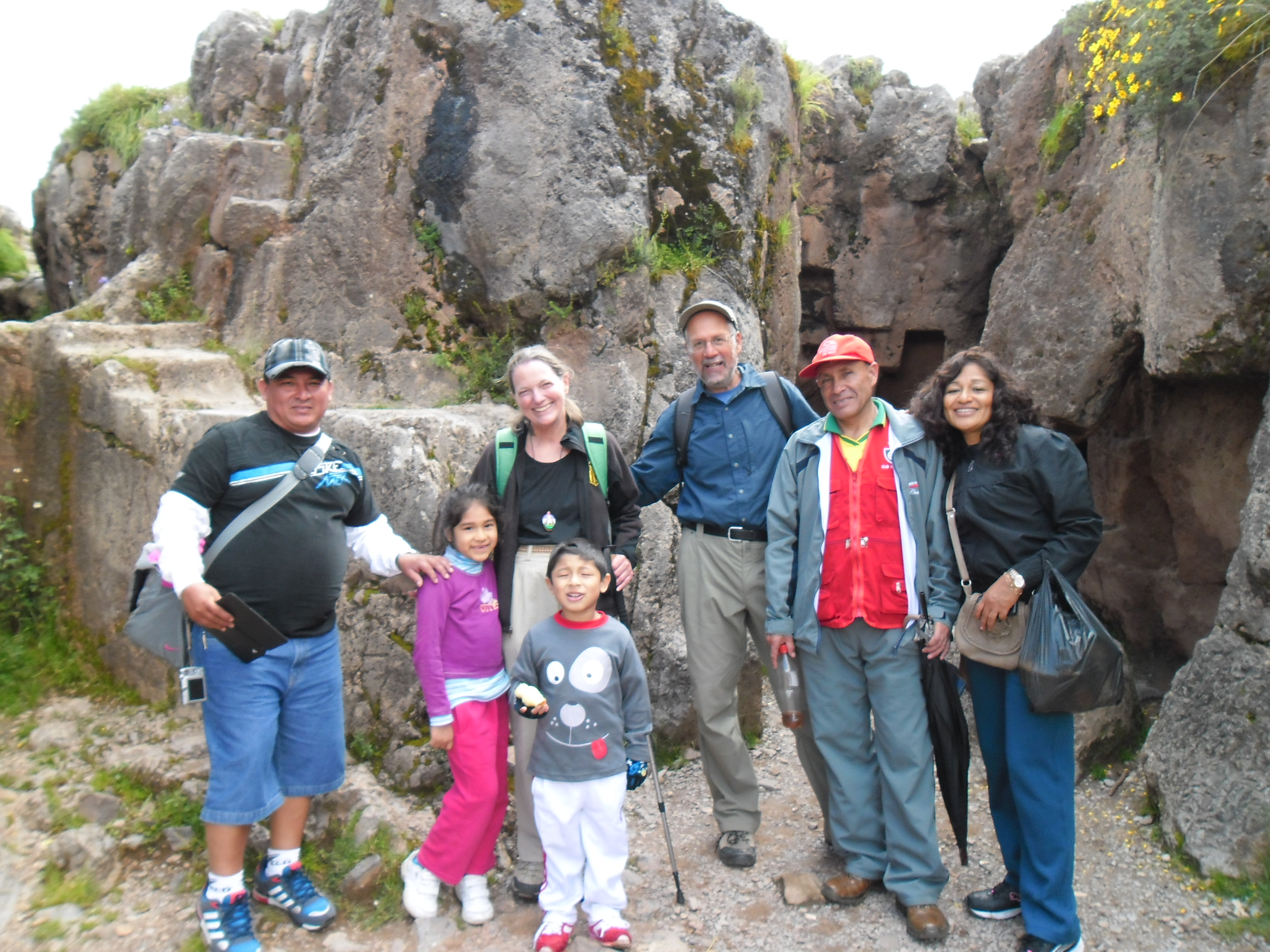
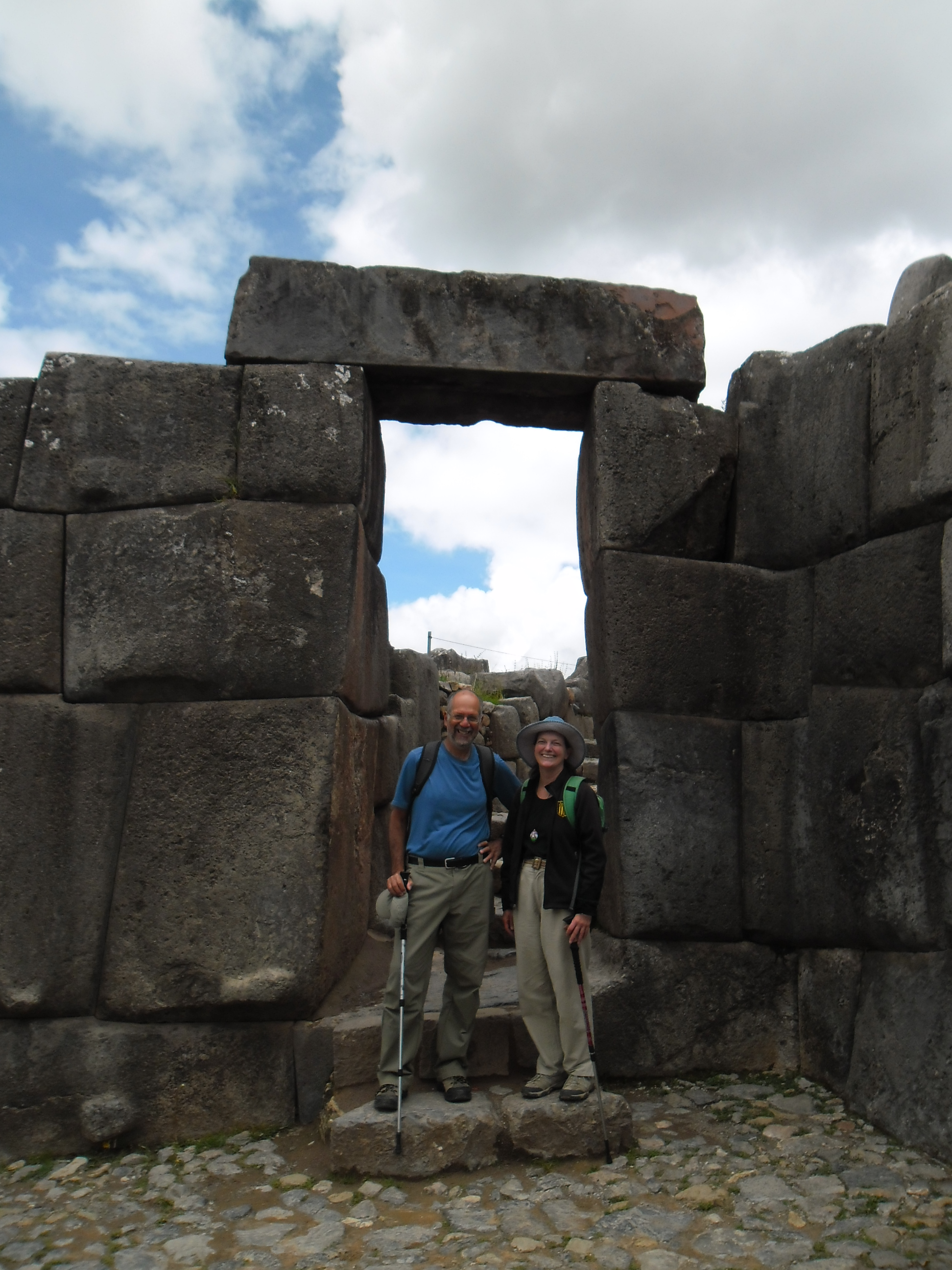
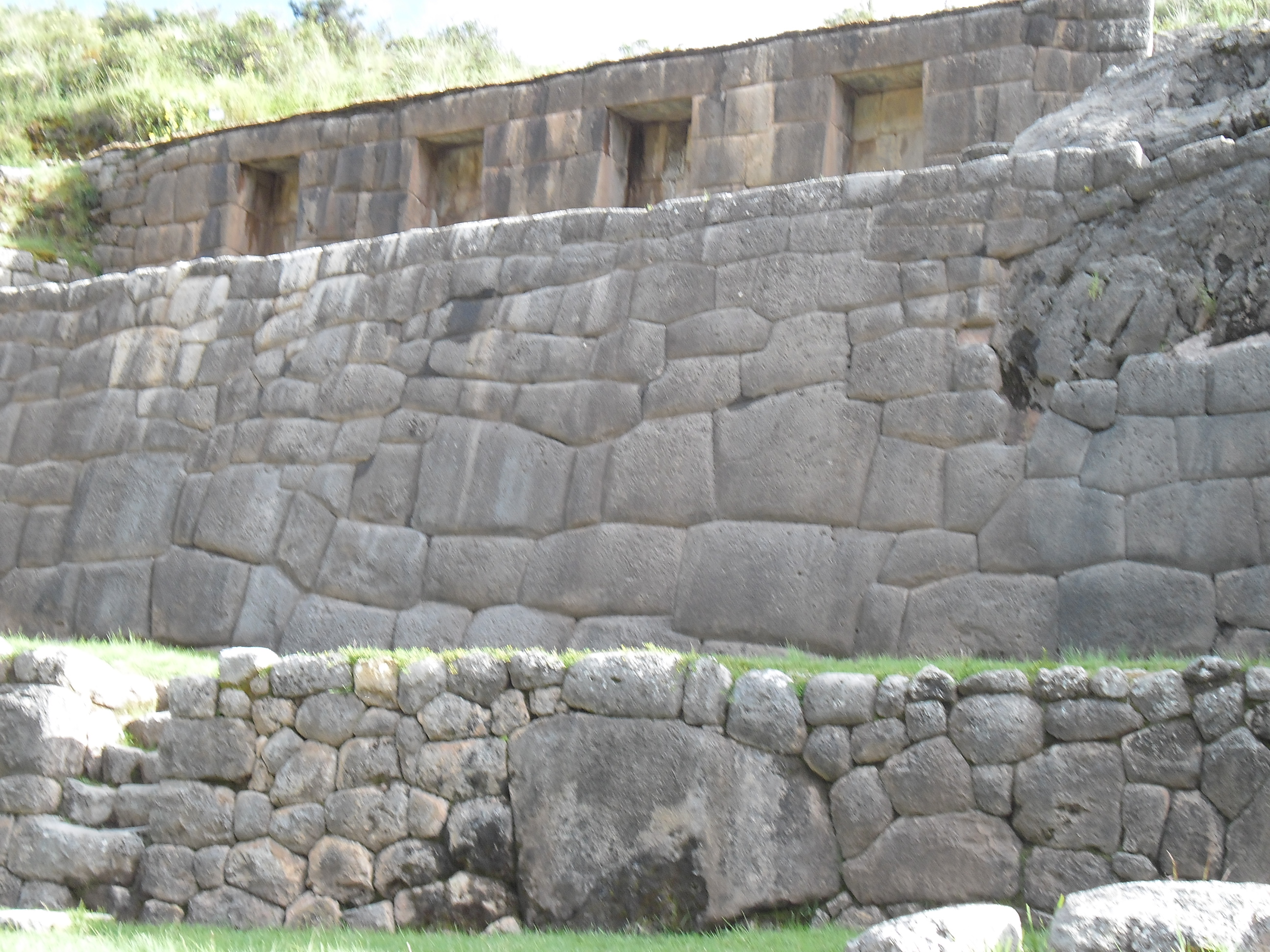
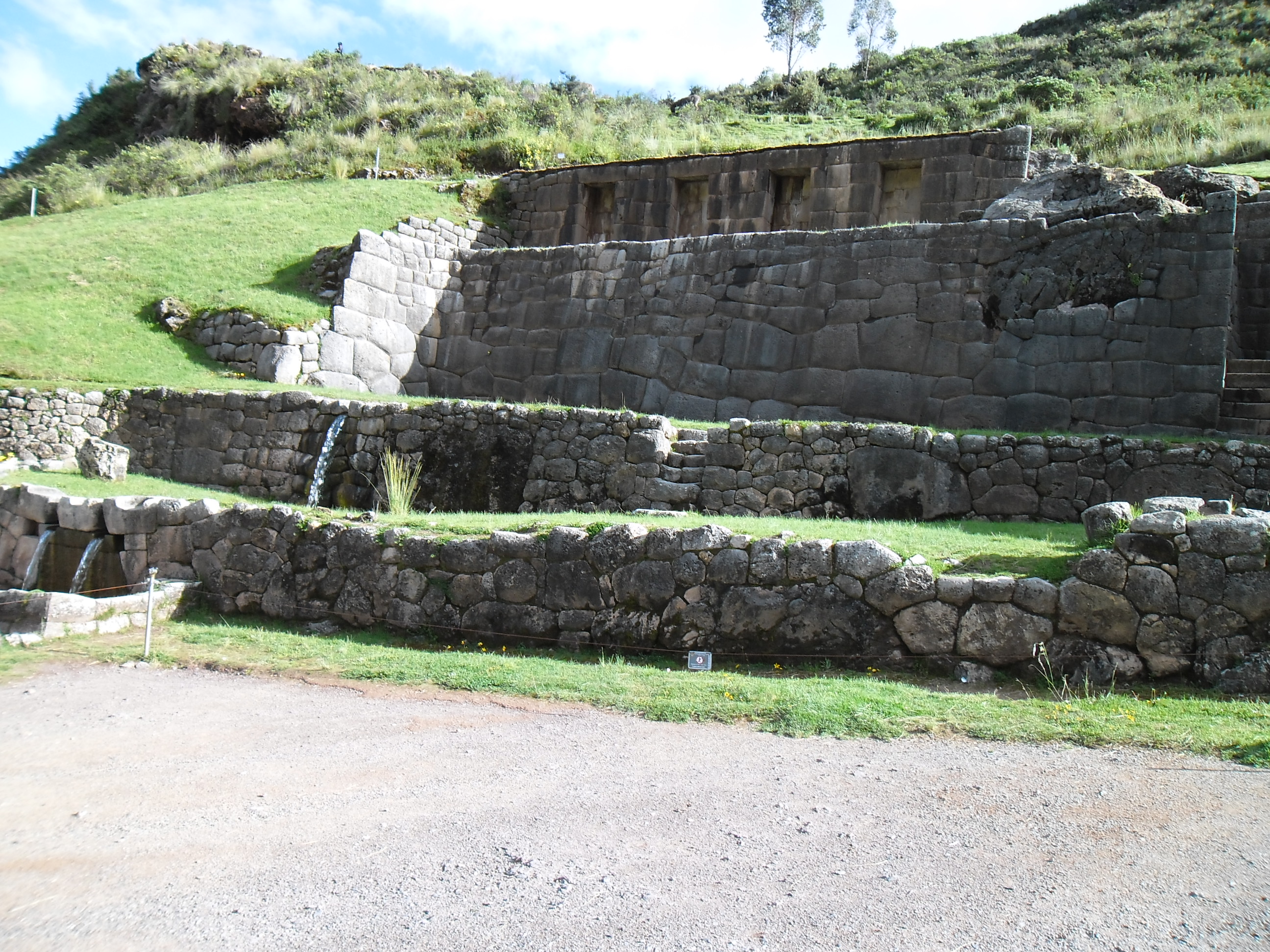
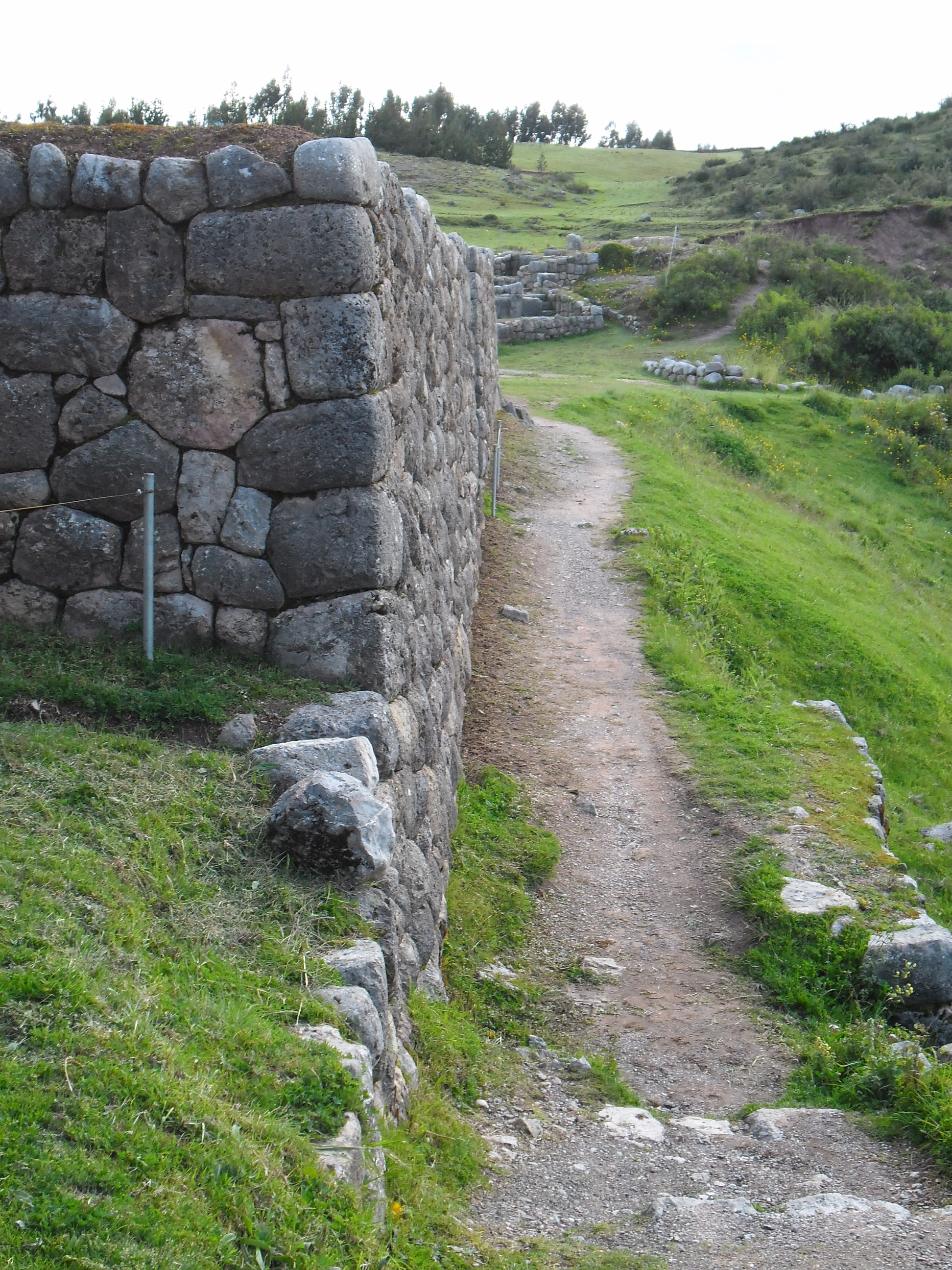
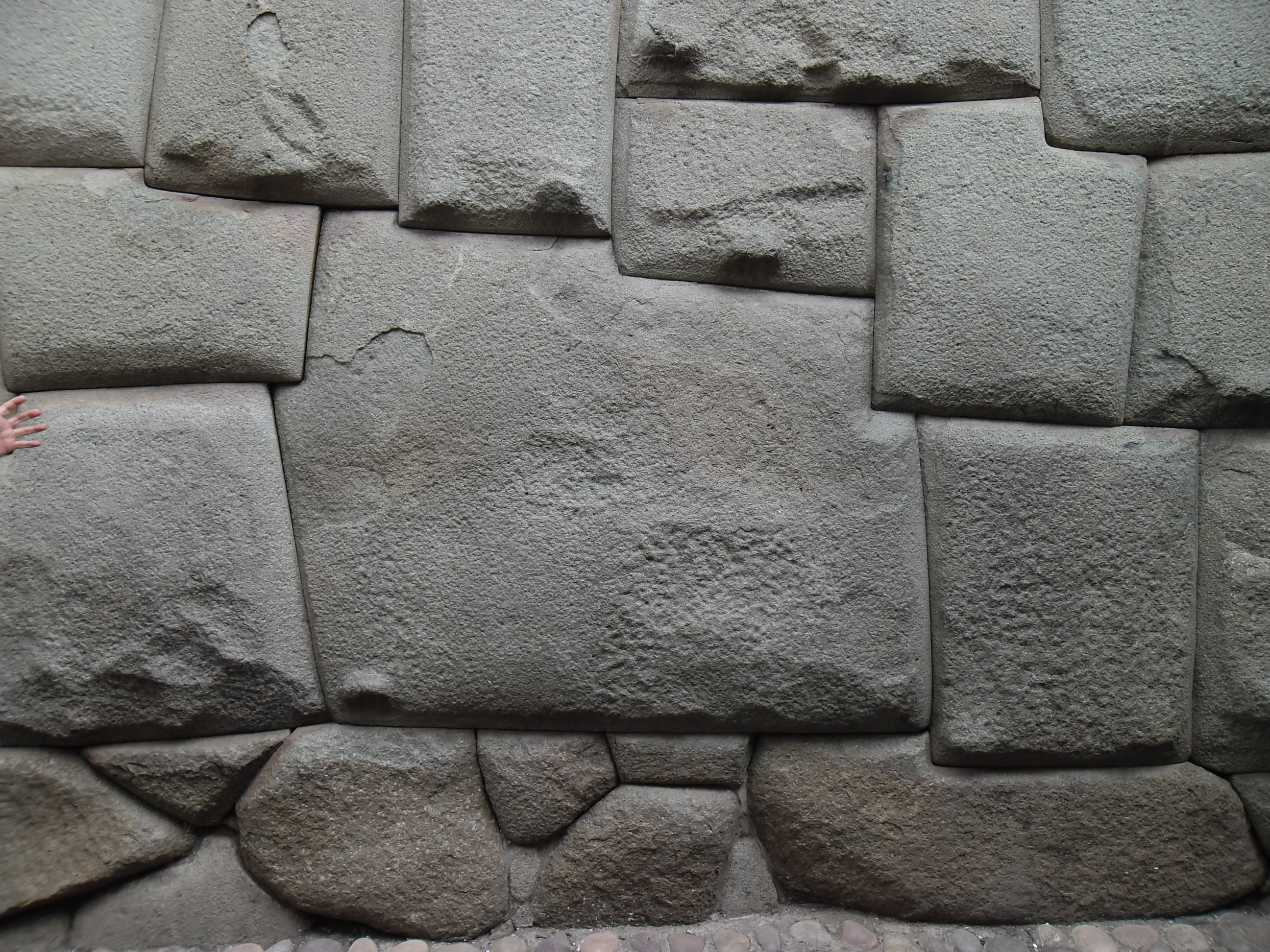
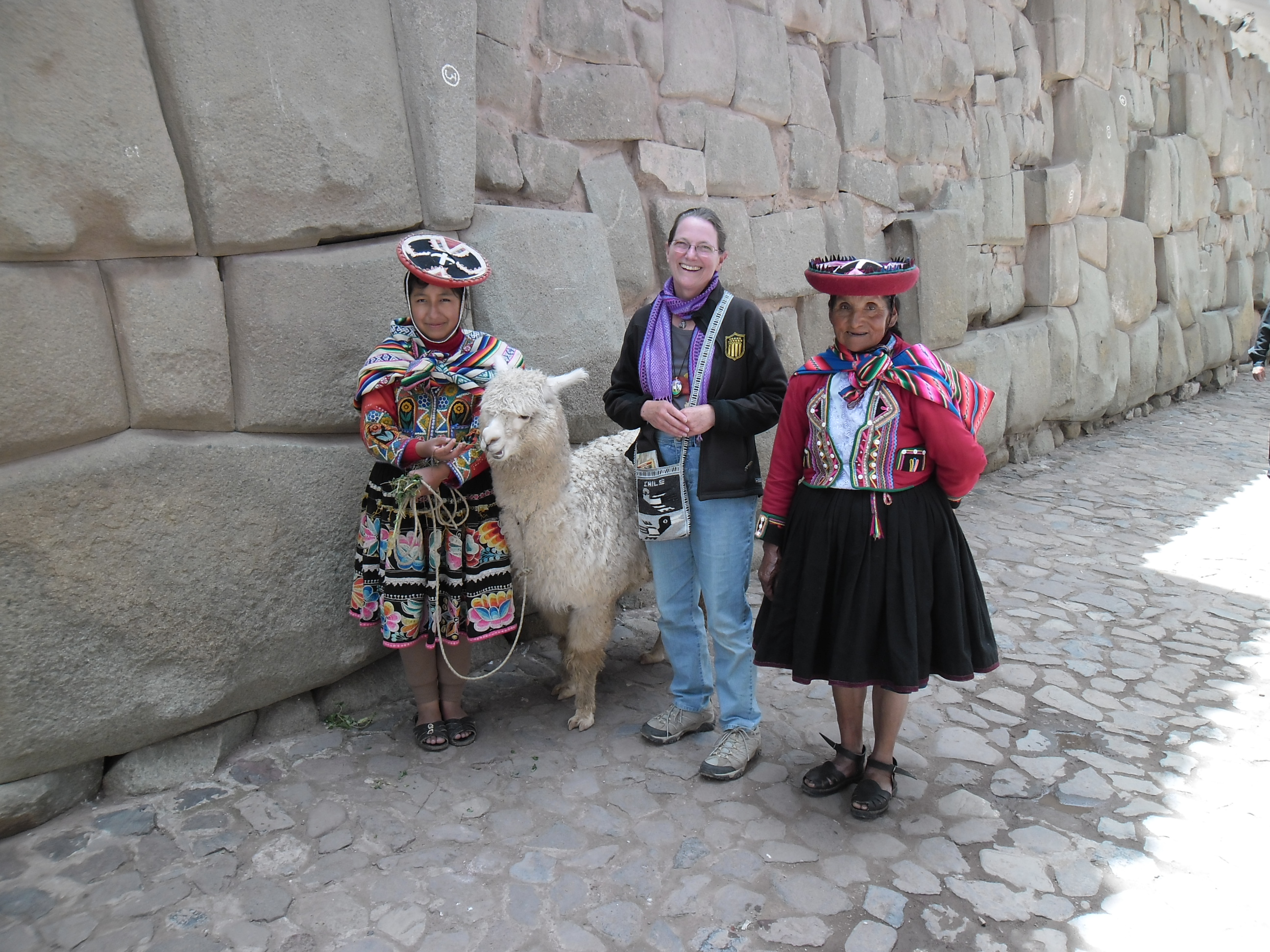
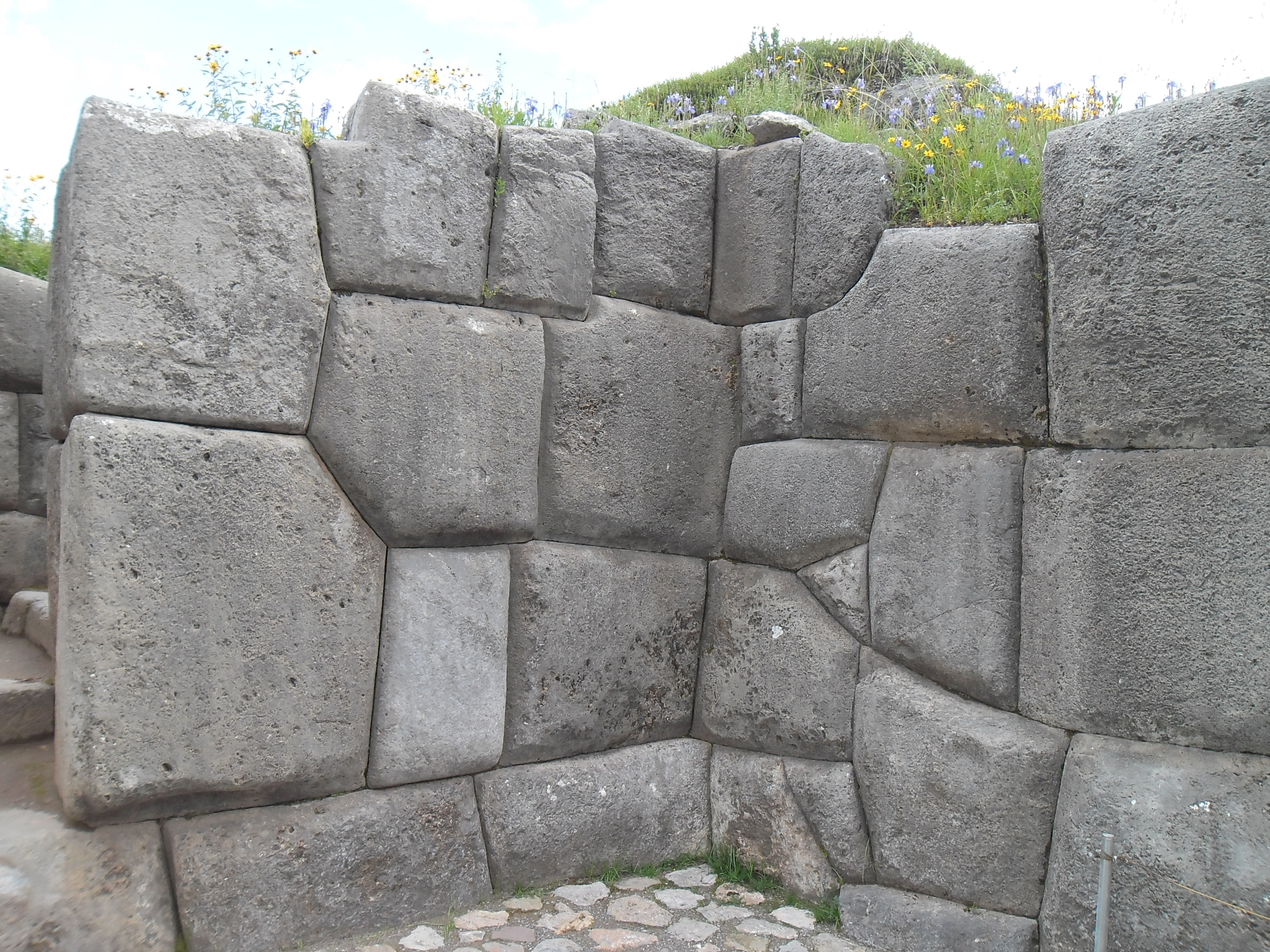 The stonework at Sacsayhuamán is precise and incredible. The rocks were brought from quarries miles away and shaped onsite to fit perfectly. The walls, the houses, the temples were all built like this.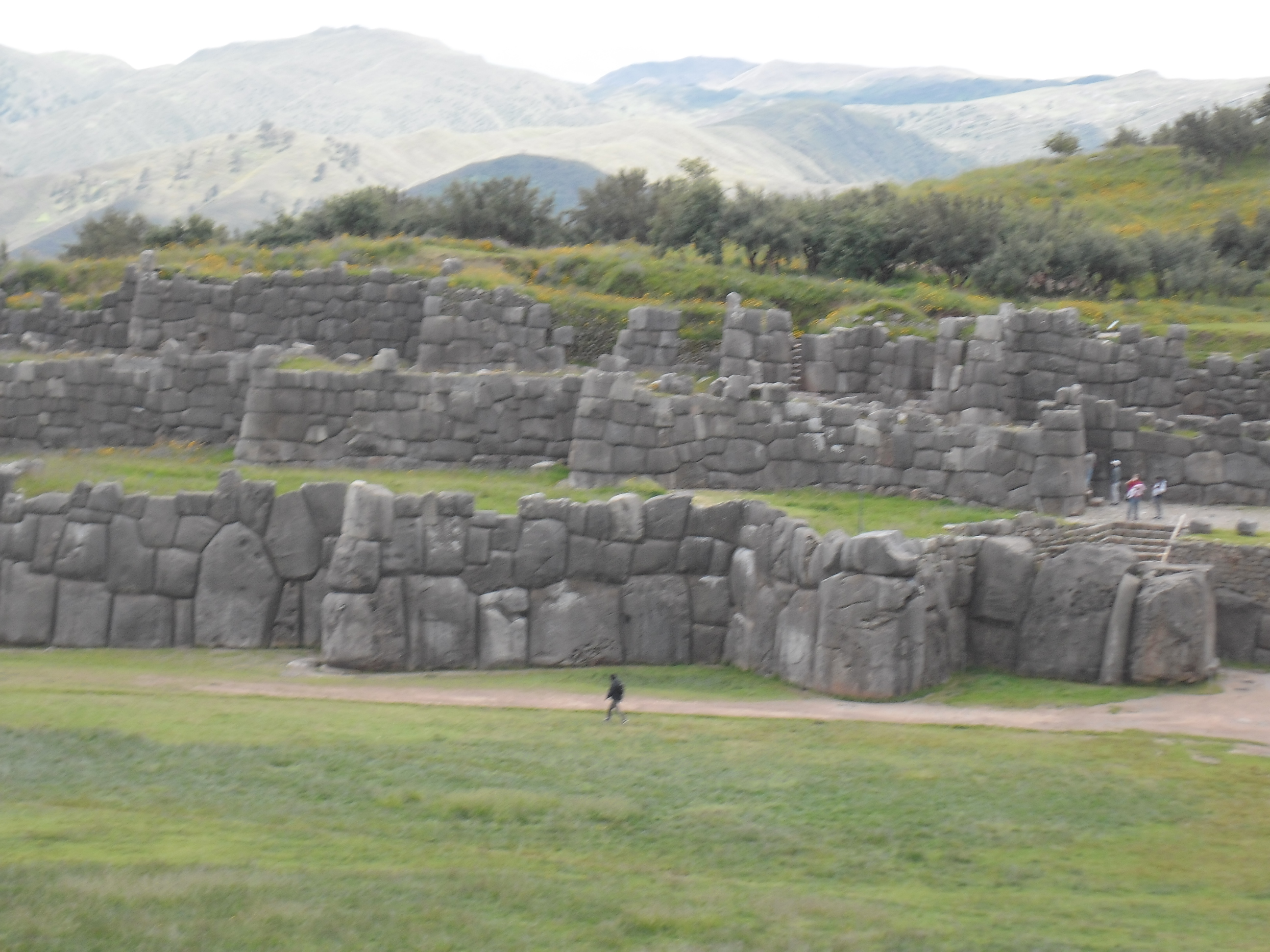
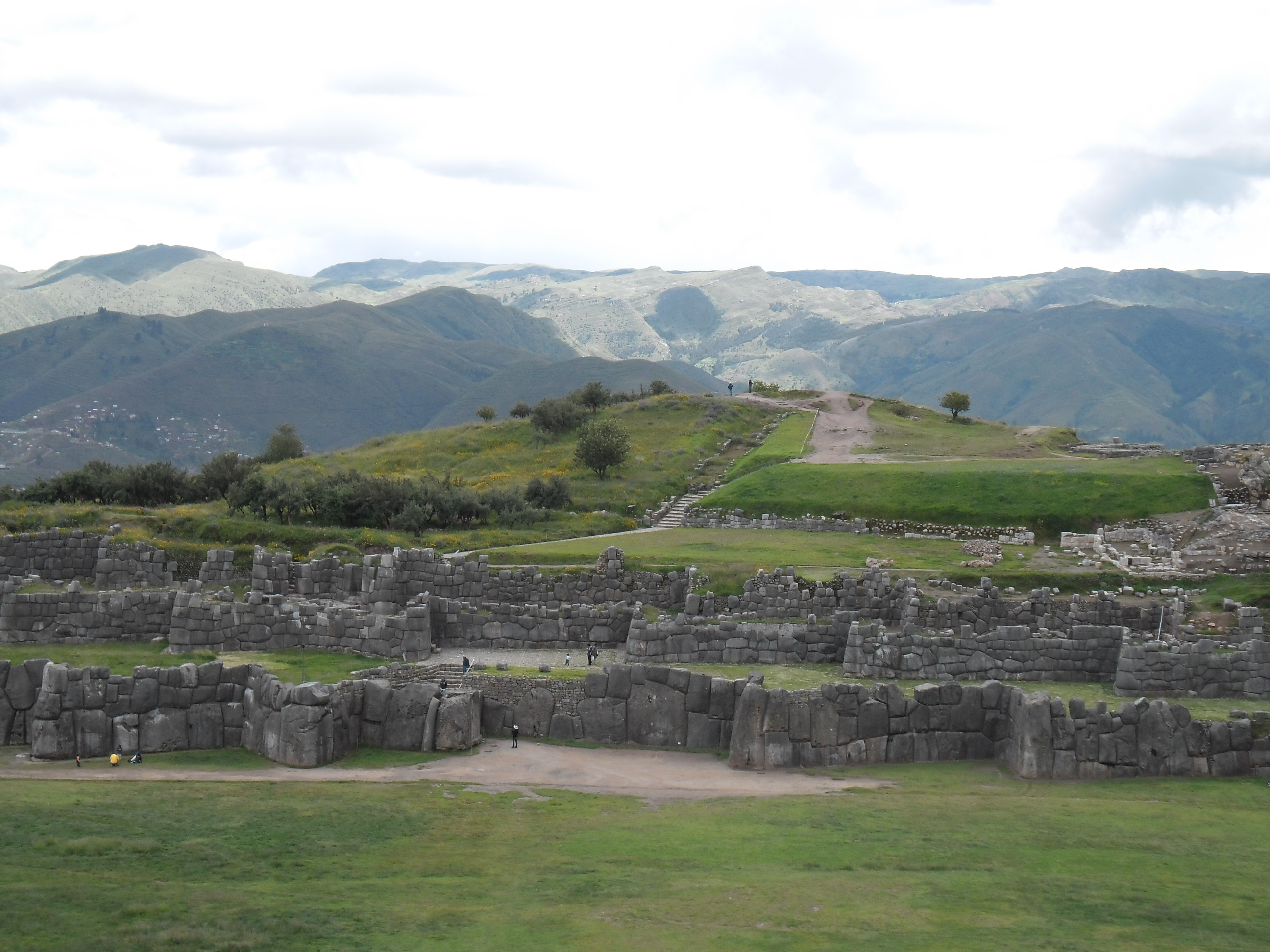
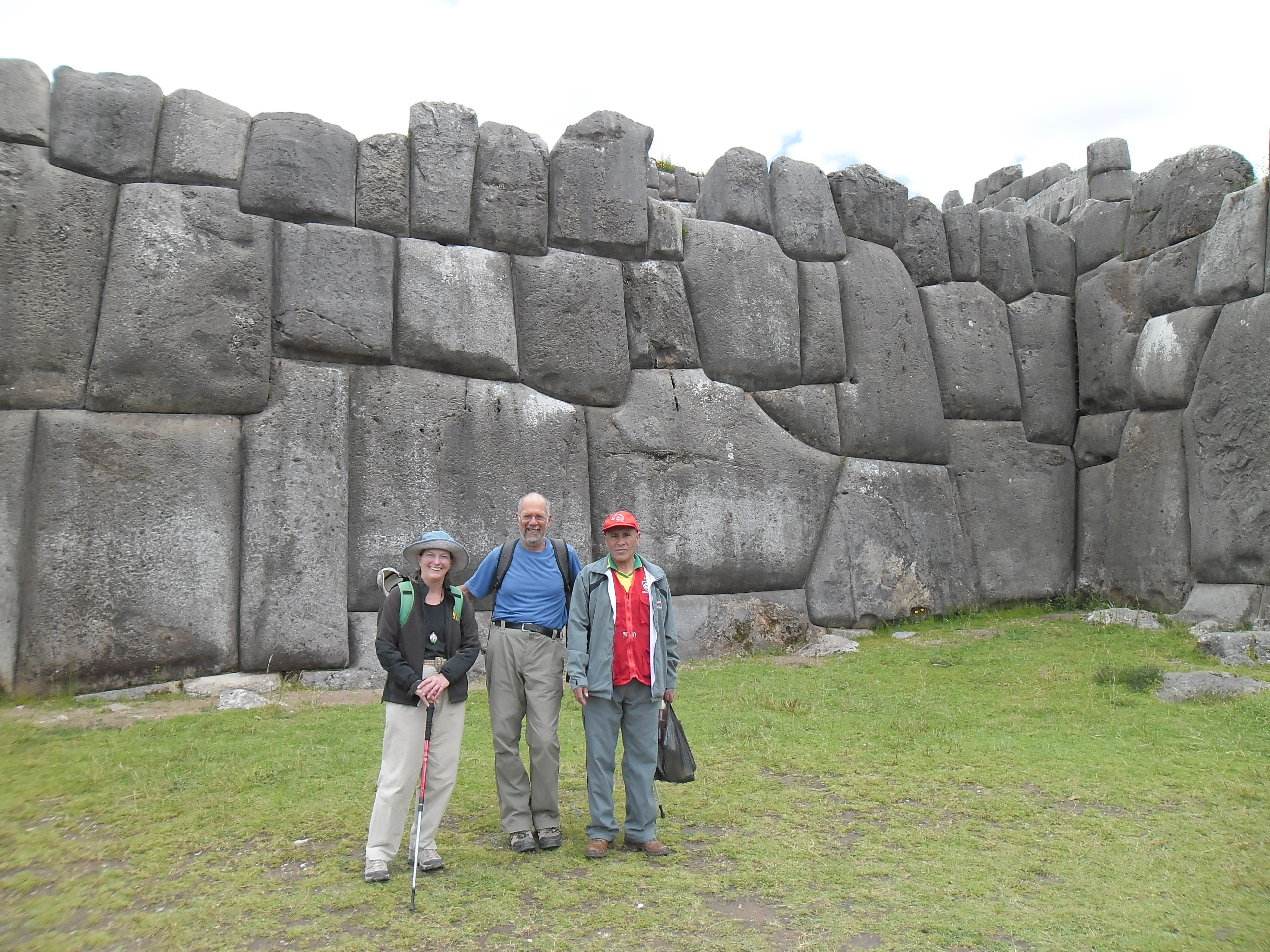 Some of the heaviest stones weigh 300 tons. The Incas brought them up here without the use of wheels. How they manipulated them and sculpted them so perfectly is still a matter of hot conjecture among the archaeologists.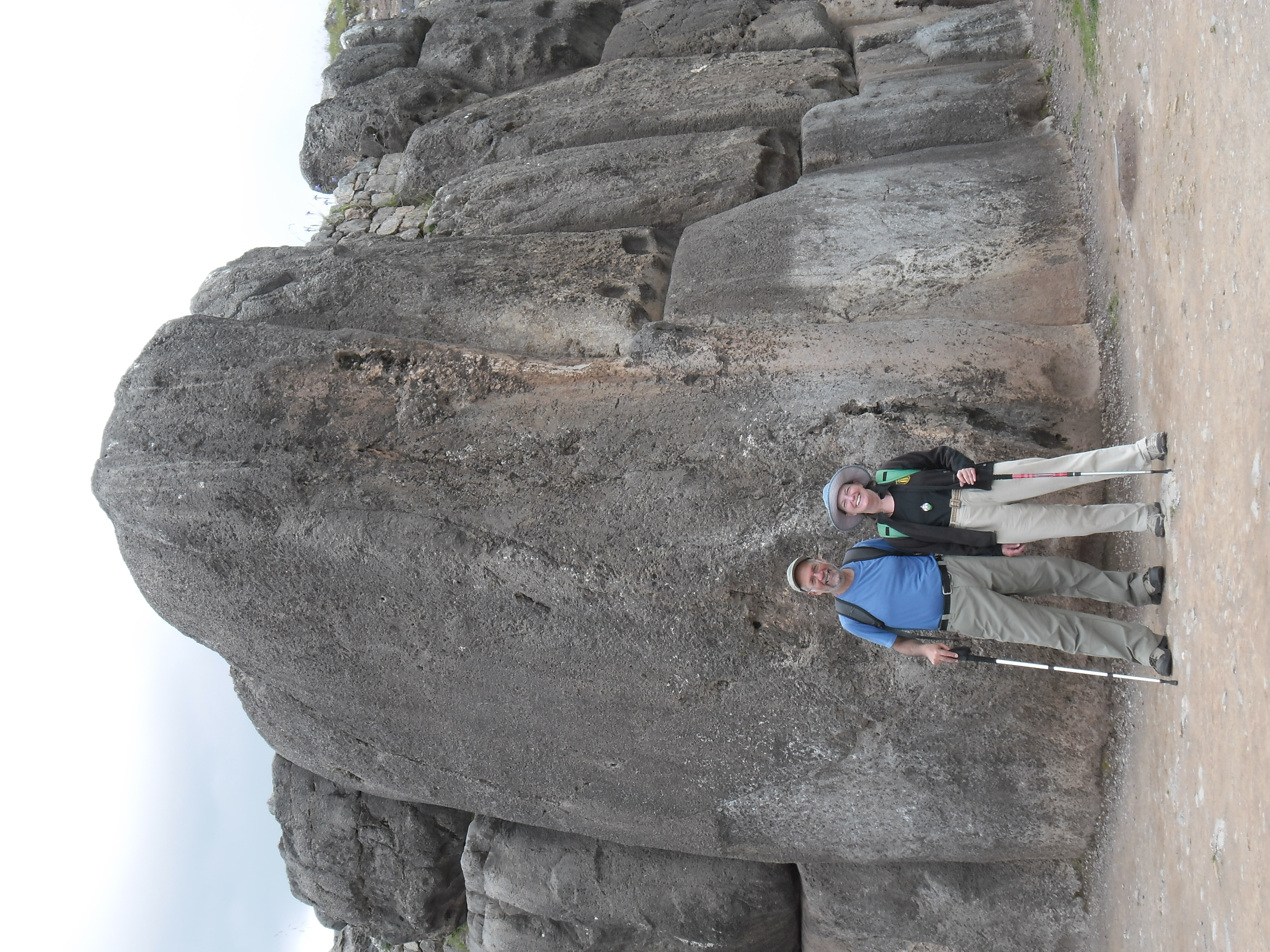
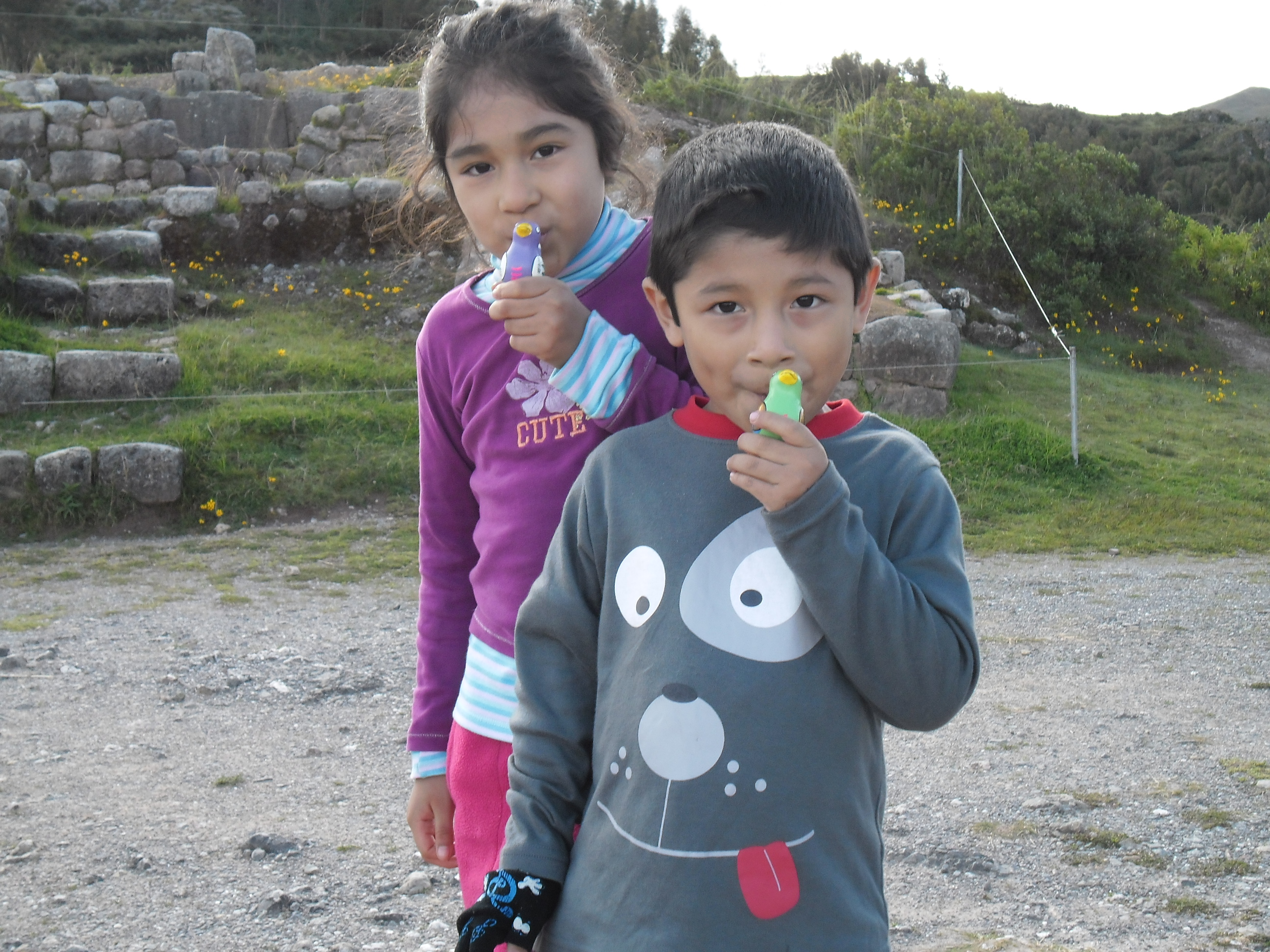
 We had a great time with Pilar and Roel and their three kids. We hope to visit them in Lima when we get there in June.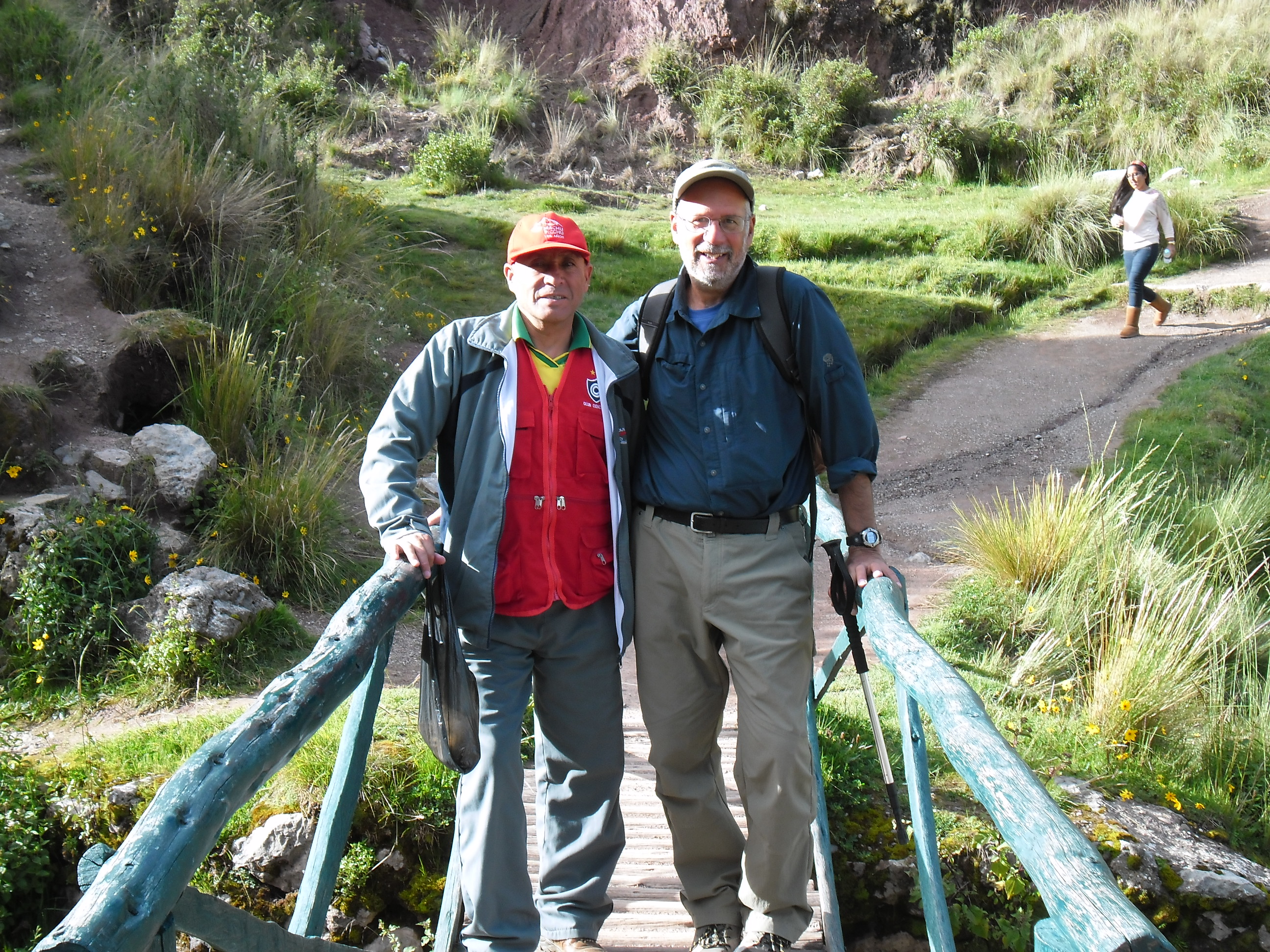
 mikeandmonica