Lake Titicaca and Isla del Sol
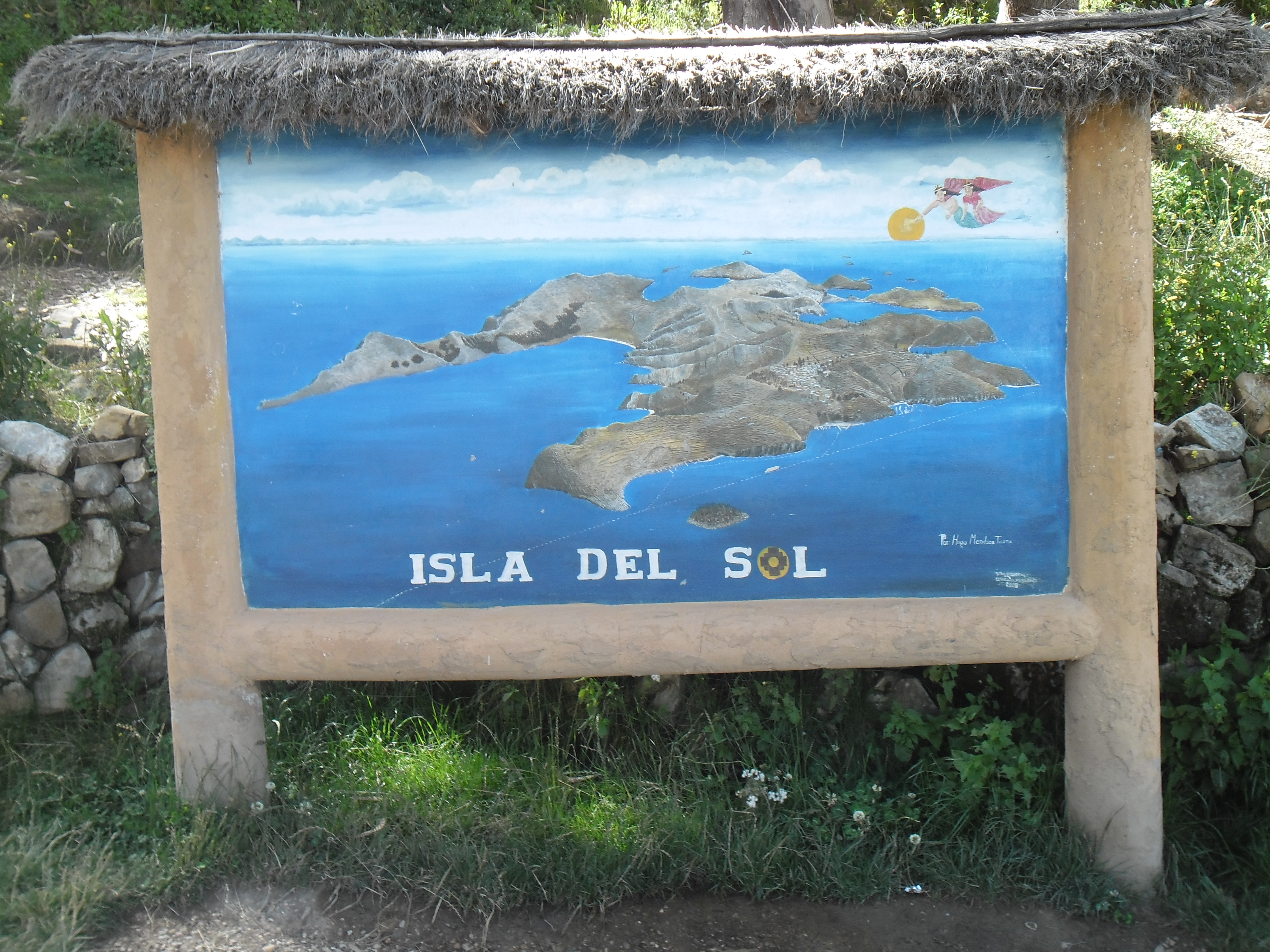 Five days on Lake Titicaca. Magnificent. Lake Titicaca is an enormous lake, up at 13,000 feet in elevation. It straddles the Bolivia-Peru border, and it is over 1,000 feet deep. The name Titicaca, source of innumerable corporal jokes, actually comes from the Aymara culture. That is the pre-Inca culture, dating back approximately to 3000 CE (common era) It supposedly means “Sacred Rock,” because La Isla del Sol was considered the birthplace of all.
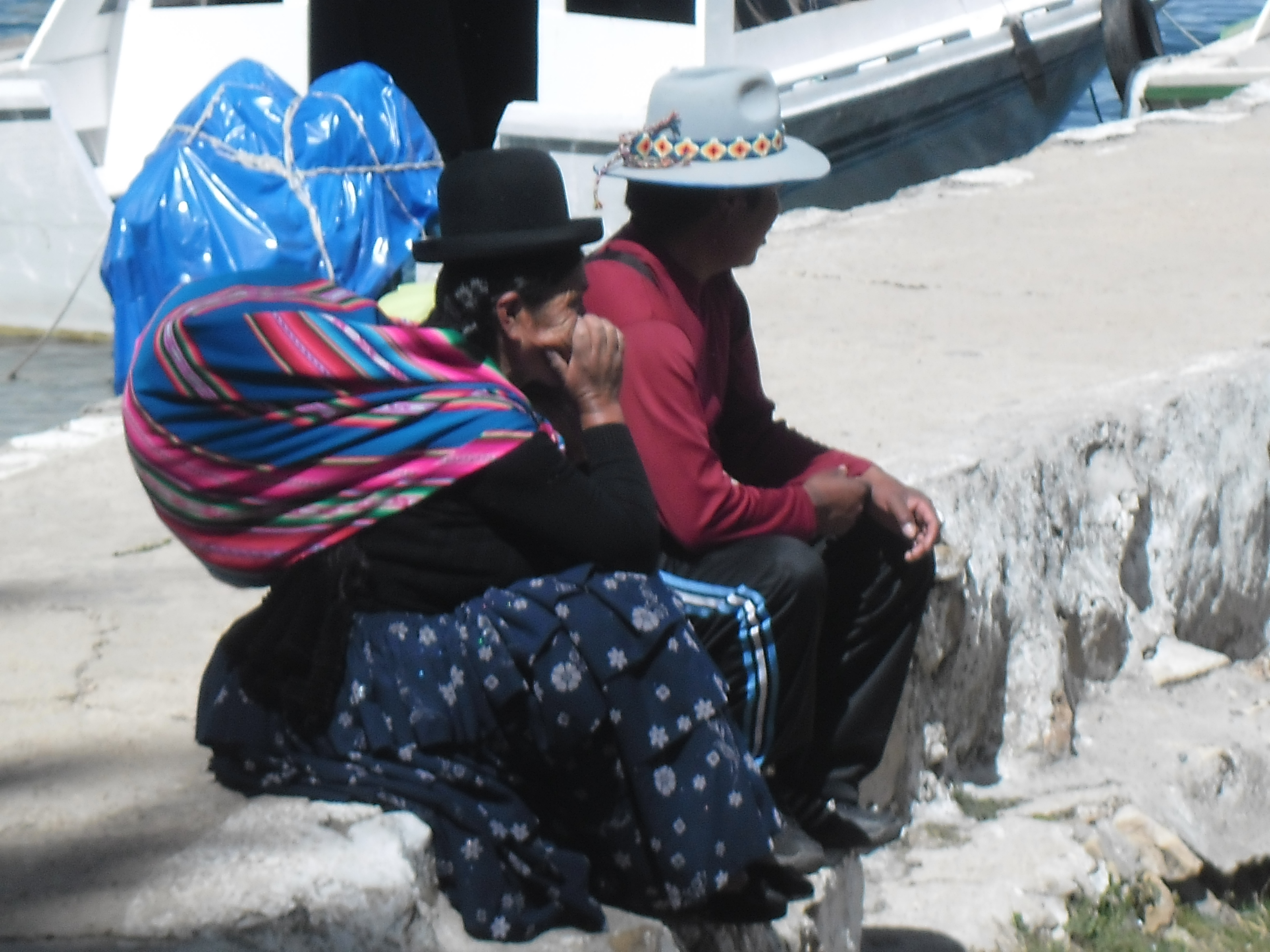
The Aymara culture is still strong on the island. The language is spoken at home and at times studied in school. The indigenous people are the majority of the 5,000 inhabitants of the island.
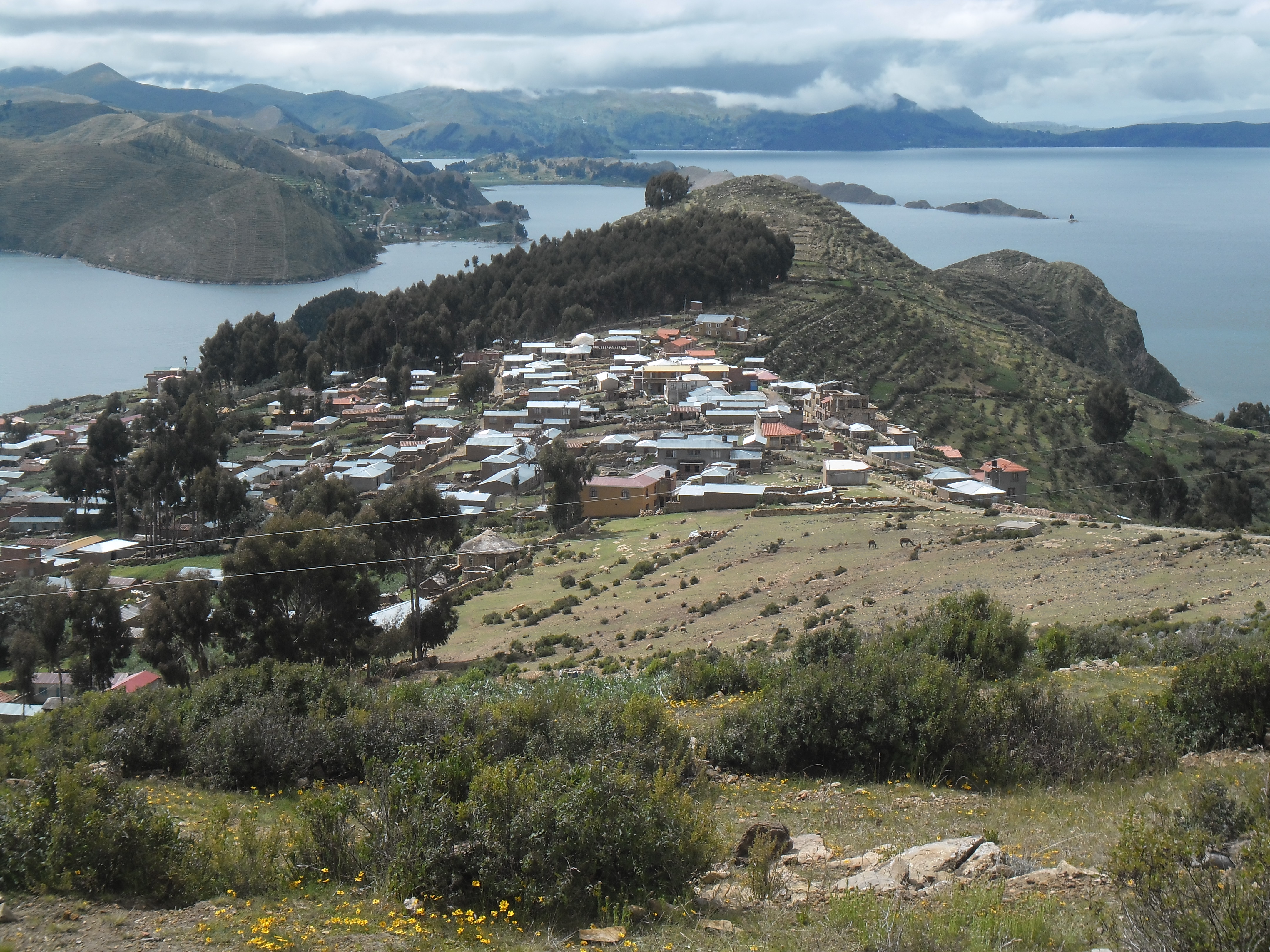
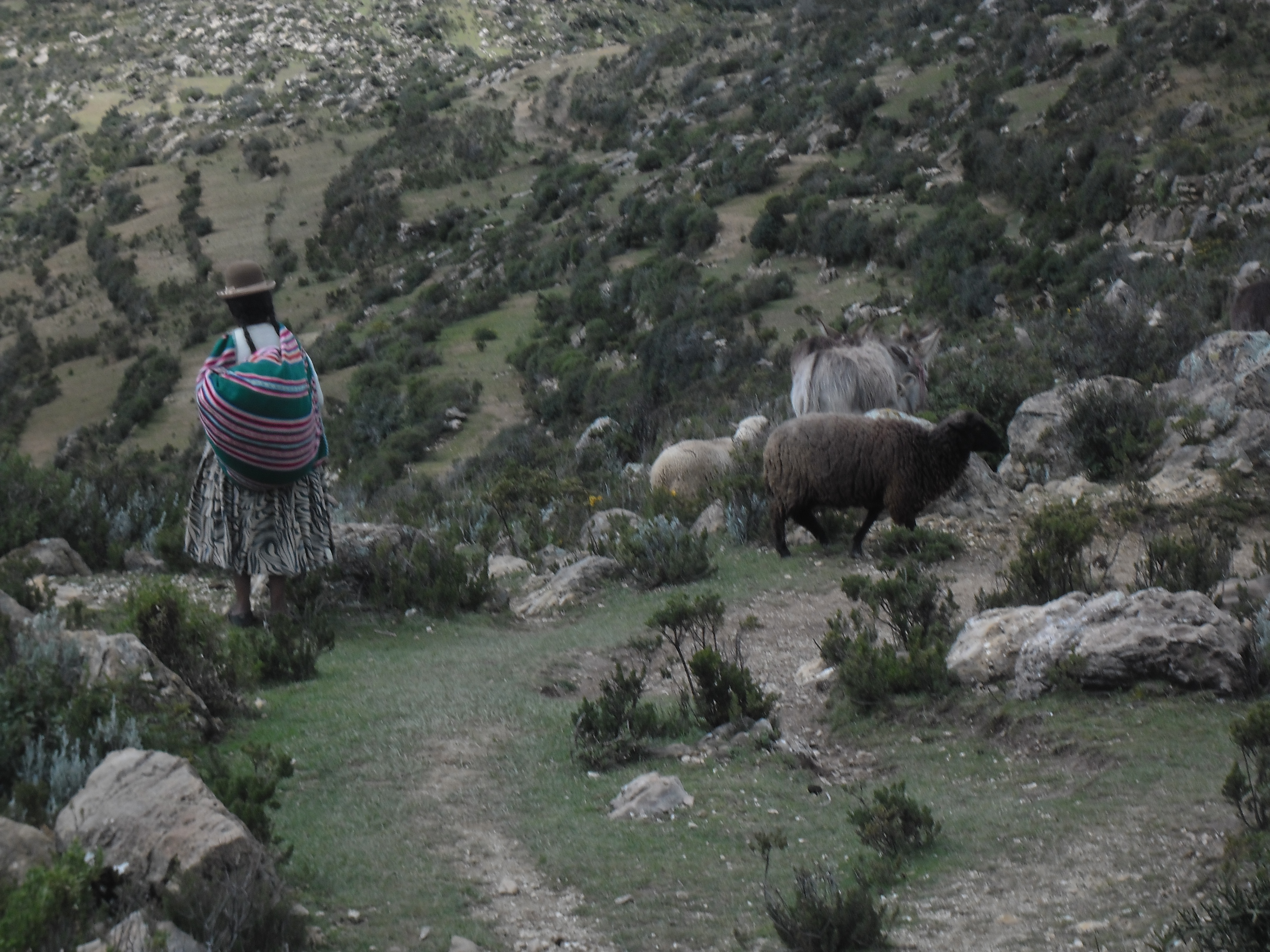
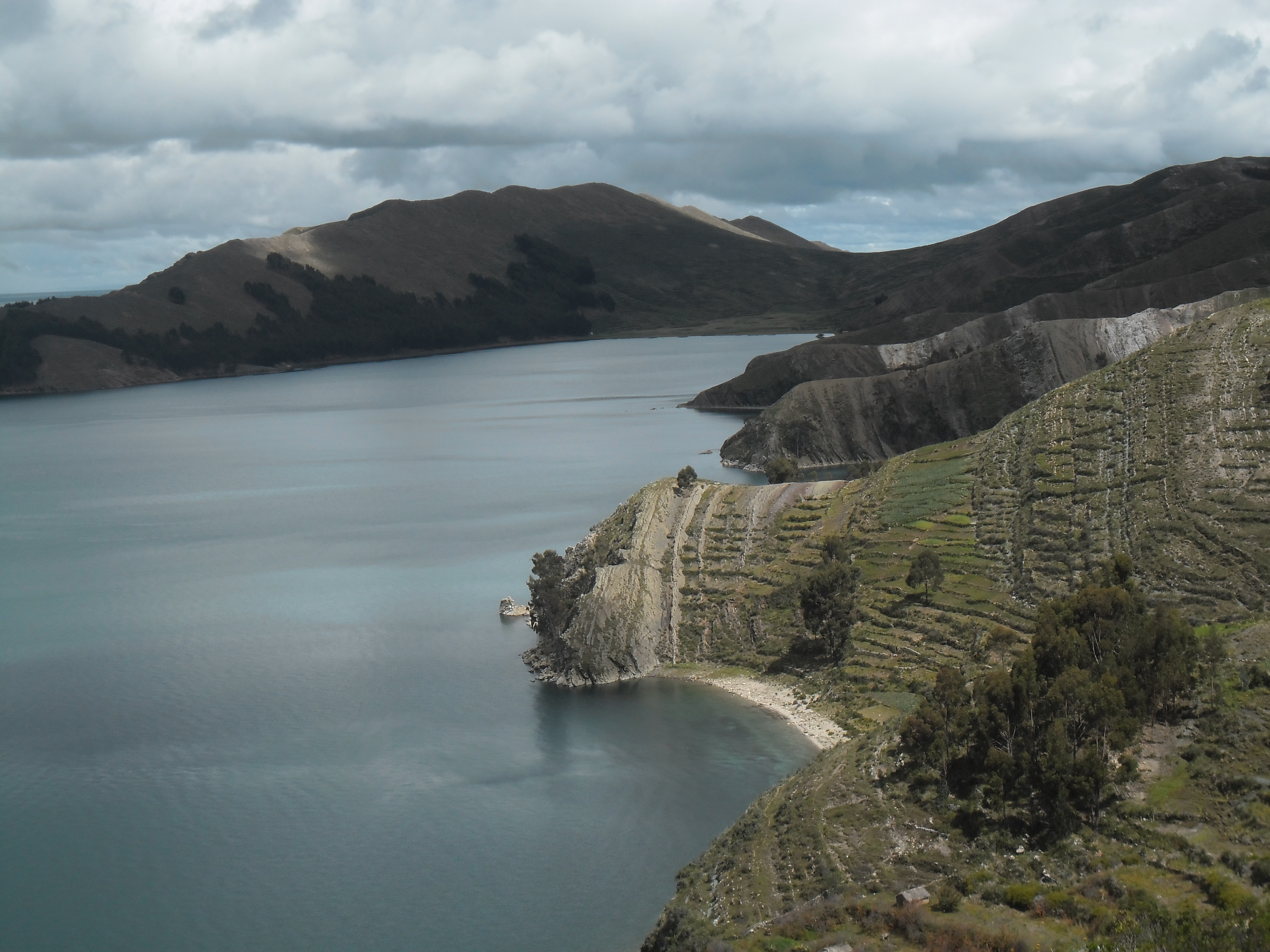
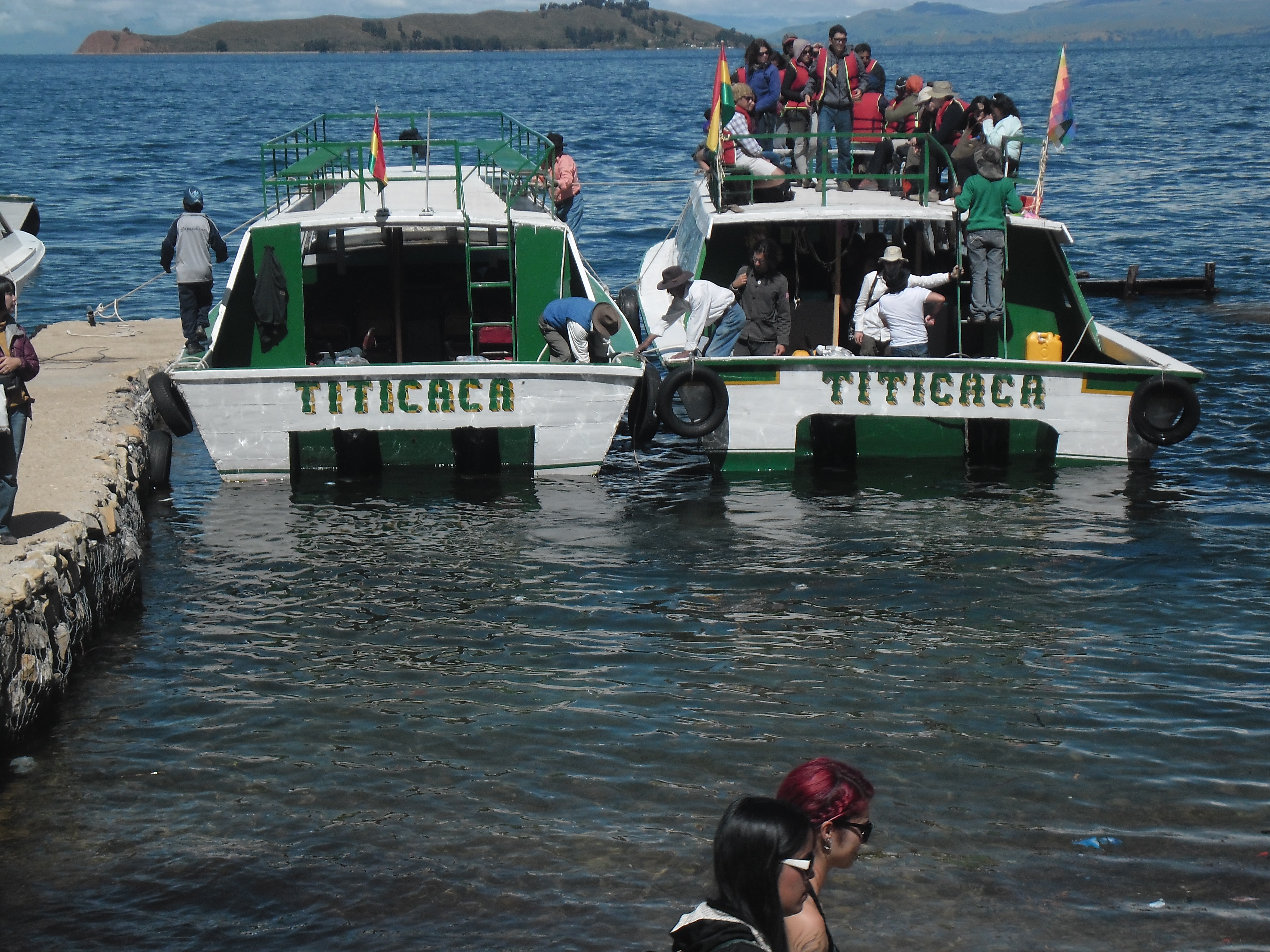
It’s an hour and a half boat ride to the island from the town of Copacabana, Bolivia. The island is pretty small. It’s about ten kilometers long, three kilometers wide. It rises steeply (to say the least) out of the water, and its ridge is 1000 feet above the lake. There are no roads on the island. There are no vehicles on the island. Neither are there (obviously) any stop signs or traffic signals. Neither are there any banks or credit cards, no internet, no telephones (except for personal cell phones) no police. Electricity arrived about ten years ago. The matter of cell phones is interesting, because often you see an ancient indigenous woman, for example, walking down the trail with her sheep like they have done for a thousand years, talking on her cell phone.
Anywhere you want to go, you walk. Up and down. We hiked all over the island. There are trails everywhere. There are also terraced, cultivated fields everywhere.
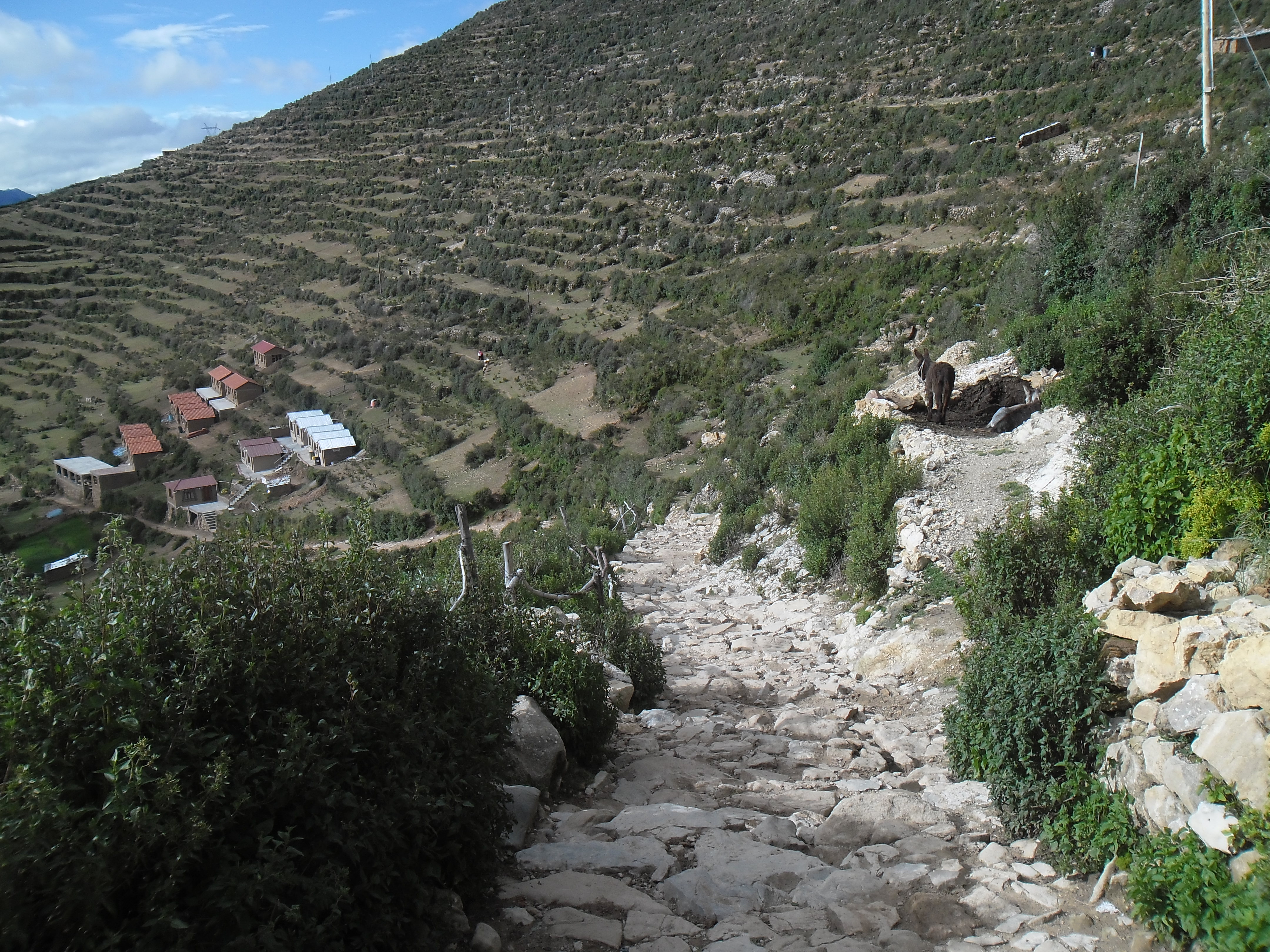
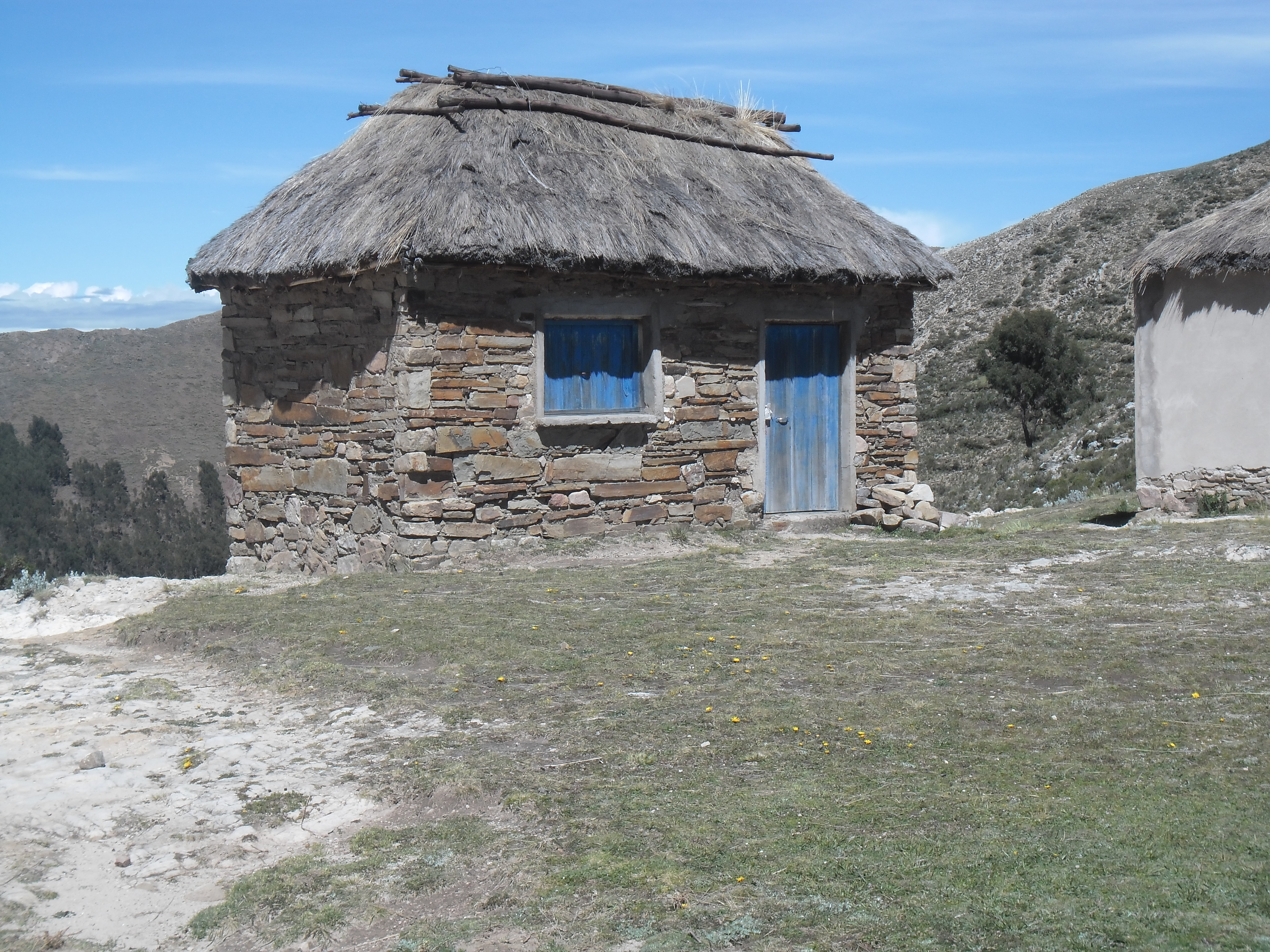
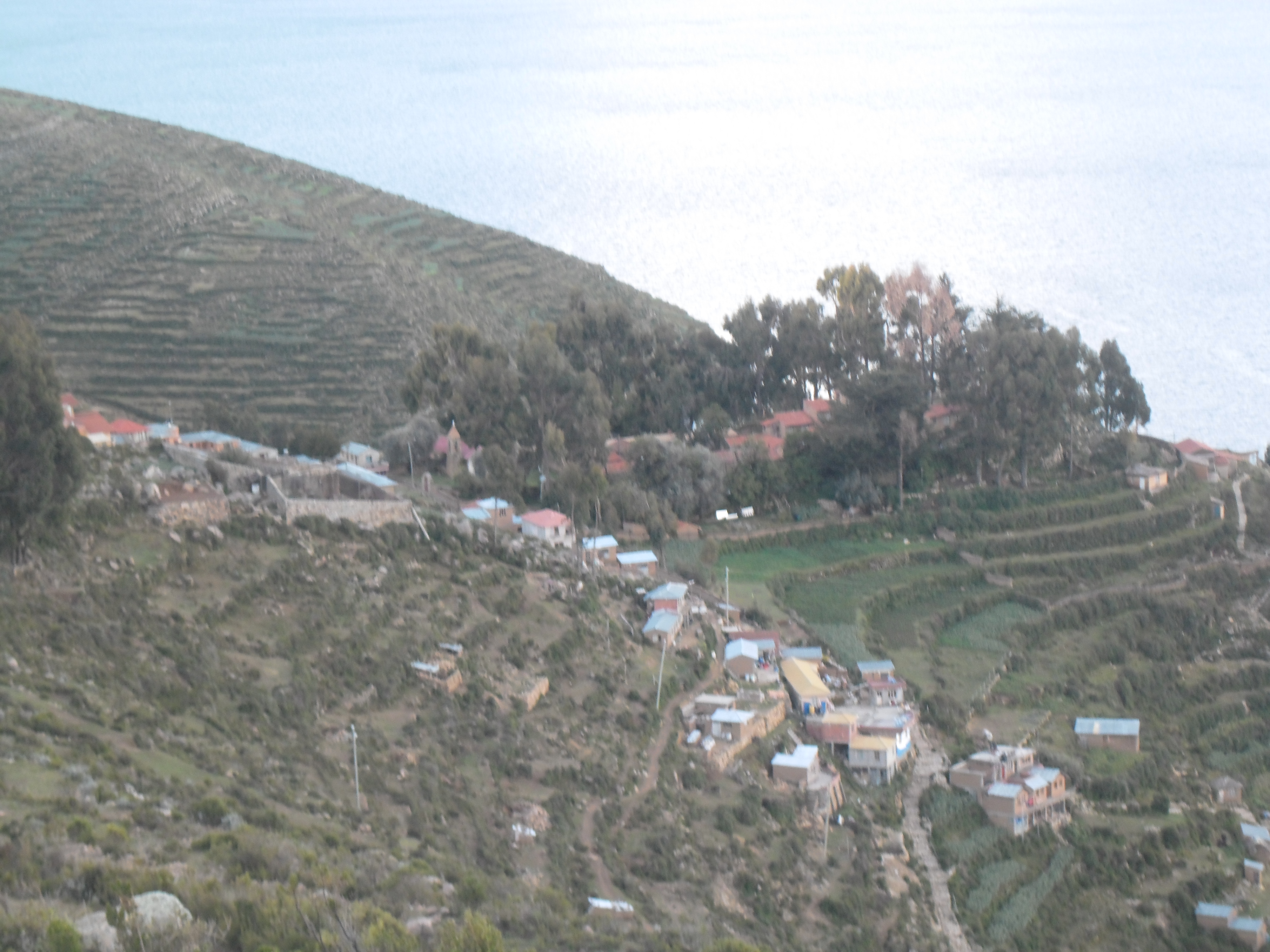 People have been living here in much the same way for many centuries. Centuries. These stone walls and terraces were not built with tractors. They were constructed over lifetimes.
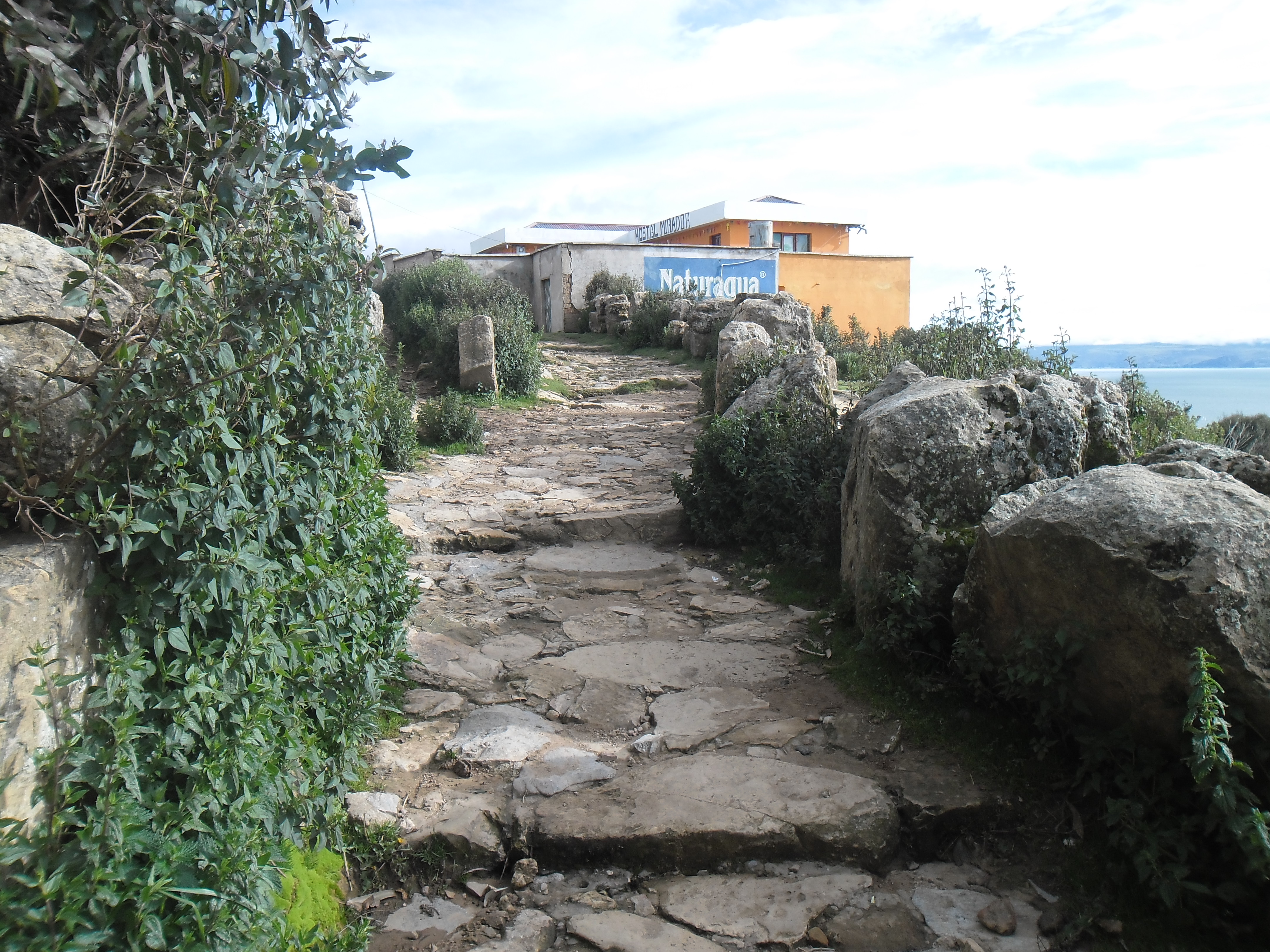
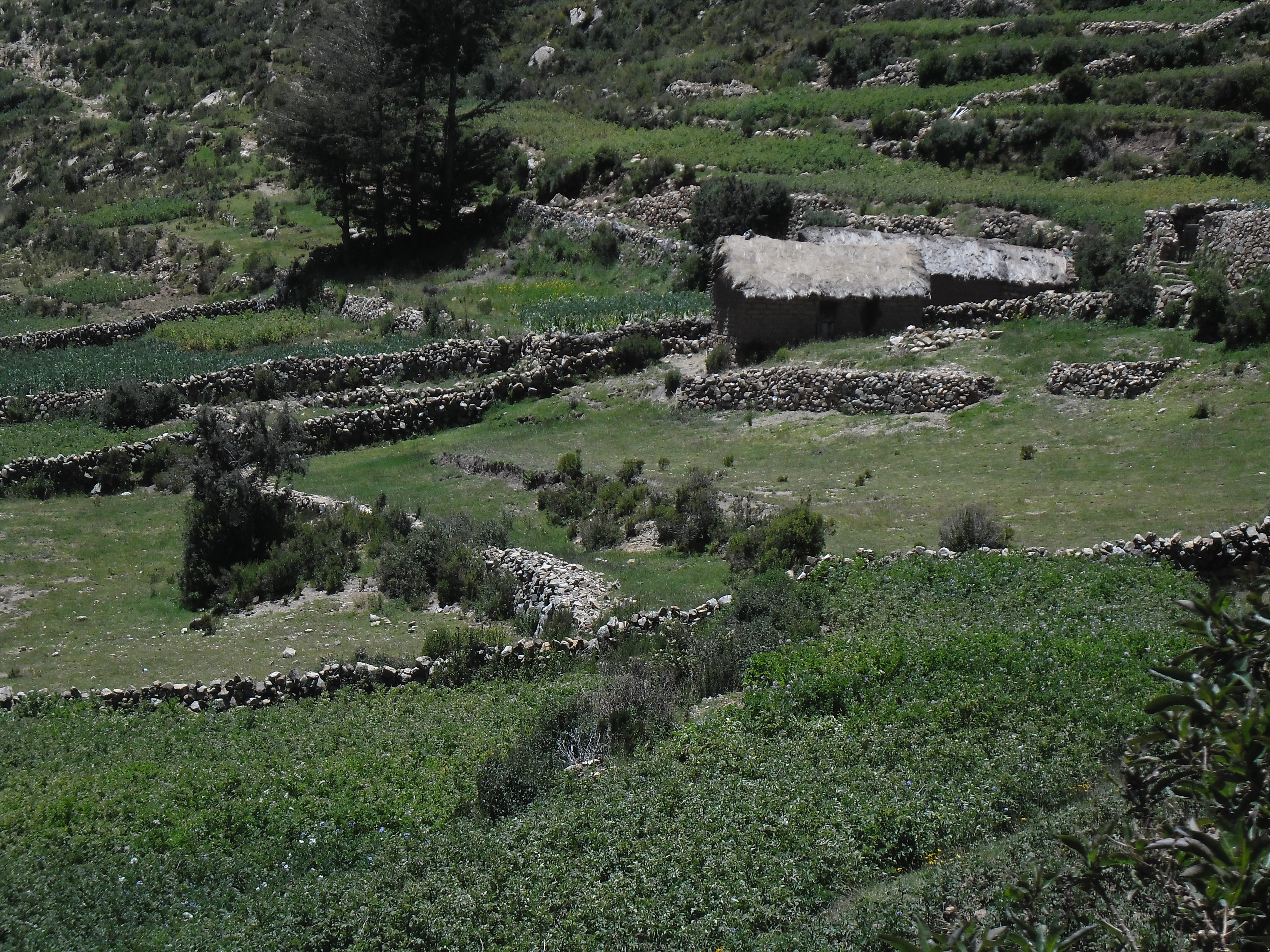 The town of Yumani is the main town on the island. It is on the ridge, 1000 feet up from the water. Everything comes in by boat, then is transported by donkey or humans up the trails.
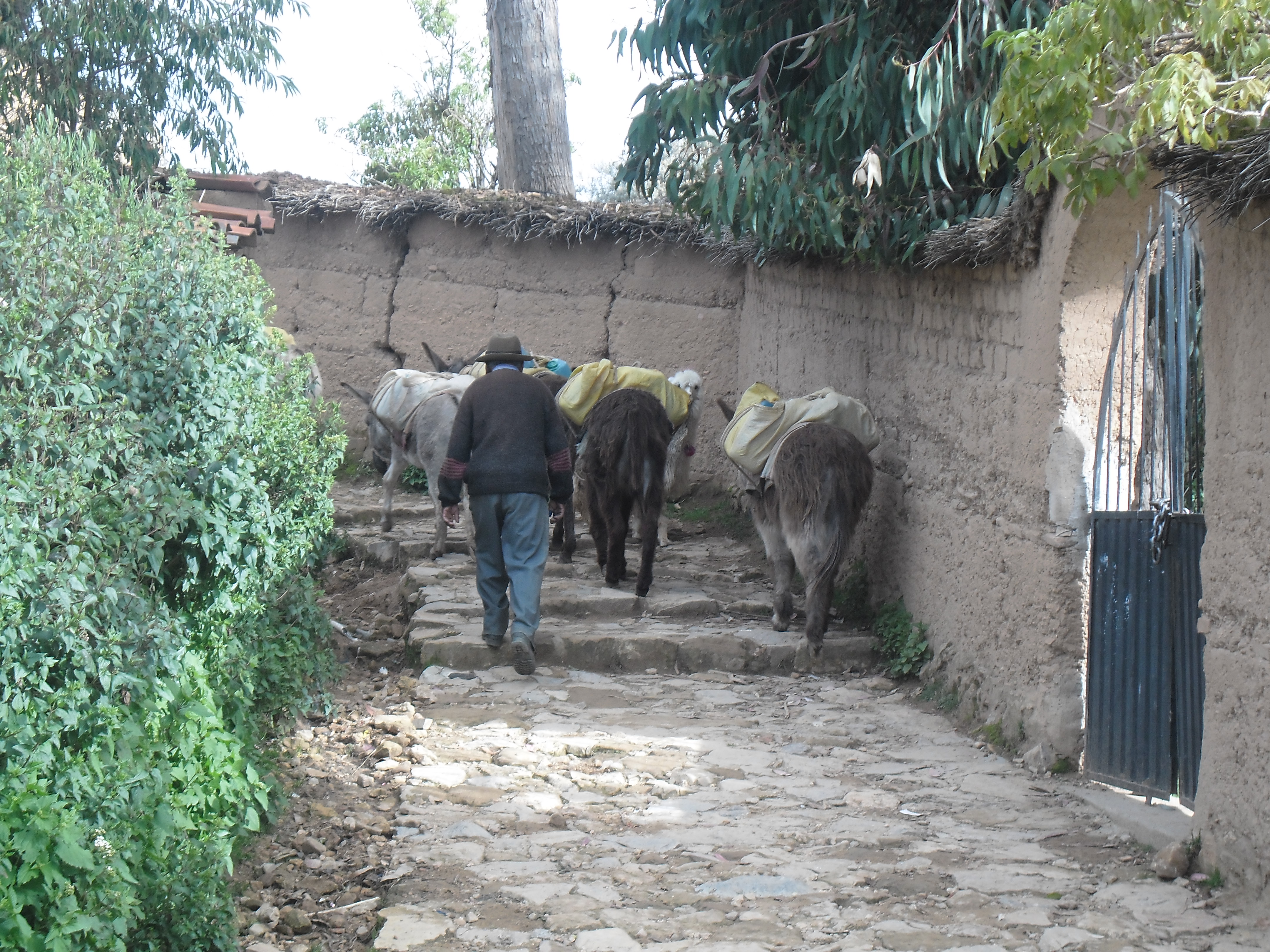
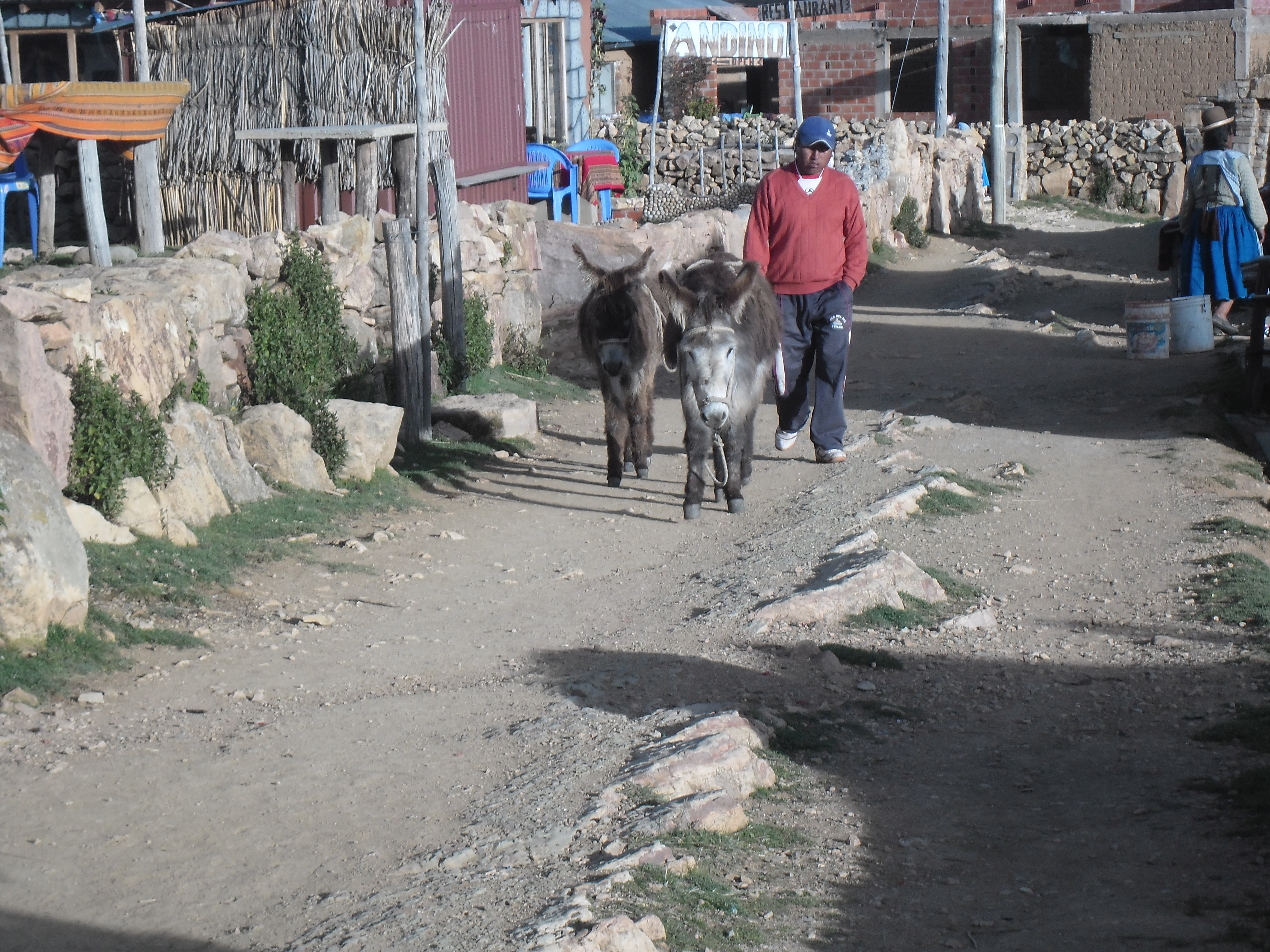
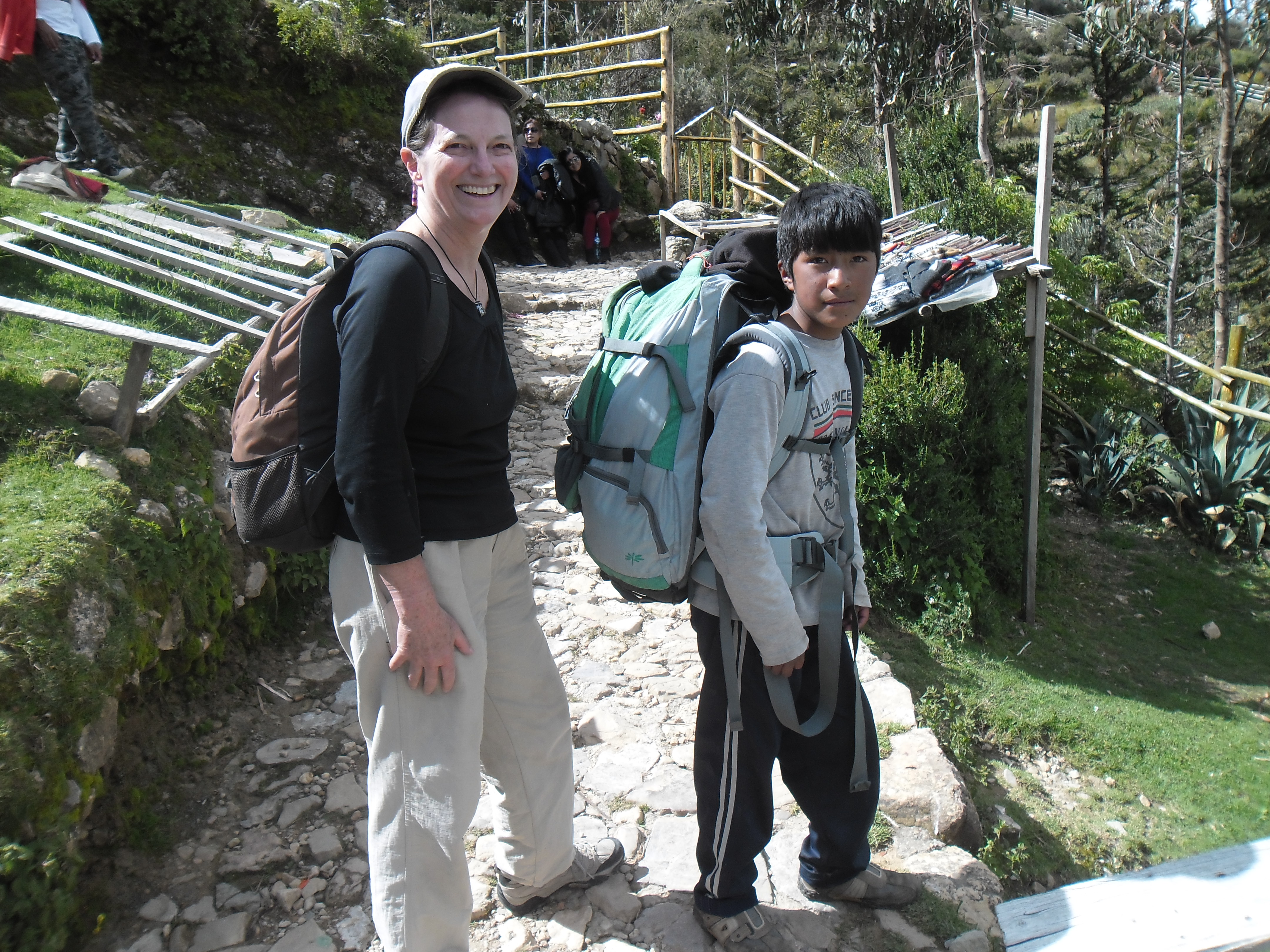
 Monica and I made the trip up from the water three times, A thousand feet up. We were huffing and puffing and resting, while the local people (many of them ancient looking) just said Buenas tardes and kept going. The first time we went up was when we first landed, with full packs. There are kids who hang around the dock, waiting for people just like us. One of them, a boy about eleven years old, named Wilmer, latched onto us, and insisted on carrying Monica’s pack. Our pride wouldn’t allow him to do so, and we kept rebuffing and huffing. Finally, Wilmer couldn’t stand it anymore, and he just grabbed the pack and put it on, and led us up the hill. Our own sherpa, and sure worth it! Wilmer kept up a running commentary on the history of the island, his school, his grandmother, and he pointed out some herbs (named muña) that help with the altitude, and he told us we could rest whenever we wanted. He also offered to carry my pack at the same time, but that was going too far.
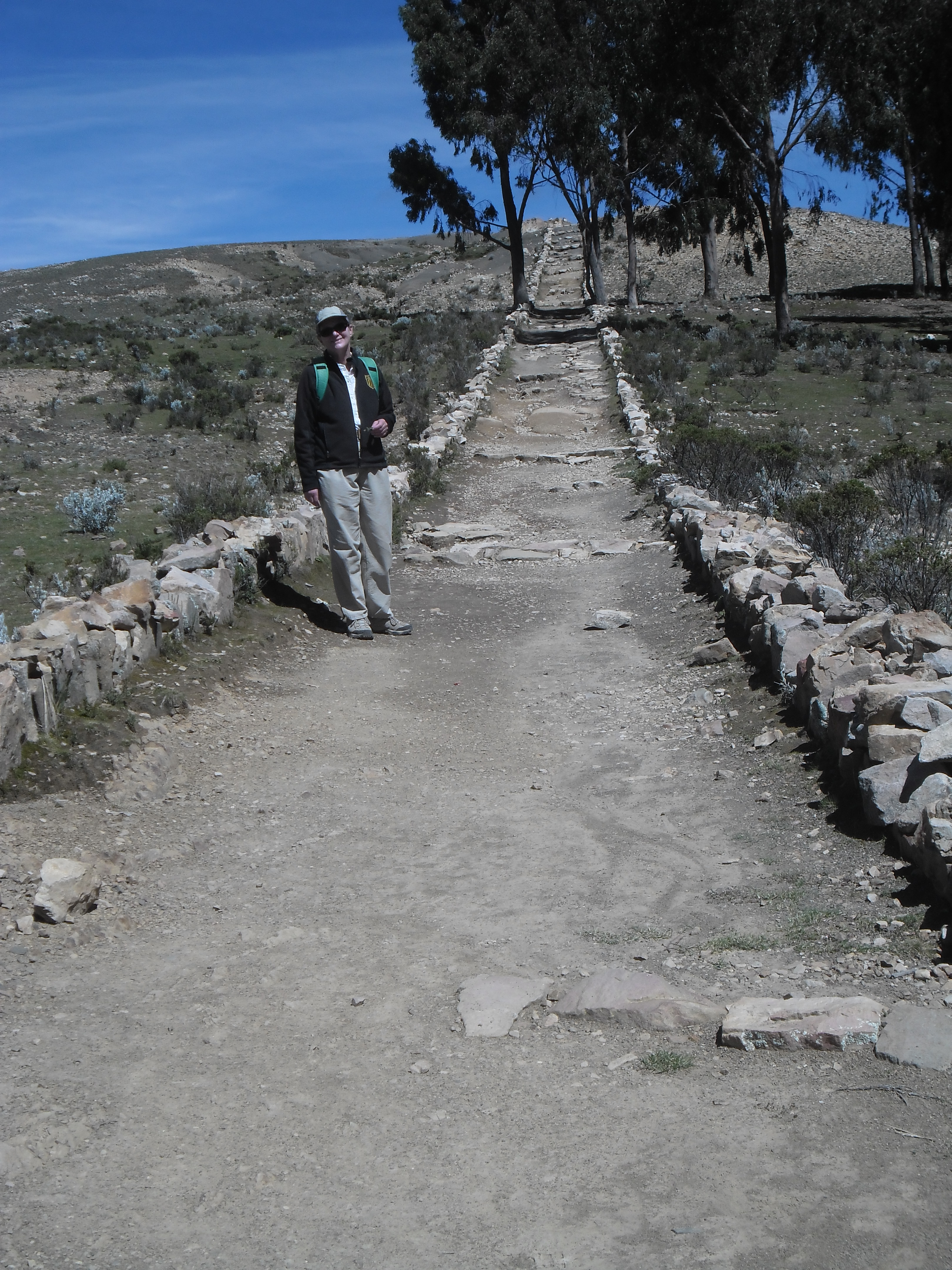
 There is one main road (actually a stone trail) that goes north and south, along the ridge, and connects both sides of the island. One day, we walked from Yumani to the north end, about eight kilometers. However, nobody refers to distance in this way. They measure distance in time. For example, people told us, “The north end is three hours,” or, “”The temple of the sun is forty five minutes,” or, “Yumani is fifteen minutes.” Distance is always measured this way.
The walk along the north-south trail is a “thing” that the turistas do, and we met people from France, Switzerland, Austria, and Germany along the way. At the north end, we got on a boat for the return back to the south end. The boat took forty five minutes.
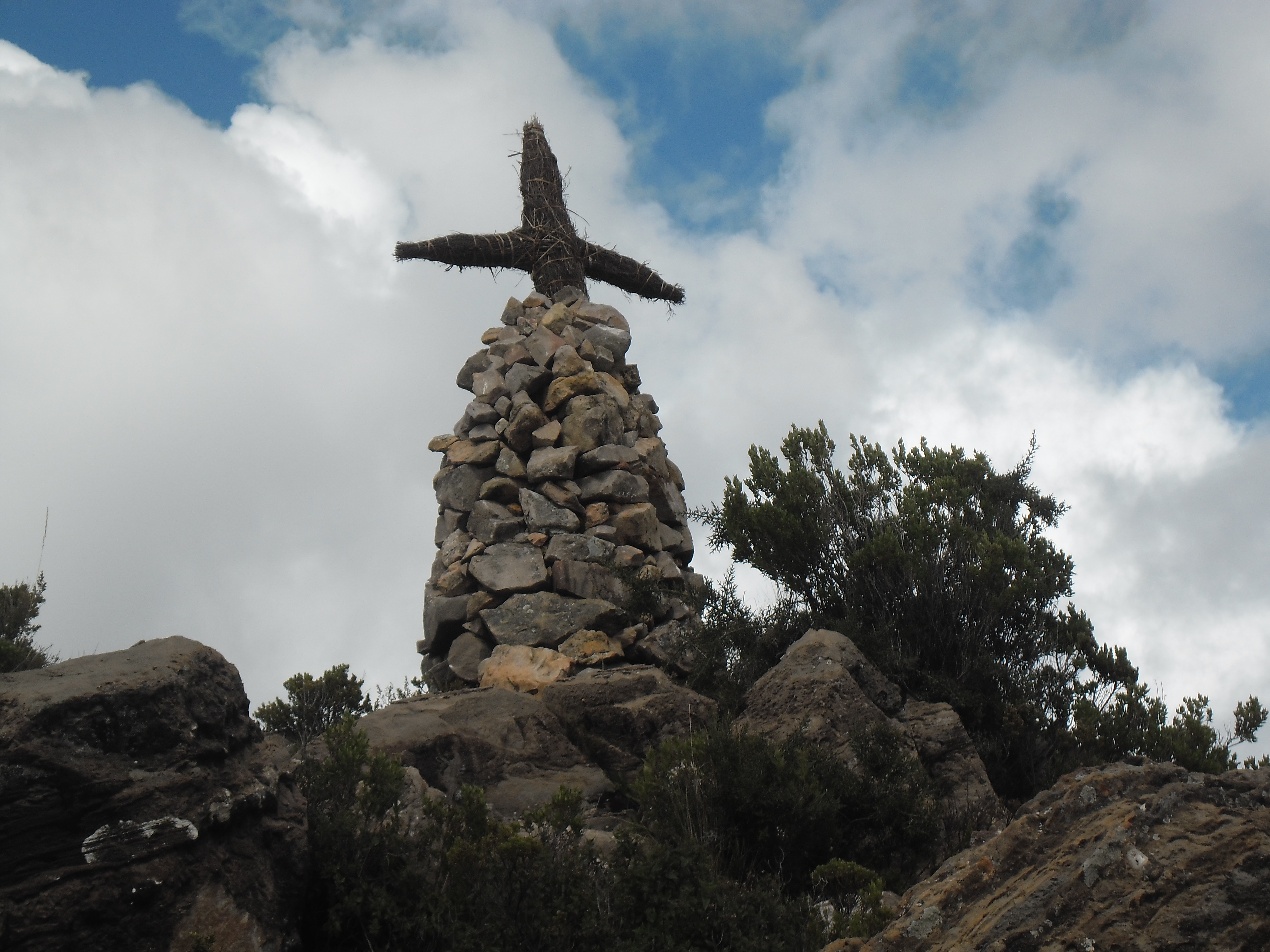
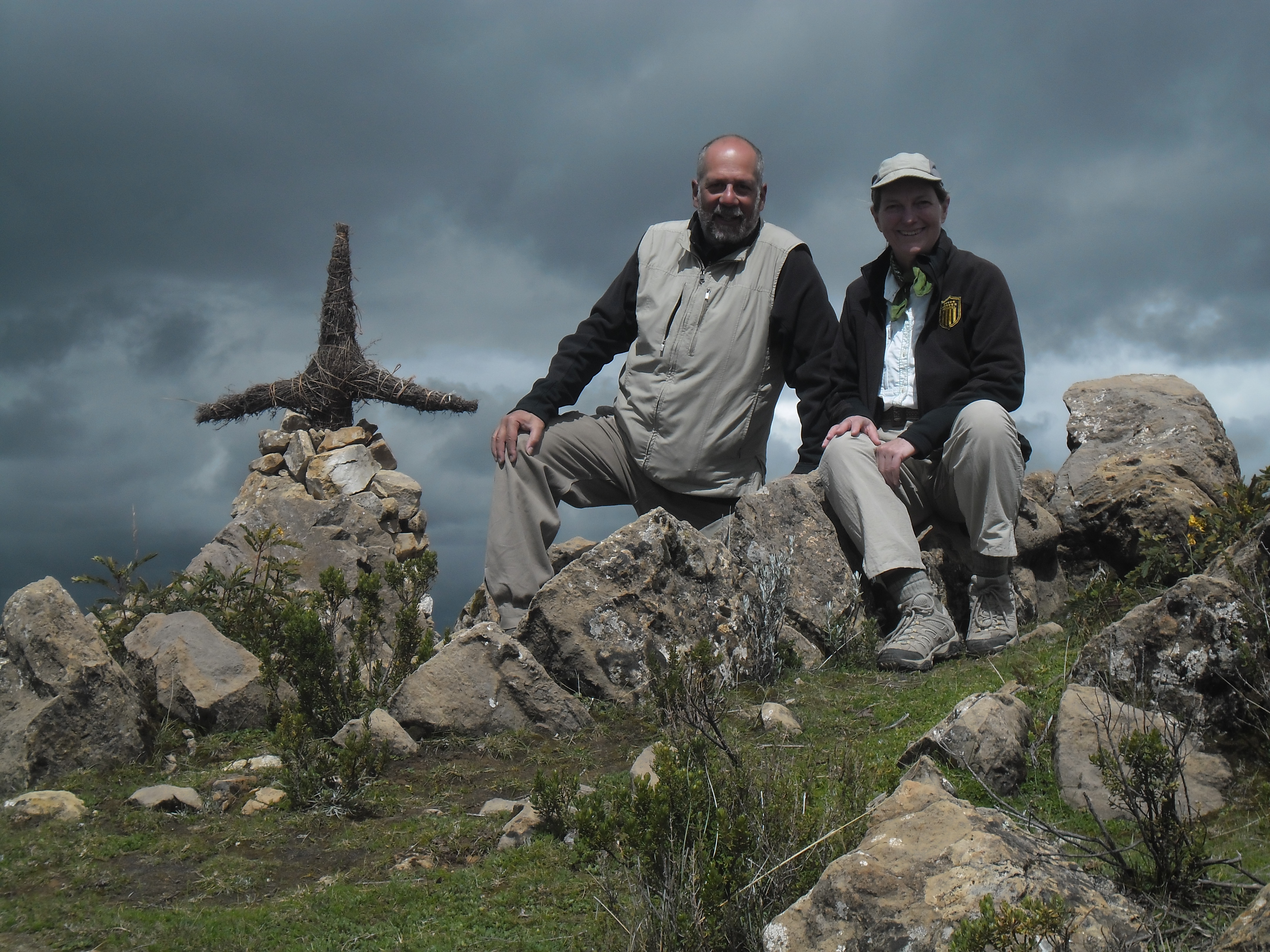
 Another day, we hiked up to one of the peaks of the island. The Aymaras have always appreciated the interconnections of land and water, earth and sky. They use the cross as a symbol of communication and protection. The constellation Southern Cross is clear in the sky every night. Monica and I have loved watching this constellation, one of the most recognizable sights on the planet. This symbol reflects the stars and invokes connections, much like crossing a river, or speaking to a person from another country, makes a connection.
We ate dinner three nights in a row in a restaurant called Las Velas. (The candles) To get there, you walk through a grove of eucalyptus trees, and then you emerge on a cliffside. It’s a small place with no electricity, with a great sunset view. Pablo is the owner and the chef. We talked a lot with him about the Aymara culture and the state of Bolivia.
Bolivia’s officially recognized name is actually Estado Plurinacional de Bolivia. (Multinational State of Bolivia) This was just started a few years ago, when Evo Morales was elected president. He is indigenous, and his government has worked hard to include the indigenous people in the decision making of the country. Evo is extremely popular here. He has been in office for five years now, quite an accomplishment in a country that has changed governments 172 times in 190 years. The flag of the indigenous people flies in front of the parliament building. The flag was banned for political reasons before Evo took office. The flag also flies outside of Pablo’s restaurant.
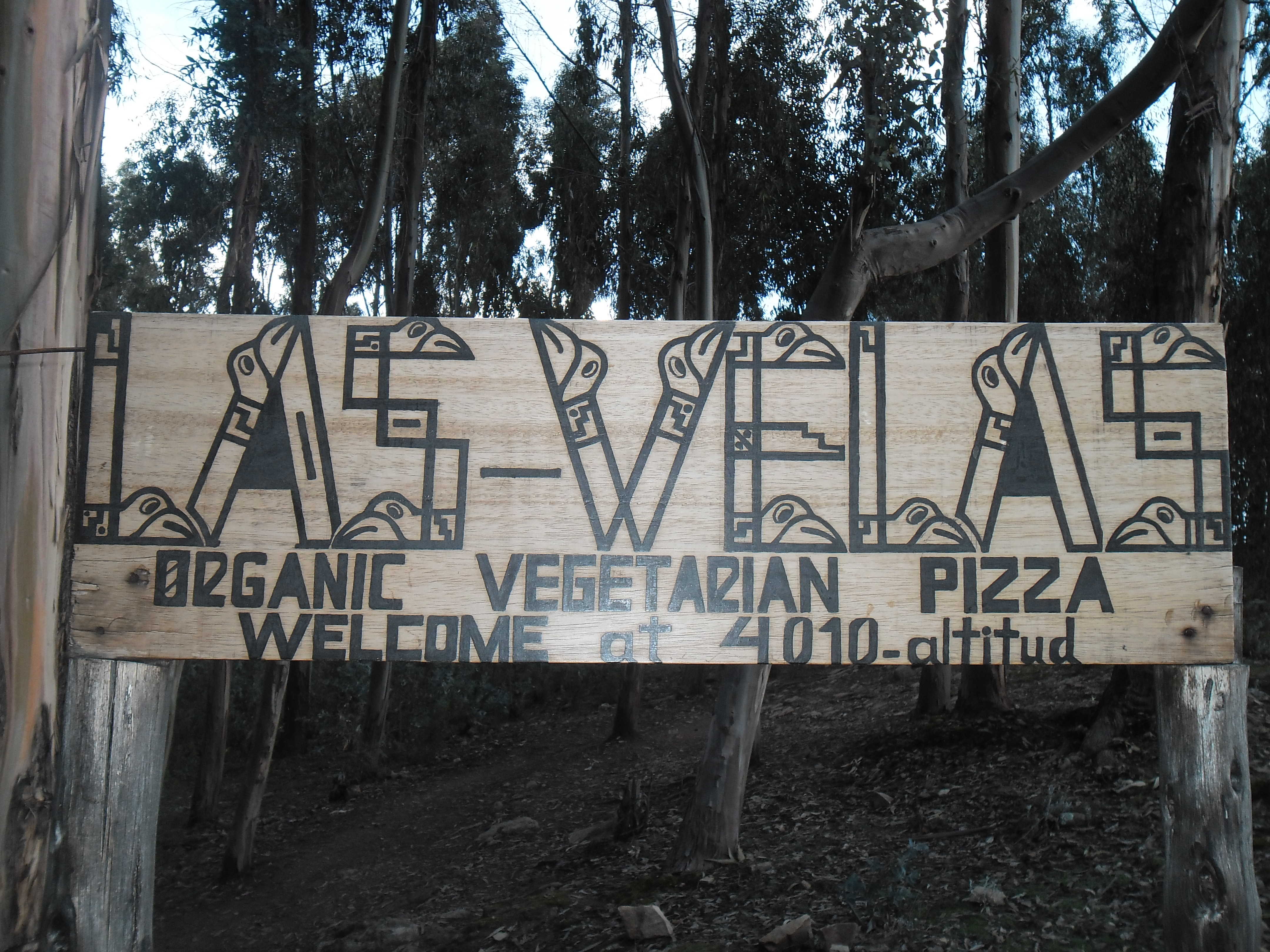
Even at 13,500 feet, there’s no need to be deprived of organic pizza.
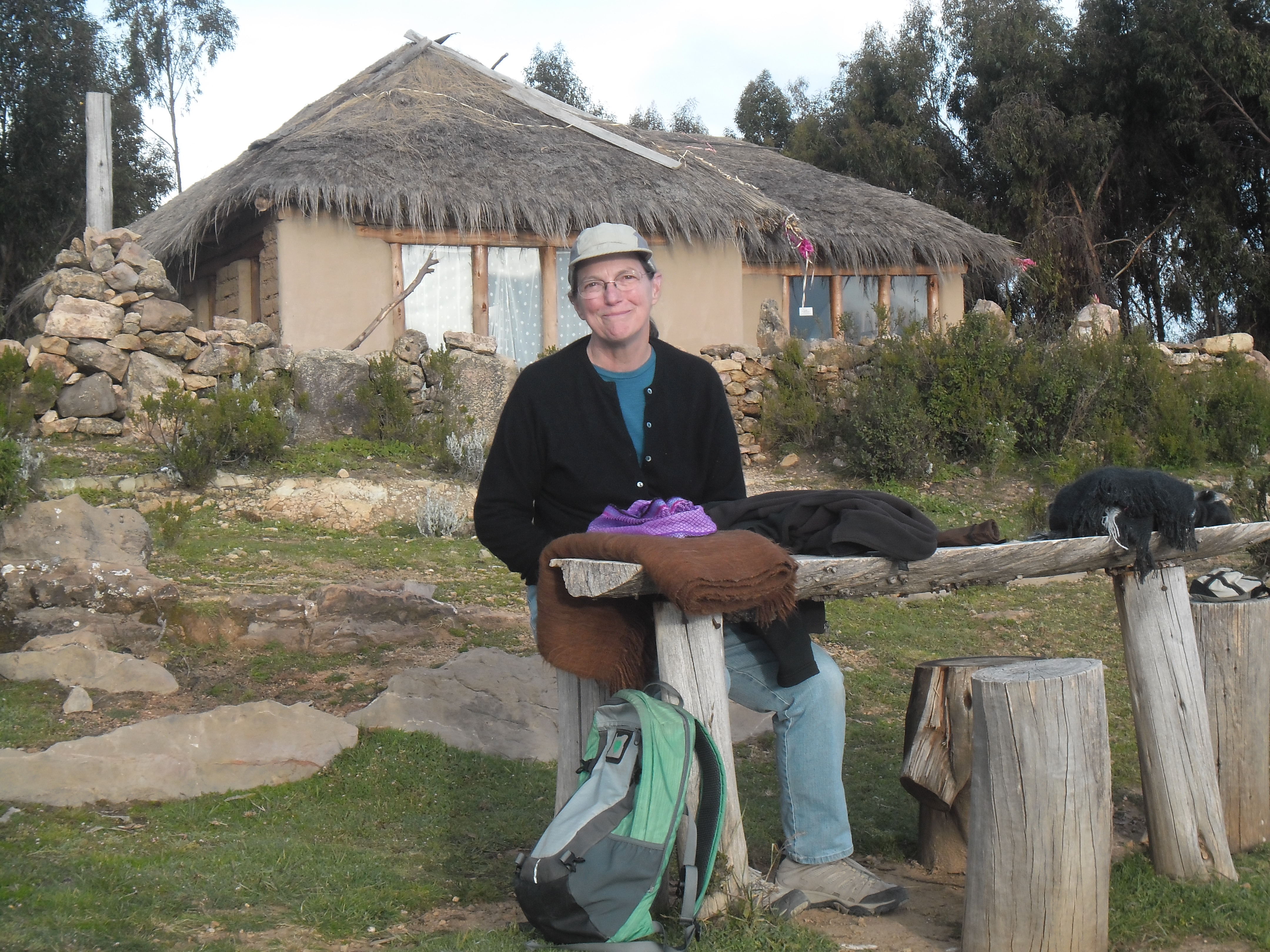
Moni and Las Velas
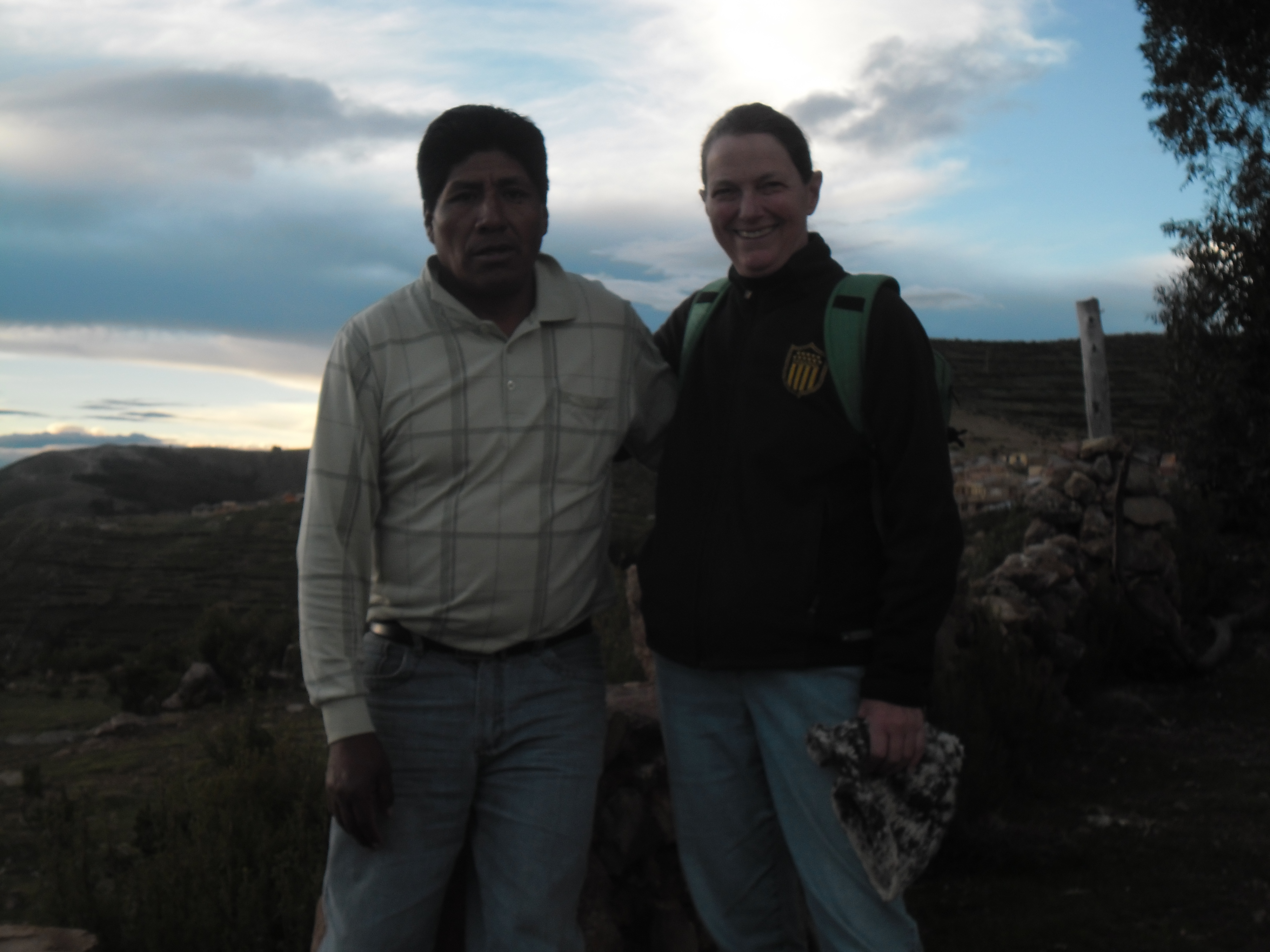
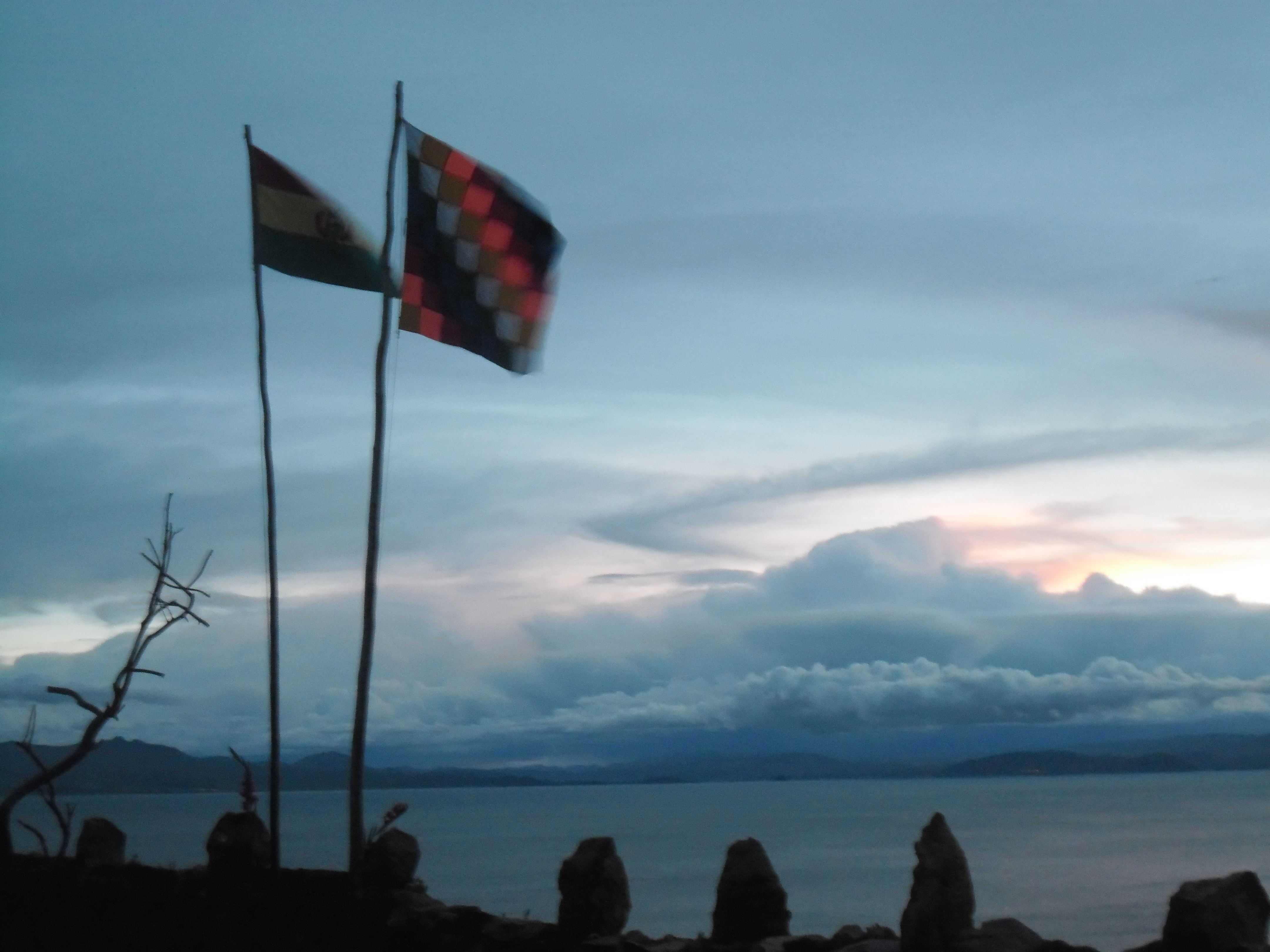 Lake Titicaca is a powerful place, clean and high.
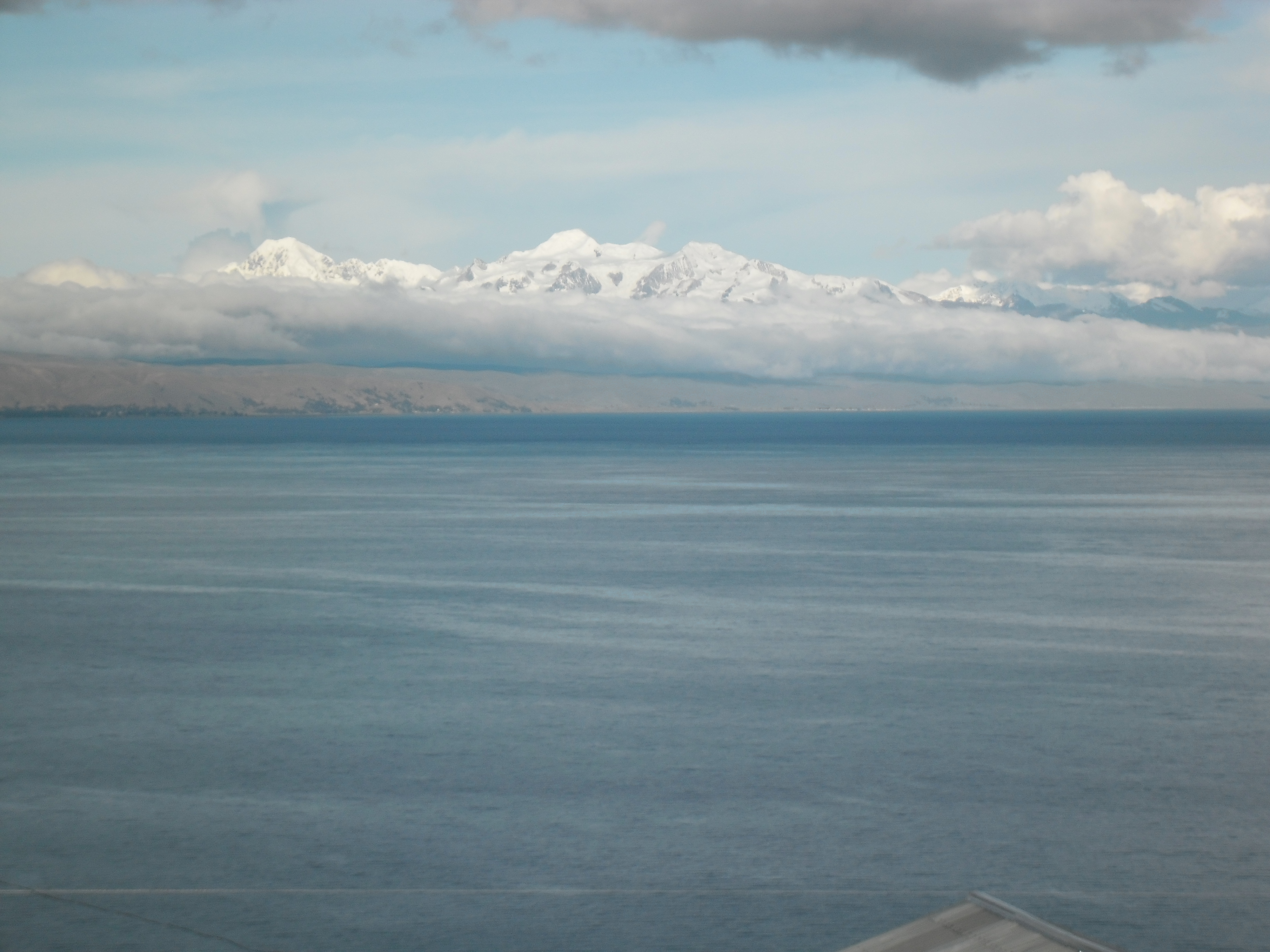
 We will always remember it.
 mikeandmonica
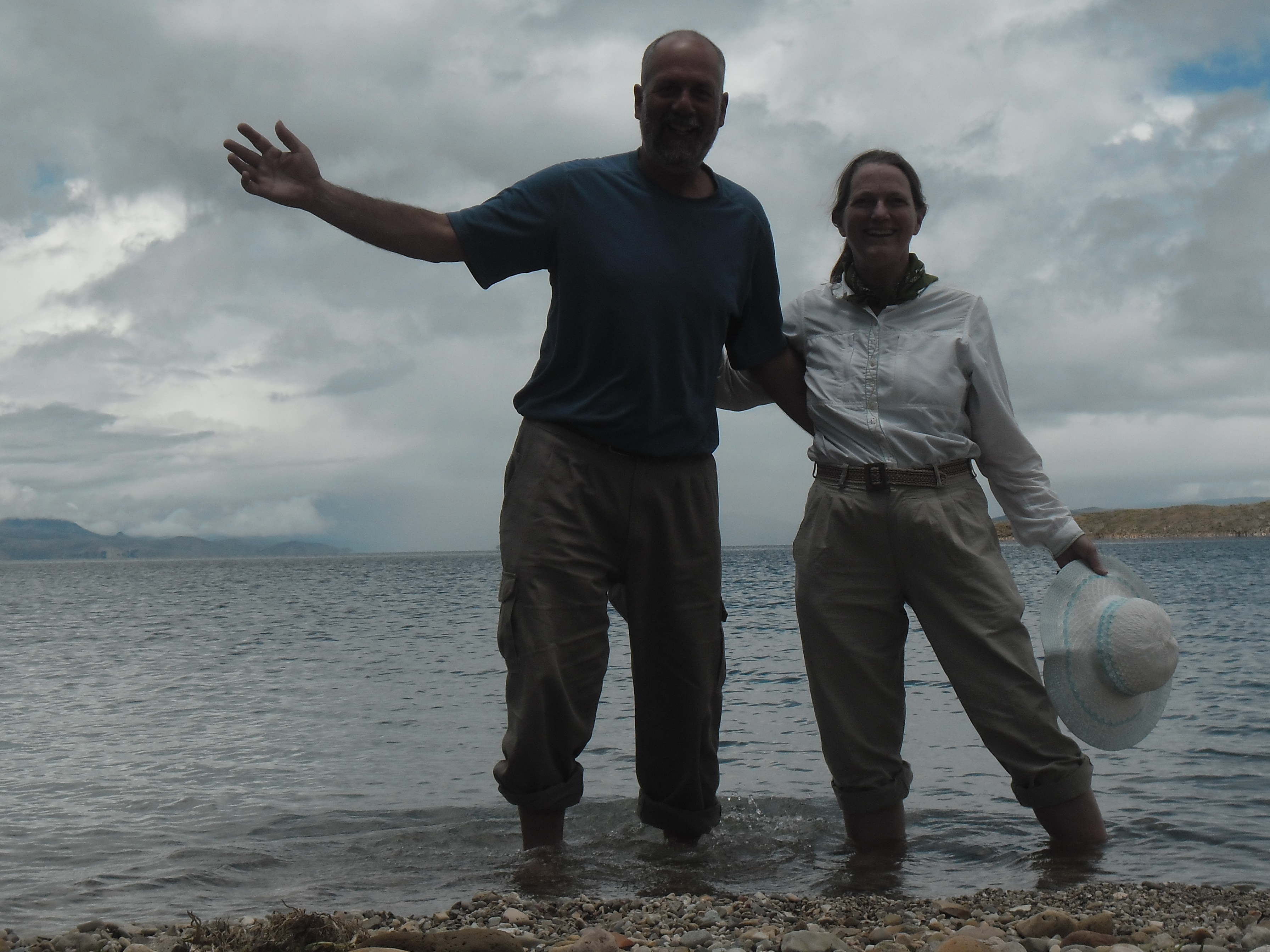
Love that last photo of you two!!! Enough so, that I downloaded it and plan to print it! So glad you are having the time of your lives! And kudos to Wilmer for carrying your pack, Monica! Love you both!
Dear Monica and Mike
I really find your experience as remarkable. You write quite good also. Beautiful pictures. I thouht the landscape would be treeless and dryer, we are in february, isn´t it the rain season there?
Evo means a lot for the Aymara people. Since Independence Aymara people have been not considered full citizen till now, today the consider diversity as an asset in their nation. Well this problem of not considering indigenous peoples rights is common in Latin America, but in Bolivia it is more aparent since they are a majority.
I´ll keep waiting for news.
WOW! you guys are really time traveling ! back in time ! that is so excellent ! the time of your lives is right !!!!!! LOVE the pics!!!! so glad to hear from you !!!! Bravo for the post and pics… history etc. mahalo ! love love and more love from me to you both. xxoo
As always so happy to see what you 2 are UP to! Monica I guess you have started that exercise program that we have talked about. I am excited about my trip yet realize how limited and pasteurized it will be in comparison. Not good to compare so I will just enjoy and make the most of it. Thanks again for including us in your experience. Love M.A.