Bolivia at last!
The bus from Tilcara reached Villazón on the Bolivian border around noon. We had heard many stories about problems crossing the border, but we had our visas from the Bolivian consulate in Jujuy and were as prepared as we could be. The countries are divided by a small river and there is no public transport across the bridge. We were let off in a large parking lot on the Argentine side and climbed up into the crowds on the bridge. We saw no signs and no apparent order or lines. People were just milling about and street venders selling juice or snacks. There was a check point for private cars crossing and we walked to the side of that. We passed a window on the side of the building where a few people seemed to be filling out forms, but no one was visible inside and no one stopped us. A few more steps and we were in the streets of Villazón, immediately a different world of people and color. No cars in the street and the sidewalk lined with stalls selling artesania, souvenirs, hardware, housewares, carnaval masks and confetti.
We paused and turned around and went back to the window. Sure enough, inside but below street level, was a desk with two customs officials. They stamped our passports after we filled out the forms declaring we were not bringing over $10,000 in any currency into Bolivia, and we were done. I´m still not sure if they were Bolivian or Argentine agents. Half a block onwards was a tiny storefront with an open door and the Bolivian state seal over it. We stopped in and a kindly man in uniform looked at one of our passports and said there was nothing more we needed to do and directed us to the bus terminal.
Villazón was gearing up for Carnaval. Crews were erecting bleachers along three sides of the main square, the streets already closed to traffic. Brass bands rounded the square from time to time.
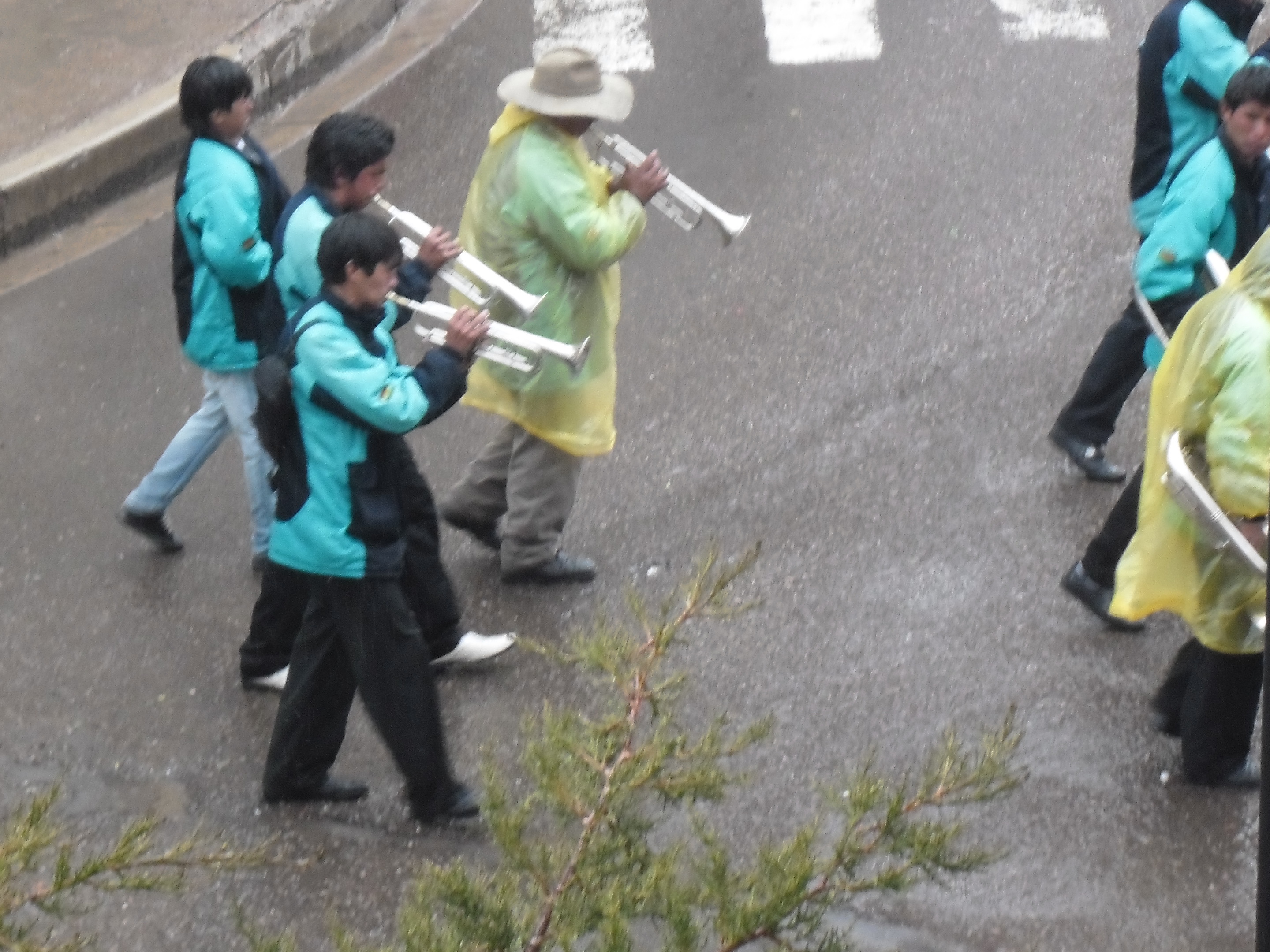
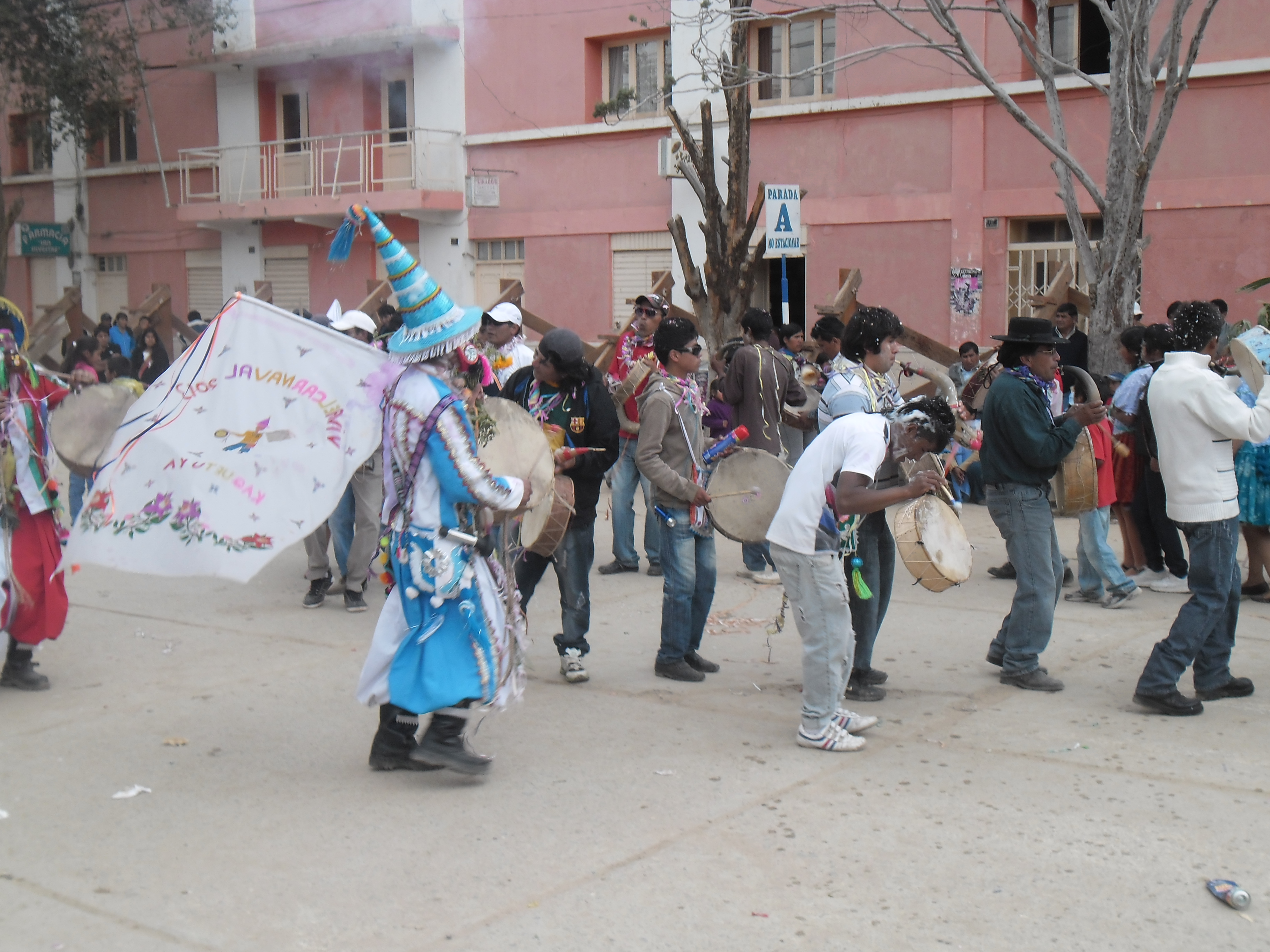 Boys – little to big – ran around the square in groups with plastic toy weapons that squirted water. The targets were the girls, some of whom ran squealing with delight while others hovered close to parents and were generally off limits. There was collateral soaking we discovered to our distaste. We were also to discover that water fights were a national custom during Carnaval. Potosí held more of the same, with the additional weapons of water balloons and cans of spray foam. We were seriously foamed in a drive-by shooting on the narrow streets of Potosí. Many citizens wore thin plastic raincoats for protection – even band members were not immune.
 We took an overnight bus from Villazón to Potosí. Our experience at the Villazón bus terminal is a chapter in itself. All good!, and we arrived in Potosí in the chill of dawn. Potosí is 4060 meters (13,400 feet) above sea level, one of the highest cities in the world.
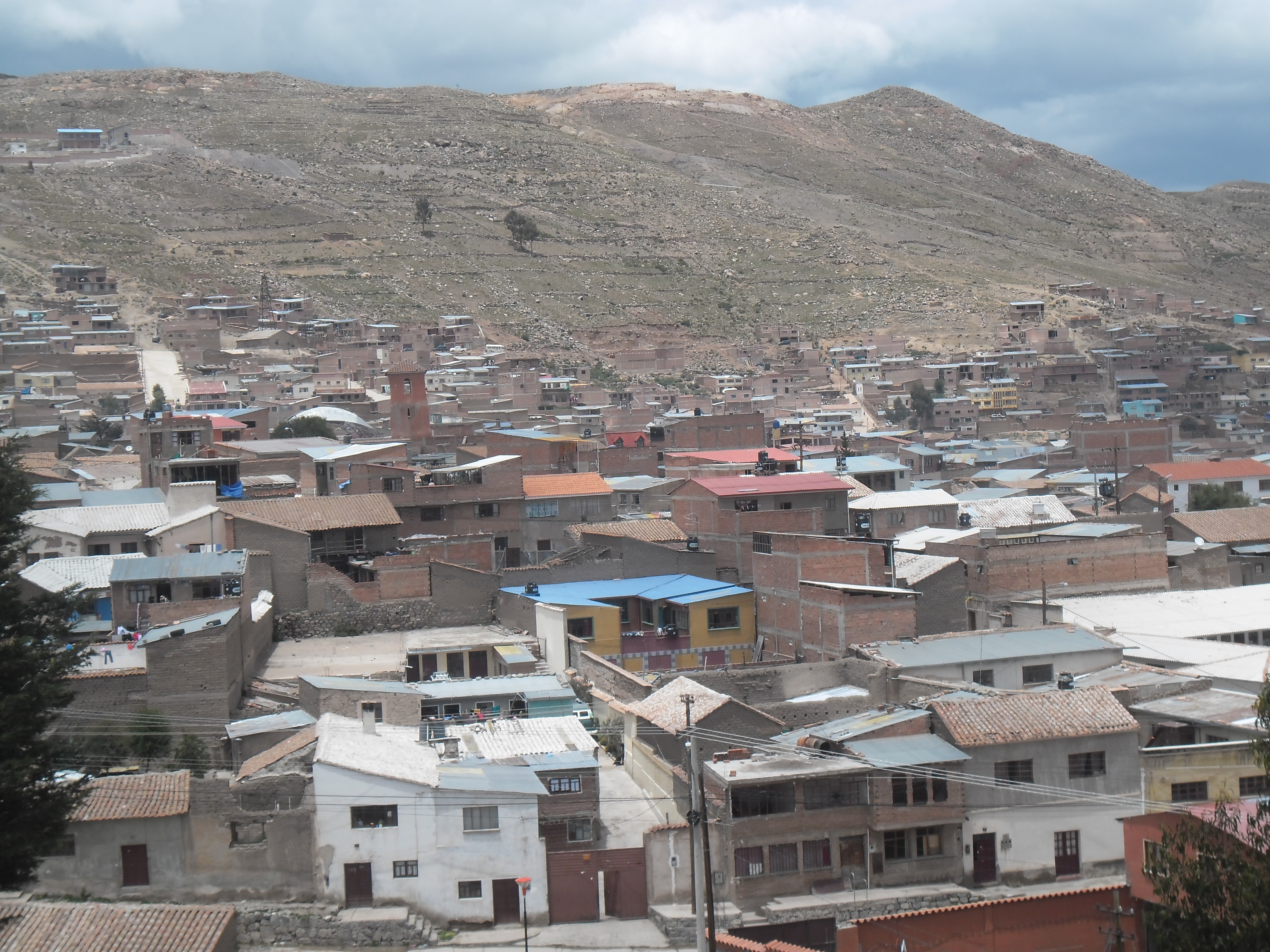 Potosí was born in 1545 when silver was discovered in the mountain and quickly grew into the largest city in all the Americas and the wealthiest city in the world. Today the mines produce just a trickle of silver and the city is but a shadow of its past glory. Nevertheless, the remains of its colonial splendor justify its selection as a UNESCO World Heritage site.
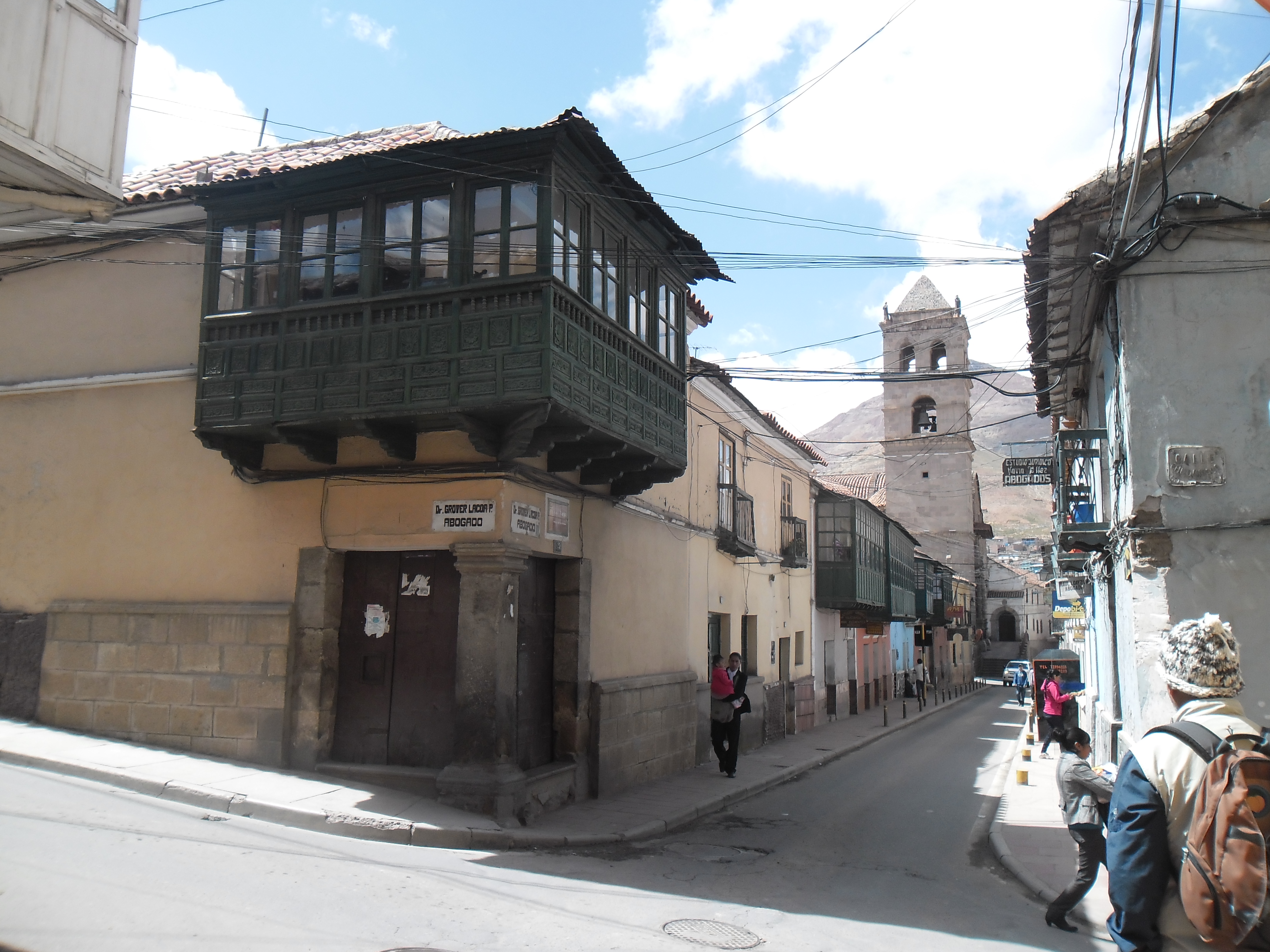
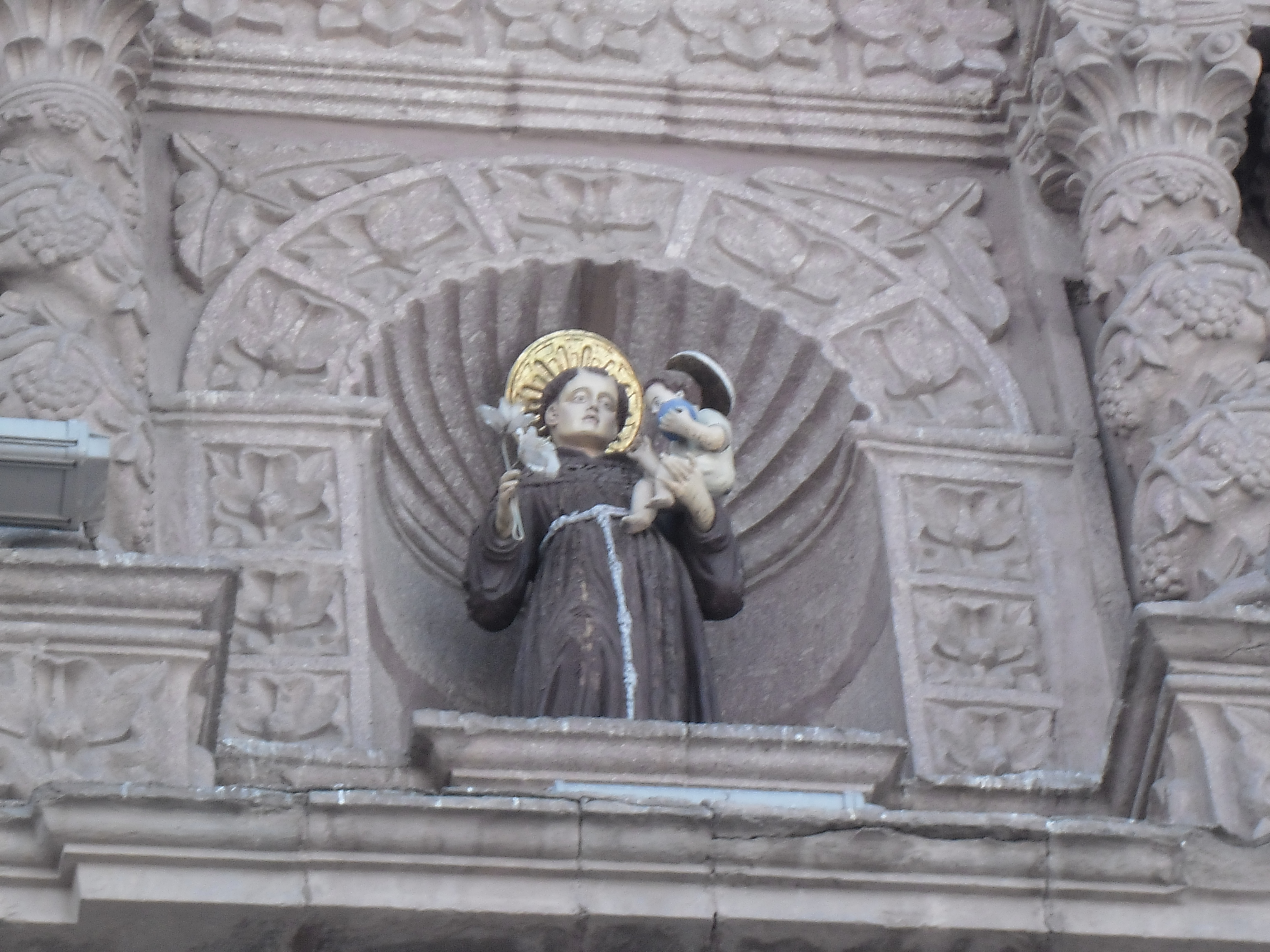
Figure of Saint Francis (San Francisco) above cathedral door
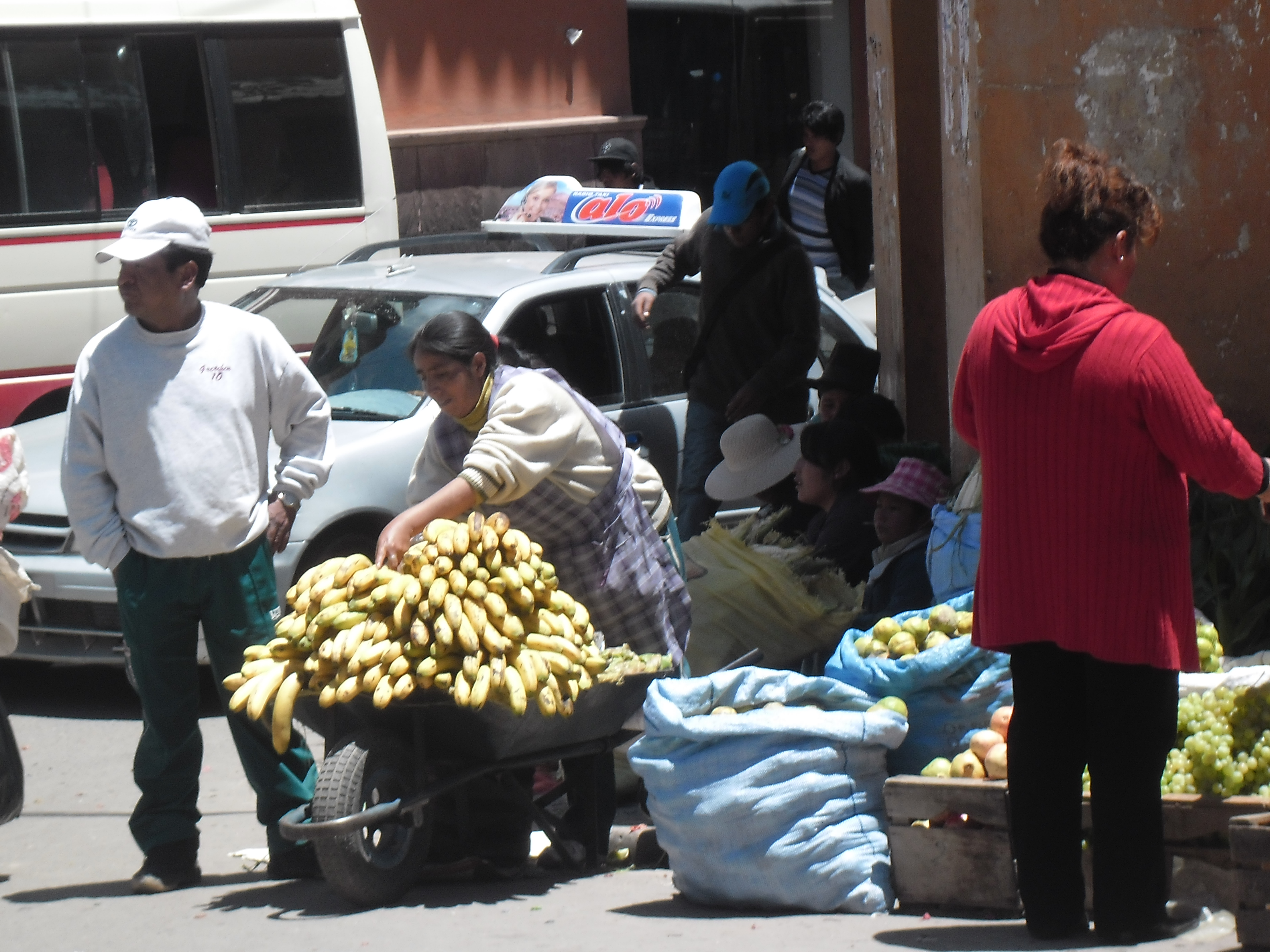
Street outside municipal market
We spent just a few days in Potosí, adjusting to the altitude and dodging water balloons. Thanks to Mike´s investigation, we learned that the tingling in our hands and shortness of breath were side effects of the prescription we were taking to prevent altitude sickness! Stopping the med relieved much of the symptoms, but we still walk slowly. All our time in the Bolivian altoplano has meant climbing up, up, up, and down, down down – in city streets and terraced hillsides.
 mikeandmonica
Arriving at dawn higher then Mt.Hood ! Hope you found a good place to lay your head. Hope at least one of you is keeping another journal of stories. Yeah for Lent you can stay drier. Always good to hear from you. May you continue to have WONDERFUL adventures. Love ya MAP
so very interesting !!!! LOVE IT ! Mahalo M & M for the posts !!!! and great PICS ! WHAT an adventure! I’m only working a mere 6 hrs then on 2 wks vacation ! going to beautiful Kauai, haha ! Pam coming over for a visit of 11 days total ! what fun !!! I’m excited ! xxoo
jeez, you guys had to get painted and dodge water balloons ? that is full on !!! looked very festive, however !!! they take it seriously, by the looks of it ! serious fun ! hahahaha!
Such amazing pictures and your words are wonderful. You make me feel as though I’m right there with you guys — well, almost-) Hey, Monica, belated HAPPY BIRTHDAY TO YOU! The blue house in the hood just ain’t the same without you two, when do you circle back? We’re all still here, suffering through our cccold winter, while you are traipsing around in shorts and short-sleeves, but that’s OK, don’t let me ‘rain’ on your parade, even tho we’re expecting rain and snow mix on the valley floor this weekend. Now tell me you’re not missing home just a little bit! Yeah, right! I thoroughly and totally enjoy your blogs. They are wonderful highlights to an otherwise ‘sorta boring’ inbox. So, thank you for including all of us on this wonderful journey of yours and may your adventures never end! XXXOOO
Potosi was the wealthiest city in the spanish empire. The CERRO RICO (rich hill) has been the tomb for thousands of forced indian laborers during the spanish colony, it is said that it produced so much silver that bridge could be made from Potosi to Madrid. Countless stories were told and adventures because of the promised riches. The incas knew about it, and incorporated it in their emprire before the spanish arrived, but it´s fame was alse known as far as today´s Brazilian coast.
It inspired the leyend of EL DORADO.
Even during the indepence war the Argentine army fighting the spaniards captured the city twice, but also two times had to reatreat. The importance of the city was its silver mll.
Unfortunately I haven´t been there,but I would love to visit the place. So much history.