Chiloé
Chiloé is an archipelago of islands in southern Chile. There is one big island, La Isla Grande, and then about forty smaller ones. Some of them are uninhabited, and others have small towns. You can get to some of these islands by public transport, buses and ferries, and others can only be reached by small boats. Chiloé is a part of Chile, but it has its own culture, history, and identity. Nowadays, it’s very accessible, and there are lots of tourists, a lot from Santiago. Cruise ships even make stops here on their way north or south, but all this is pretty recent. Chiloé has evolved more or less separately from the rest of Chile.
Chiloé is a culture of boats, woodworking, sheep, and fishing.
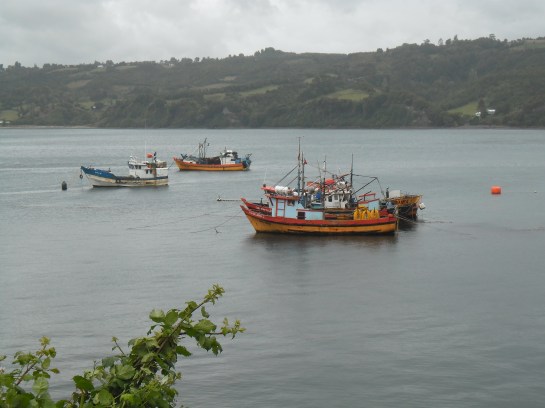
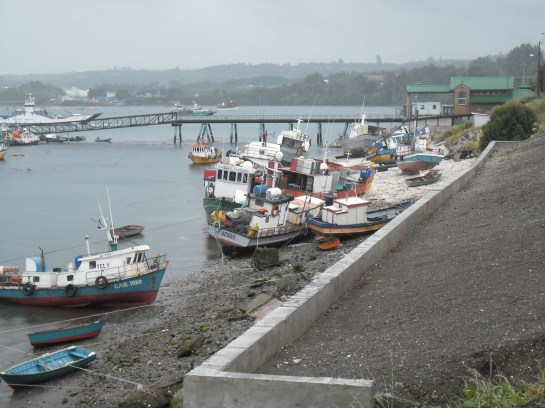
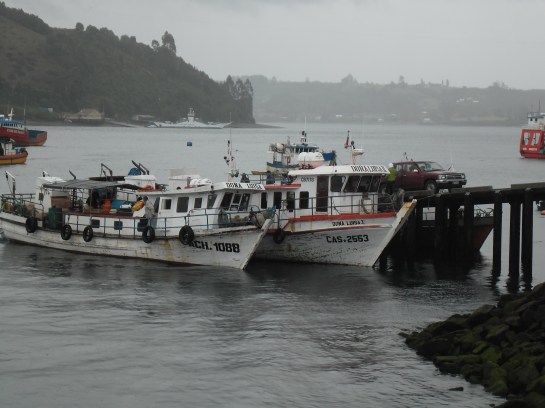 It rains here. The guidebook says that when it’s not raining, it’s misting or drizzling. It is green green green, with rolling hills and extremely picturesque vistas of bays and inlets.
Castro is the main city. 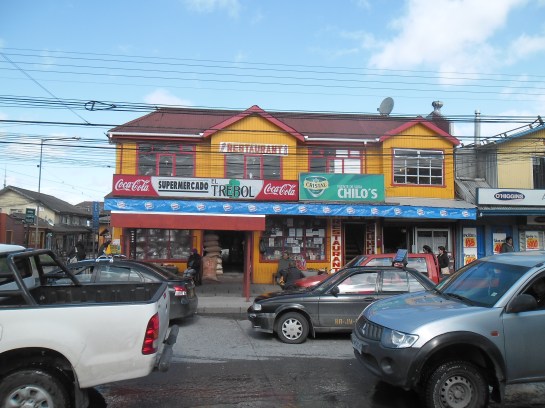
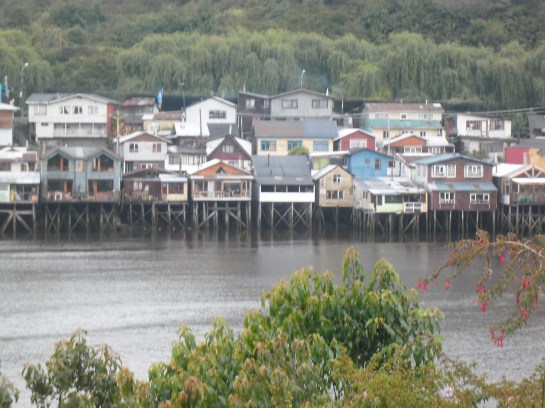
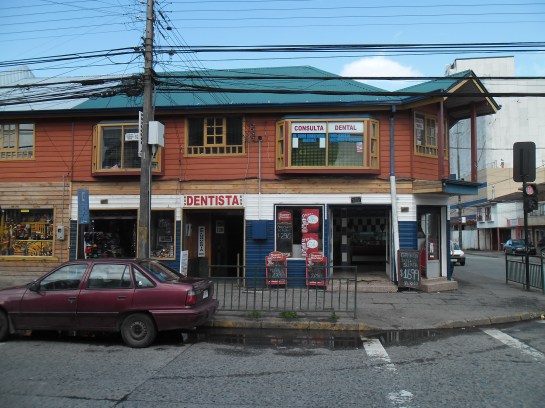 Castro is known for its palafitos. These are homes built over the water, on stilts. The high tide comes under the houses, and the low tide recedes over the mudflats.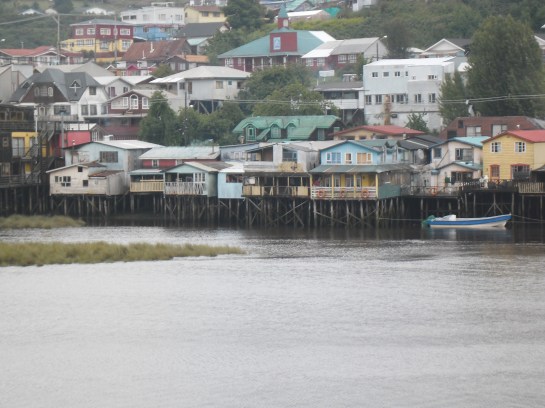
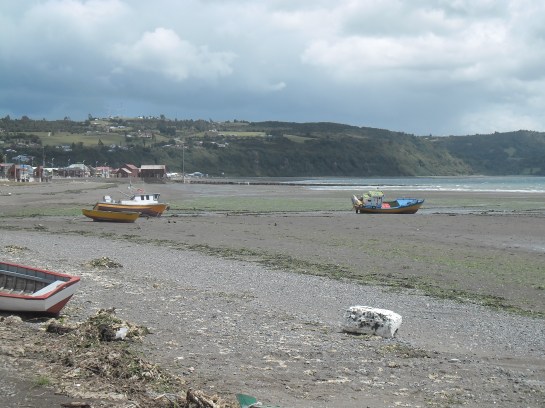
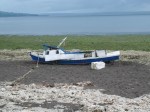
 You often see boats that look like they’re stranded, but they’re just waiting for the tide to come in again.
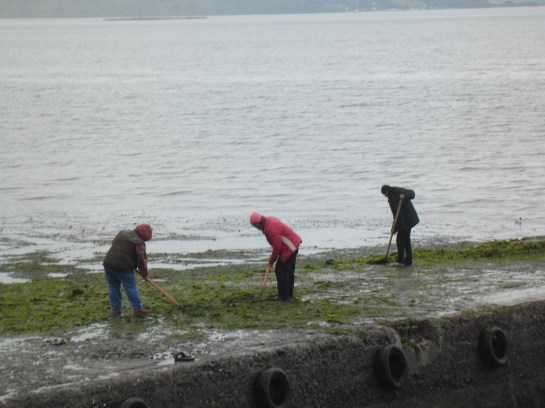
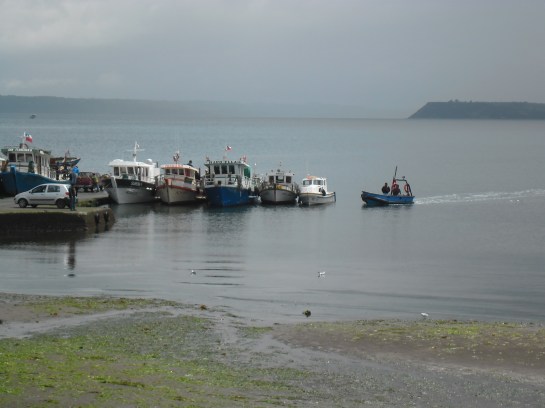
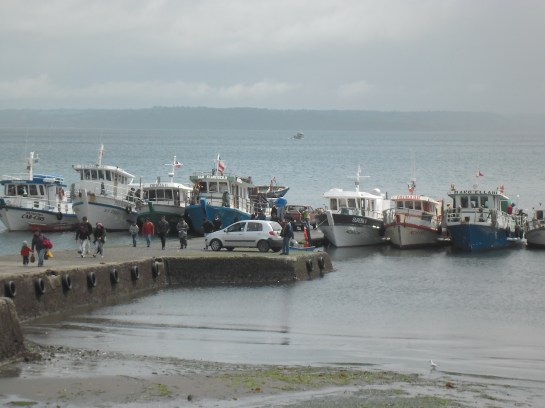
 Boats are a way of life for the people who live on the outer islands. We stayed in a small town called Achao, on a small island called Quinchao. Achao is reallly slow. Monica said that it is similar to Kaunakakai, the main city on Molokai, except that Achao is a little slower. Achao does, howerver, have a couple of grocery stores, and the people on the islands make the crossing on a boat when the sea is calm to stock up on groceries. We arrived in the middle of a gale that had been blowing for a few days. Not unusual. Nobody could come to the island until the wind died down. the next day was calm, and the ocean was flat. Boats arrived all day at the dock. People jumped off and walked into town. A few guys cleared the slippery seaweed that had come up on the dock, and pickup trucks drove down to the boats with supplies to carry back home. People and boats coming and going all day long.
 Handicrafts are an important part of life here. Every town has its own Feria Artesanal. These “fairs” are open, usually, every day of the year, and they serve many different purposes.
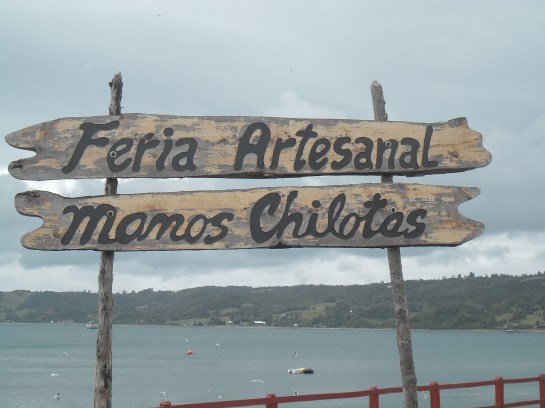
From the hands of the people of Chiloé
TThey are definitely a source of income, as the craftspeople sell their stuff to people passing through, as well as to local people. Most of the things for sale are woolen goods, both knitted and woven. Beautiful wool hats, vests, ponchos, sweaters, as well as decorative dolls and woolen renditions of specific Chiloé mythical figures. These include beautiful mermaids and sirens, mischievous trolls, and even some downright evil and menacing creatures of the forest. 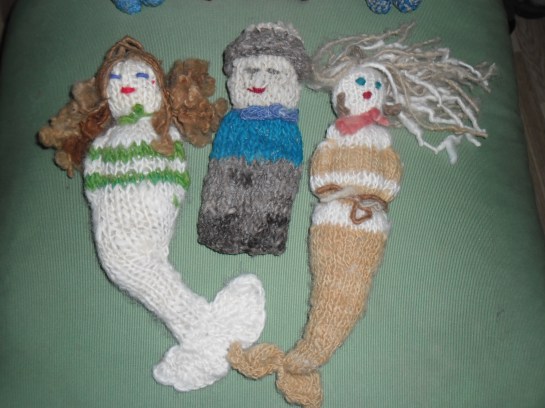
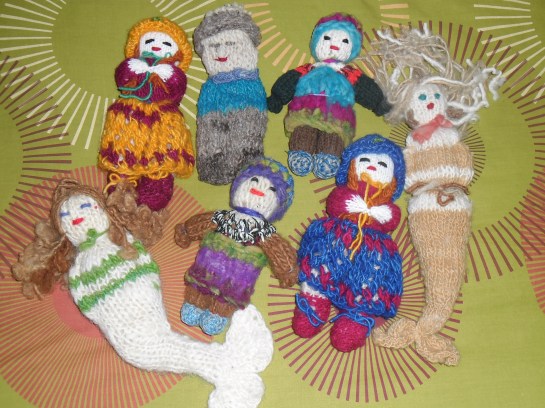 In addition to the source of income, the handicrafts are also a link between the past, present, and future. We were fortunate enough to be in Achao on December 21, when the annual event honoring and celebrating the handicrafts fair is held. There was a fashion show, featuring the kids of the knitters and weavers, some of them impossibly cute, wearing the beautiful and detailed, naturally dyed from their own sheep wool. The colors of the vests and hats and sweaters represent the islands of Chiloé. Green for the countryside, white, grey, brown, and black for the earth and sky.
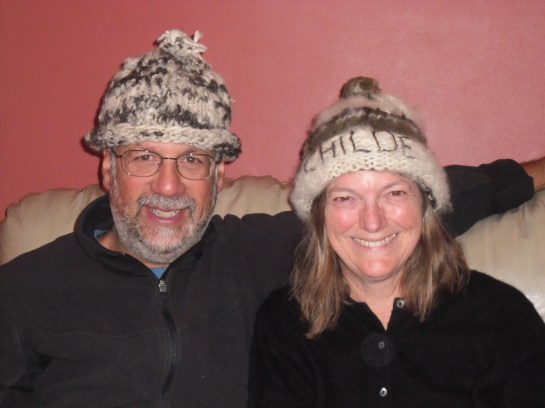
At the event, there were traditional songs, guitarrists and singers. And there was a moving and heartfelt speech that explained the relevance of handicrafts during our modern times. “In the old days, it wasn’t called handicrafts,” he told all of us. “It was just our daily life. It was the clothes we wore, the boats we built, the homes we lived in, the bags we used to harvest potatoes.” He talked about how easy it would be to lose their culture, now that we can buy anything we want. He talked about how wonderful it was to see the grandmothers working with their daughters and granddaughters, knitting and weaving and producing, the same way that the generations past had done. The feria is definitely woman-powered. At the end of the event, all of the artisans were called up to the stage, 12 women, most of them grandmas. The keepers of the culture.
The people of Chiloé know that everything changes. They realize the challenge of simultaneously keeping the past and embracing the future. Cell phones and computers are everywhere. A new airport was just finished near Castro. But the songs and the artesanias continue also.
At
 mikeandmonica
Wow, that looks like an enchanting place ! Chiloe! Great photos ! Love the pic of you and your new cozy hats ! so cute !
no, “impossibly cute !!!!” hahahahahahaha! Mele Kalikimaka Eve !
wondering where the wanderers are for the New Year….Best wishes for continued adventures Love M.A.
Monica, Marilyn told me about your adventure and blog. Wow! My son and I have enjoyed reading and looking at the pictures. He especially loved the lizard picture and penguin pictures. I loved the pictures and stories of all the hostels and people you have met. Amazing trip.
Amber (in florence)
Mike & Mónica, el blog es una idea genial. Las fotos son lindísimas y es muy lindo poder seguirlos en sus aventuras. I love your trips! Se los ve felices y disfrutando tanto de los lugares y de la gente!, es un placer ver las fotos y leer los posts. Los mejores deseos para este año que empieza de la mejor manera.
Un abrazo grande de Fabián. Love, Silvana