Archive

Monthly Archives: December 2012

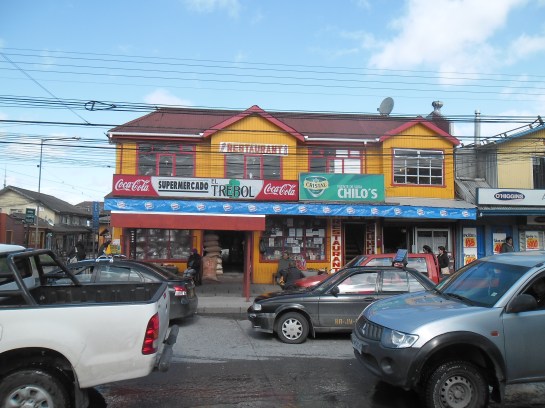
Chiloé is an archipelago of islands in southern Chile. There is one big island, La Isla Grande, and then about forty smaller ones. Some of them are uninhabited, and others have small towns. You can get to some of these islands by public transport, buses and ferries, and others can only be reached by small boats. Chiloé is a part of Chile, but it has its own culture, history, and identity. Nowadays, it’s very accessible, and there are lots of tourists, a lot from Santiago. Cruise ships even make stops here on their way north or south, but all this is pretty recent. Chiloé has evolved more or less separately from the rest of Chile.

Chiloé is a culture of boats, woodworking, sheep, and fishing.
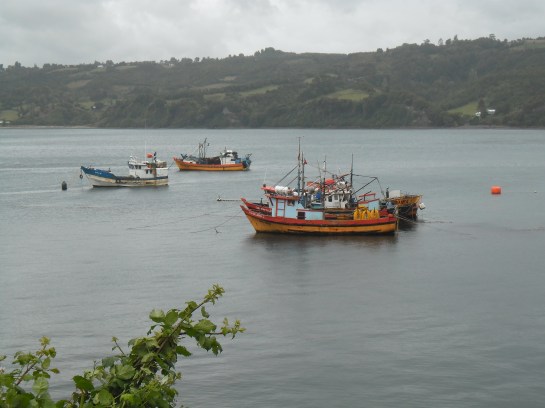
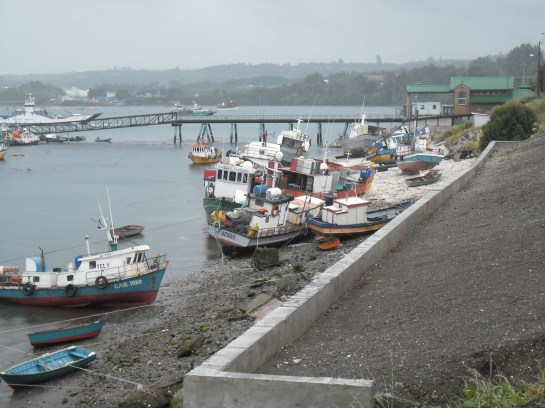
SAM_0385SAM_0386SAM_0388It rains here. The guidebook says that when it’s not raining, it’s misting or drizzling. It is green green green, with rolling hills and extremely picturesque vistas of bays and inlets. 

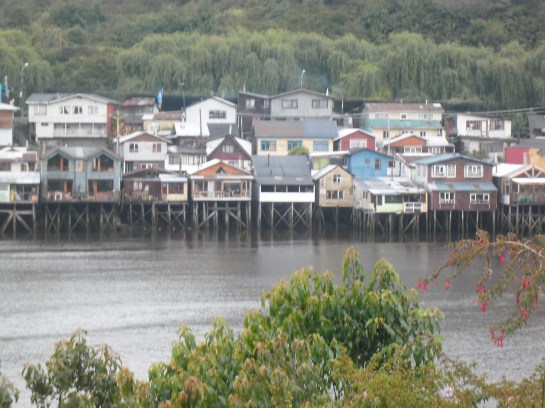
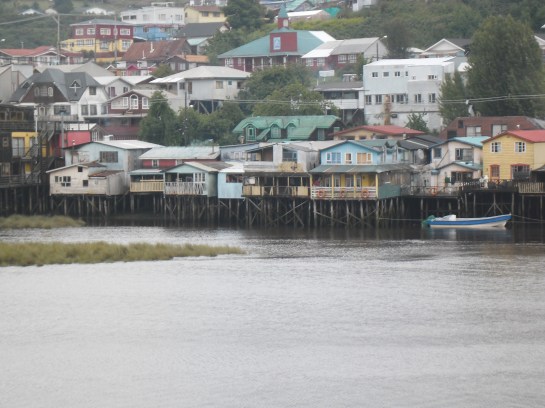
Castro is the main city. SAM_0346SAM_0348Castro is known for its palafitos. These are homes built over the water, on stilts. The high tide comes under the houses, and the low tide recedes over the mudflats. SAM_0409
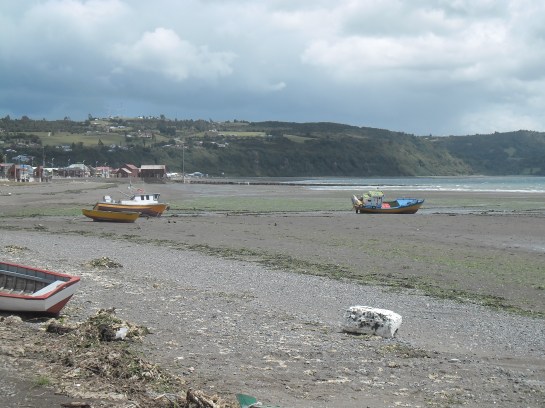
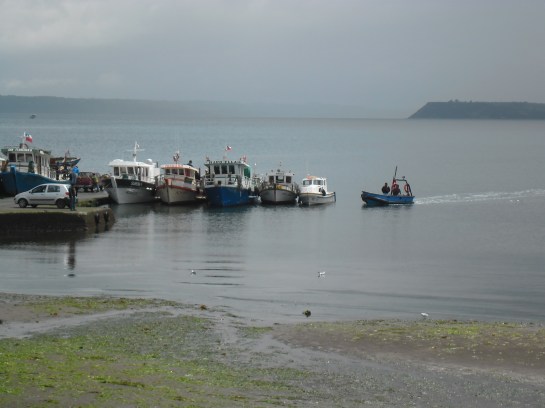
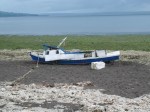
SAM_0406You often see boats that look like they’re stranded, but they’re just waiting for the tide to come in again.
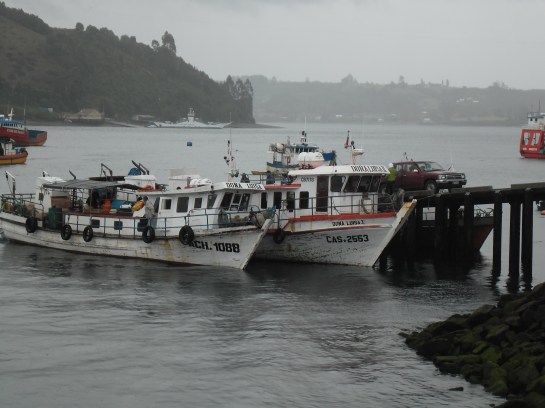
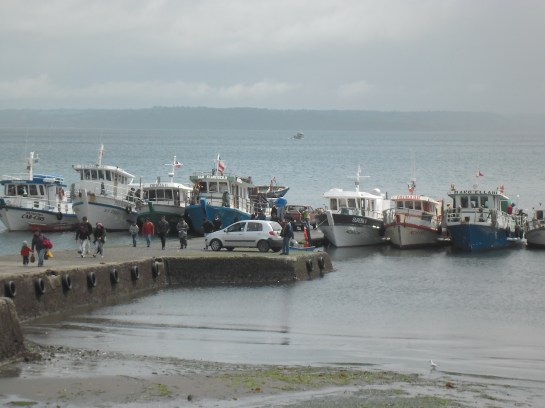
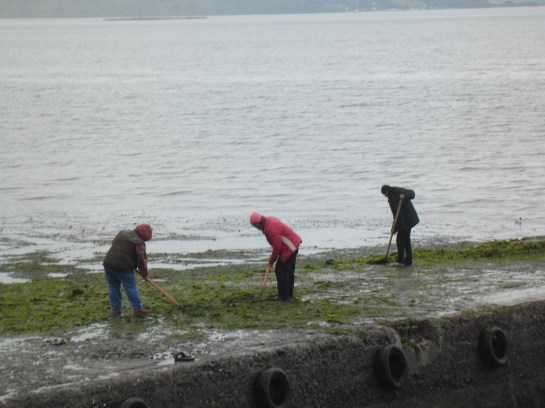
SAM_0363Boats are a way of life for the people who live on the outer islands. We stayed in a small town called Achao, on a small island called Quinchao. Achao is reallly slow. Monica said that it is similar to Kaunakakai, the main city on Molokai, except that Achao is a little slower. Achao does, howerver, have a couple of grocery stores, and the people on the islands make the crossing on a boat when the sea is calm to stock up on groceries. We arrived in the middle of a gale that had been blowing for a few days. Not unusual. Nobody could come to the island until the wind died down. the next day was calm, and the ocean was flat. Boats arrived all day at the dock. People jumped off and walked into town. A few guys cleared the slippery seaweed that had come up on the dock, and pickup trucks drove down to the boats with supplies to carry back home. People and boats coming and going all day long.
SAM_0367SAM_0377SAM_0379Handicrafts are an important part of life here. Every town has its own Feria Artesanal. These “fairs” are open, usually, every day of the year, and they serve many different purposes.
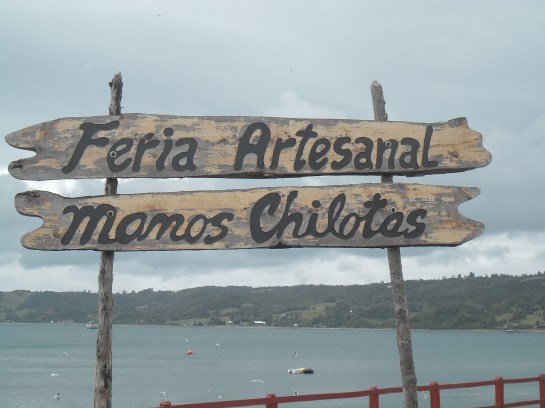
From the hands of the people of Chiloé

From the hands of the people of Chiloé

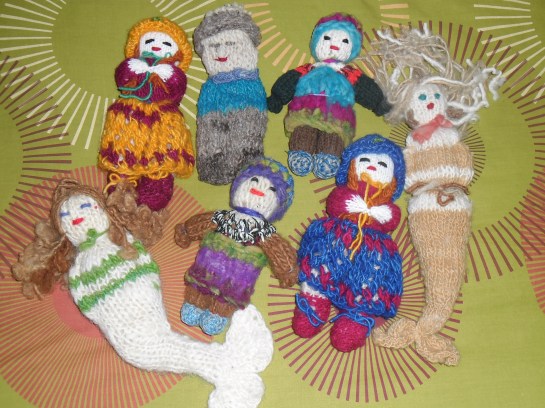
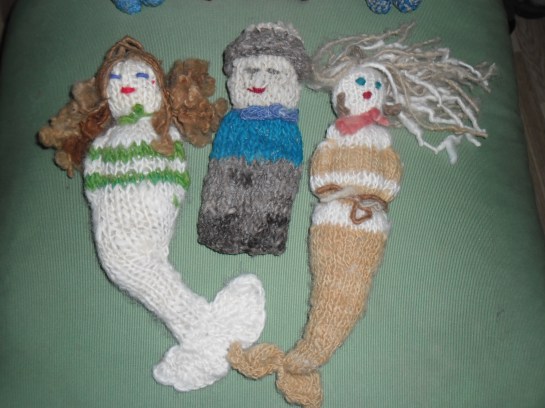
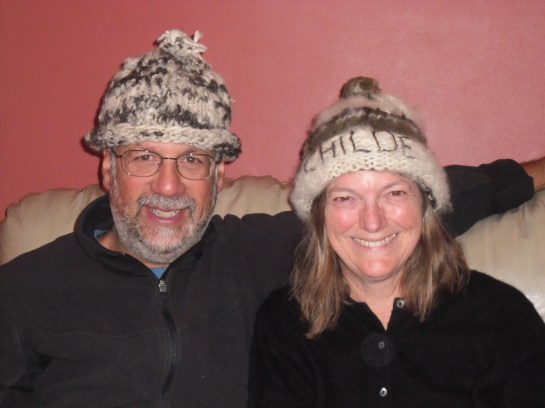
TThey are definitely a source of income, as the craftspeople sell their stuff to people passing through, as well as to local people. Most of the things for sale are woolen goods, both knitted and woven. Beautiful wool hats, vests, ponchos, sweaters, as well as decorative dolls and woolen renditions of specific Chiloé mythical figures. These include beautiful mermaids and sirens, mischievous trolls, and even some downright evil and menacing creatures of the forest. SAM_0422SAM_0423In addition to the source of income, the handicrafts are also a link between the past, present, and future. We were fortunate enough to be in Achao on December 21, when the annual event honoring and celebrating the handicrafts fair is held. There was a fashion show, featuring the kids of the knitters and weavers, some of them impossibly cute, wearing the beautiful and detailed, naturally dyed from their own sheep wool. The colors of the vests and hats and sweaters represent the islands of Chiloé. Green for the countryside, white, grey, brown, and black for the earth and sky.
SAM_0427

At the event, there were traditional songs, guitarrists and singers. And there was a moving and heartfelt speech that explained the relevance of handicrafts during our modern times. “In the old days, it wasn’t called handicrafts,” he told all of us. “It was just our daily life. It was the clothes we wore, the boats we built, the homes we lived in, the bags we used to harvest potatoes.” He talked about how easy it would be to lose their culture, now that we can buy anything we want. He talked about how wonderful it was to see the grandmothers working with their daughters and granddaughters, knitting and weaving and producing, the same way that the generations past had done. The feria is definitely  woman-powered. At the end of the event, all of the artisans were called up to the stage, 12 women, most of them grandmas. The keepers of the culture.

The people of Chiloé know that everything changes. They realize the challenge of simultaneously keeping the past and embracing the future. Cell phones and computers are everywhere. A new airport was just finished near Castro. But the songs and the artesanias continue also.
At
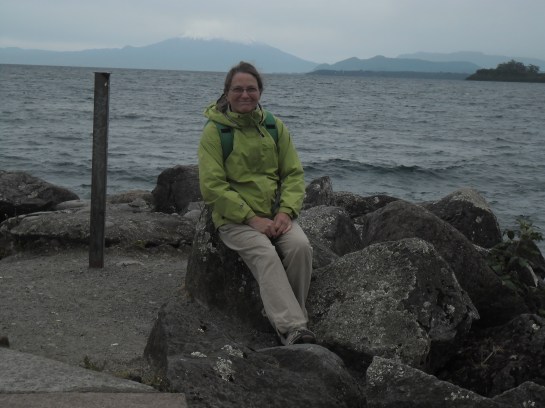
Our bank cards arrived on Saturday (the post office fellow recognized us when we walked in and had the envelope ready!) and on Sunday we took the bus over the mountains to Chile. It rained along the way, so we had no great vistas, but the scenery was impressive none the less. We arrived in Puerto Varas on the shore of of Lake Llanquihue in late afternoon.

Lakefront of Puerto Varas

Lakefront of Puerto Varas

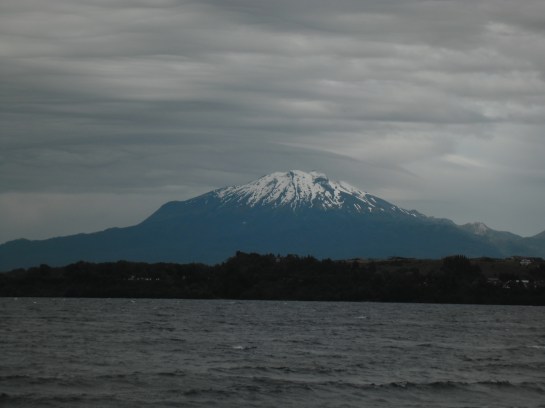
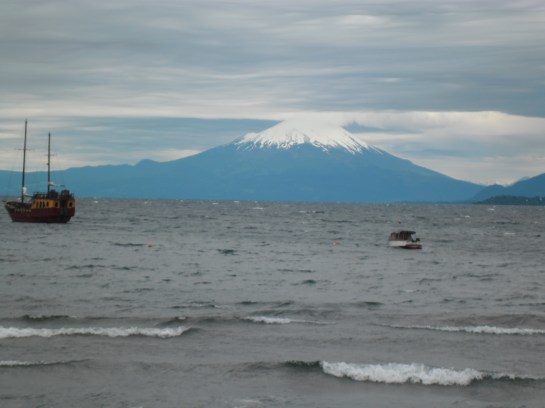
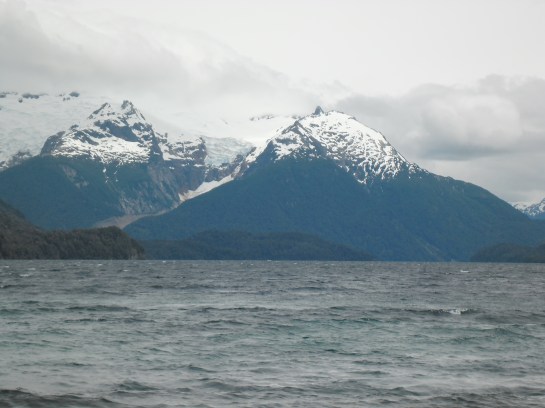
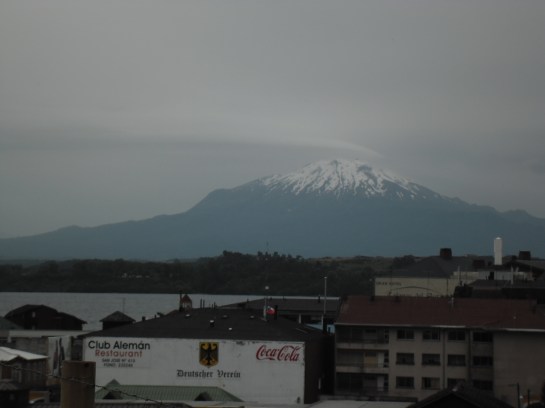
The rain had stopped and in the evening the clouds lifted enough that we could see the tops of the two volcanoes towering across the lake.

Mount Calbuco

Mount Calbuco

Calbuco 10 minutes later

Calbuco 10 minutes later

Mount Osorno

Mount Osorno

We stayed at a small, friendly hostel a block from the lakefront. Again, our fellow guests were European. English and French were spoken as much or more than Spanish.

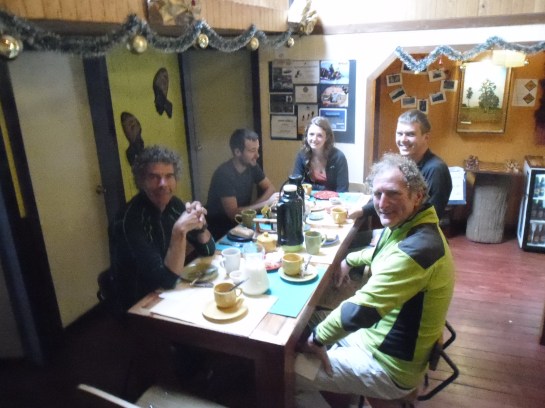
Common room at Hostal Margouya

Common room at Hostal Margouya

We had our first taste of Chilean seafood in Puerto Varas. Paila marino, Mike’s favorite, is a clear broth filled with 8-10 different kinds of fish and shellfish. I had a crab chowder so thick with crabmeat that the spoon stood up in it. We did not know what we were missing when we passed up the pisco sours, but we found out the next day when we reached Chiloé.

San Carlos de Bariloche is a resort town on the shore of Lake Nahuel Huapi in the Argentine Andes. An international tourist destination in both summer and winter, we chose it as a reasonable spot to receive mail general delivery. Our bank cards had expired and our angels in Eugene, Jayne and Mary, were forwarding the new cards to us express mail. Unbeknown to us, a transportation strike in Buenos Aires was holding up the delivery. The frustration and uncertainty of waiting, as well as the variable weather, definitely colored our impressions of this picturesque place.

Briefly, Bariloche is famous for its timbered architecture and chocolate. There were crowds of tourists: organized tour groups of Argentines in matching sweat shirts and loud, informal groups of young Israelis on their year paid sabbatical after three years in the army. Our first hostel was in the tourist neighborhood. We only discovered residential, and hip, Bariloche on our last day.

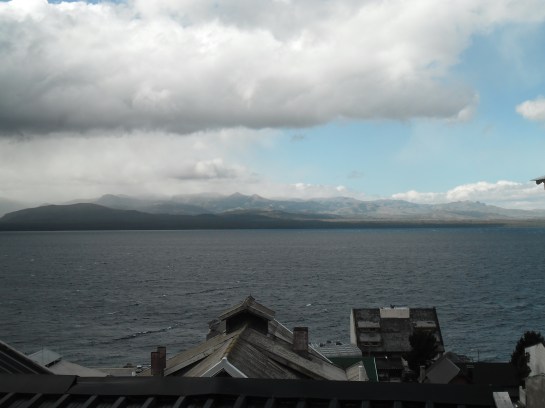
View from our hostel window

View from our hostel window

Outside of daily visits to the Correo Argentino (post office), we did manage to find some fun. One nice day we rode the municipal bus along the lake shore to the national park. Just outside the entrance was a grand hotel, the Llao Llao, very reminiscent of Timberline Lodge. Huge log pillars and woodlined walls in the lobby, with two great stone fireplaces at each end. We had a coffe and hot chocolate and people watched for an hour, and the bill came to $20 American! Afterwards we took a hike in the park which ended in views across the lake.

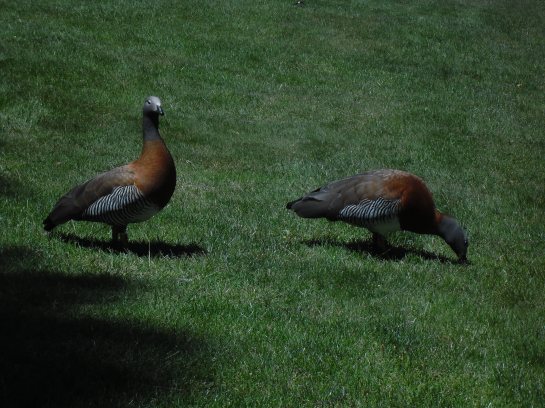
¨Cauquén real¨ Ashy headed geese on the hotel lawn

¨Cauquén real¨ Ashy headed geese on the hotel lawn

SAM_0304

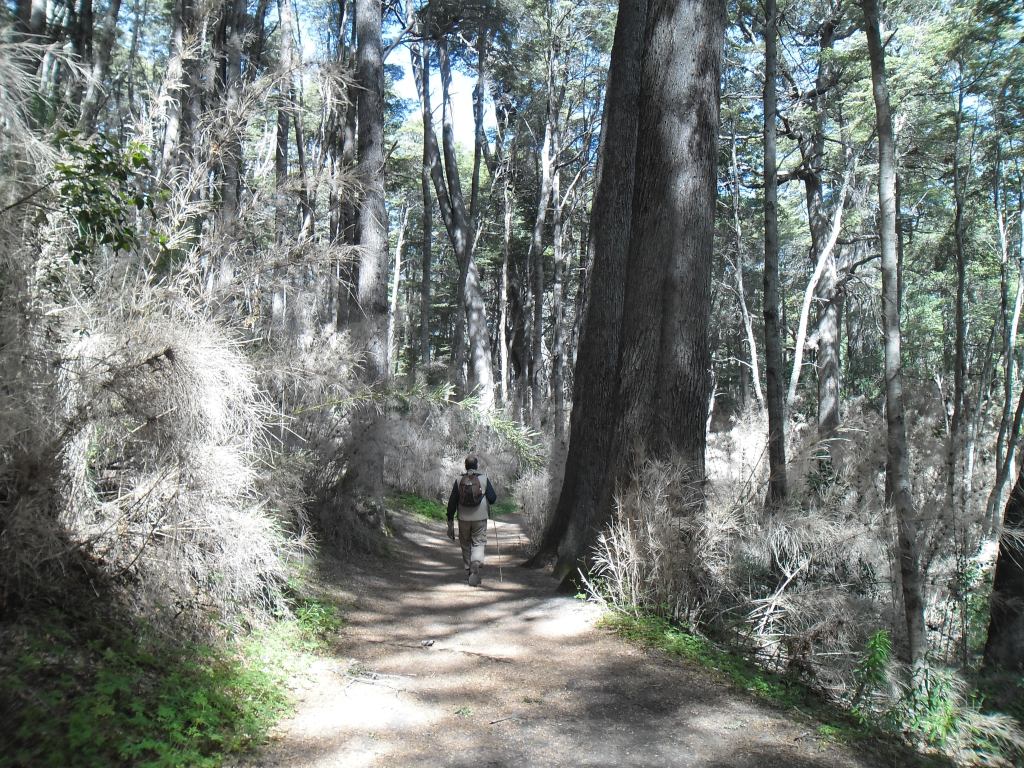
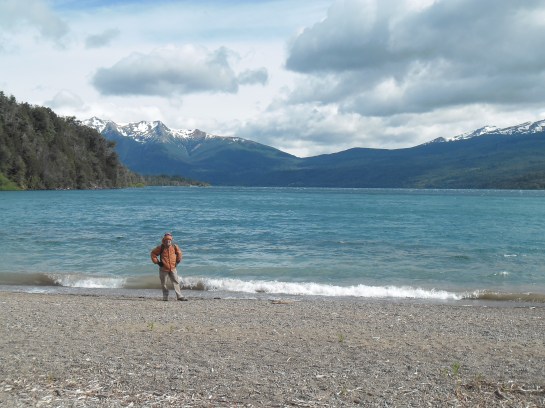
Mike on the trail

SAM_0300

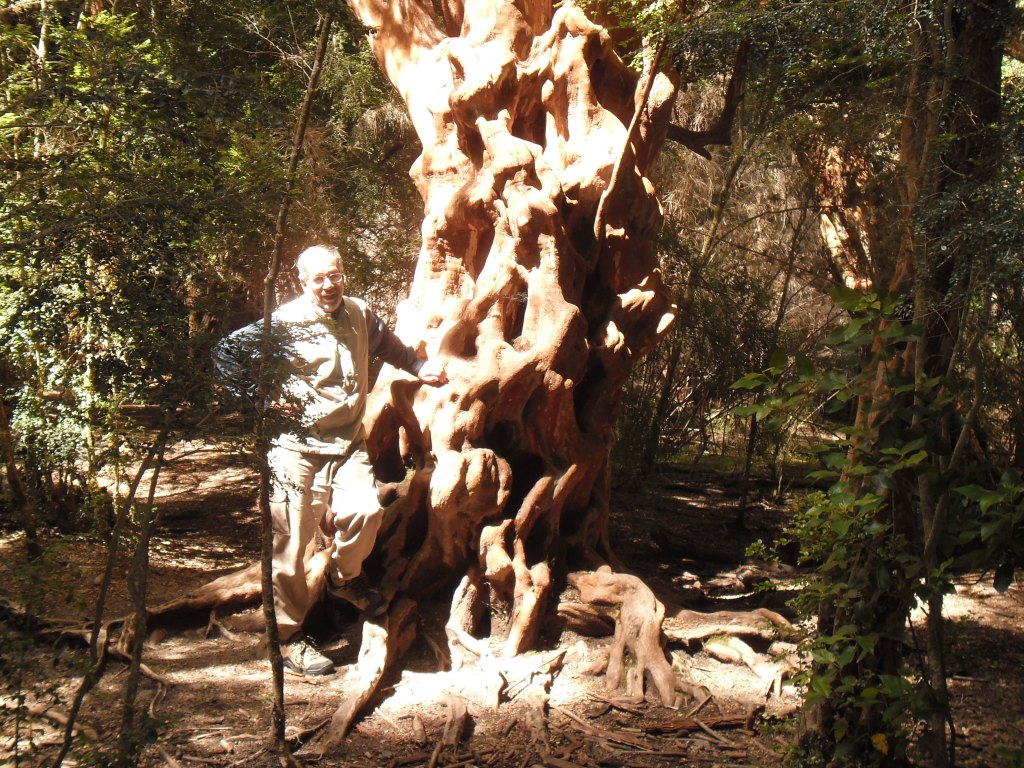
Giant Arrayán tree

SAM_0303

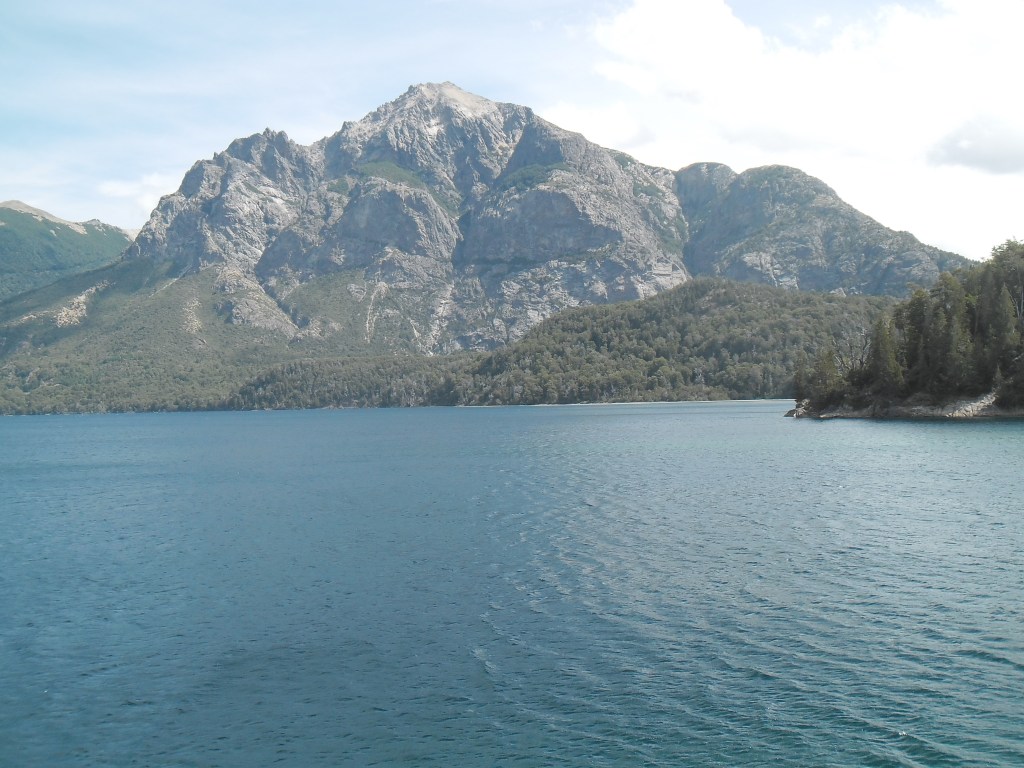
View at end of trail

El Bolson is a town that is famous in Argentina for its counterculture vibe. The hippies moved here in the sixties to escape the big cities and to start a new life. It’s a small town, another one without a traffic signal, and the vibe definitely is here, with its street art fair three days a week, public art, alternative healers, and its beautiful plazas. “El Bolson” roughly is translated as “Big shopping bag.” The town is on a flat valley floor, completely surrounded by steep mountains. The town is the bottom of the bag.

We stayed in a beautiful little hostel called “Casa del Arbol.” It’s a house with about five rooms, a kitchen, and a big back yard. We met people there from France, Germany, Slovenia, Spain, Argentina, and a couple from Switzerland who are traveling around the world. They had already been gone for 18 months.SAM_0286

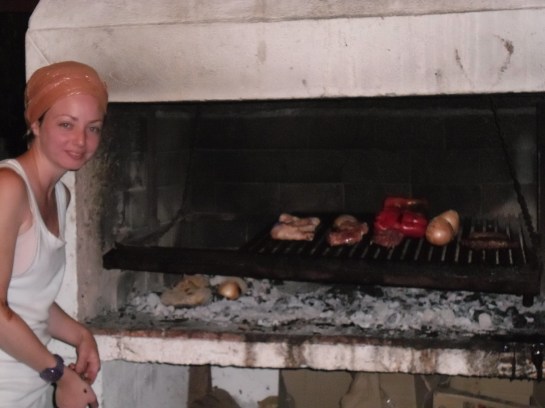
One night we built a fire in the parrilla, and we shared an asado for dinner. Everybody who was interested chipped in, and we went shopping, with Pau from Catalunya. (Please, not Spain, but rather Catalunya.) Estafania was a pro cooking up the dinner.

SAM_0171

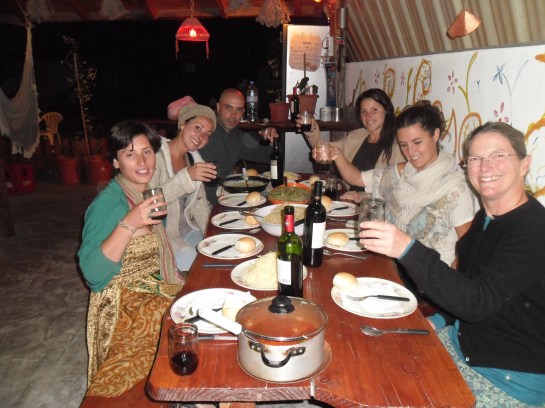
Another evening, we contributed again, and nine of us shared a meal. It was fun going to the supermarket with two chicas from France and a chico from Catalunya.

SAM_0285

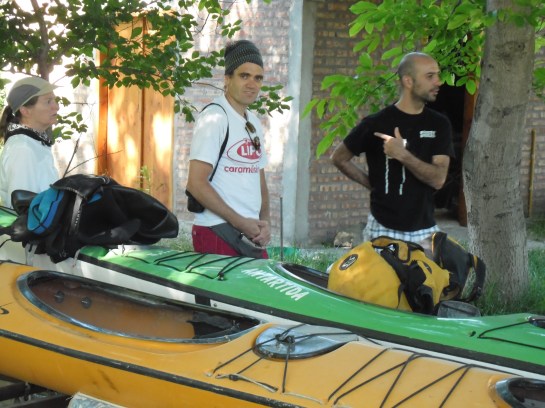
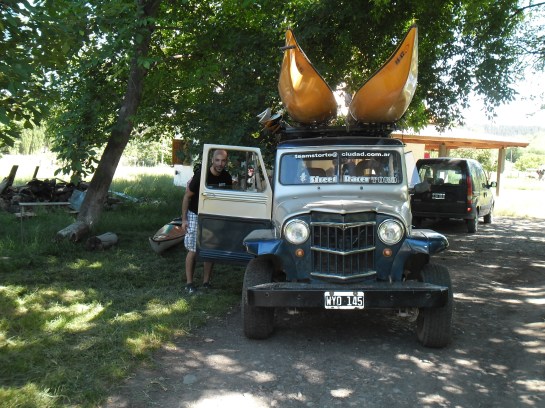
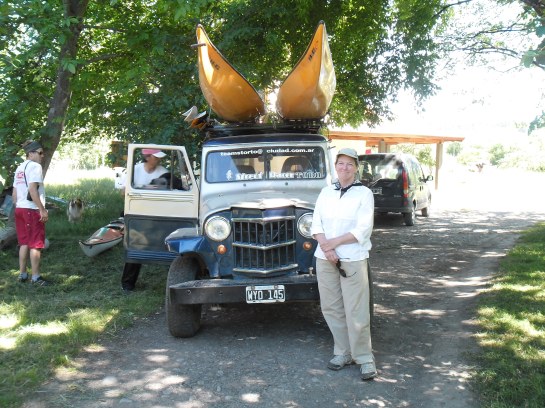
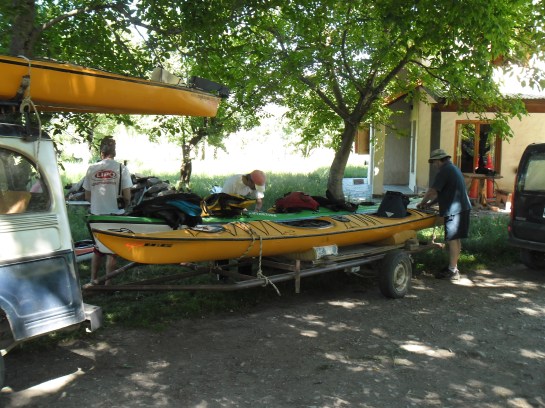
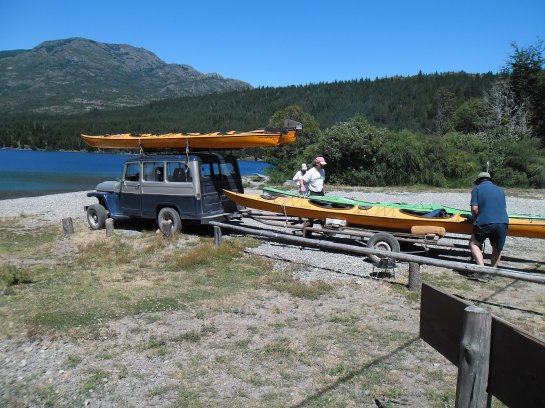
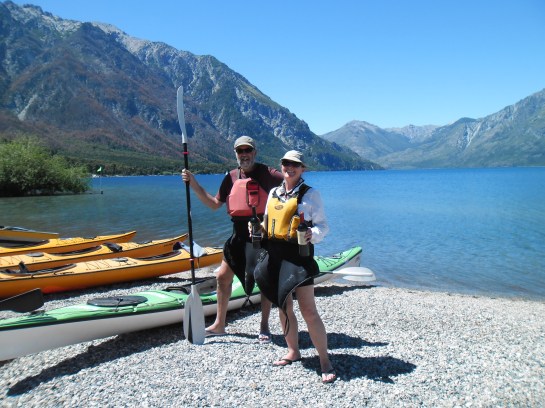
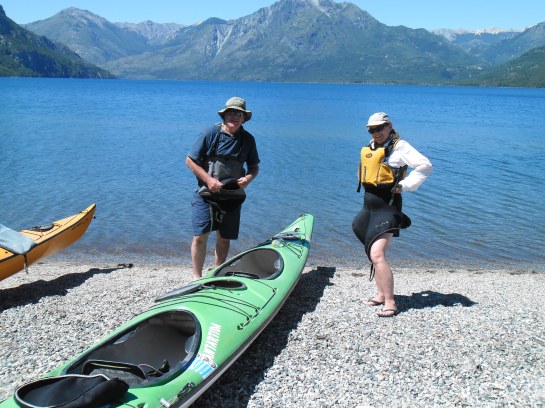
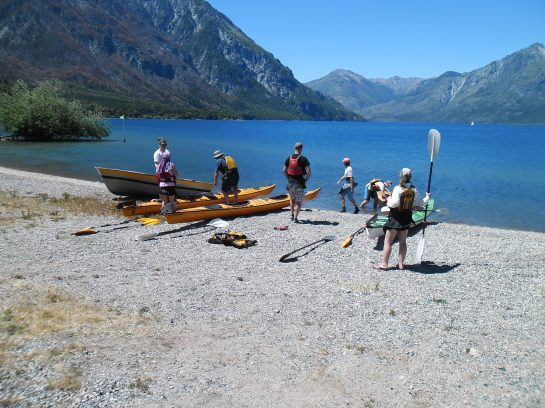
Our highlight in El Bolson was the kayak trip on Lago Epuyen. We told Sergio, the owner of the hostel, that we were interested in renting a kayak for the day, to go out on the lake. Lake Epuyen is a big, glacier-fed lake pretty close to town. Sergio said that he would call his friend Miguel, (another Miguel) who lived near the lake and had some kayaks. Miguel would meet us at the bus stop, drive us and the kayak 15 kilometers on a dirt road to the lake, drop us off, then pick us up later in the afternoon. Sounded great. Soon, though, our solo trip turned into an outing with four double kayaks and eight people. Sergio, Nadia, and Pau from the hostel, Miguel and his son Francisco and their friend Fabian decided to come along also. It was fantastic. The five of us from the hostel drove to Miguel’s house, where we got organized. Who would paddle with who, etc.

Monica, Sergio, and Pau, talking it over

Monica, Sergio, and Pau, talking it over

SAM_0173

SAM_0181

SAM_0174

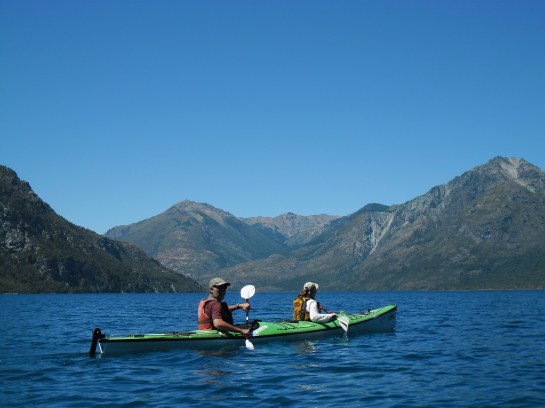
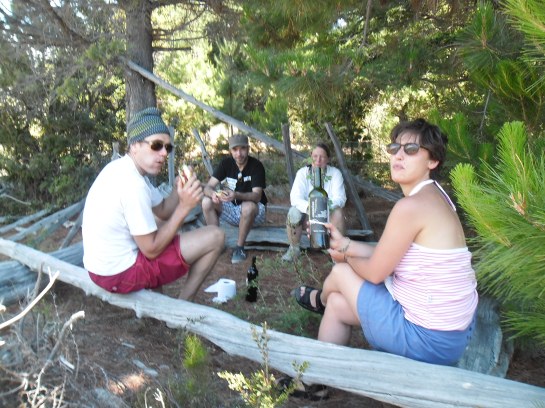
We drove to the lake, loaded up, and took off. It was a brilliant sunny day and the water was deep deep blue blue. Before we actually took off, Sergio and Pau went to a store and made sure that we had plenty of food and wine for lunch.

SAM_0182

Who's going to paddle, and who's going to drink?

Who’s going to paddle, and who’s going to drink?

Making sure the wine is safe

Making sure the wine is safe

SAM_0191

The crew before takeoff

The crew before takeoff

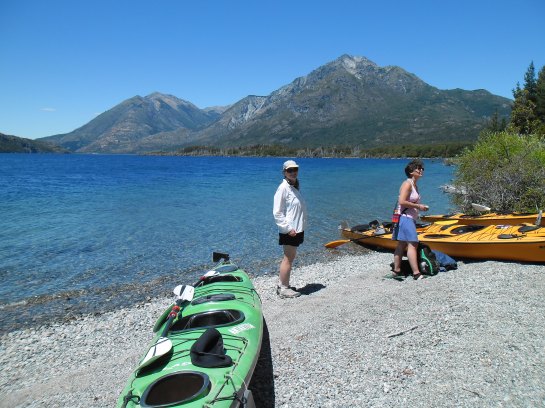
Paddling was a dream. The water was so so clear, so so clean. We drank cupfuls of it as we paddled. We paddled to a far shore and stopped for lunch on a beach.

SAM_0211


SAM_0237

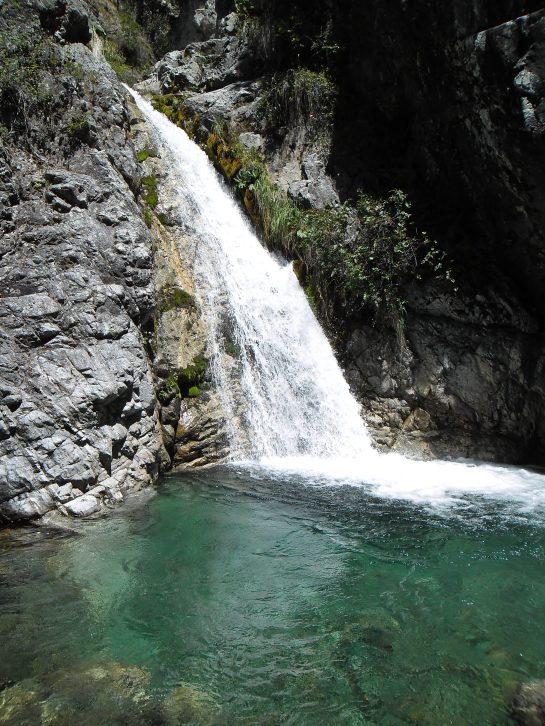
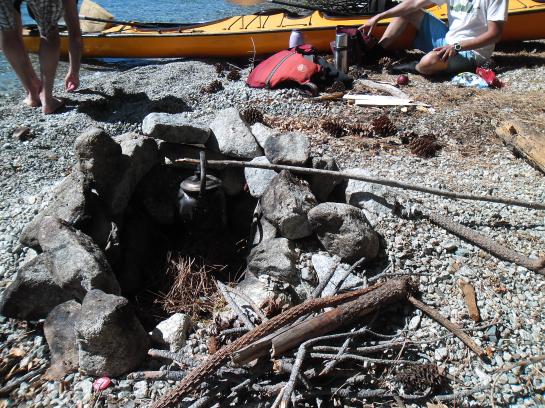
Six of us went for a hike up a small canyon to a spring that gushed out of the mountainside into a waterfall, while Fabian and Sergio stayed on the beach, built a fire, and started cooking steaks on a steel disk. When we returned from our hike, we sat in the shade, eating steak sandwiches and passing around the bottles of wine. Not like most of our hikes in Oregon. SAM_0246


SAM_0256

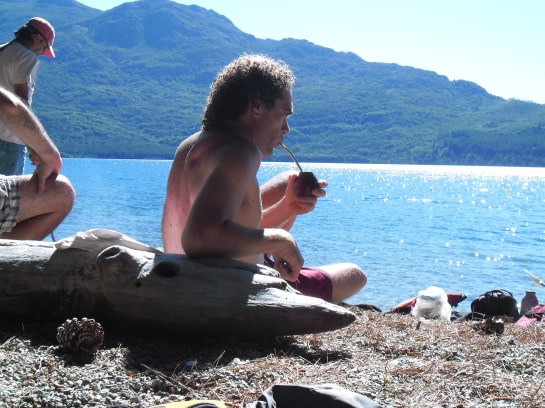
After lunch, and a rest, we paddled to the other side of the lake, to another beach, for a mate break. Argentinos can’t go too long without mate. It’s a drink kind of like tea, that you make by steeping leaves in a mate bowl, then sipping. Another fire was built, enough to heat a pot of water, then the water was poured into a thermos. We all shared some mate and cookies before loading up the kayaks again and beating into the headwind, back to the truck.

Kind of like the hoboes

Kind of like the hoboes

SAM_0269

Another successful outing!

Hostelling in Argentina has been super comfortable, friendly, and fun. The first hostel that we stayed in was in Esquel. This was also our first glimpse of the Andes. We hope to see much more. Esquel is a small mountain town in Patagonia and without a traffic signal. It’s a ski town in the winter (June, July, August.) In the summer, it’s a little quieter, with people coming to hike in the mountains and swim in the lake.

Our hostel was called Casa del Pueblo. A hostel is defined as a place where you can stay, which also has an equipped kitchen ready to use, some common area to hang around in, and access to the internet. Most of them have a choice of shared dorm rooms or private rooms with private bathrooms. Most of the guests show up with backpacks.

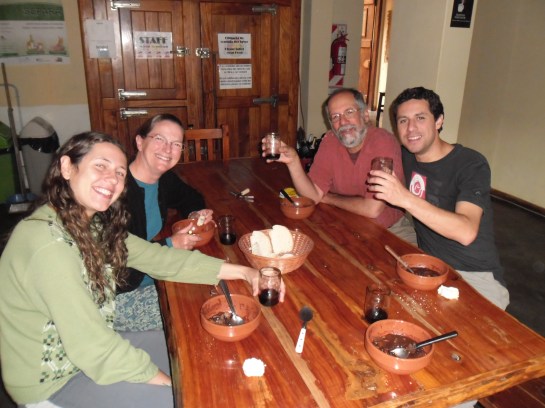
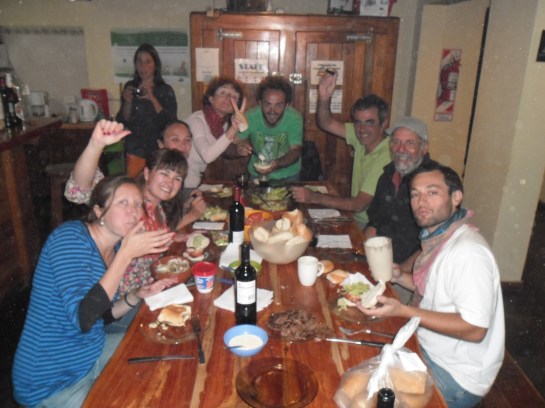
We immediately felt at home. We were greeted by a chica from France,  Aline, who showed us our room and gave us a tour. The kitchen was the center of activity in Casa del Pueblo. The following day was rainy, so we went shopping and cooked up a big pot of black bean soup for everyone. It was very fun for us to cook in the kitchen, and a treat for everyone, including us, to sit around the table later that afternoon with bread, wine, and soup.

SAM_0108Flávia is on the far left. She is an astronomy student from Brasil. She especially enjoyed it, because black beans are part of the Brasilian culture, and in Argentina, nobody eats beans. For Virginia, who lives in Esquel, it was the first time ever eating beans. They eat meat in Argentina. In the hostel, we met people from France, Australia, Germany, Belgium, Argentina, and a couple from Alberta who were traveling around the world.

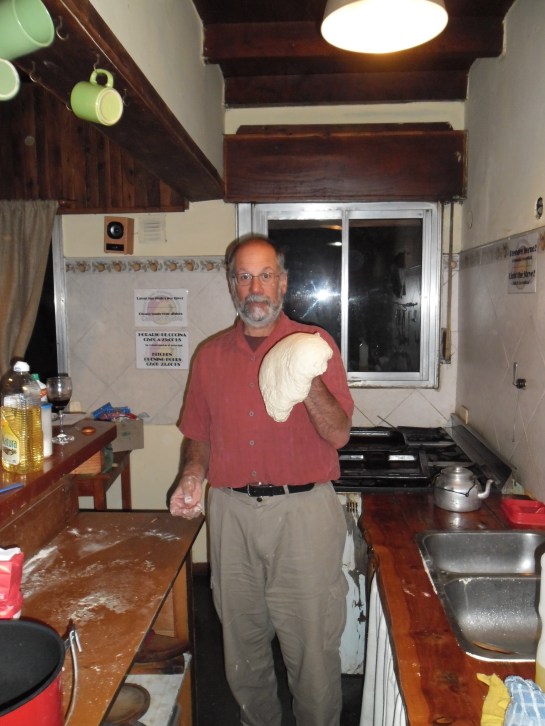
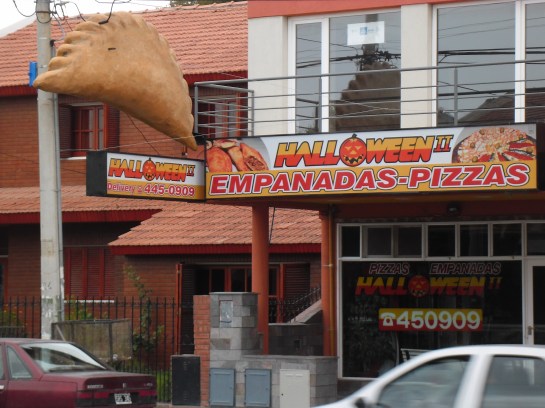
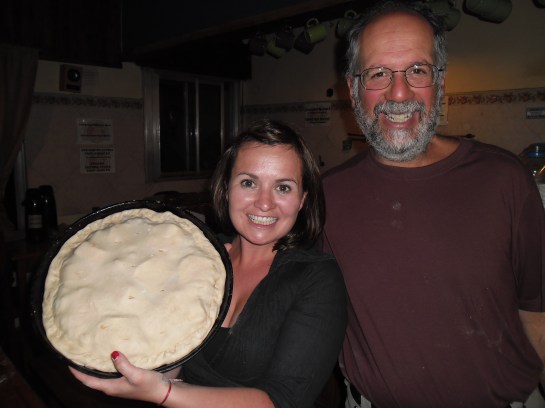
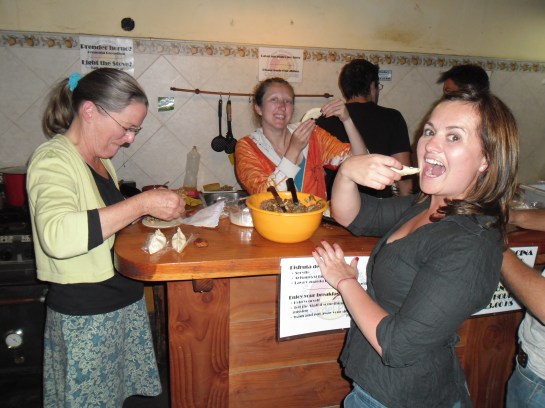
SAM_0112I also had the chance to bake some bread. This really endeared us to the place. Our old friend Lief once told us, “In any community, carpenters and bakers are always welcome.”SAM_0115We shared a few more meals, but by far the most impressive one was Empanada Night. Empanadas might be considered Argentina’s national food, because they are everywhere, every day. They are little meat or vegetable or chicken turnovers, filling wrapped around with dough, then baked.

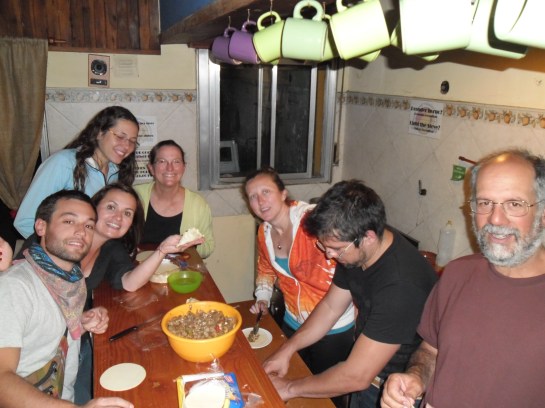
SAM_0105Natalia is the owner of the hostel, and she has friends who like to drop by. On this evening, Maxy (Maximiliano) and his wife Florencia came by with their friend Gustavo. They went shopping for ingredients, returned to the hostel with a mountain of meat and vegetables, and eighty rounds of empanada dough. “Team work,” they said. It is fun to be a part of a group, working together on a big project.

SAM_0140

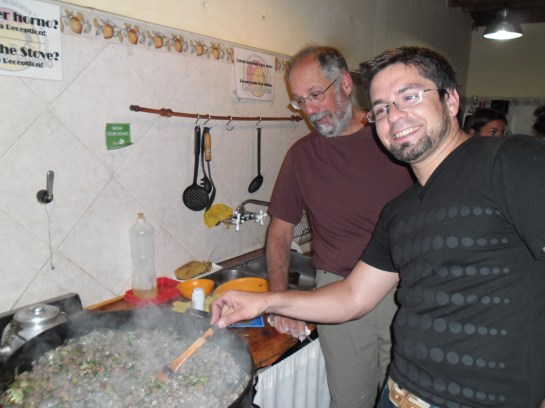
Making eighty empanadas is a big project, like making a ton of tamales. The first thing you do is open some wine bottles, the cut the meat into little pieces, chop the vegetables, and then cook them on a big disco. A disco is a disk from a tractor, that’s used to plow the fields. Heavy steel. They’re used over really hot fires and they can stand the heat. Here is Maxy showing Mike how it’s done. SAM_0139After everything was cooked, we filled the dough, pinched it together, baked them, and ate them. There was still some filling left after we filled all eighty empanadas, so Natalia quickly whipped up some more dough for a tarta. Lots of good cheer, lots of good food, everything still going strong at midnight. SAM_0146SAM_0151El Parque Nacional Alerces is close to Esquel. It’s a national park with lakes, rivers, hiking trails, and glaciers. Alerces are a type of cypress tree, and there is one specific tree that’s more than 4500 years old, one of the oldest living things on the planet. We didn’t go to see it, because you have to take a boat ride of a few hours, and we preferred to hike in the forest.

We went there on two separate days. A local bus takes you there in the morning, and brings you back in the evening. The first day, we hiked along the shore of Lake Futalaufquen.SAM_0117The next time, two days later, it was a beautiful sunny day, and we went a little further into the park, to enjoy the forest and the water. We sat on the shore of Lake Menendez, and looked at the glacier in the distance, and we hiked along El Rio Arellanes. A perfect day in the forest. SAM_0155

SAM_0156

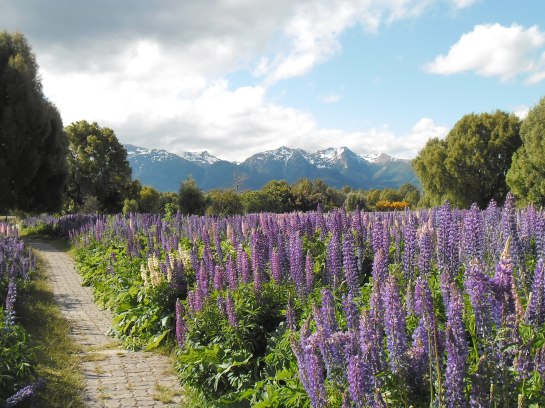
Lupines

Lupines

Patagonian summer in December

Patagonian summer in December

Late in the afternoon, after hiking a bit and a nap, we walked up to the road, and then flagged down the bus to take us back home to the hostel.

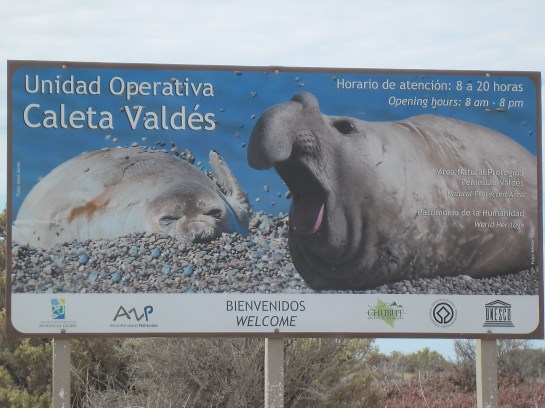
Halfway down Argentina´s scalloped coastline is a stalked polyp of land called Península Valdés. Early European settlers mined the salt basins and grazed sheep on the barren steppes. Wool, hides and salt were shipped from the natural ports created by its unique formation. These protected beaches are also breeding grounds for thousands of marine mammals and birds. The entire huge peninsula is now a UNESCO World Heritage Site and strictly regulated.

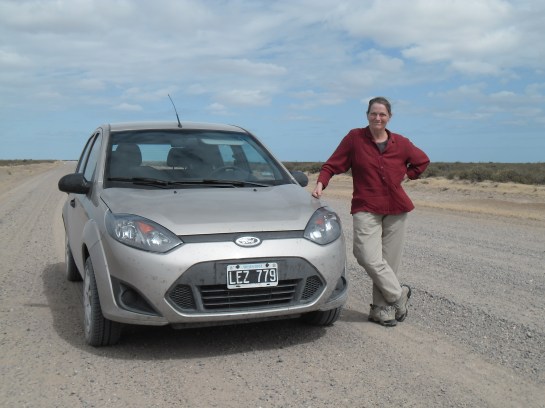
In our rental car we spent the whole day driving kilometers and kilometers of gravel road (ripio) between viewpoints.

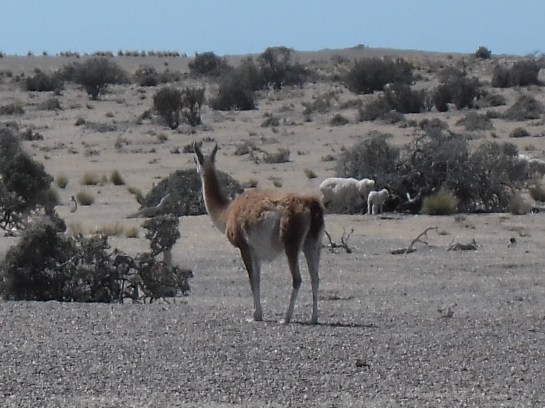
SAM_0004Along the way, we saw guanacos (vicuñas) and sheep,

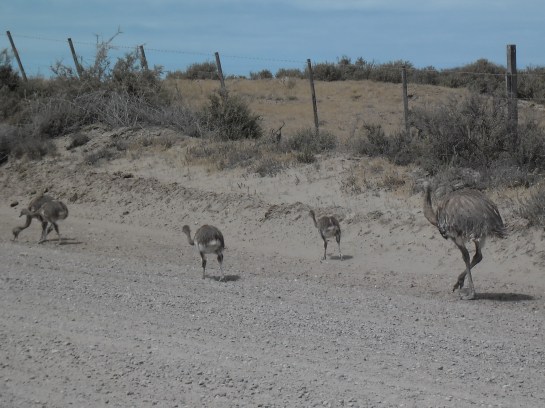
SAM_0164and choiques (lesser rheas).

SAM_0166

We followed one choique with a brood of nine young slowly down the road and stopped to take photos. Afterwards we were gently scolded by a park ranger for getting out of the car. “This is the animals’ home, not ours.”

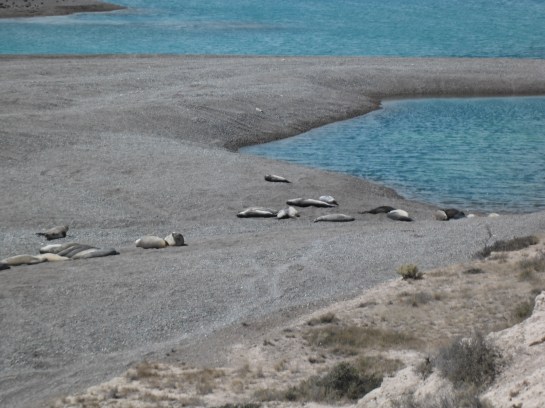
Our first stop was a penguin colony, though tiny compared to what we would see the next day in Punto Tombo. At the other two viewpoints, we could look down on the beaches and see elephant seals and sea lions (lobos marinos).
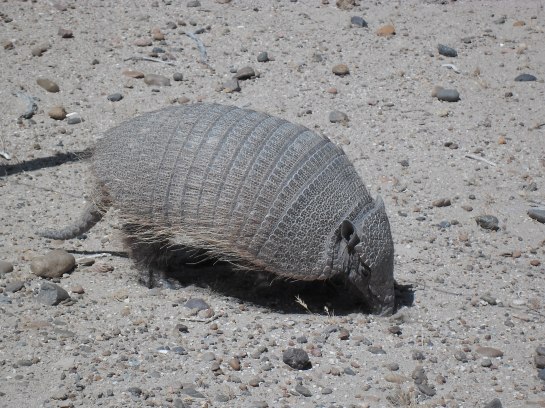
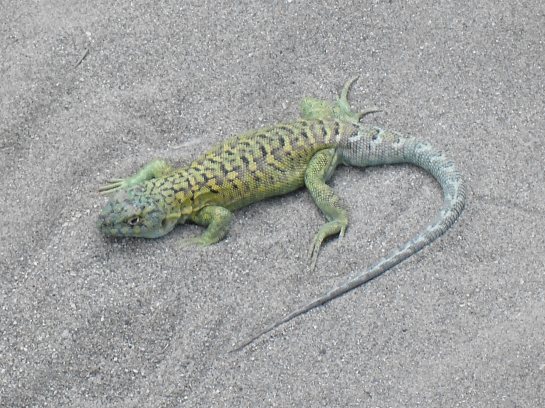
SAM_0167SAM_0014A hairy armadillo – peludo – scurried around the parking lot at Punto Norte and we saw many lizards and geckos along an interpretive trail.

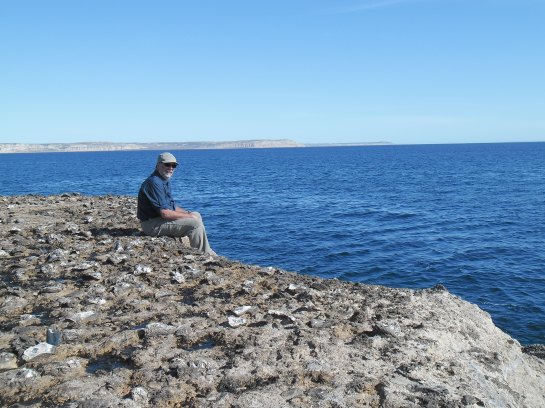
SAM_0055SAM_0036SAM_0168Our final stop of the day was not on the tourist map, but told to us by Lilian, the car rental agent. Another long gravel and sand road led to Punta Valeras where we finally could climb down to the ocean. At the base of a sand cliff we found ourselves on a long shelf of rock jutting into the ocean, forming one wall of a cove. We sat at the edge looking out to sea and watching the tide come in.
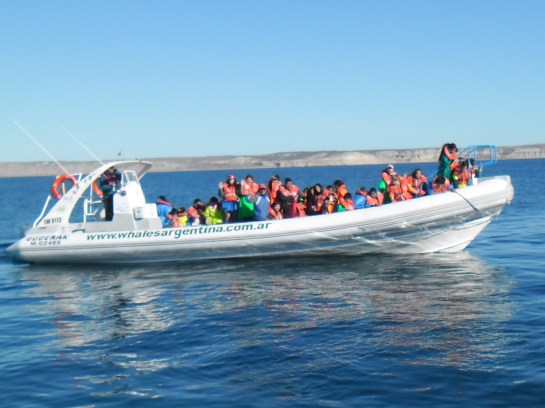
SAM_0067We were nearly ready to leave when a whale surfaced in the cove. Then a second, smaller one followed. Ballenas franca austral, southern right whales, mother and calf. Broad bulbous heads covered with barnacles. A whalewatching boat crowded with school kids slowly circled them.

SAM_0165 For maybe 15 minutes the whales lingered in the cove, sometimes coming up right alongside the boat. Then they headed out to sea. They surfaced one more time, 20 feet in front of us! We had the camera ready . . . and the battery went dead. Arrgh! But the memory will live on . . .