Punta Tombo
 Penguins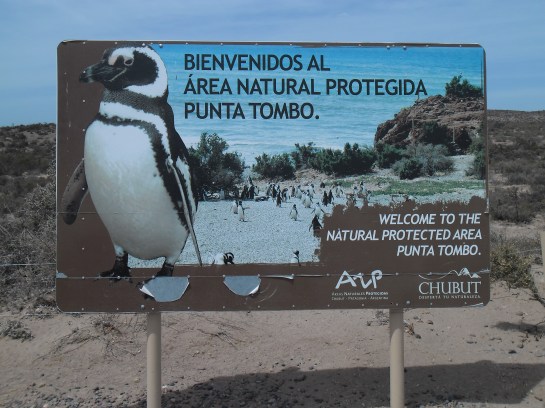
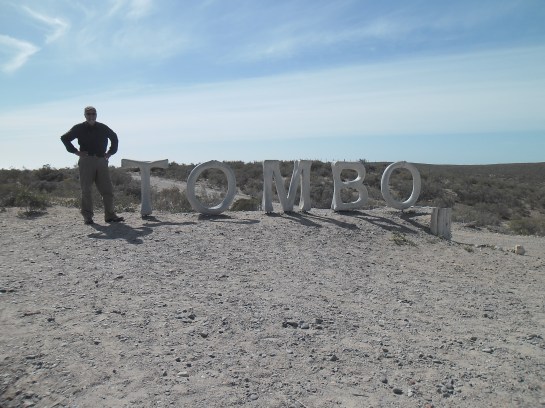
We rented a car and drove out to Punta Tombo, a point of land that juts out into the ocean, about 100 miles south of Puerto Madryn, Patagonia. Punta Tombo is a nesting ground for Magellanic Penguins. There are more than 250,000 breeding pairs, more than 500,000 adult penguins, plus their little pichoncitos. We went there expecting to see penguins, but we were totally blown away, awestruck, and boquiabiertos (openmouthed) by the quantity, beauty, and intimacy.
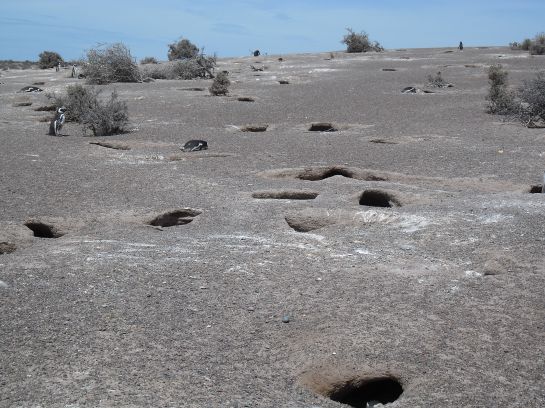
We were there at the end of November. All the chicks have already hatched. It’s the beginning of summer. Penguin life at Punta Tombo goes something like this: In September, the males begin to arrive from the ocean. They climb out onto the beach, then walk through the steppe of Patagonia to find a good spot for their nest. The steppe is pebbles and dirt and bushes. It’s desert. They walk as far as a kilometer before digging their nest. They return to the same nest year after year, so if they’ve already dug one in past years, they’re all set. That is, unless another guy wants to take it from him. There are lots of fights for the good spots. Here is a photo of a high density nesting area.
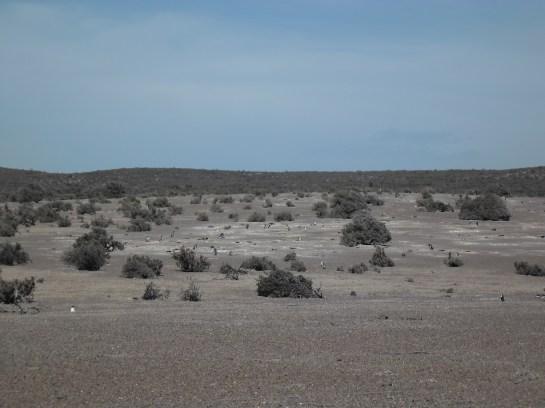 A few days later, the females begin to arrive, and the drama really starts. If the female is already in a bonded pair, she finds her mate. Otherwise, the singles find each other, with lots of fights and blood between the males. Then there is courtship and mating, egg laying, and then caring for the chicks. How do they all return at the same time? How do the pairs find each other? We don’t know. What we know is that from April until September, they have been in the ocean, with never touching land.
After the chicks are born, the male and female share all the responsilities. The responsibilities are guarding the chick, and getting food to feed the chick as well as the guarder. They take turns. One of them stays at the nest with the chick, and the other one walks to the ocean to hunt and fish. This is what we saw—-hundreds and hundreds of penguins walking to the ocean, and hundreds and hundreds of them returning to their nests. The ones going to the ocean are red and brown and dirty, and also skinny, from being at the nest. The ones returning to the nests are clean and white and fat.
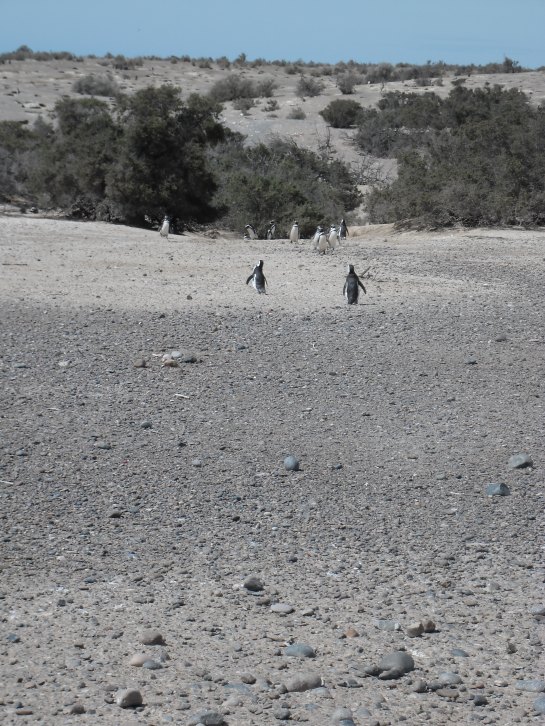
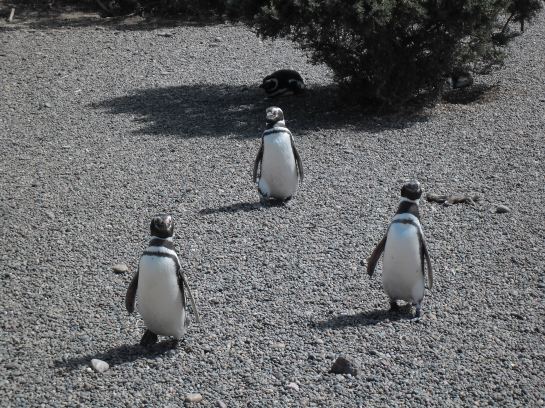
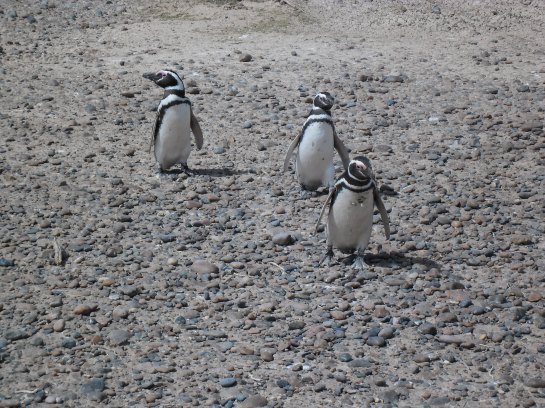
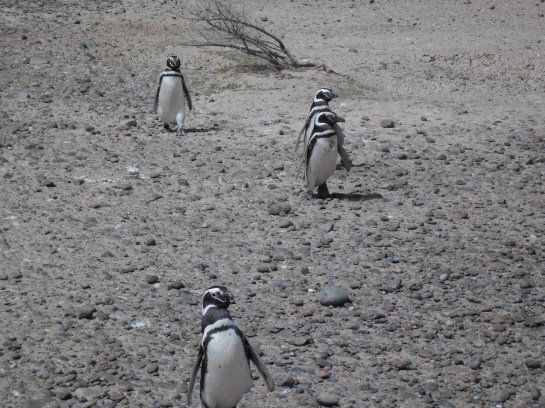
They take turns, one of them caring for and guarding the chicks, and the other makes the long journey to the ocean to hunt and eat as much as they can, before returning to the beach and making the long journey back to their nest to regurgitate food for their mates and chicks. This can take a few days or longer. The one who stays at the nest waits and guards. There are a lot of predatory birds flying around, looking for an opportunity to swoop down and grab a chick. We witnessed this. A skua dove down to the nest and flew off with a chick in its bill, angrily followed by a bunch of sea gulls, who wanted the tasty morsel for themselves
If the adult penguin who is out fishing does not return, the one at the nest finally has to make a decision. Stay longer at the nest or go fishing her or himself. If they stay, they can die of starvation. If they go, their chick will inevitably be eaten by the birds. Tough life!
We saw lots of little chicks They are all black, like little mice. They were usually lying under their parent. The parents care for and guard the chicks for about three or four months. Then, starting in March, the penguins begin to dive into the ocean and disappear. By mid-April, there are no more penguins there. The place is empty until September, when the first males again appear, and they start the whole thing over again. The penguins can live for 30 years.
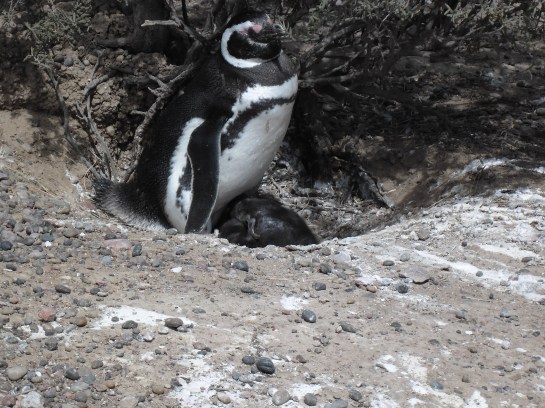
 We also watched them grooming each other, and we saw a few squabbles.
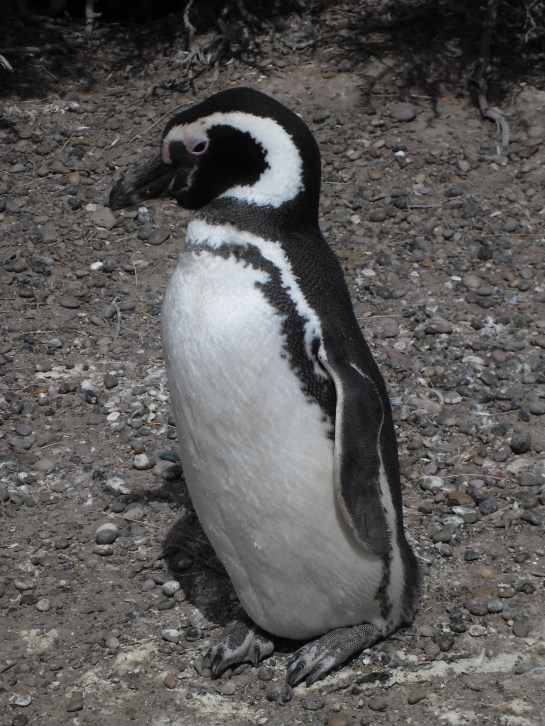
The most amazing thing, besides the quantity, was the intimacy. I mean, they were right there. One of the rules of the place is that the penguins always have the right of way. If you are walking down a path and there´s a penguin crossing in front of you, you have to stop and let it go first. They have no fear of humans. I don’t think that they even noticed us, although a few times it did seem like one or two of them looked me in the eye. At any time, we could have reached down and petted them or hugged them. (Everybody wanted to.) The rangers were extremely diligent in clearly telling everybody that the penguins’ bills are very strong, and they can easily cut through and take off your finger. That’s good incentive for not petting them. 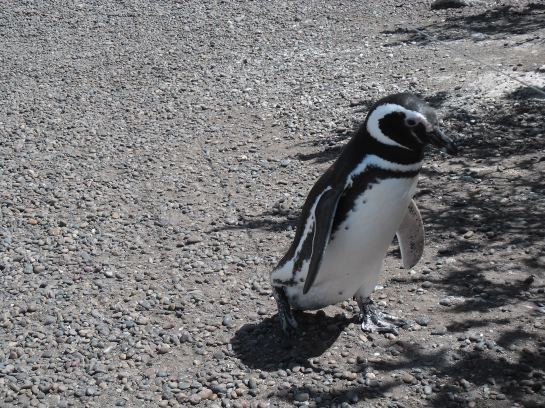
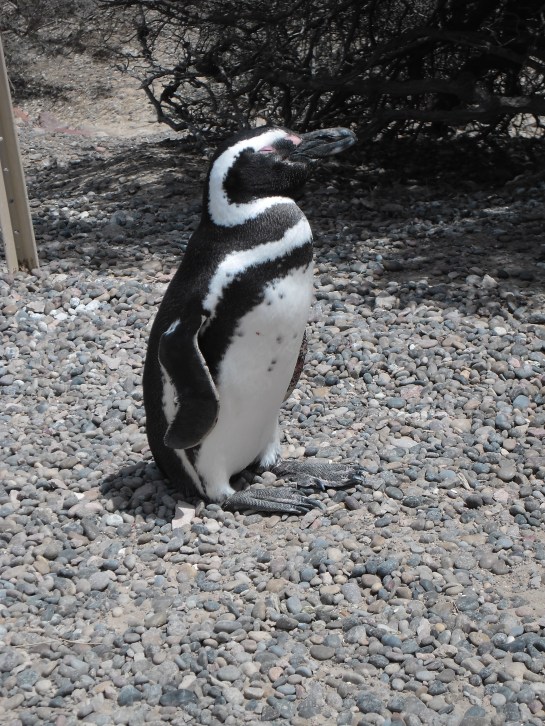 There were certain high-traffic areas, used intensively by the penguins on their way to or from the water. The caretakers built bridges for the humans there, so we could stand above them and they could continue on their way.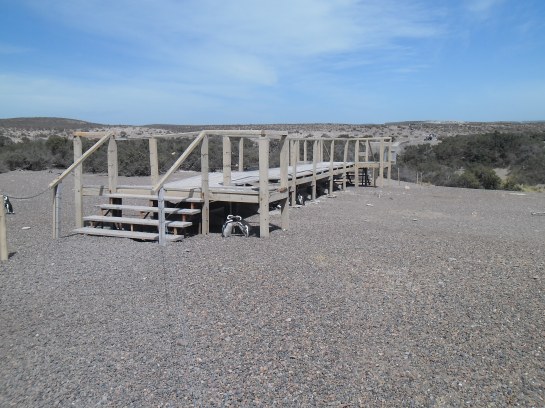
Everybody loves penguins. Maybe it’s because they look like little humans. They definitely walk like little humans. Their little arms hang down and they just toddle along. All around us we heard people exclaiming and oohing, “Qué lindo!” “Qué hermosura!” “Qué amorosos!”
There is no doubt that they are as adorable as can be. But what impressed me the most is how goddam tough they are.
What do they think of us? What do they think we are? It can get humanly crowded there, with loads of tourists descending from buses. The penguins just walk, or rather, toddle, right past us without a care. They might think that we are just big penguins. 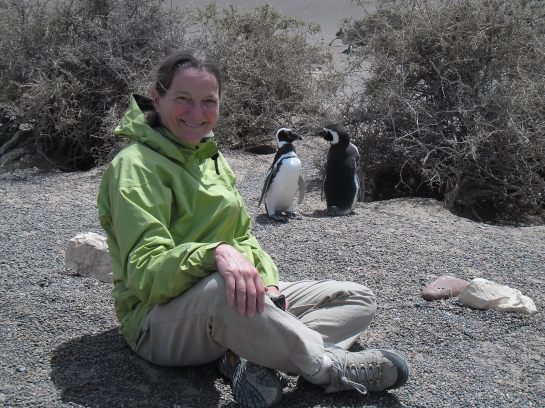
 mikeandmonica
That is so freakin’ cool. Great story and fantastic photos
How wonder full and awesome! Of course you 2 are so kind and open you can make friends anywhere. I love feeling like I am traveling with you. So many fond memories you are creating. Thanks for sharing love M.A.
so very interesting ! a big Mahalo !!! xxoo Jan
Loved all the beautiful photos of the penguins, especially the one with Moni in the foreground.