Archive

Monthly Archives: November 2012

SAM_0070PenguinsSAM_0104

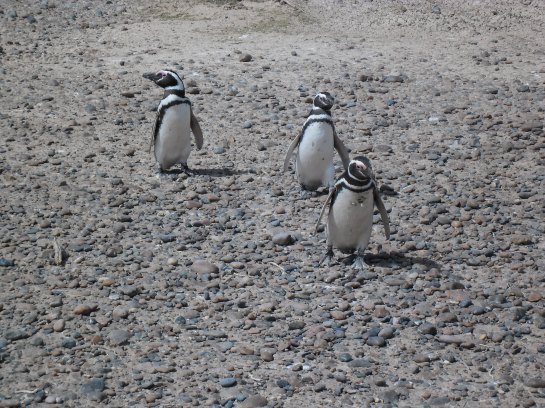
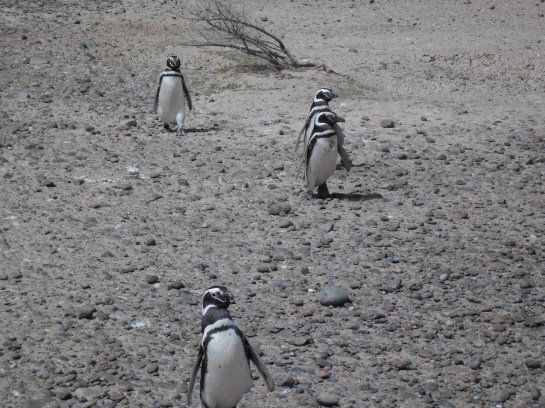
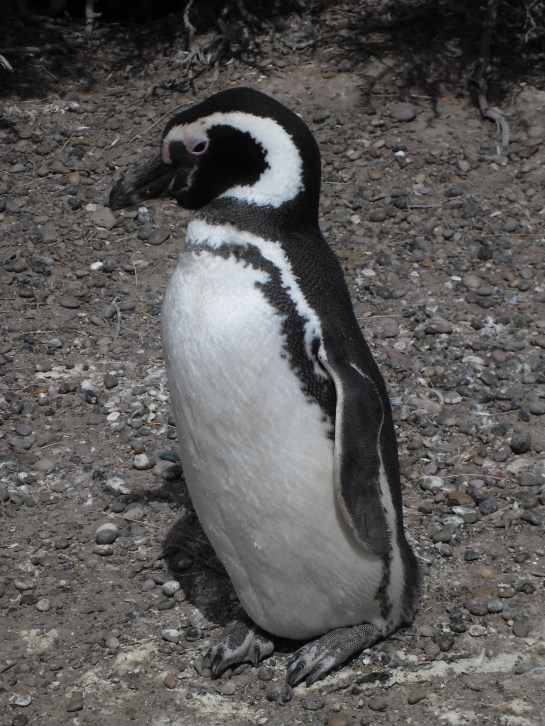
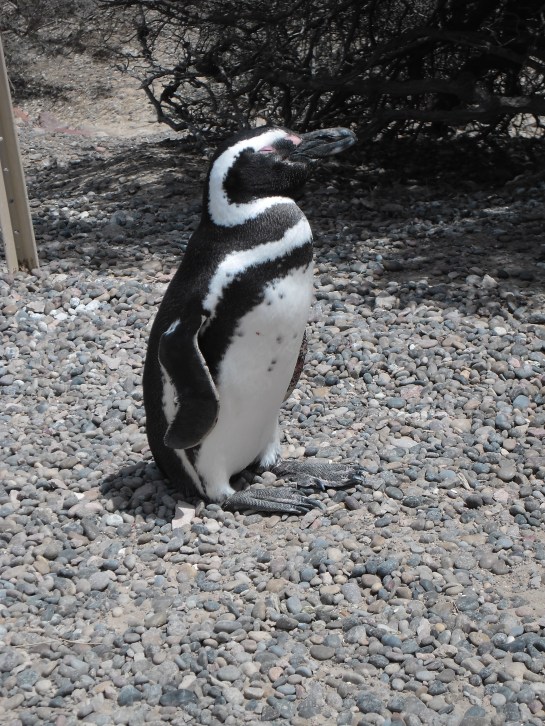
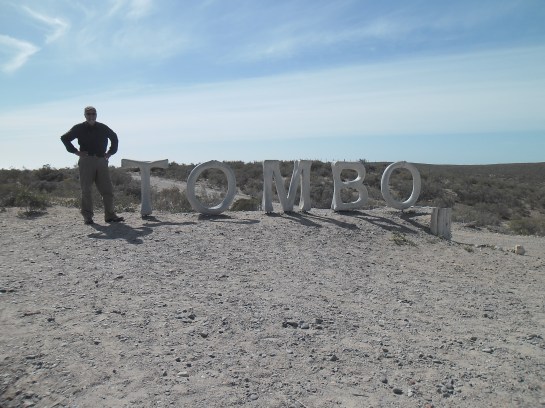
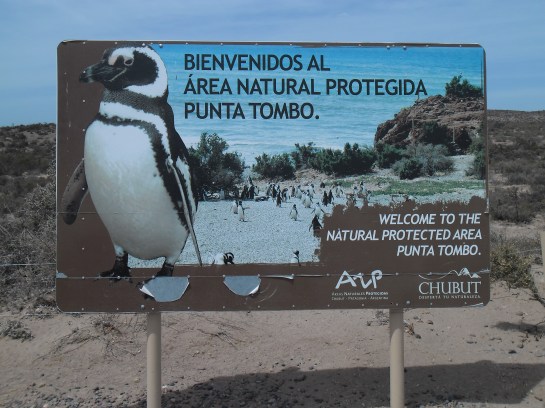
We rented a car and drove out to Punta Tombo, a point of land that juts out into the ocean, about 100 miles south of Puerto Madryn, Patagonia. Punta Tombo is a nesting ground for Magellanic Penguins. There are more than 250,000 breeding pairs, more than 500,000 adult penguins, plus their little pichoncitos. We went there expecting to see penguins, but we were totally blown away, awestruck, and boquiabiertos (openmouthed) by the quantity, beauty, and intimacy.

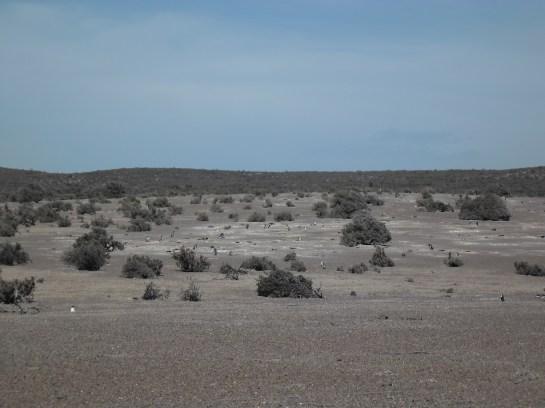
We were there at the end of November. All the chicks have already hatched. It’s the beginning of summer. Penguin life at Punta Tombo goes something like this: In September, the males begin to arrive from the ocean. They climb out onto the beach, then walk through the steppe of Patagonia to find a good spot for their nest. The steppe is pebbles and dirt and bushes. It’s desert. They walk as far as a kilometer before digging their nest. They return to the same nest year after year, so if they’ve already dug one in past years, they’re all set. That is, unless another guy wants to take it from him. There are lots of fights for the good spots. Here is a photo of a high density nesting area.
SAM_0094A few days later, the females begin to arrive, and the drama really starts. If the female is already in a bonded pair, she finds her mate. Otherwise, the singles find each other, with lots of fights and blood between the males. Then there is courtship and mating, egg laying, and then caring for the chicks. How do they all return at the same time? How do the pairs find each other? We don’t know. What we know is that from April until September, they have been in the ocean, with never touching land.

After the chicks are born, the male and female share all the responsilities. The responsibilities are guarding the chick, and getting food to feed the chick as well as the guarder. They take turns. One of them stays at the nest with the chick, and the other one walks to the ocean to hunt and fish. This is what we saw—-hundreds and hundreds of penguins walking to the ocean, and hundreds and hundreds of them returning to their nests. The ones going to the ocean are red and brown and dirty, and also skinny, from being at the nest. The ones returning to the nests are clean and white and fat.
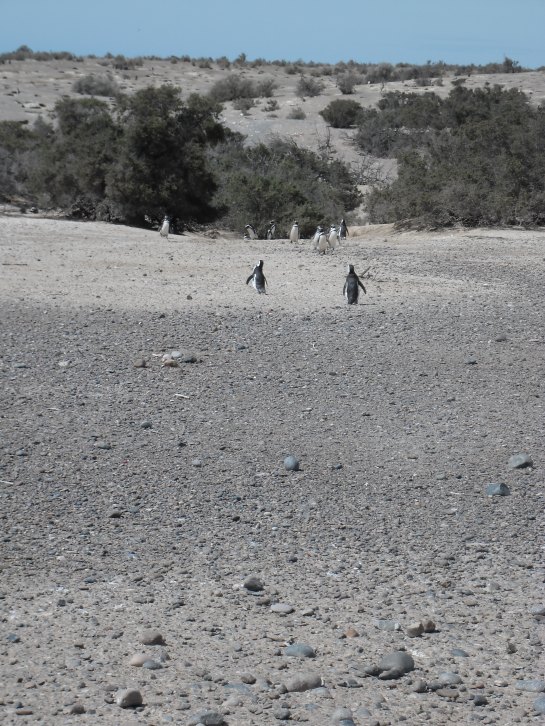
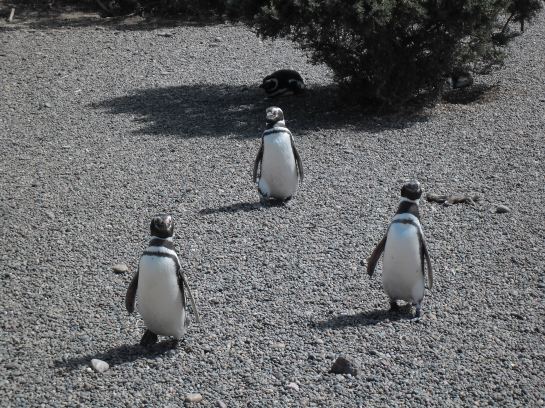
SAM_0077

SAM_0083SAM_0081

SAM_0080

They take turns, one of them caring for and guarding the chicks, and the other makes the long journey to the ocean to hunt and eat as much as they can, before returning to the beach and making the long journey back to their nest to regurgitate food for their mates and chicks. This can take a few days or longer. The one who stays at the nest waits and guards. There are a lot of predatory birds flying around, looking for an opportunity to swoop down and grab a chick. We witnessed this. A skua dove down to the nest and flew off with a chick in its bill, angrily followed by a bunch of sea gulls, who wanted the tasty morsel for themselves

If the adult penguin who is out fishing does not return, the one at the nest finally has to make a decision. Stay longer at the nest or go fishing her or himself. If they stay, they can die of starvation. If they go, their chick will inevitably be eaten by the birds. Tough life!

We saw lots of little chicks They are all black, like little mice. They were usually lying under their parent. The parents care for and guard the chicks for about three or four months. Then, starting in March, the penguins begin to dive into the ocean and disappear. By mid-April, there are no more penguins there. The place is empty until September, when the first males again appear, and they start the whole thing over again. The penguins can live for 30 years.
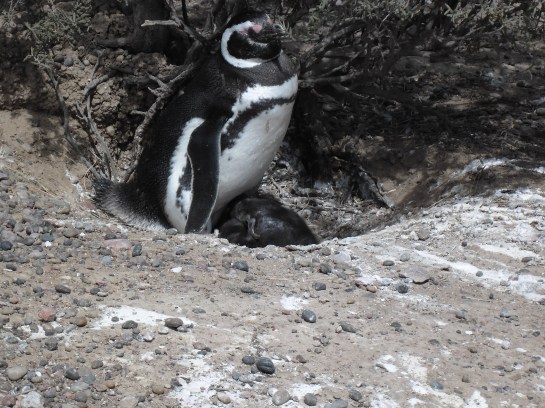
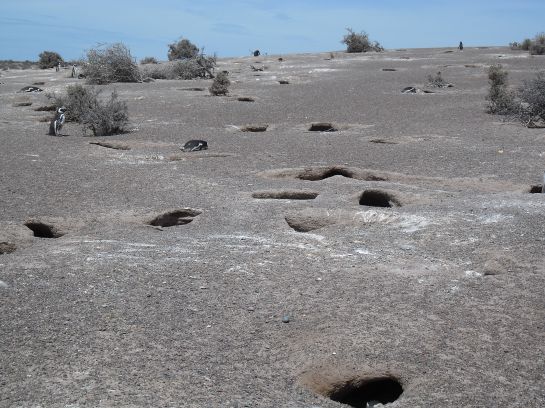
SAM_0084SAM_0097We also watched them grooming each other, and we saw a few squabbles.

The most amazing thing, besides the quantity, was the intimacy. I mean, they were right there. One of the rules of the place is that the penguins always have the right of way. If you are walking down a path and there´s a penguin crossing in front of you, you have to stop and let it go first. They have no fear of humans. I don’t think that they even noticed us, although a few times it did seem like one or two of them looked me in the eye. At any time, we could have reached down and petted them or hugged them. (Everybody wanted to.) The rangers were extremely diligent in clearly telling everybody that the penguins’ bills are very strong, and they can easily cut through and take off your finger. That’s good incentive for not petting them. SAM_0095SAM_0086SAM_0096There were certain high-traffic areas, used intensively by the penguins on their way to or from the water. The caretakers built bridges for the humans there, so we could stand above them and they could continue on their way. SAM_0088
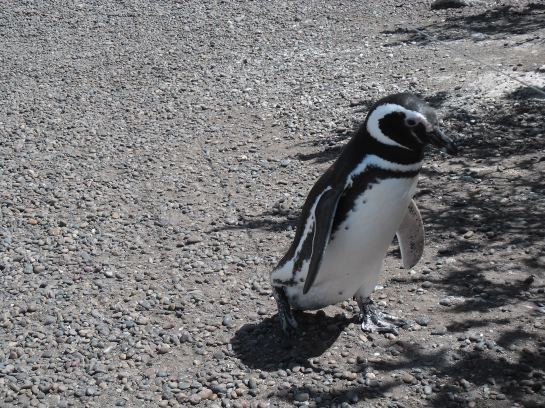
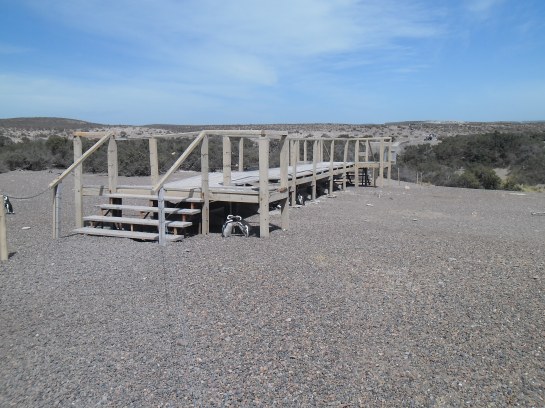
Everybody loves penguins. Maybe it’s because they look like little humans. They definitely walk like little humans. Their little arms hang down and they just toddle along. All around us we heard people exclaiming and oohing, “Qué lindo!”  “Qué hermosura!”  “Qué amorosos!”

There is no doubt that they are as adorable as can be. But what impressed me the most is how goddam tough they are.

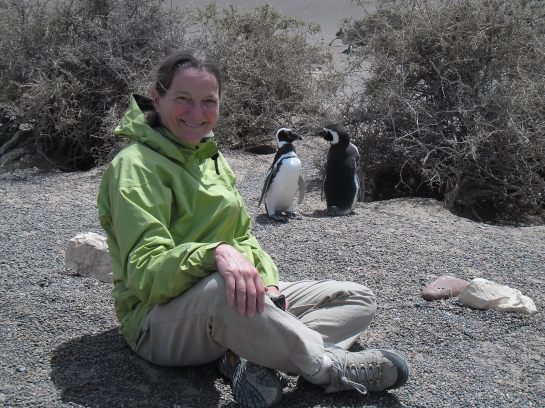
What do they think of us? What do they think we are? It can get humanly crowded there, with loads of tourists descending from buses. The penguins just walk, or rather, toddle, right past us without a care. They might think that we are just big penguins. SAM_0102
We left Buenos Aires on a midnight bus from Retiro station. Our first experience on the luxury buses of Argentina we had heard so much about. The station was huge, with over 70 departure gates for internal destinations and more for international trips. And it was busy at this time, people coming and going, restaurants open as well as most of the stores. Our bus was two levels (as are most long distance buses) and our seats leaned far back and had foot rests that folded down from the seat in front. We were given bottled water and a snack bag, and took off into the dark.

We arrived in Monte Hermosa at 9 in the morning on a Tuesday. The little bus station there was empty except for two attendants who gave us directions to our hotel. The morning was clear and sunny.  We put on our packs and walked into town. Monte is a sleepy little beach town on the Atlantic coast between glittery Mar del Plata and gritty Bahia Blanca. Facing south, the sun both rises from and sets into the ocean. Several kilometers of boardwalk lines the broad sandy beach, which was empty for the first three days we were there. Mike had found us the “Petit Hotel”, an older, 2 story spot right on the beachfront. We were the only guests when we first arrived. We had the best room of the place- a huge space with three beds, a kitchenette, and a large balcony overlooking the beach. It was the hammock that won my heart. We decided right then to stay 6 days instead of three.

Highlights of our stay in Monte included a five km walk down the beach to fossil beds in the sand revealed in low tide. We went there the second day at the beginning of a big storm, returning to the hotel in the teeth of the wind just before the lightning and rain. On our last day we climbed the 130 steps of an iron spiral staircase of the lighthouse at the east end of the beach.

The weekend brought thousands of Argentine visitors to town for the 6th annual Festival of Colectividades. These are societies of different ethnic or national origins representing the various groups of immigrants to Argentina. Dressed in typical costumes, each colectividad performed dances and music on a stage set up on a city street both Saturday and Sunday evenings. A court of food booths served food from various countries. The streets filled with people, traffic, laughter. The beach filled with umbrellas, fishermen, games played in the sand. Our hotel was host to the Asturiano colectividad. Tears came to my eyes to hear drums and gaitas being practiced beside the ocean.

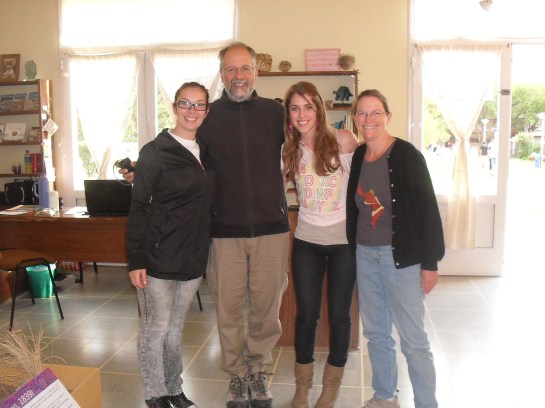
But undoubtedly our most memorable experience was making friends with Paz and Lucrecia who staffed the museum of natural history. It was they who sent us adventuring to the fossil beds and lighthouse, and we visited them almost every day at the museum, sharing mate and English lessons. We miss them already.
We had heard about the beaches of Uruguay for a while, and we wanted to see them, and to be on them, before heading south into Southern Argentina. More than anything, we wanted a break from the big city, a place and time where we could just sit and relax and reflect. Our Spanish teacher Nancy told us about a place in Uruguay called Cabo Polonio. From Buenos  Aires, you take a ferry across the Río de la Plata to Montevideo, then you can travel by bus up the coast. She said that it was near the Brazilian border, that it was very simple and basic, small and quiet, and a “hippie place.” That was enough for us. We googled it, got in email contact with a place called Posada Cañada, and reserved a room.
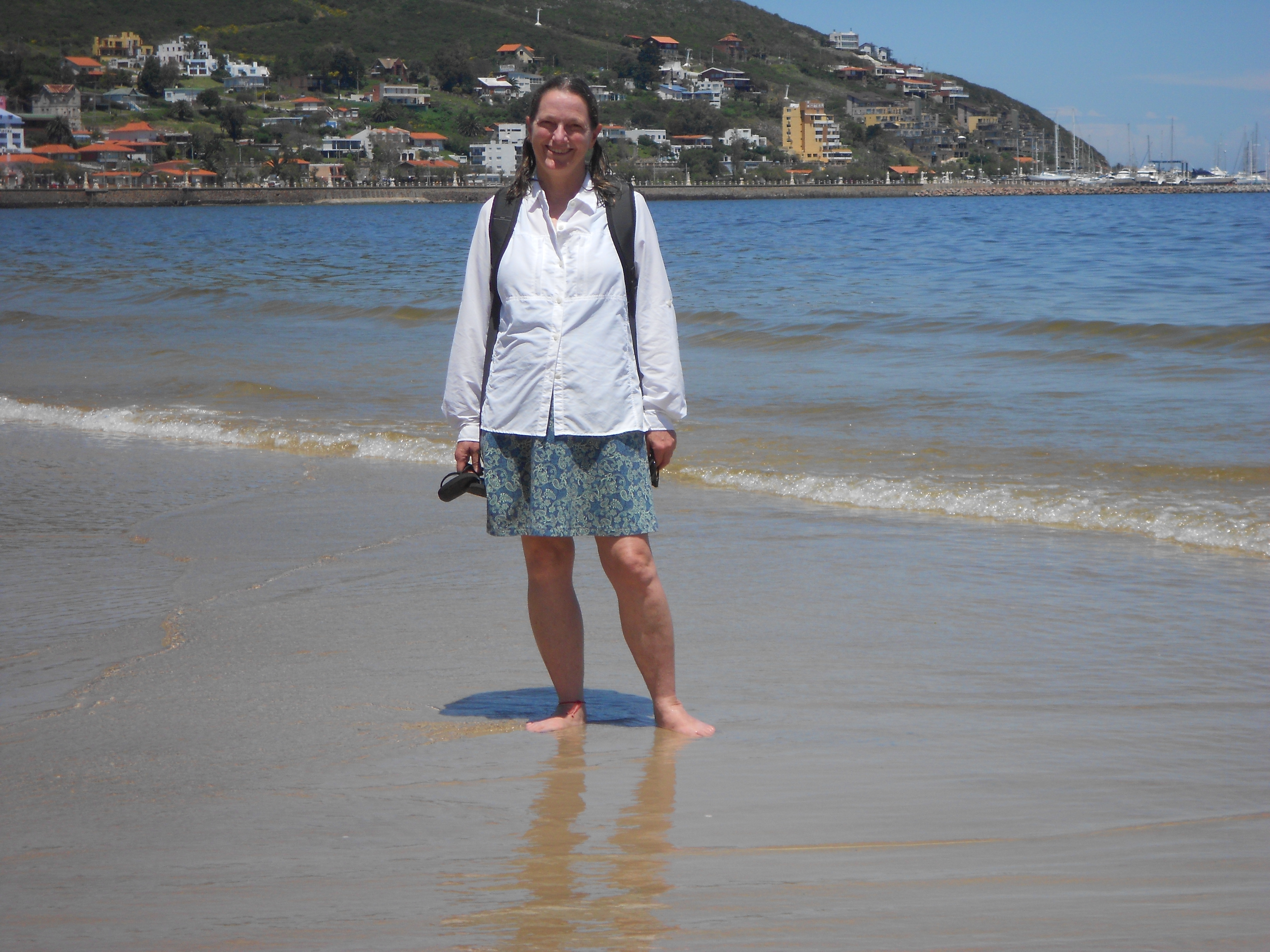
We left Buenos Aires on the 8:00 am ferry, and got to Montevideo at 11:00, then took a bus to a small beach town called Piriápolis, where we spent two nights at a small home that rents out rooms.

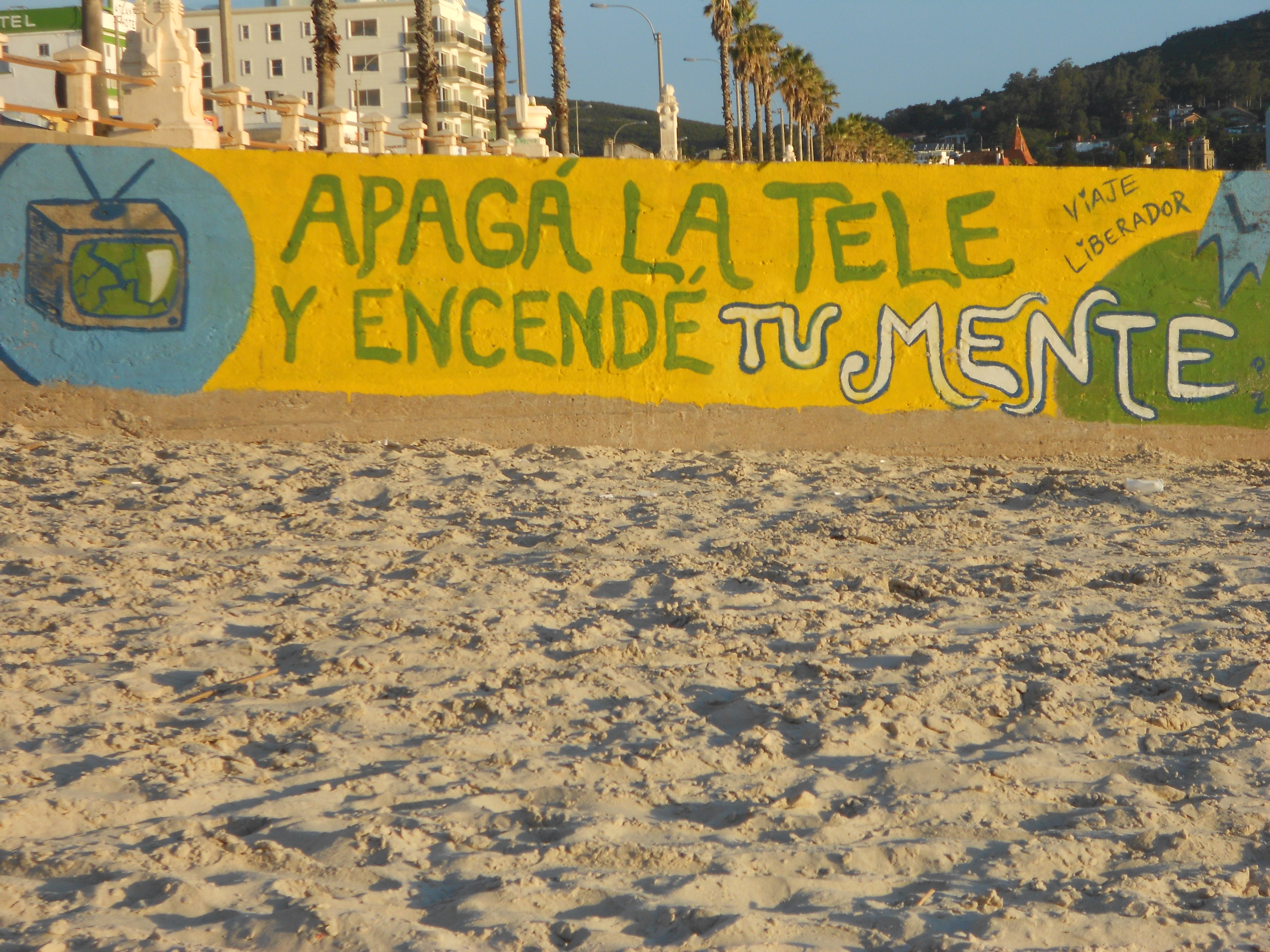
The beach was right down the road from our room, and we appreciated the message waiting for us there.  Turn off your TV, Turn on your mind.

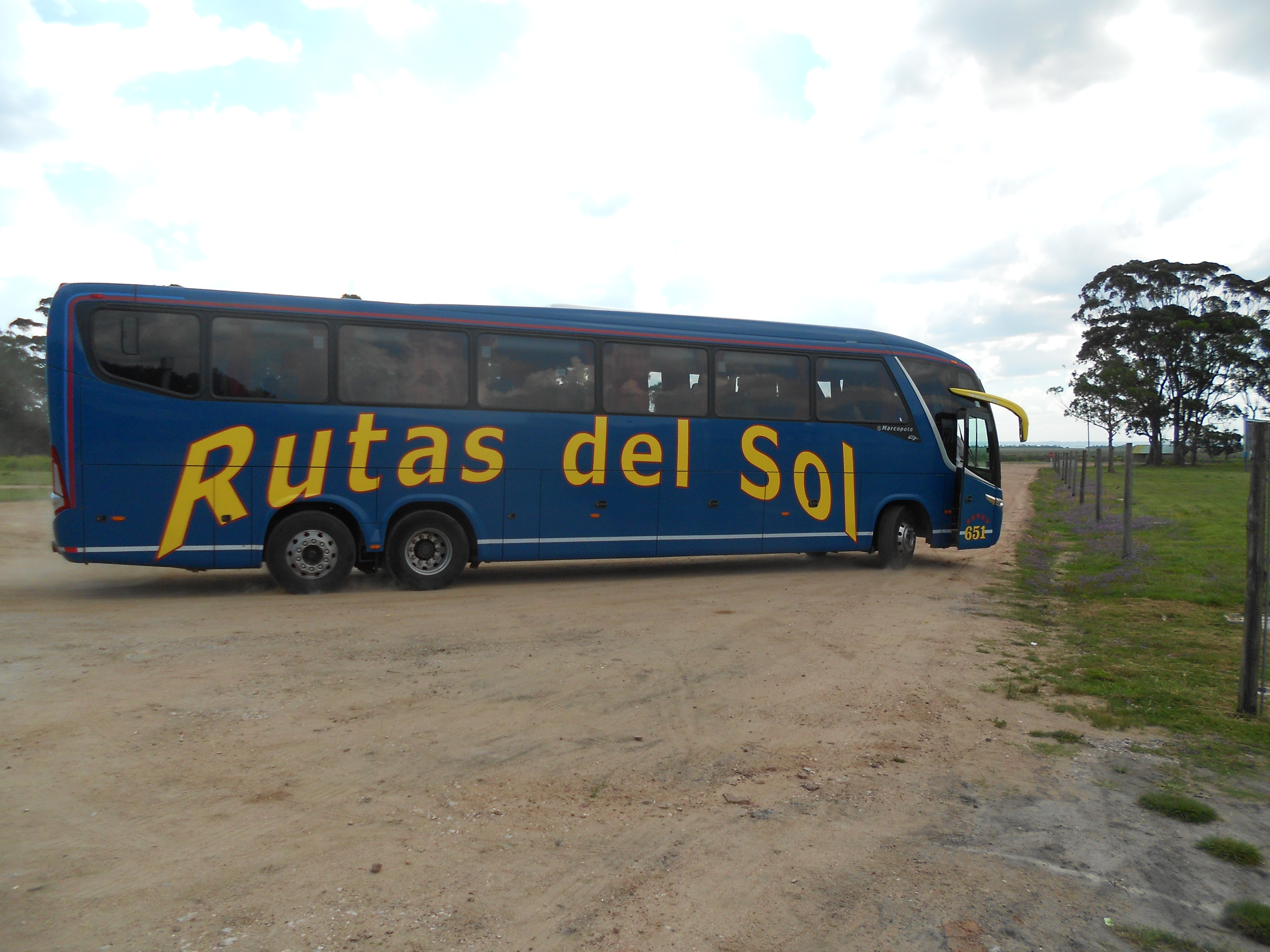
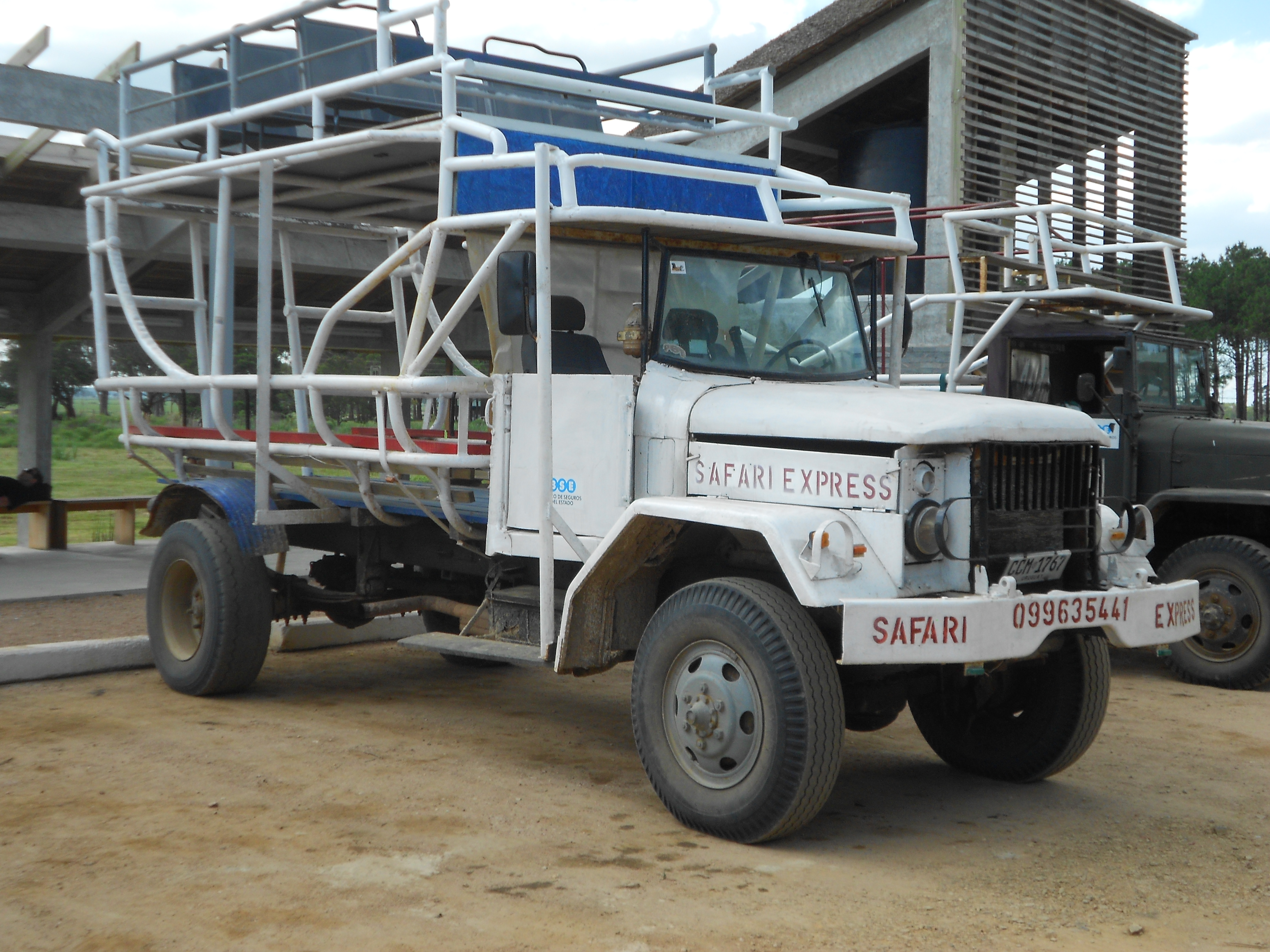
After a couple of days in Piriápolis, we headed for Cabo Polonio. First, we took a local bus to another small town, called Pan de Azúcar, then another bus for three hours. The bus drops you off on the highway, then you climb onto a four-wheel drive truck to drive you over the dunes into Cabo Polonio.¡¡¡CABO POLONIO IS AWESOME AND TREMENDOUS!!!

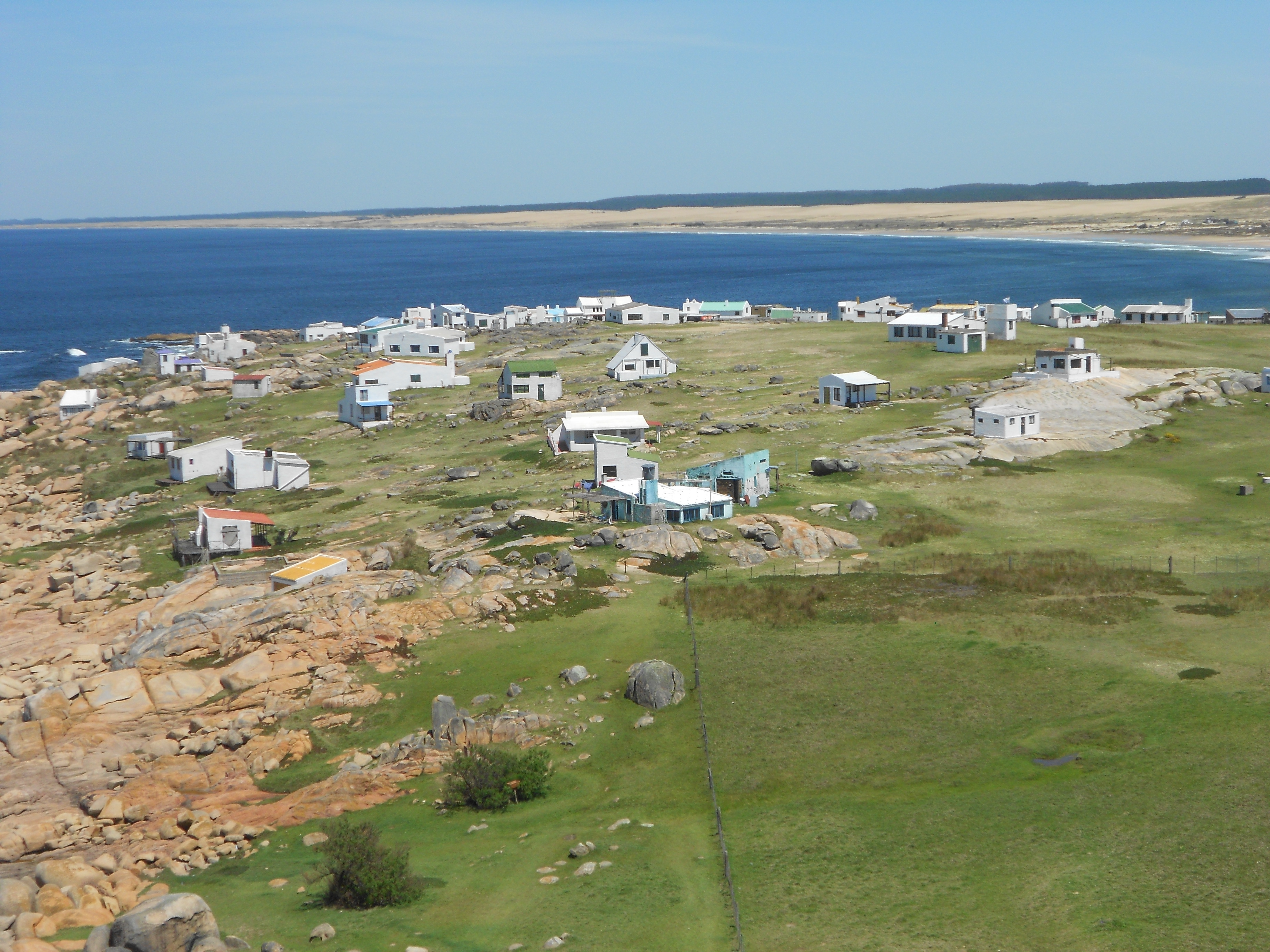
Cabo Polonio is a national park. There are no cars. The only electricity is solar and wind powered. There are people living there, but there is a moratorium on new building. No more. In the summer, (December, January, and February) it explodes with people from Montevideo and Buenos Aires. In the winter, it´s a town of fifty four people.

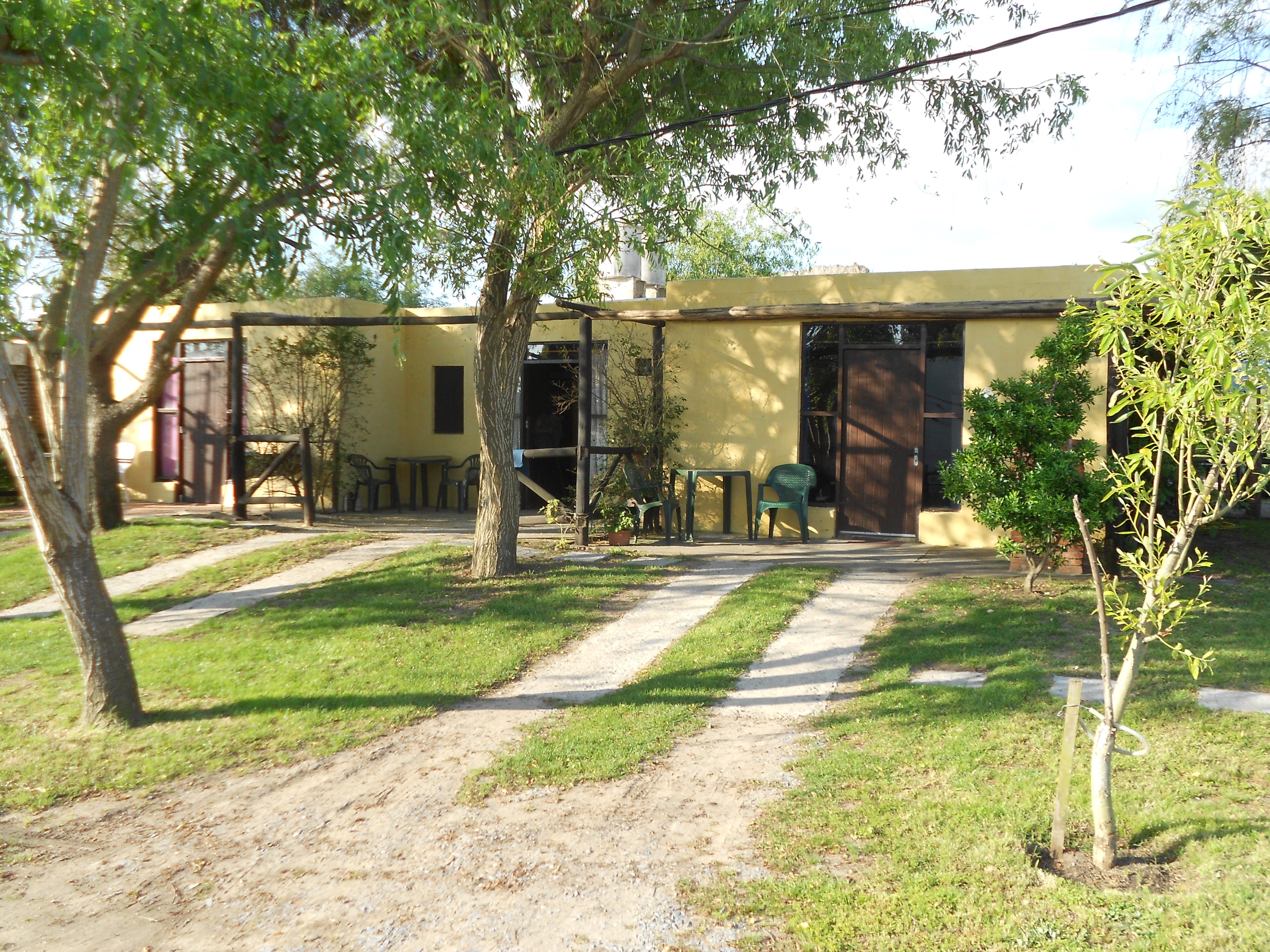
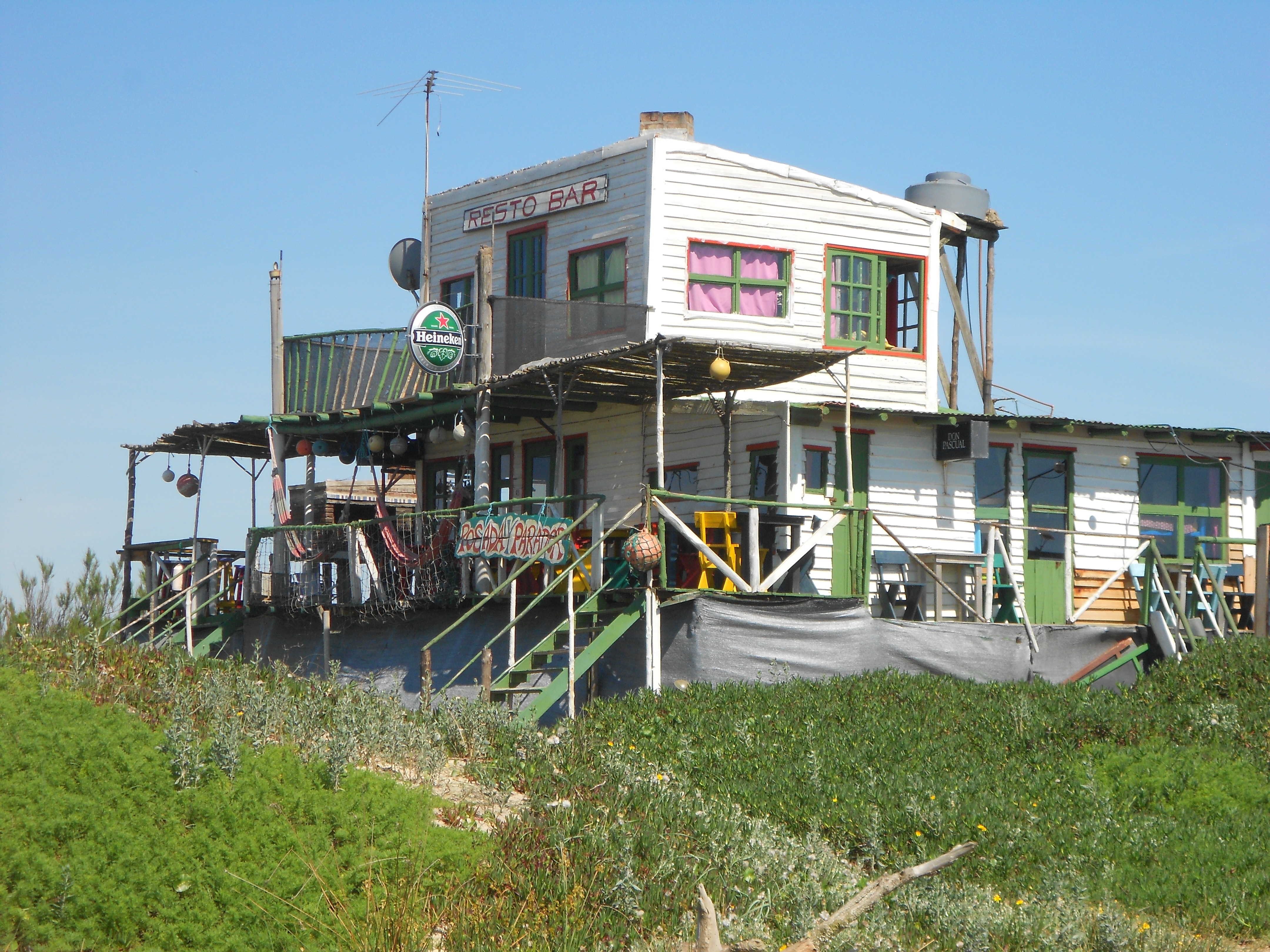
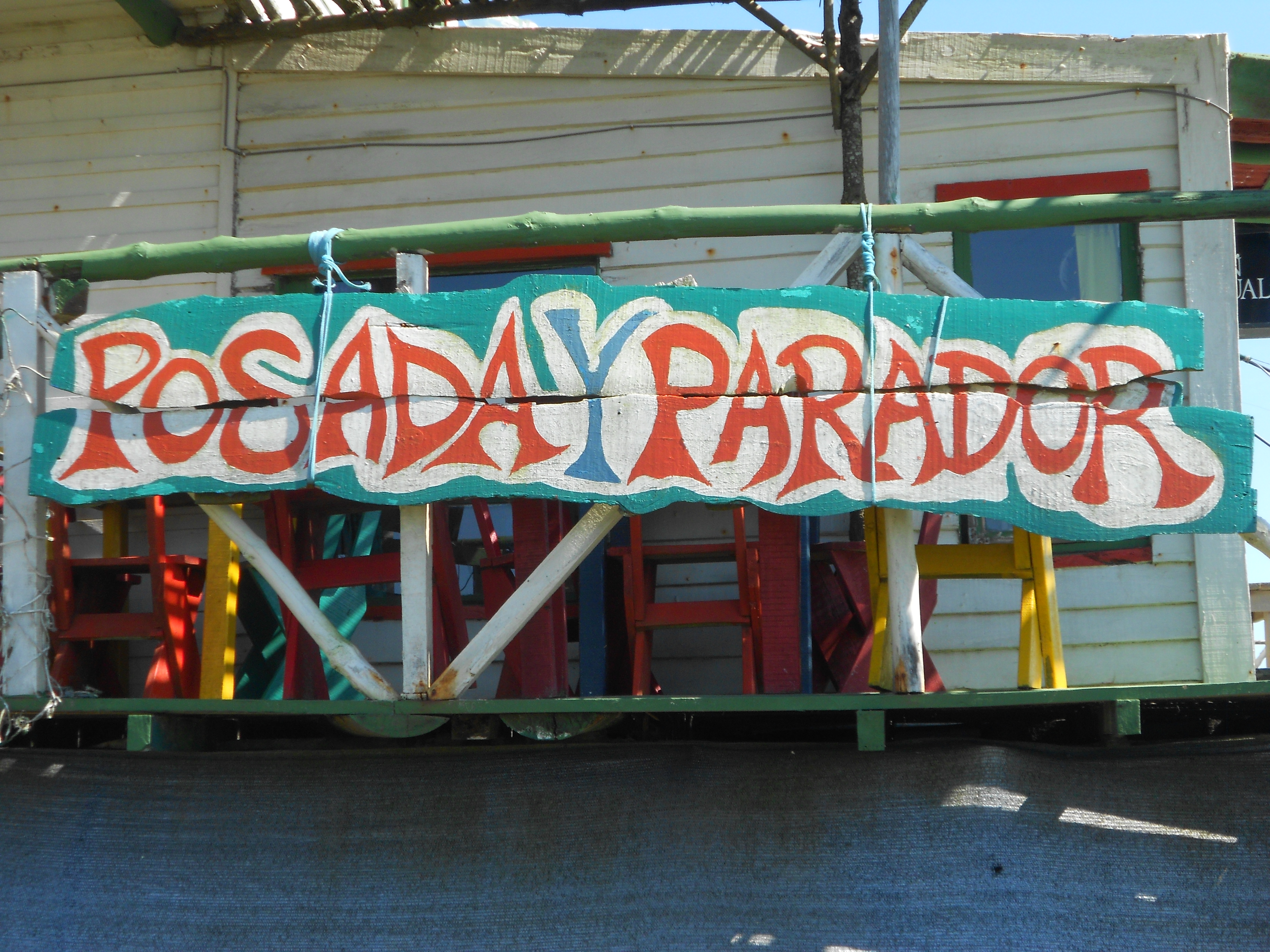
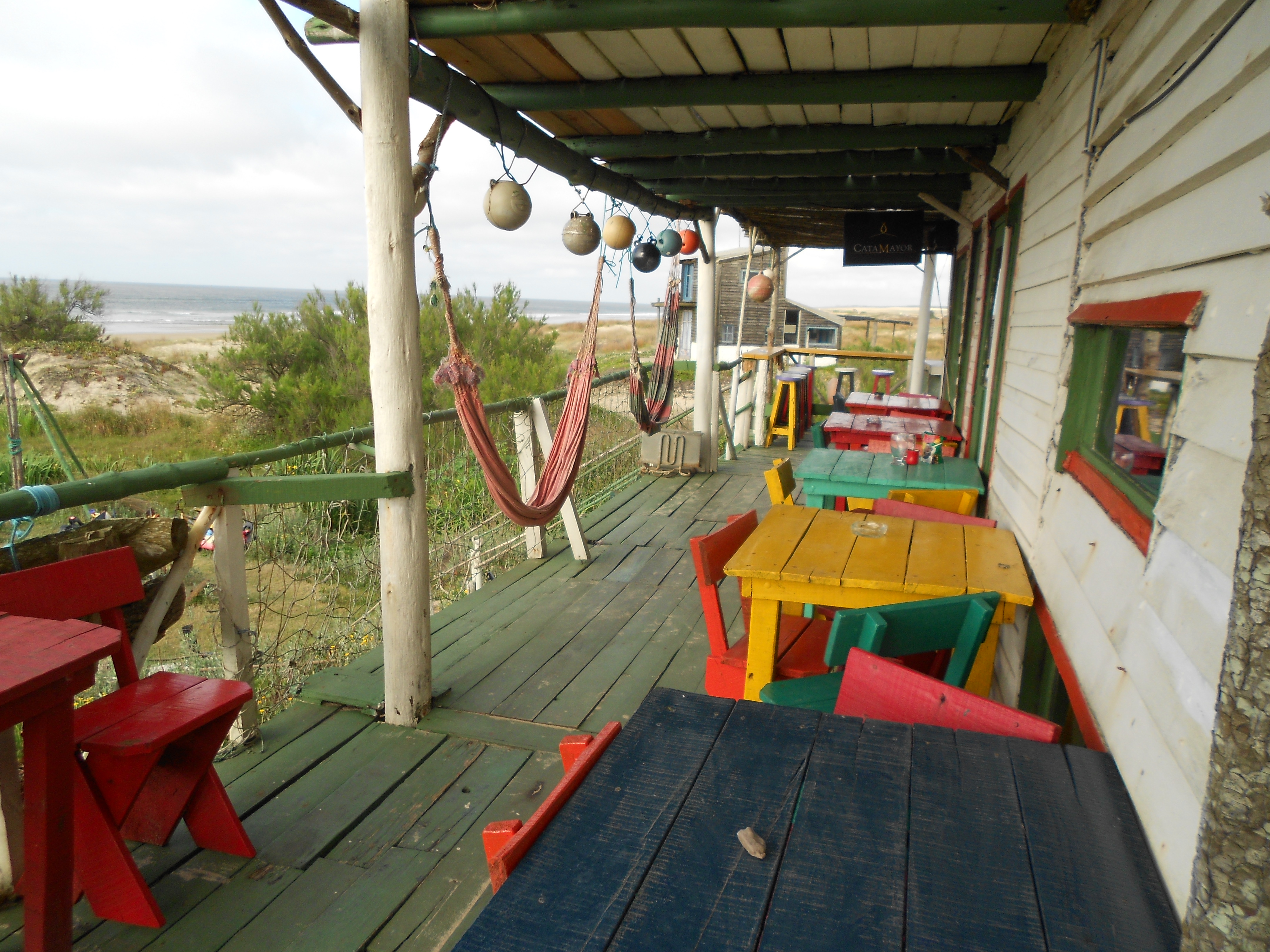
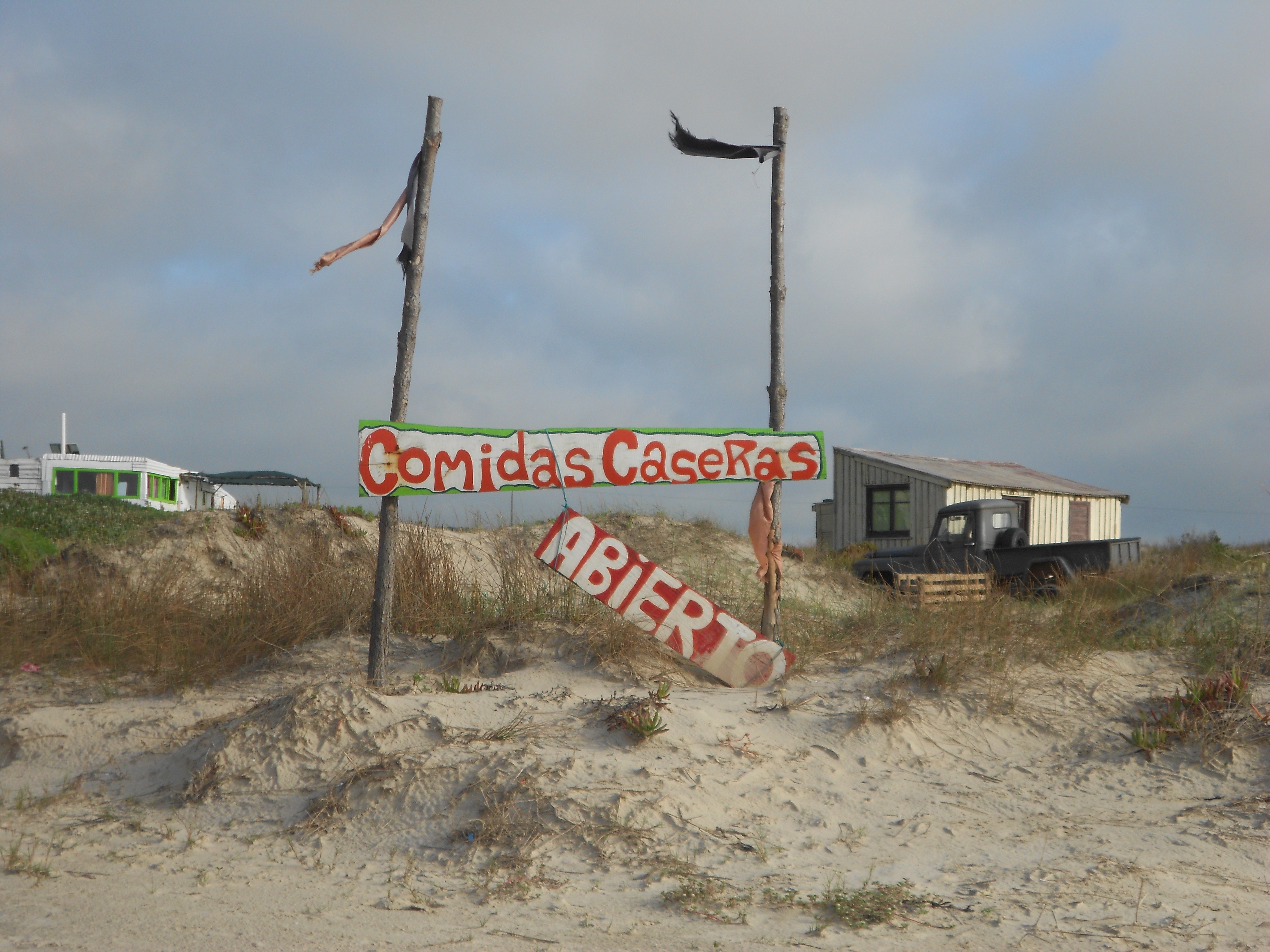
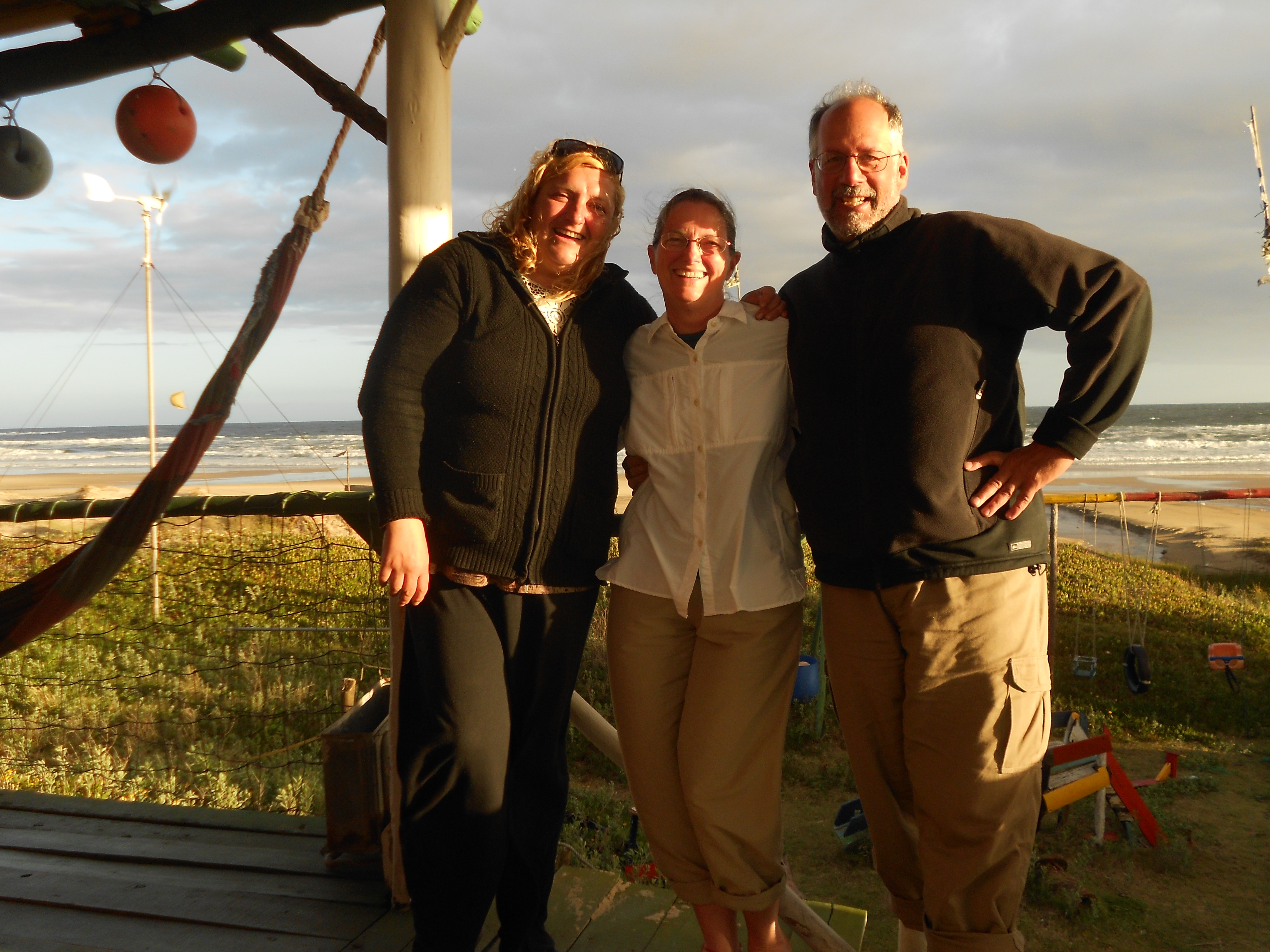
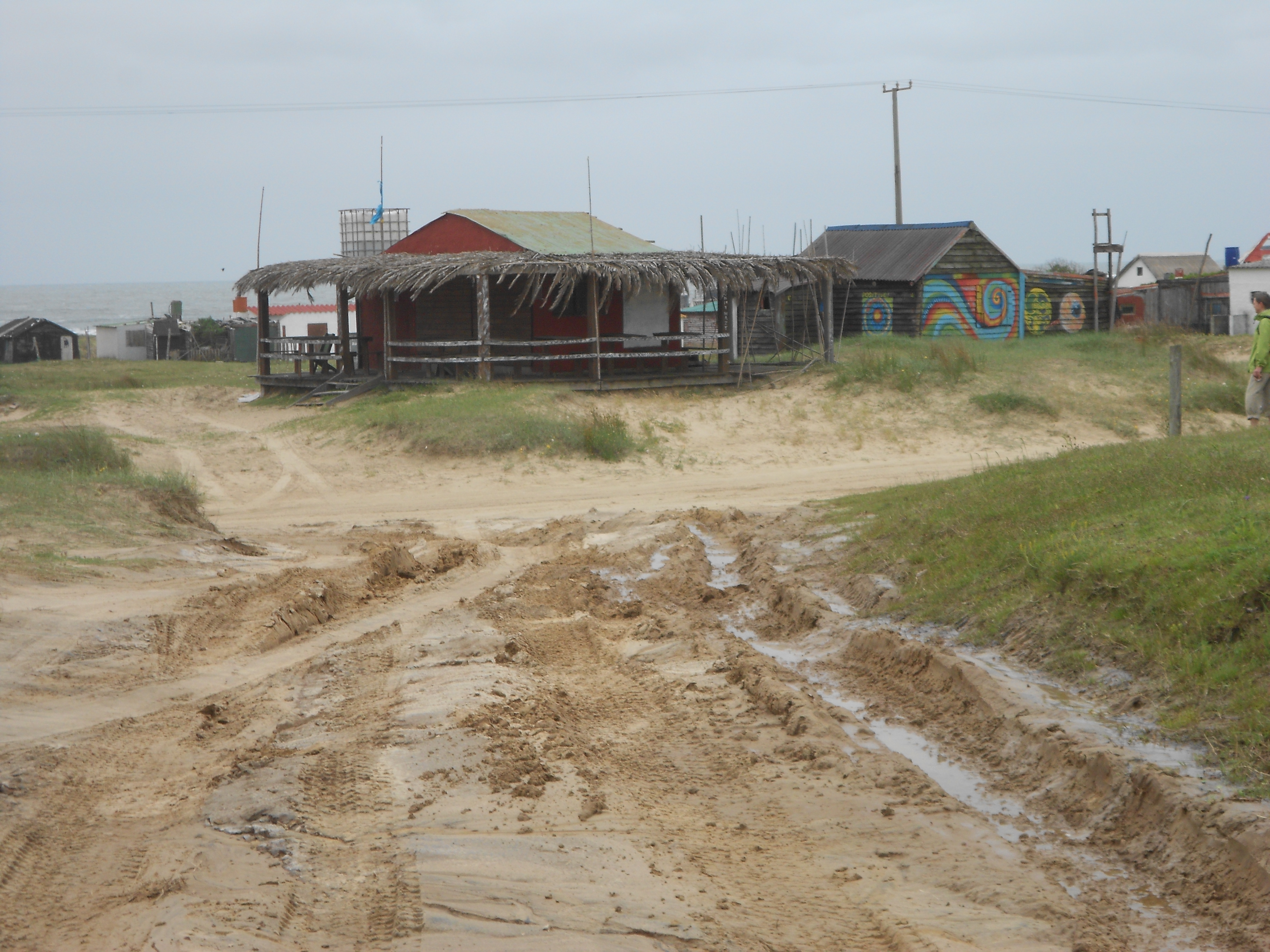
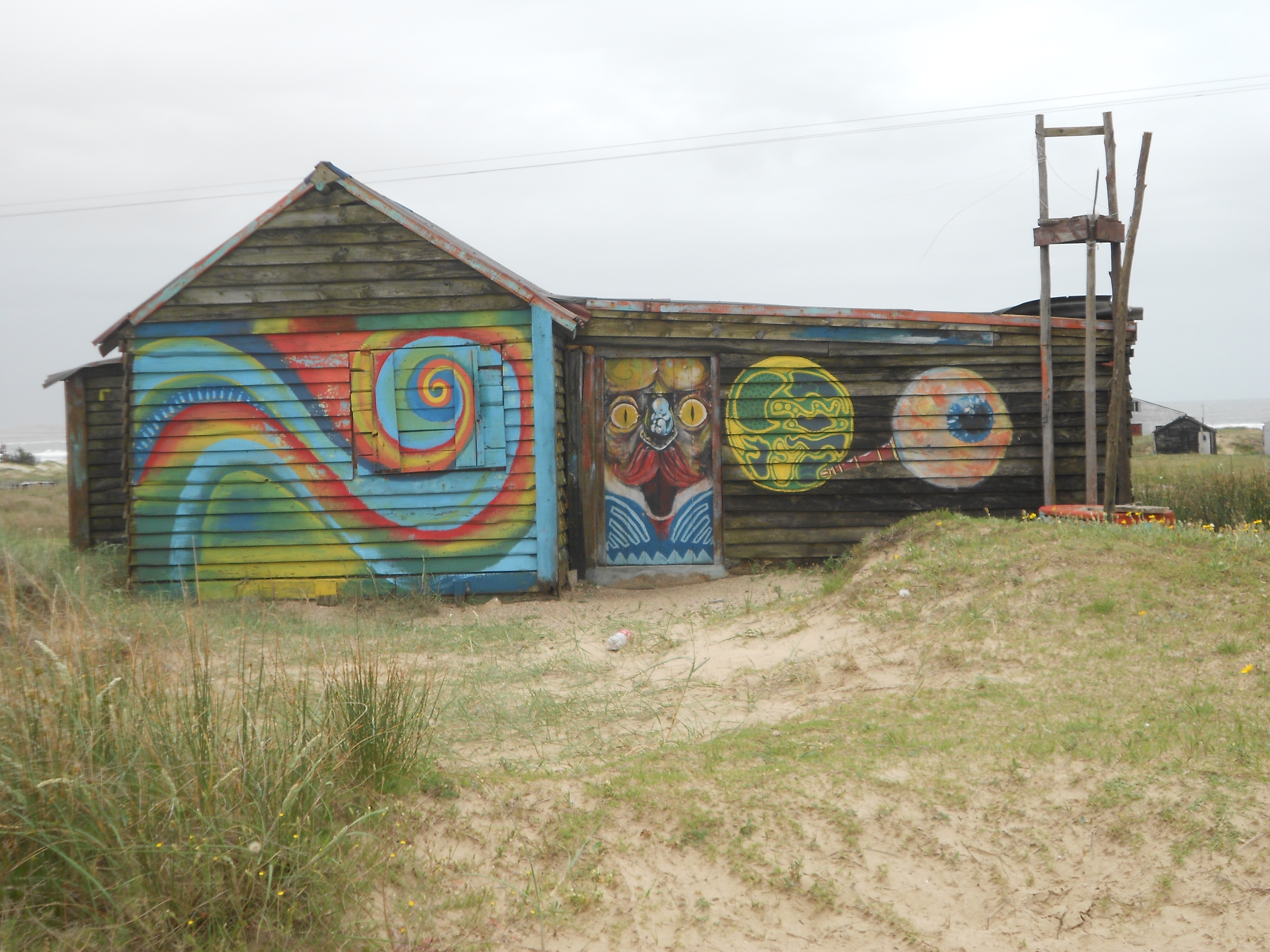
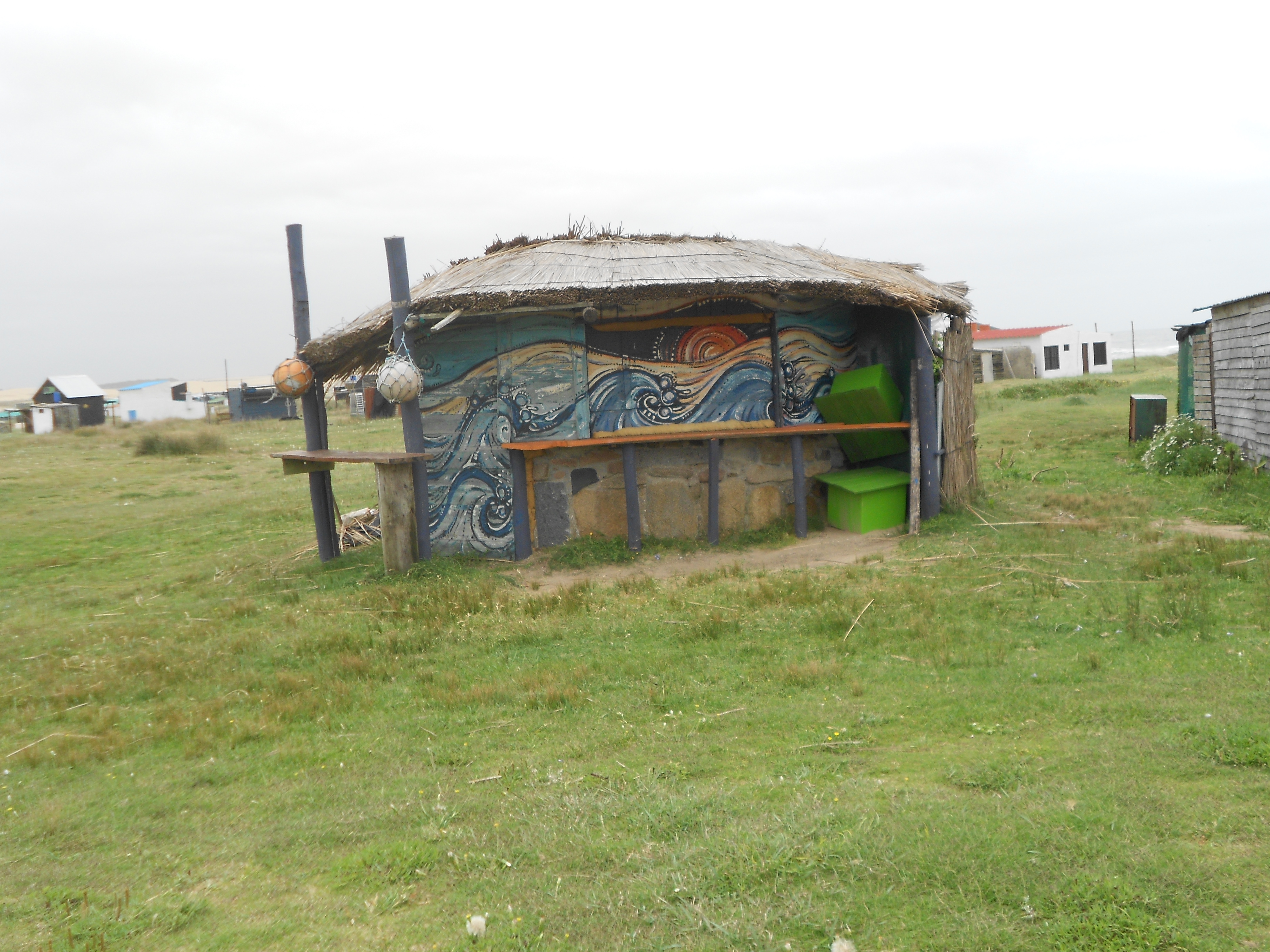
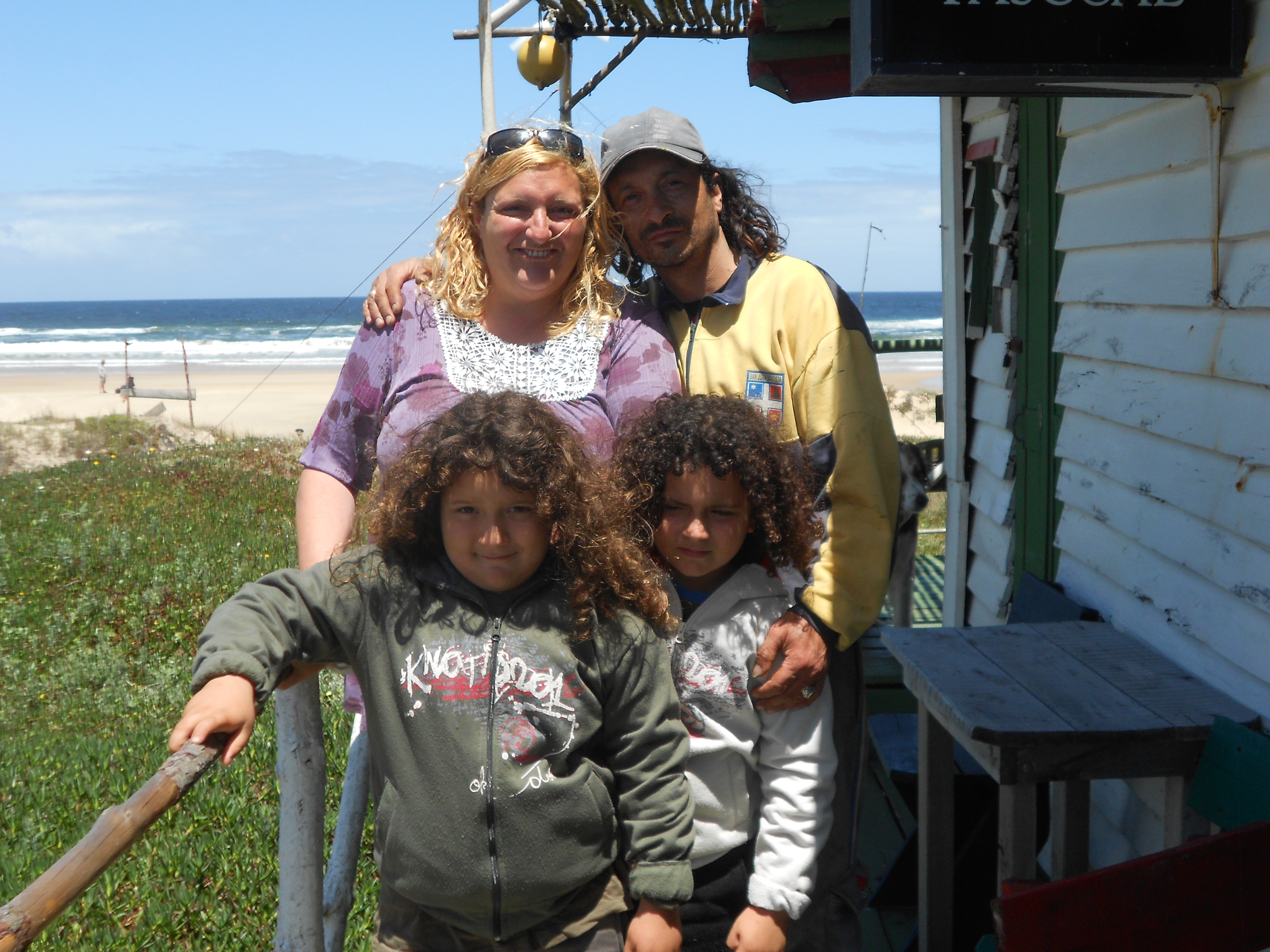
We stayed in a little posada, a half-hour walk from town down the beach. Nancy and Marco built the place and they were our hosts, along with their two sons, Luka and Tato, aged five and seven. The truck dropped us off in front of La Cañada, (canñada means springs, and there are two fresh water springs that flow around their house.) and Nancy came out to greet us with a kiss.She gave us a choice of two room, la grande or la chiquita, then opened up a bottle of beer for us to welcome us. Posada and Parador means that there are rooms to rent as well as meals to buy. Comidas Caseras means “homemade meals.” They have room for about twenty people when they are full, and it is easy to imagine people from all over the world spending a delightful afternoon on the porch.

 Nancy put out some appetizers (picadas) for us, and gave us a great welcome. Very soon, Marco came home with the boys, after picking them up from school. He immediately rolled a joint to share with us. We decided to stay two more nights.

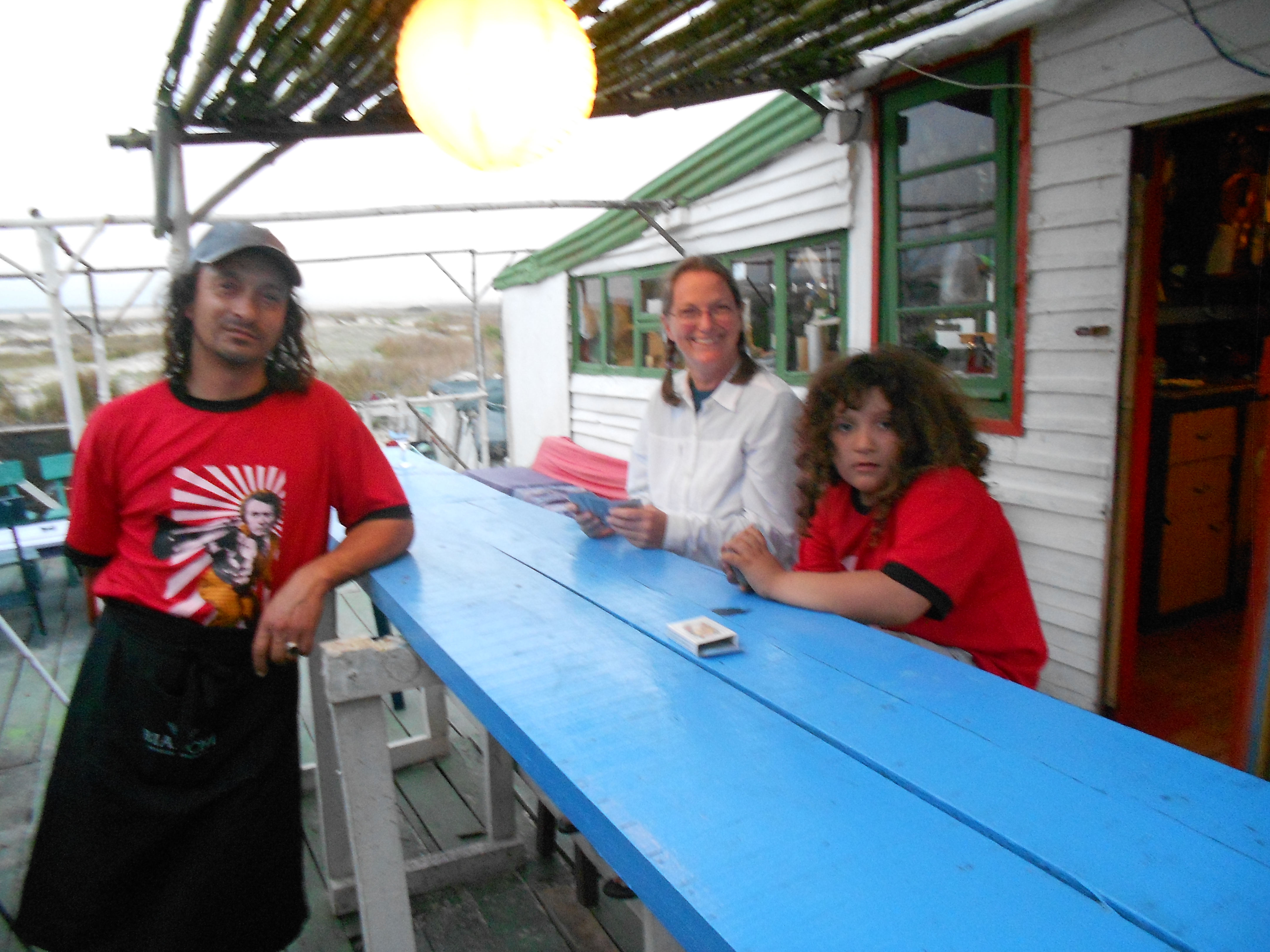
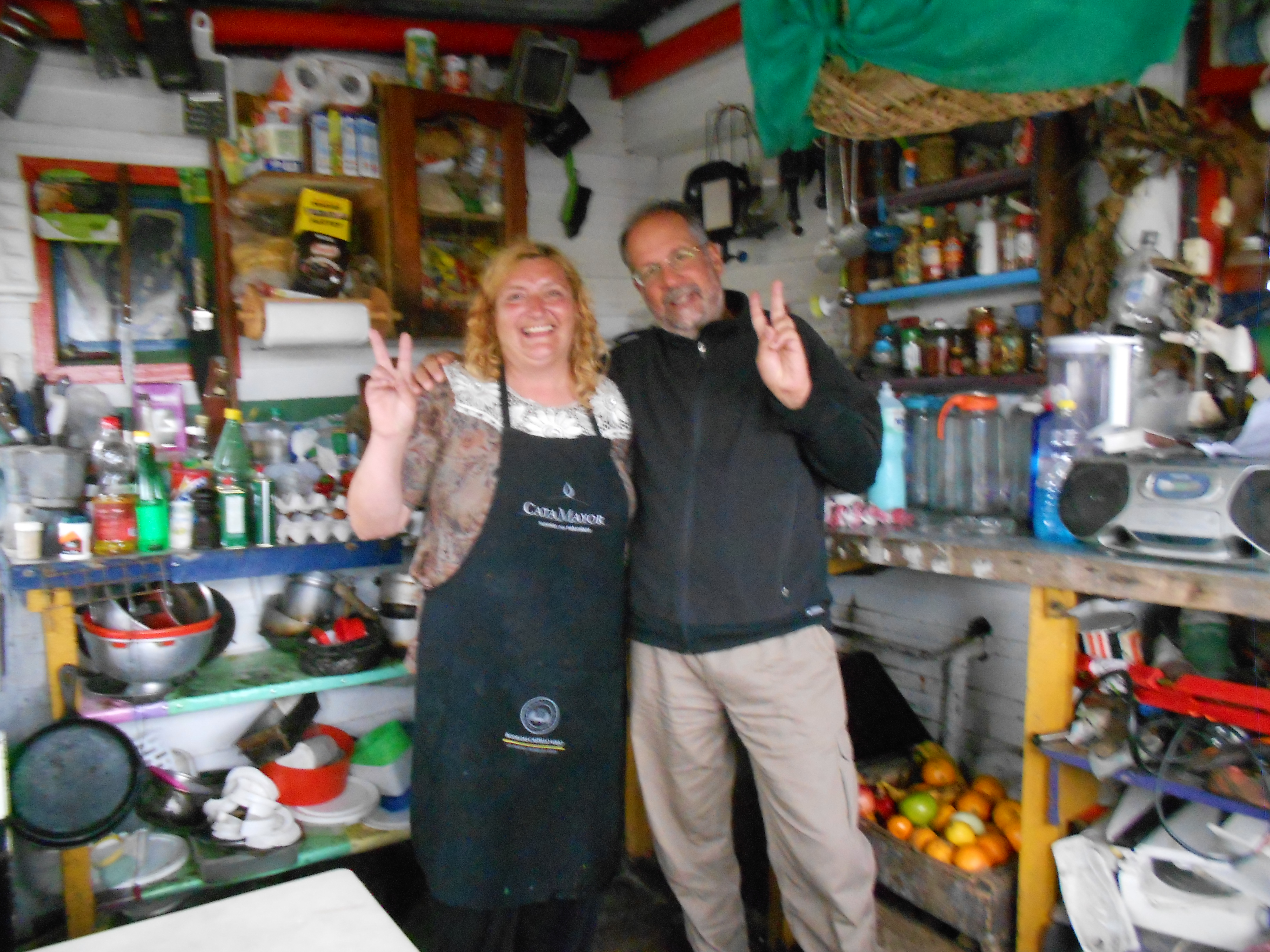
We stayed for seven nights in all. The cost of the room (about forty dollars a night) apparently included all the porros that we wanted. La Cañada is beautiful. It is right on the beach, hand-made, colorful, with Nancy´s warm loving spirit infusing everything. We became part of the family pretty quickly. We were the only guests, and we helped out in the kitchen and swept the floors, and had a great time with everyone. Monica liked to play cards with the kids, outside on the porch. Soon after Marco arrived with the kids, they went down to the beach for a swim. Beautiful sunny weather. Monica and I followed them to the beach, waved to them, and walked down the beach. You can walk for at least twenty kilometers down the isolated beach before running into anybody. The next day, Luka, who is seven, looked at me very seriously and asked me why we hadn´t gone swimming with them yesterday. (This in perfect Spanish. They learn Spanish so young down here.) I was touched and taken aback. Up to that point, thekids hadn´t really communicated much with us. I told Luka that we didn´t swim because we wanted to take a walk, but if they go swimming this afternoon, I´ll go with them. He answered, “Bien.” So, later that afternoon, I joined them in the water, swimming and surfing, while Marco was the lifeguard and Nancy watched from a beach chair. After that, we were best friends with the boys.

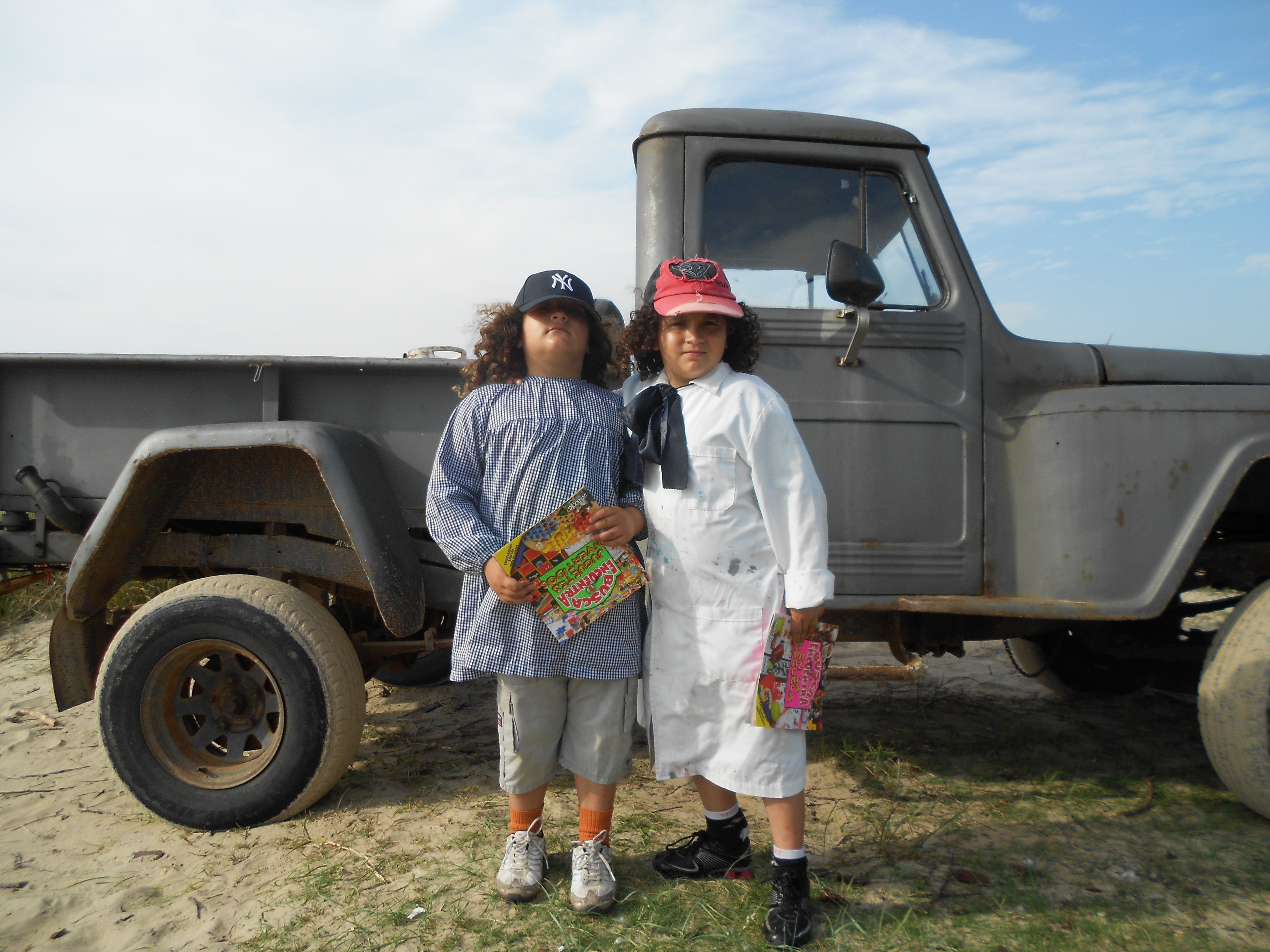
They go to school in town. There are a total of six students at the school, with Tato and Luka being two of them. All the school kids in Uruguay and Argentina wear smocks (guardapolvos) to school. Luka and Tato usually got driven down the beach in the pickup truck and then got picked up in the afternoon. Here, they are ready for school. School is usually from about 10:00 to 2:00, but it depends on the bus schedules and the teacher´s schedule. She lives about 30 km from town, and she travels by bus to get there and go home.

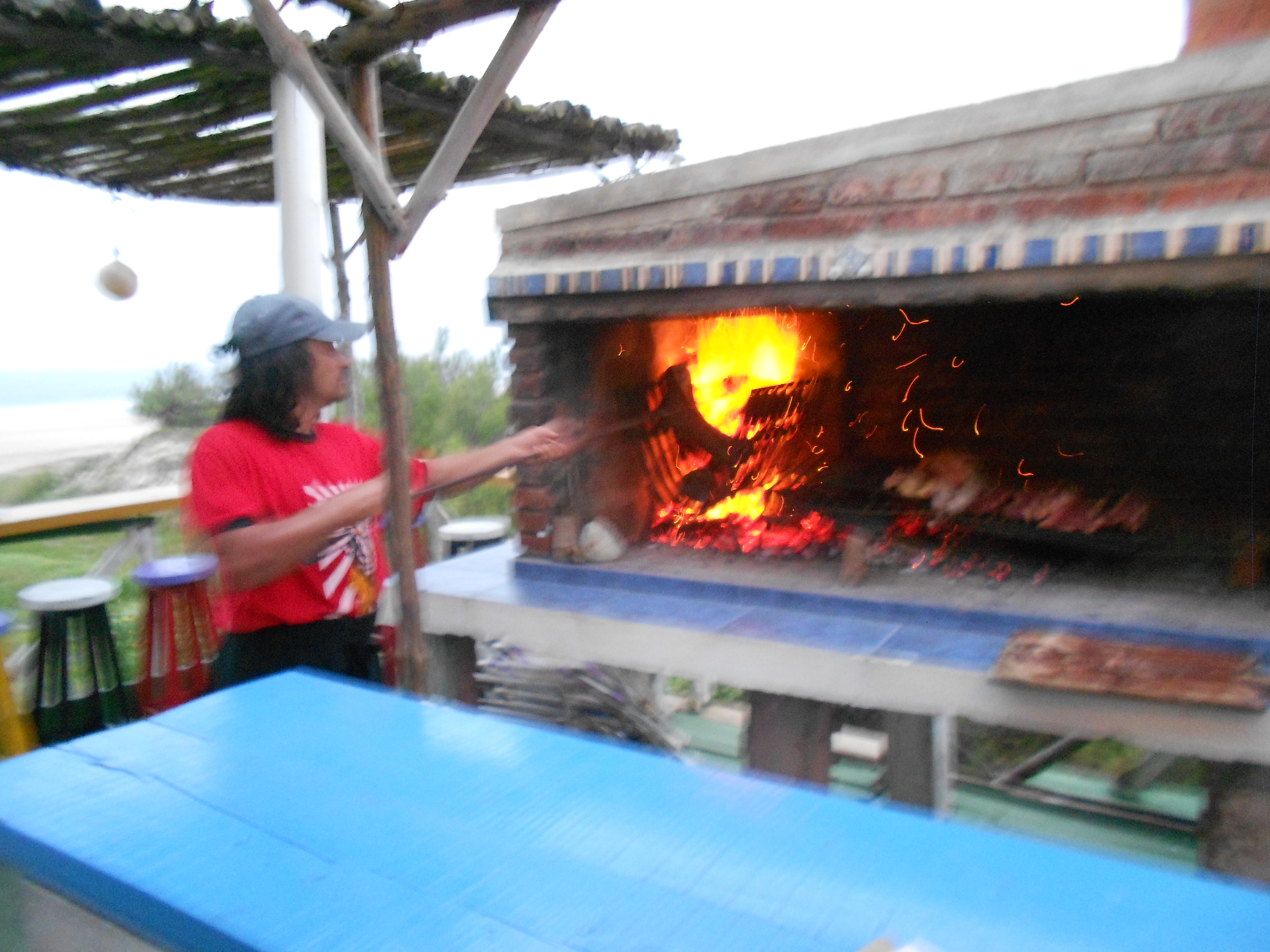
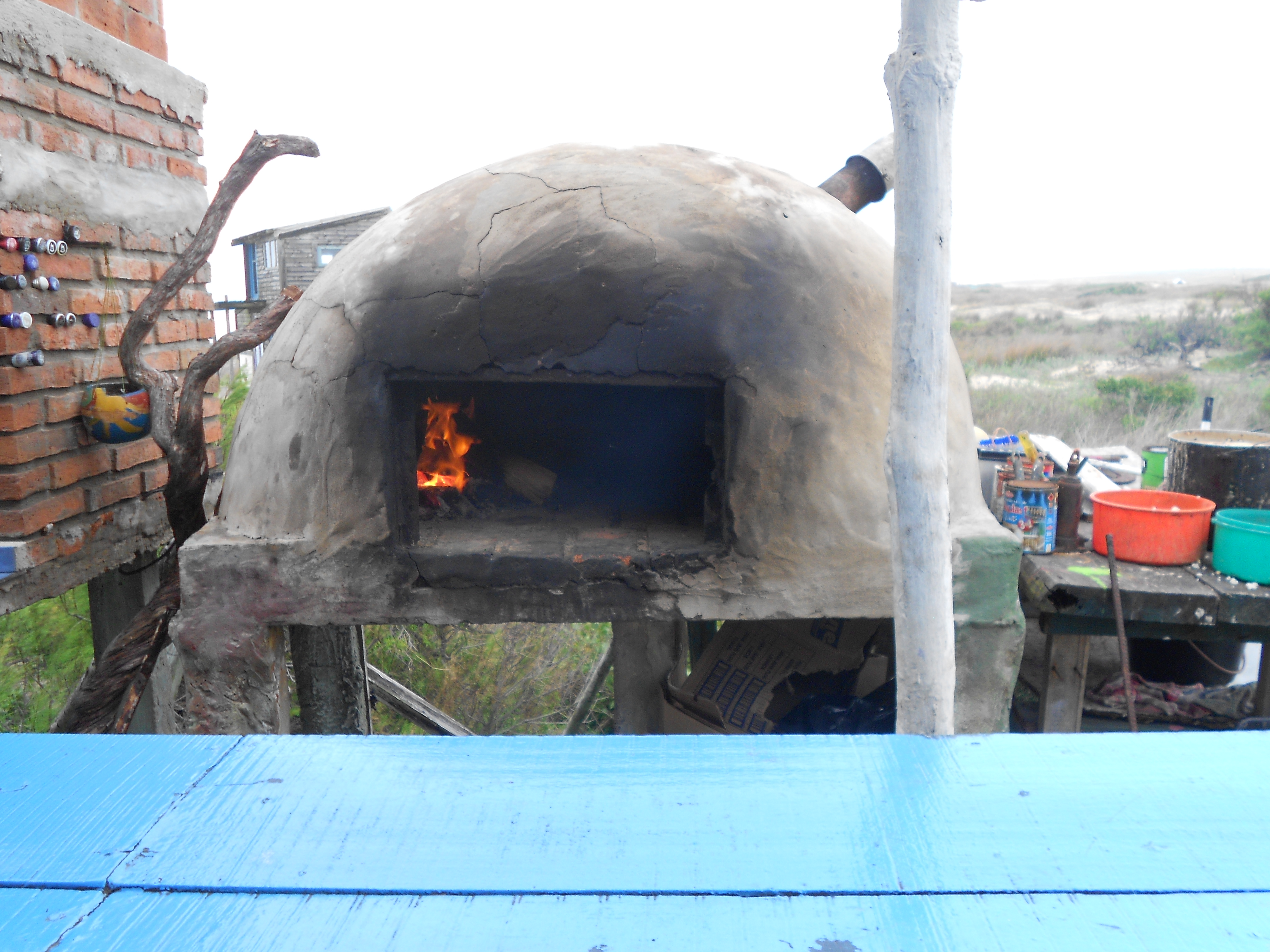
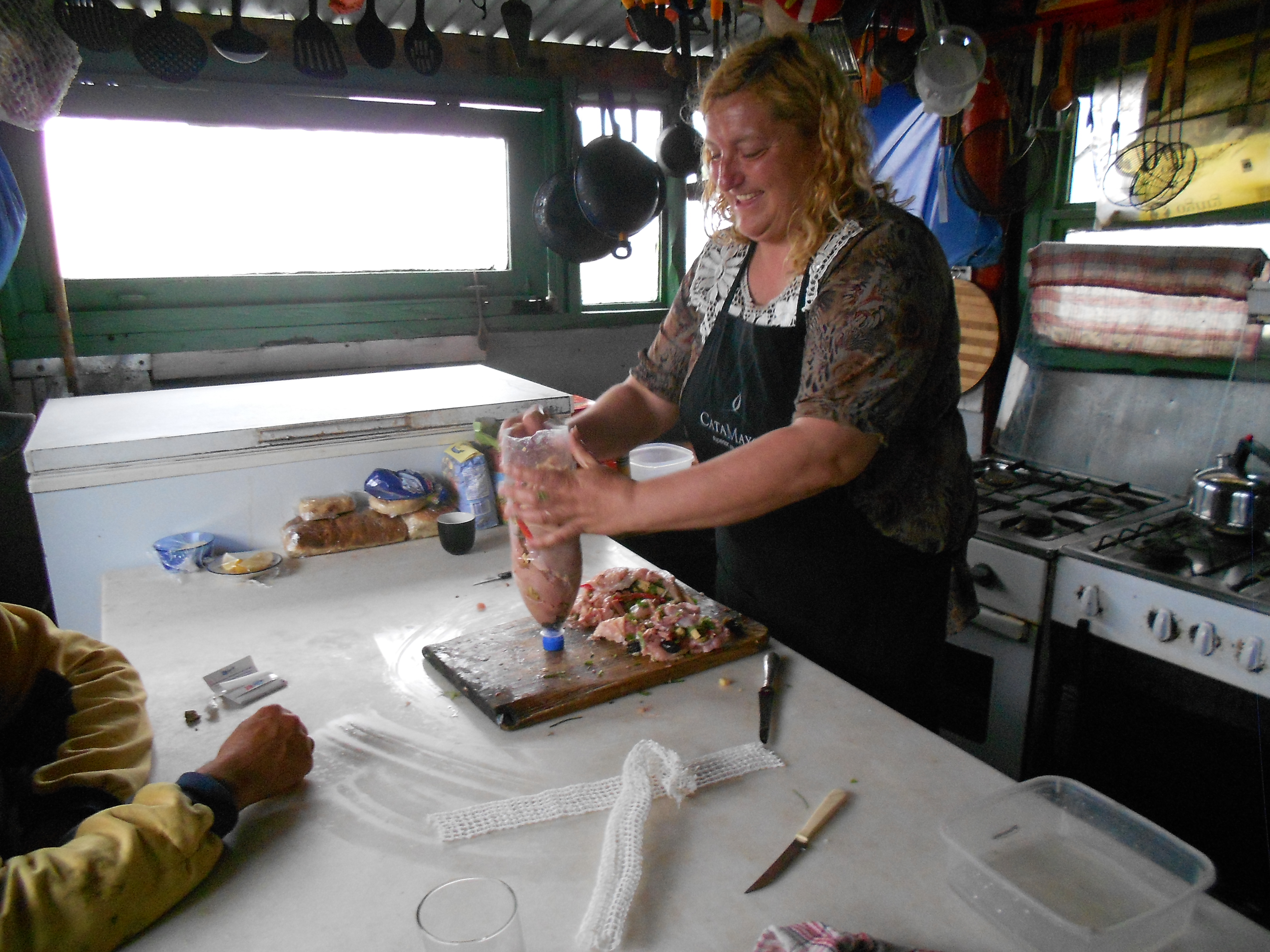
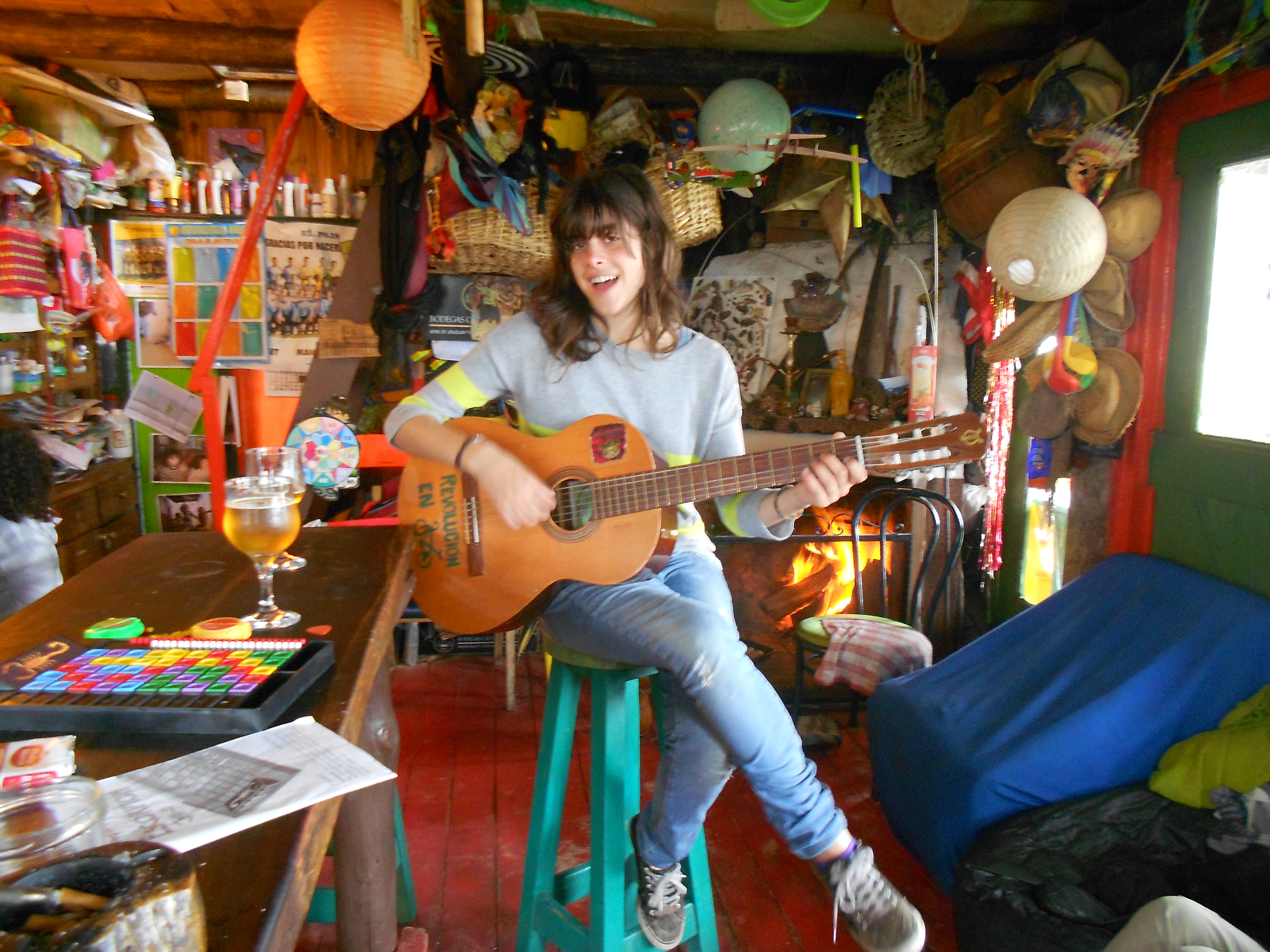
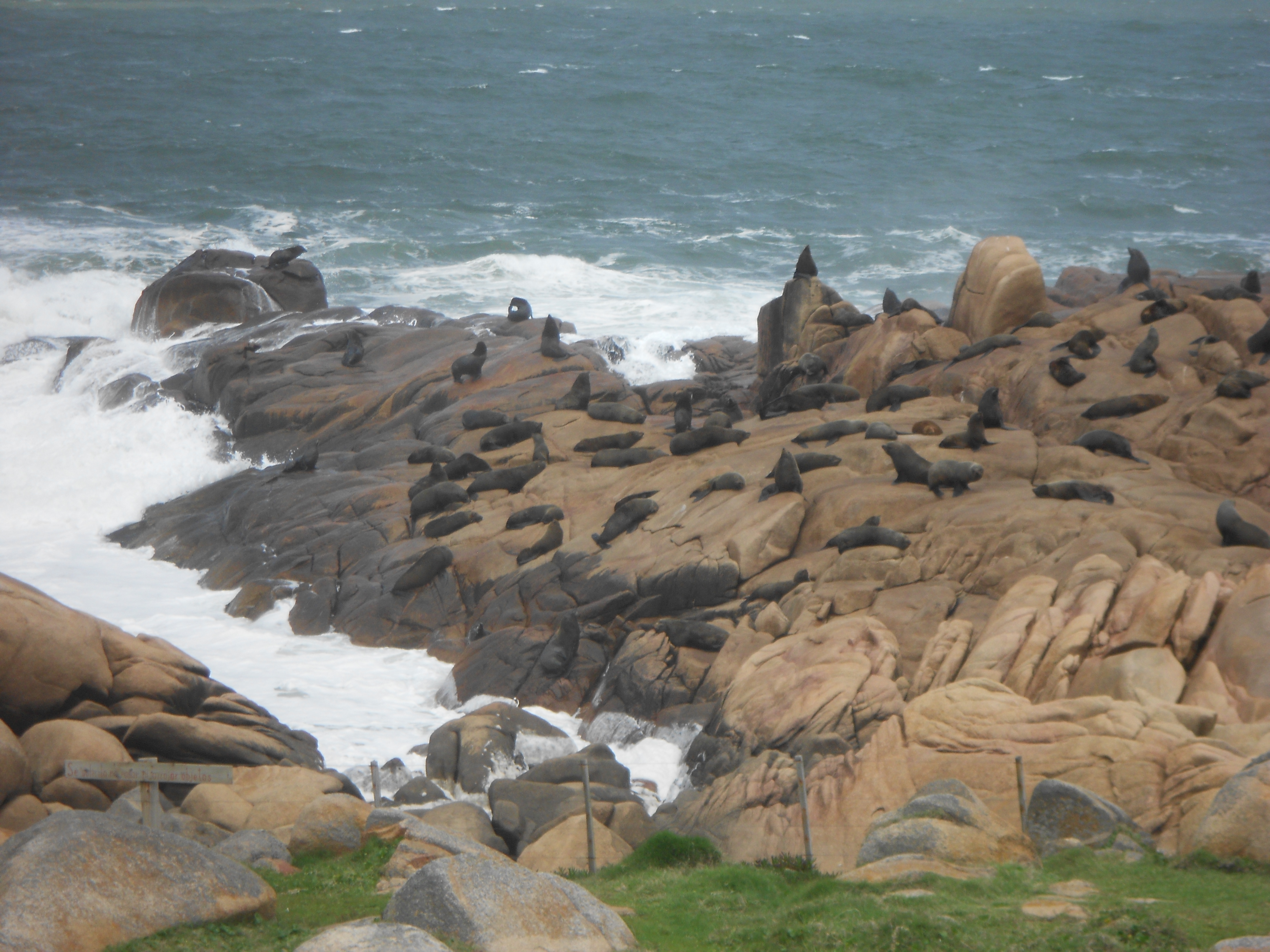
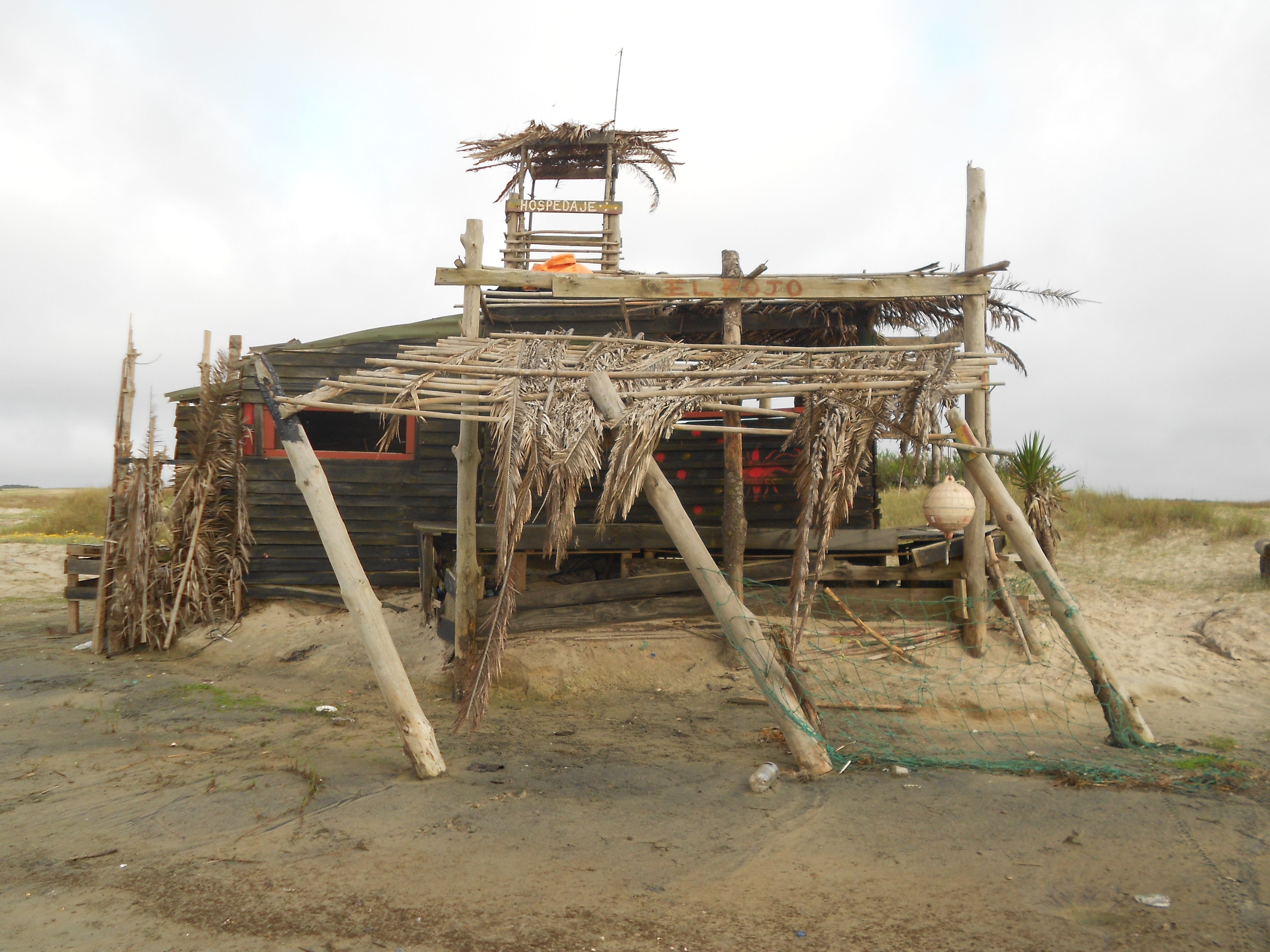
Nancy and Marco are both great cooks, and they both put their heart into preparing food for their guests. Breakfast was always cheerful, with coffee and a chapati, (kind of a grilled quesadilla) They put a lot of effort into dinner, which was usually served around 10:00 at night. They have a beautiful parilla for grilling meat, and a beautiful brick oven for baking breads and pizzas. Nancy kneads all the dough. In the summer, when they are full with guests, Marco can fill the parilla with enough meat for twenty people, at the same time baking pizzas in the oven. The oven is made with bricks and covered with mud. It holds the heat. It is solid. They built the parilla and the oven before they built the rest of the house. I appreciate their priorities. One night, Nancy de-boned a chicken, sliced it thin and rolled it out, and filled it with prunes and cheese, ham and spices, then stuffed it into a plastic water bottle, then put a baking net over the bottle, and slipped the bottle out. They baked the chicken for three hours. Delicious. I told Nancy and Marco that I´ll do it in Oregon and call it Pollo Cañada.I asked if I could knead the dough for pizza and bread one night, and it was very nice being part of the production instead of just being served. I loved their kitchen, with that big marble work table in the middle. I was very impressed with how much food they are able to turn out, and all with such love and cheer. We arrived on a Tuesday (election day). On Friday afternoon, after days of sunshine, the sky turned black and the clouds moved in, and we had a real storm. Lighting over the ocean, strong wind, heavy rain. The rain stopped during the night, but the wind blew for three days. It was more than a gale. The ocean kicked up, and the wind was powerful. It stayed that way until the day we left. On Friday, besides the storm, three other guests also arrived. Gabriel and Florencia were a young couple, he from Montevideo and she from Buenos Aires, and Frederic was from Paris. Frederic had already been traveling for two years, following a spiritual path, with stops in monasteries and with Thich Nhat Hanh. Gabriel and Florencia loved to sing. The day after the storm, with the fierce wind blowing and the ocean riled up and rollicking, Flor gently played the guitar and the two of them sang and filled the house with music all day long. We walked into Cabo Polonio a few times during our stay. The main part of the town is the lighthouse. There are beautiful little homes there also, and at the base of the lighthouse, there is a colony of lobos marinos (sea lions). There are no cars here. The people arrive by the big trucks, as well as the supplies for the restaurants and hostels. The restaurants use gas tanks for cooling and freezing, and most of them have solar and wind power for lights. At night, looking at the town from a distance, the only thing you see is the lighthouse. Along the beach, there are also some houses, although they were empty. I think that once the summertime hits, there will be people here.

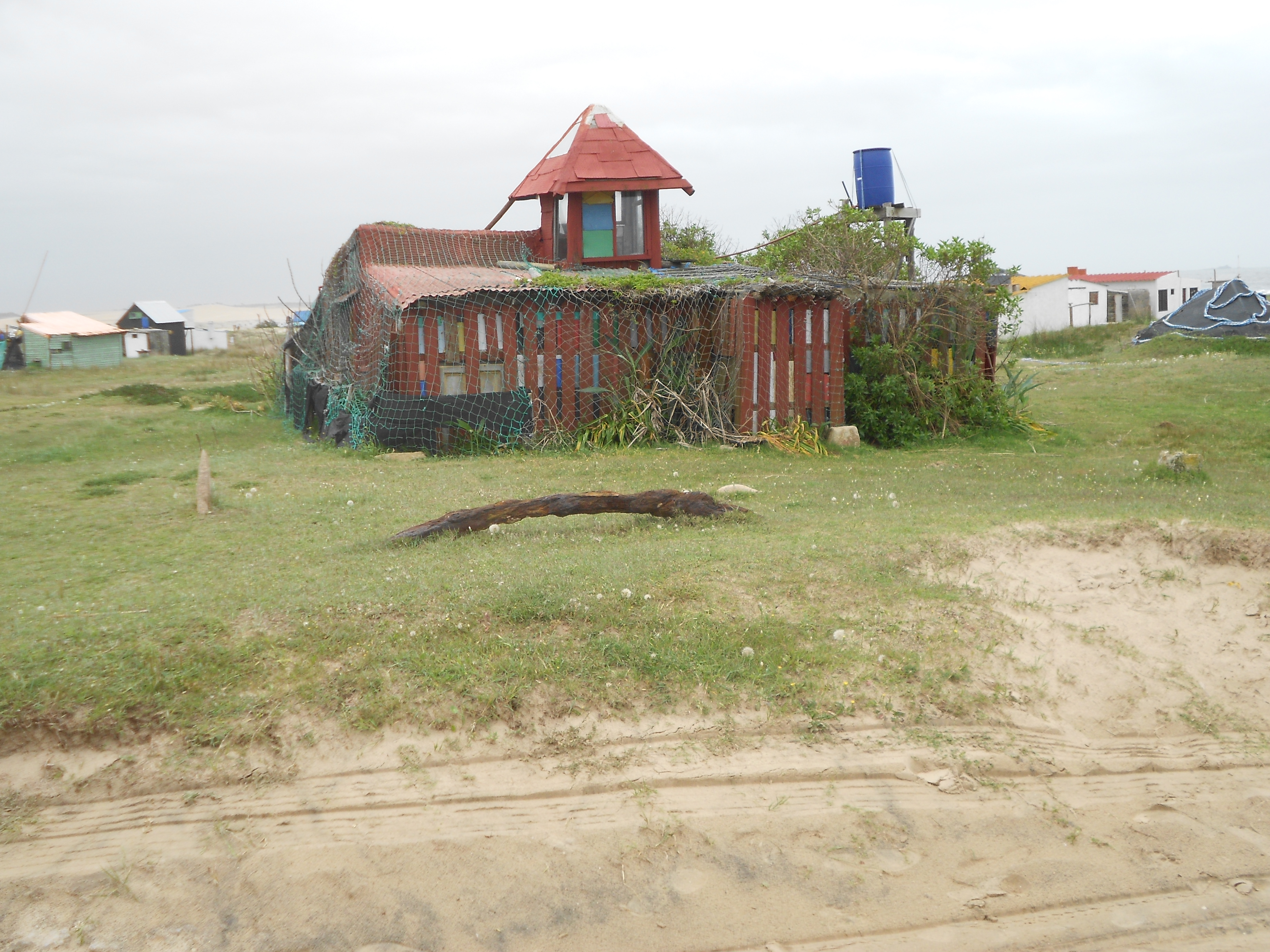
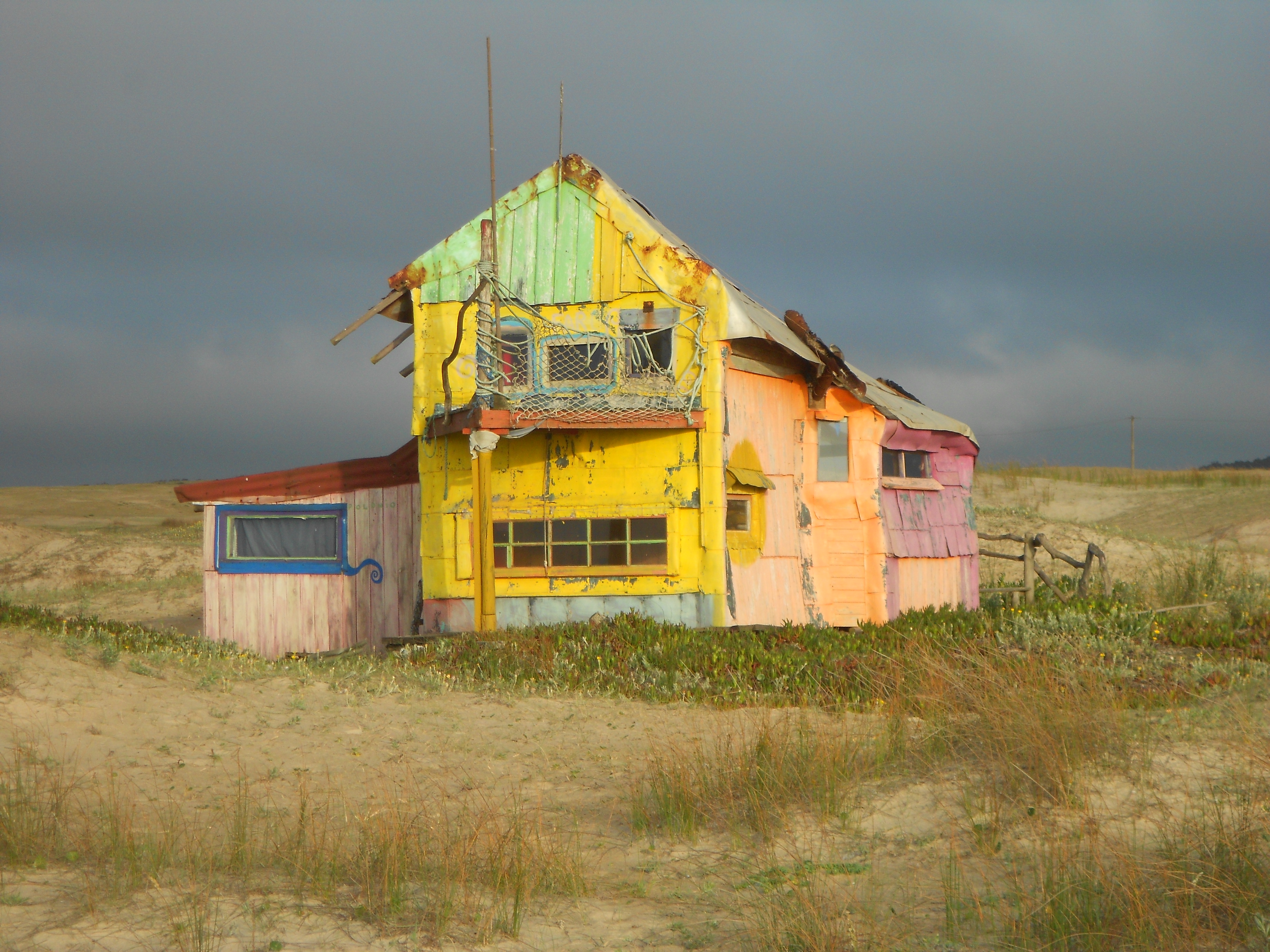
This next one always reminded me of Robinson Crusoe.

We loved our week at Cabo Polonio. It was very sad to say goodbye to the family, and we hope to keep in touch. Uruguay has been great. Now we look forward to new places.

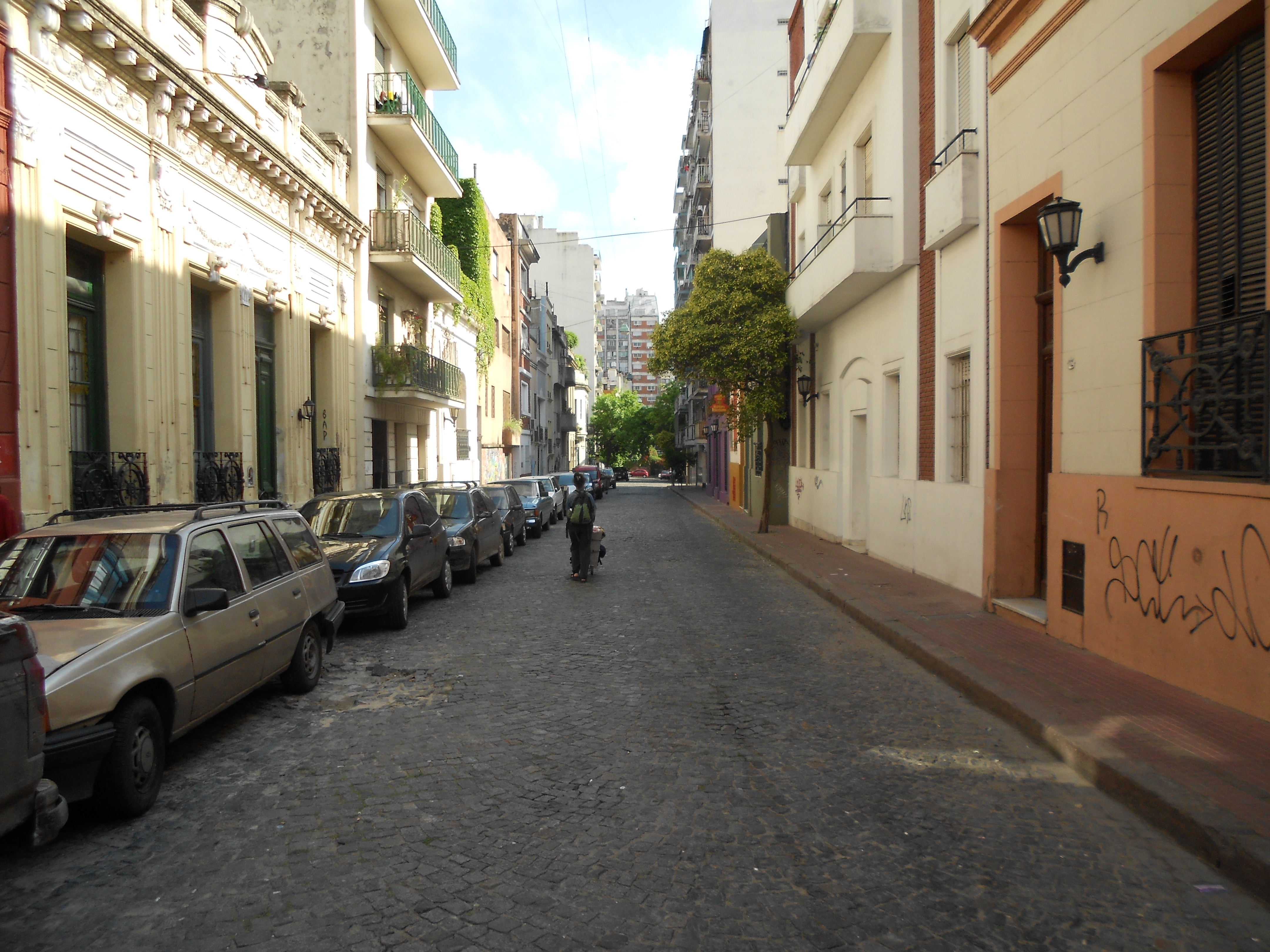
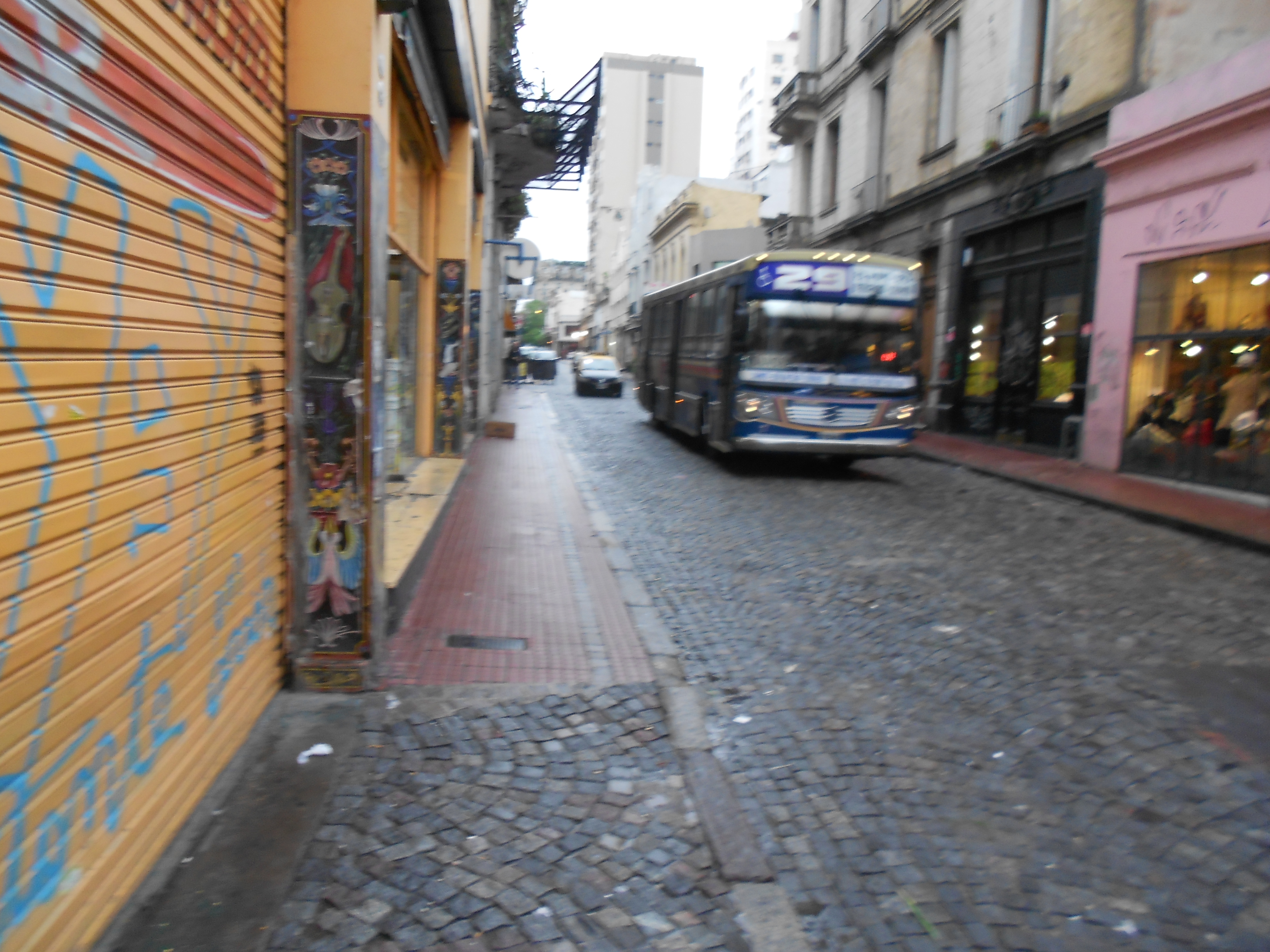
We´ve been living in a little apartment in San Telmo during our stay in Buenos Aires. San Telmo is the oldest neighborhood in the city. It was mostly built in the beginning of the 1800´s, and the streets and many of the buildings are still the same. The streets are narrow cobblestones, and it´s always exciting to see the city buses recklessly barreling down the narrow streets. You learn quickly to step back from the curb.    Above is a photo of our street on a quiet Sunday morning.

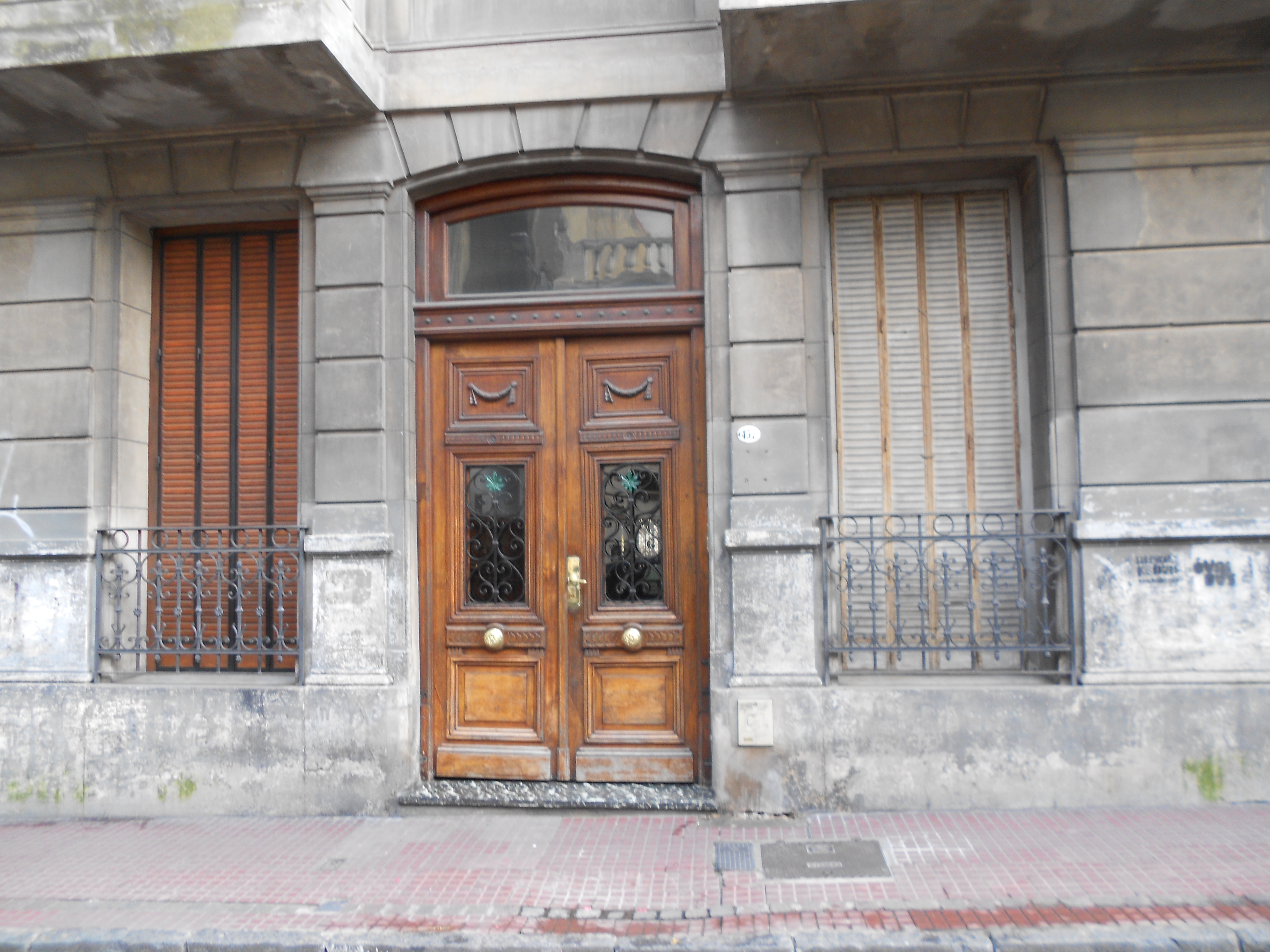
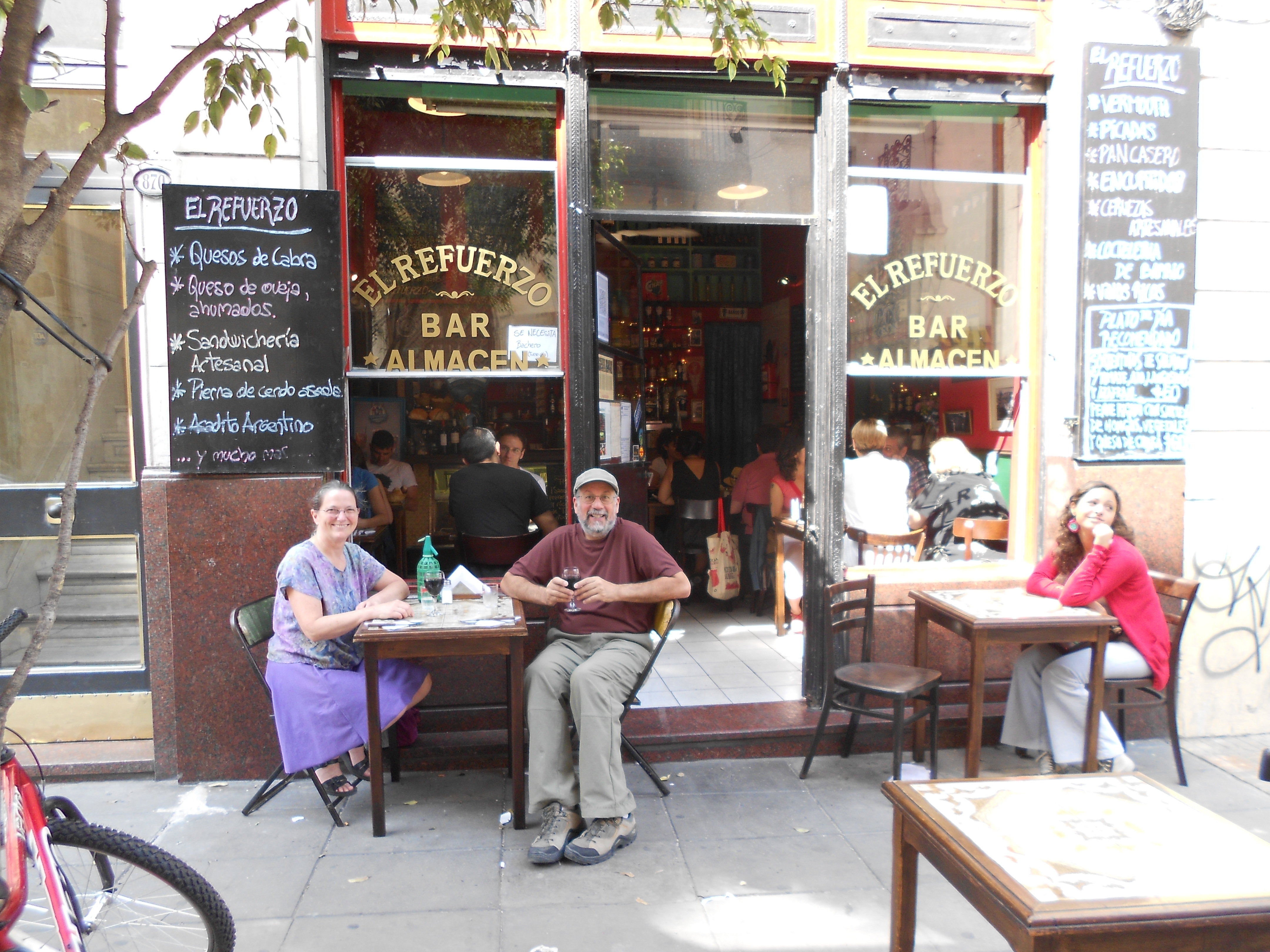
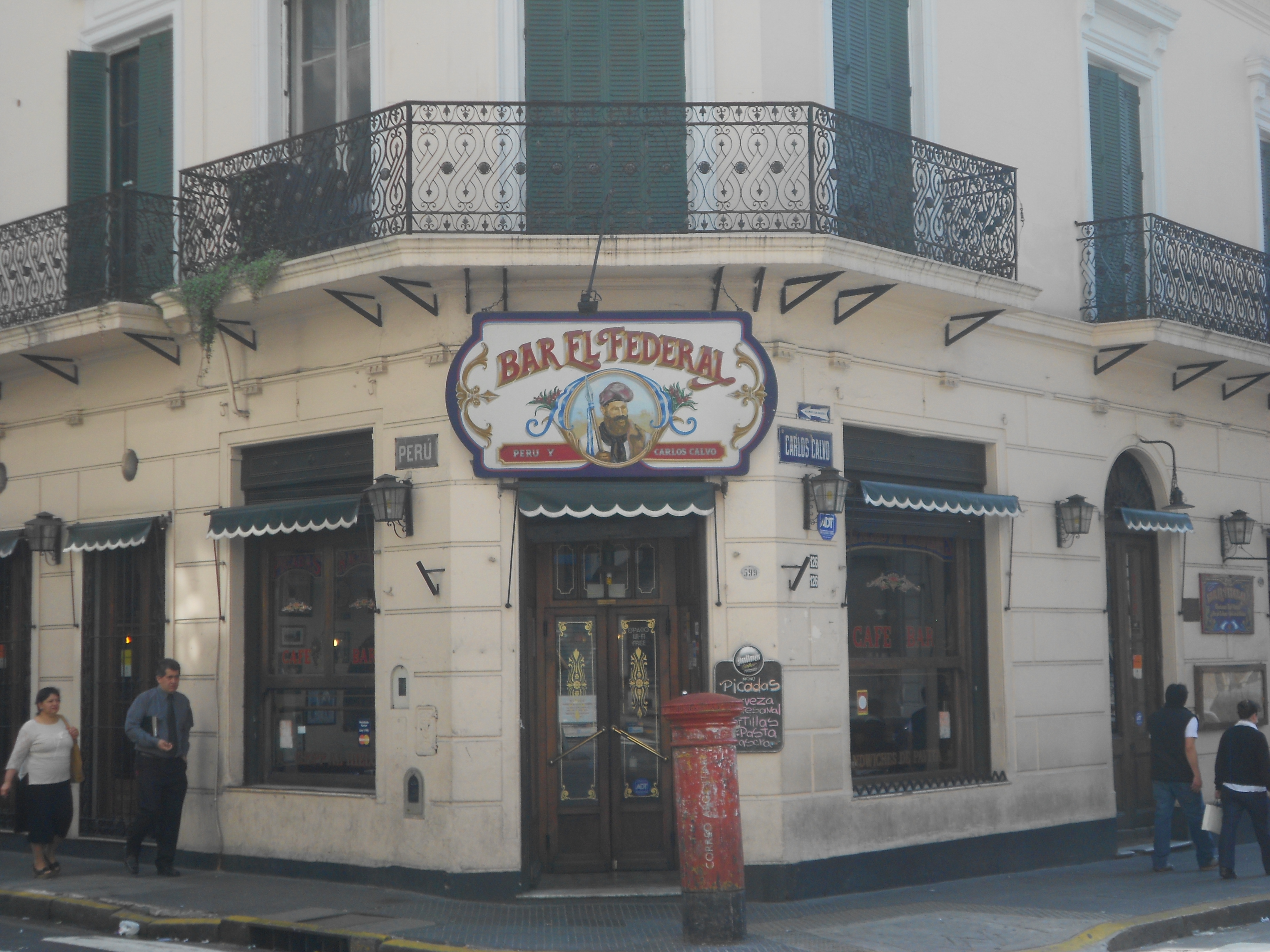
Many of the buildings have ornate, ten-foot high doors on the outside and elaborate marble staircases on the inside. The neighborhood has bars and cafés that are 150 years old, next to modern, hip restaurants and stores geared toward the young, modern, and hip. There are lots of tourists, because the neighborhood is so unique and beautiful, and lots of residents and families, because this is where they´ve always lived.

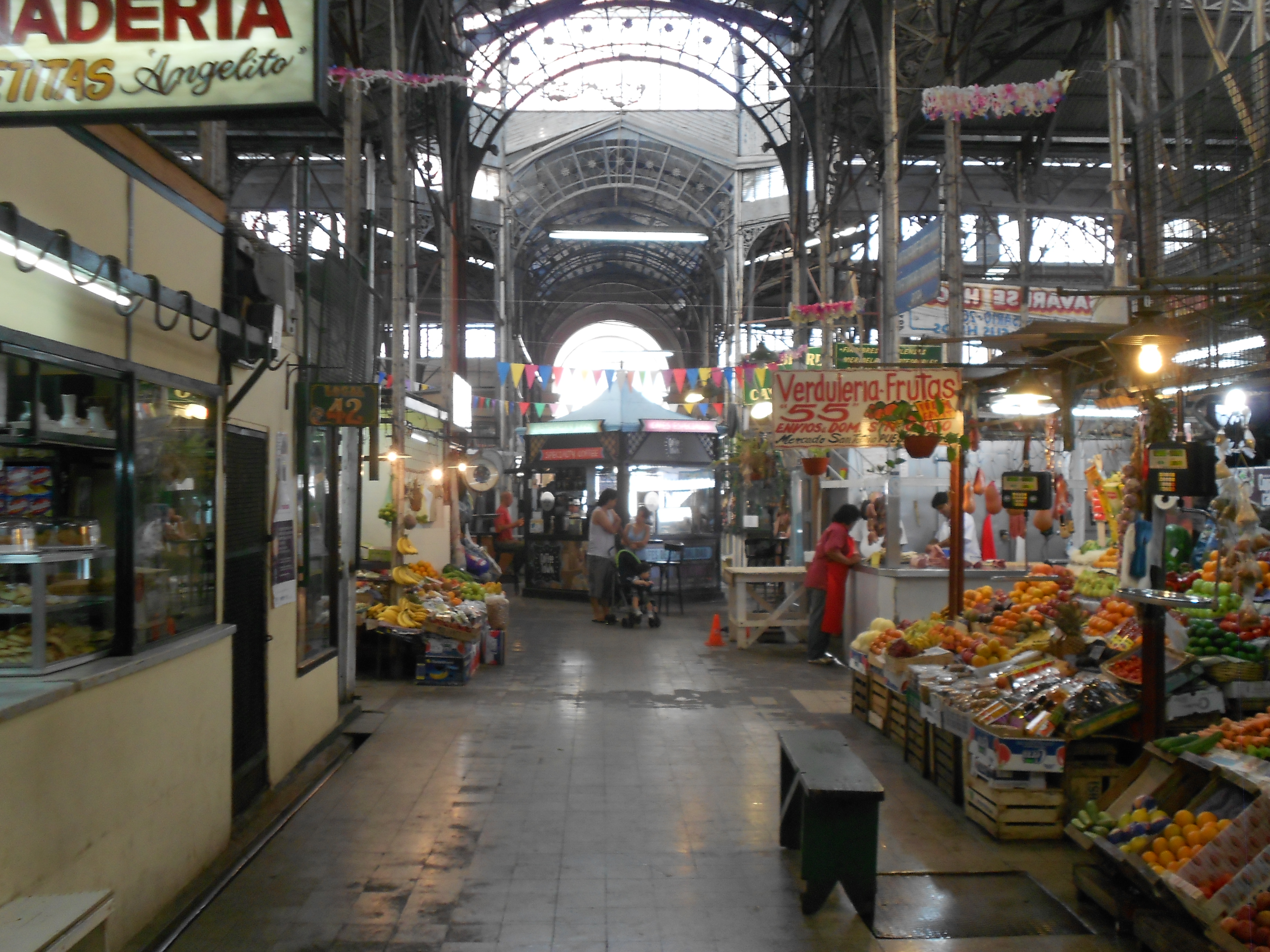
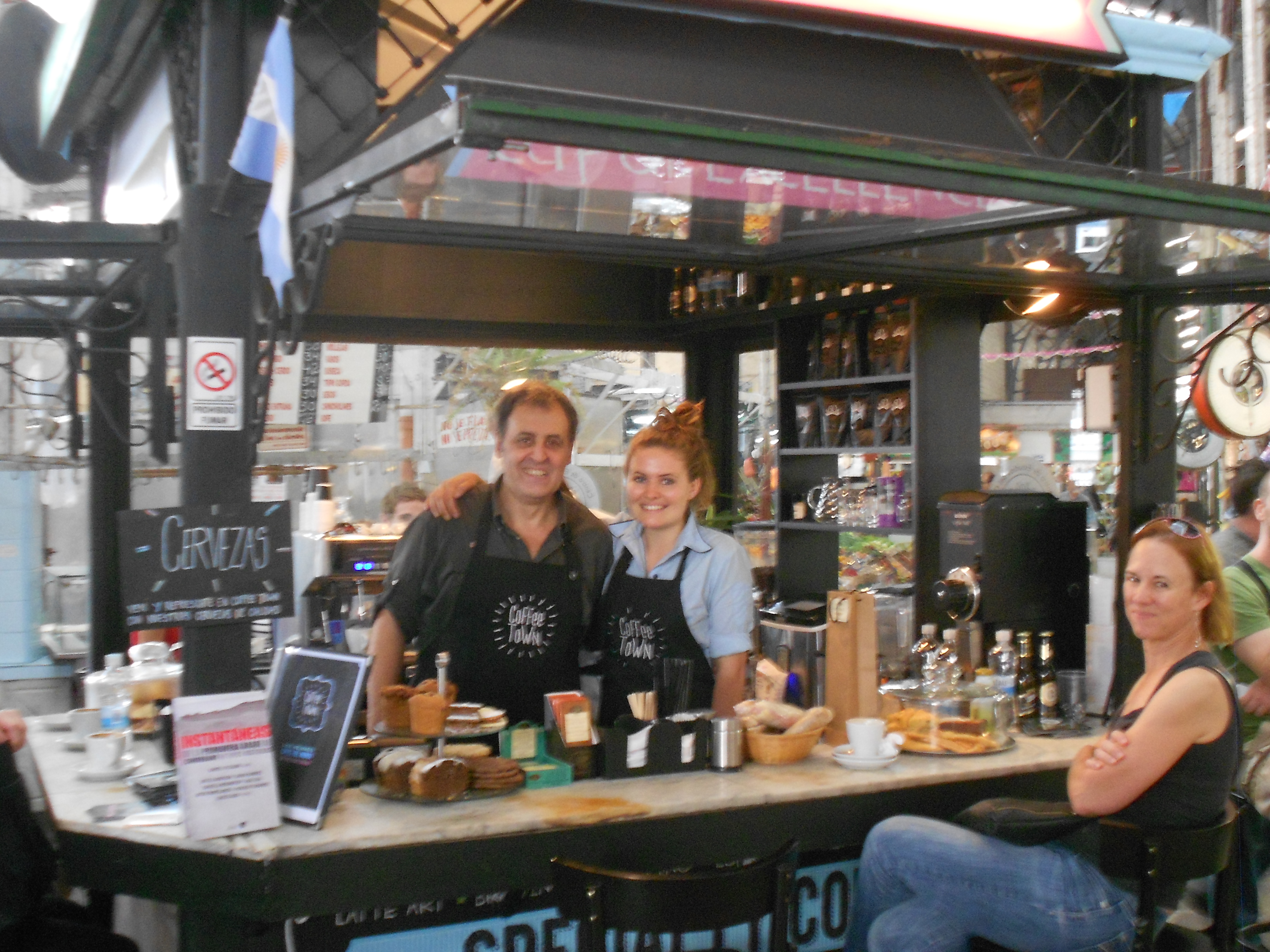
The San Telmo Market is open every day. It has little vegetable stands, butchers, bakers, clothing shops, and a little coffee kiosk, very similar to the ones back in Eugene. “Coffee Town” is owned by José, and is starred in by Hannah, the chica from New Zealand.

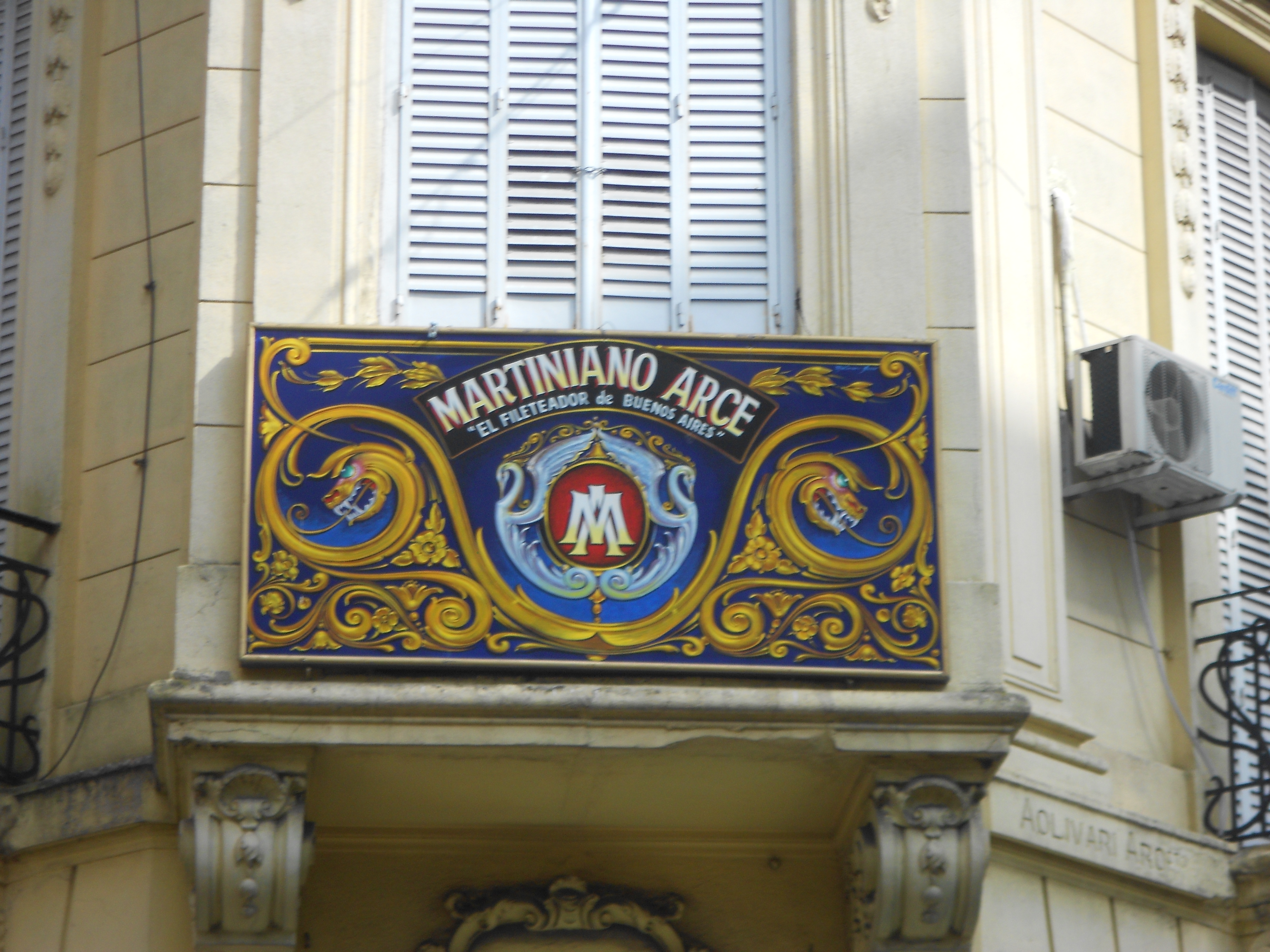
Buenos Aires has had at least three major contributions to world culture: Tango, Filteateado, and Submarinos. So far, Tango is the only one that has become international. Fileteado, (or filete)  and Submarinos are still very “Argentino.” The submarino is a culinary revelation. You can go into almost any café, sit down, and ask for a submarino. Soon, the waiter appears with a glass of hot steaming milk, and a chocolate bar shaped like a submarine. The idea is that you sink the submarine, then you drink a delicious glass of hot chocolate, perfect for a rainy afternoon. To make it a bit better, they also bring you a cookie.

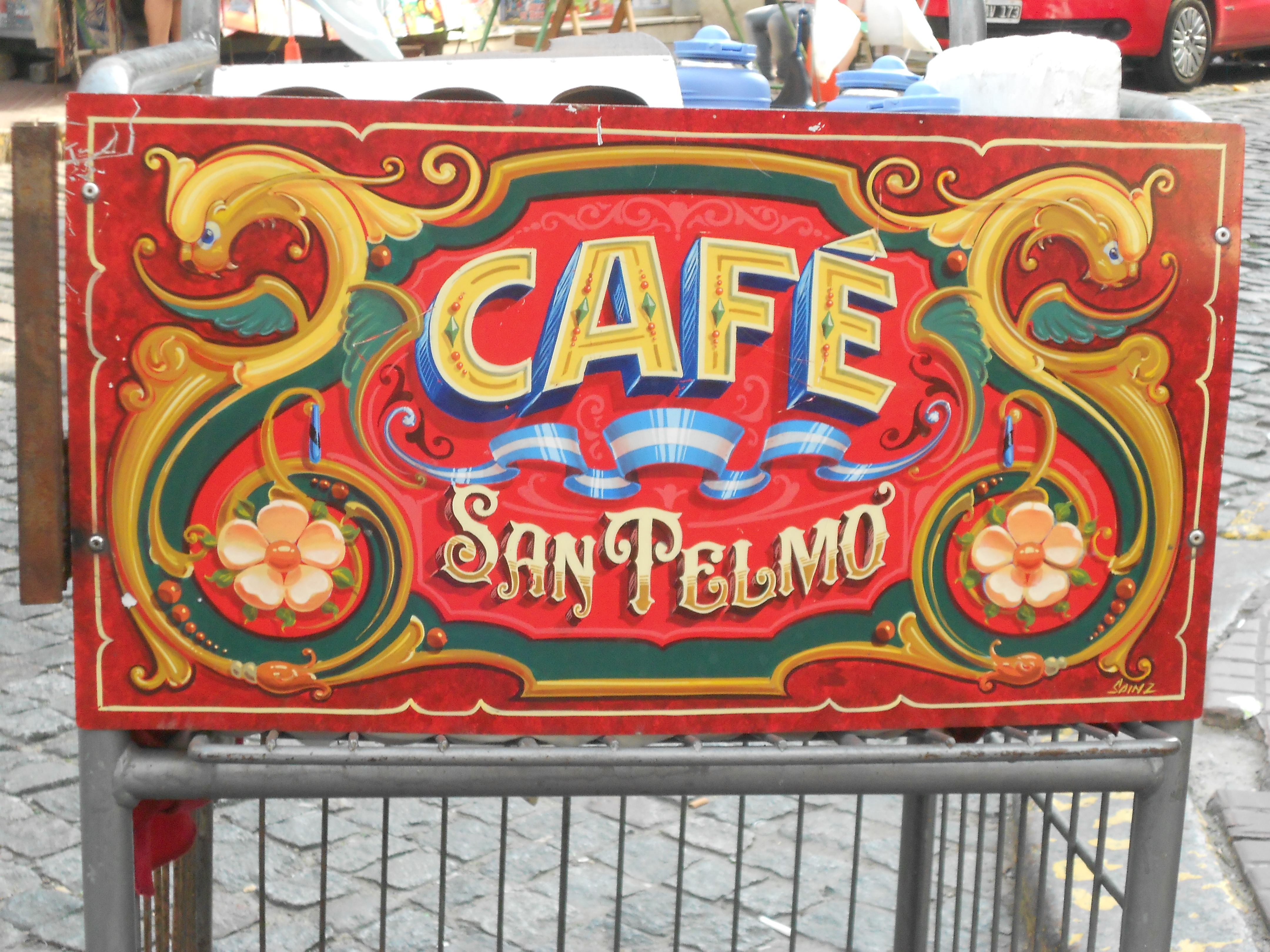
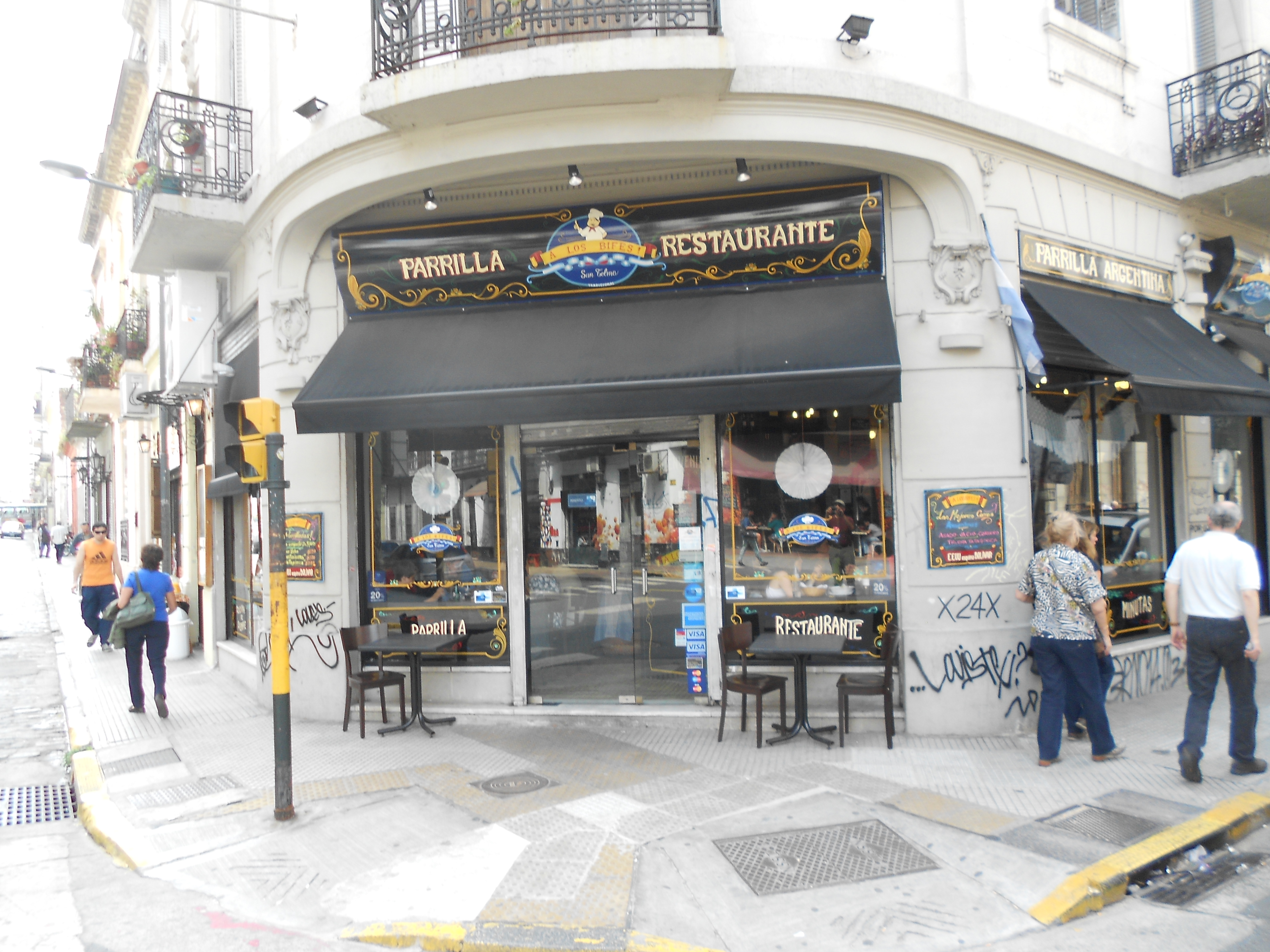
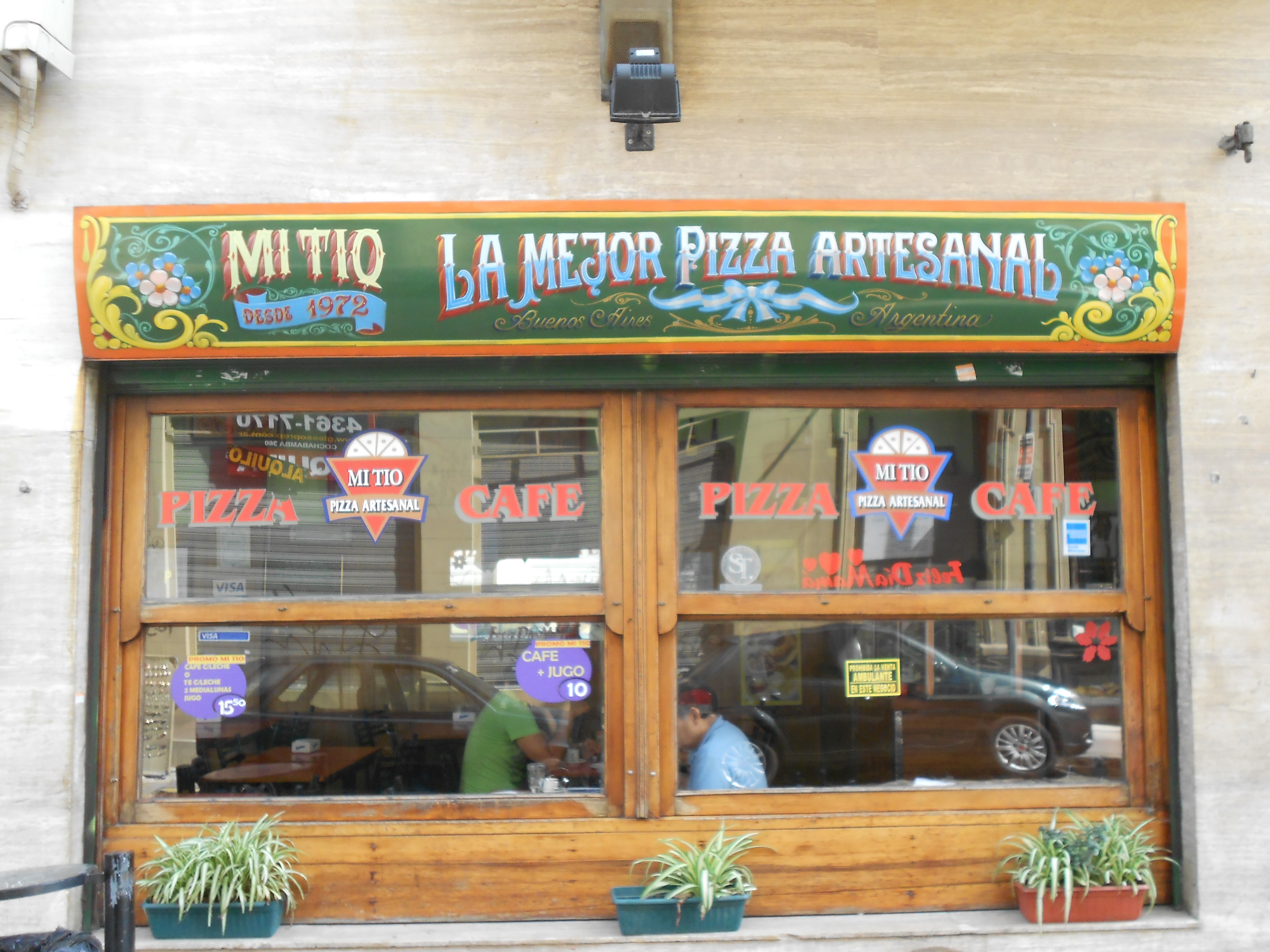
Fileteado is a Buenos Aires art. It is a decorative and cheerful art that now is painted on business signs, doorways, and restaurants.In the past, trucks and delivery wagons were decorated with it, until it was banned during the military dictatorship of the 1970´s. It is fine, detailed work, full of colorful curlicues. You can see it all over San Telmo. There´s a saying that compares Filete to Tango: The tango is a sad feeling that you dance, and filete is a happy feeling that you paint.

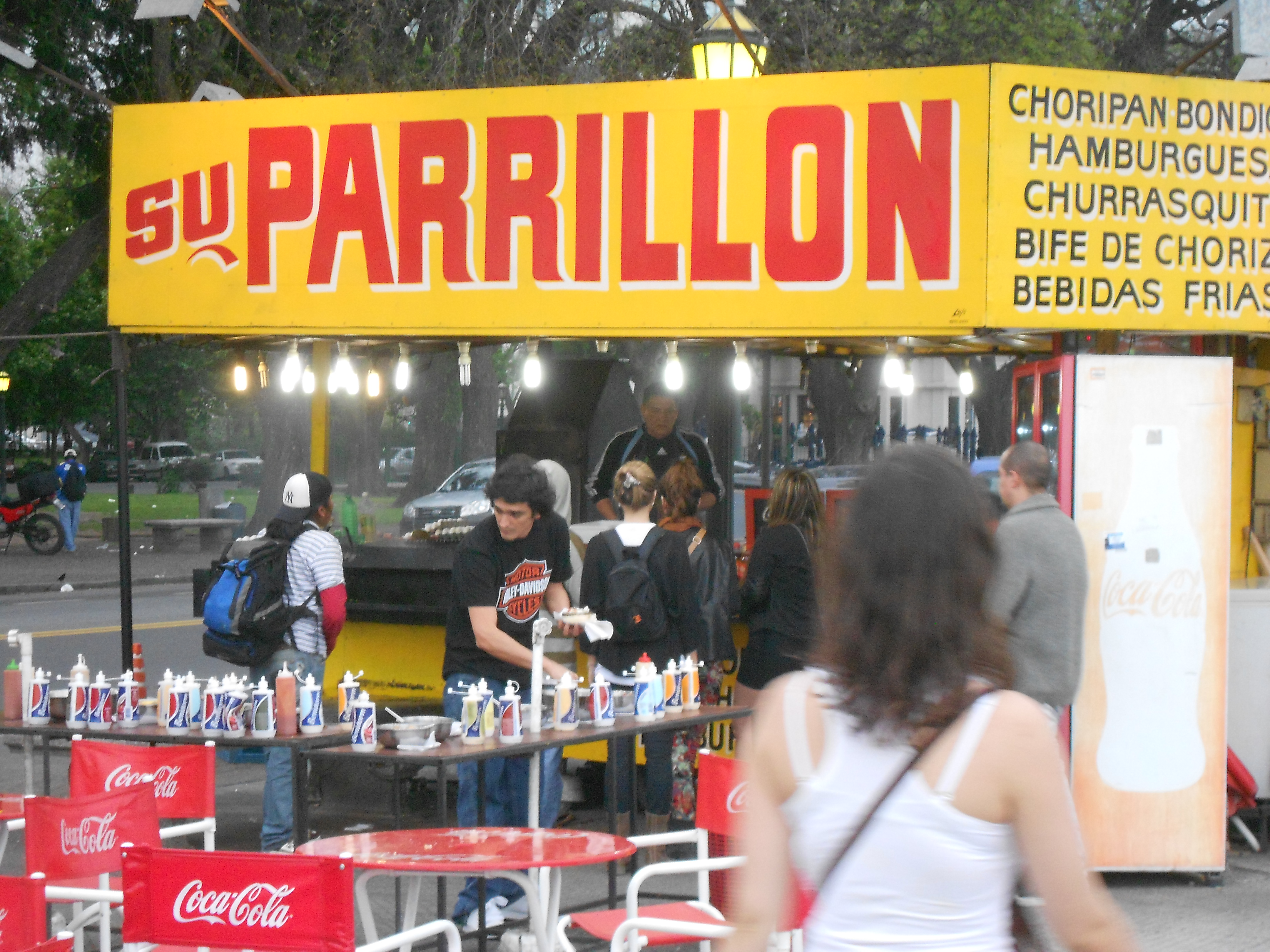
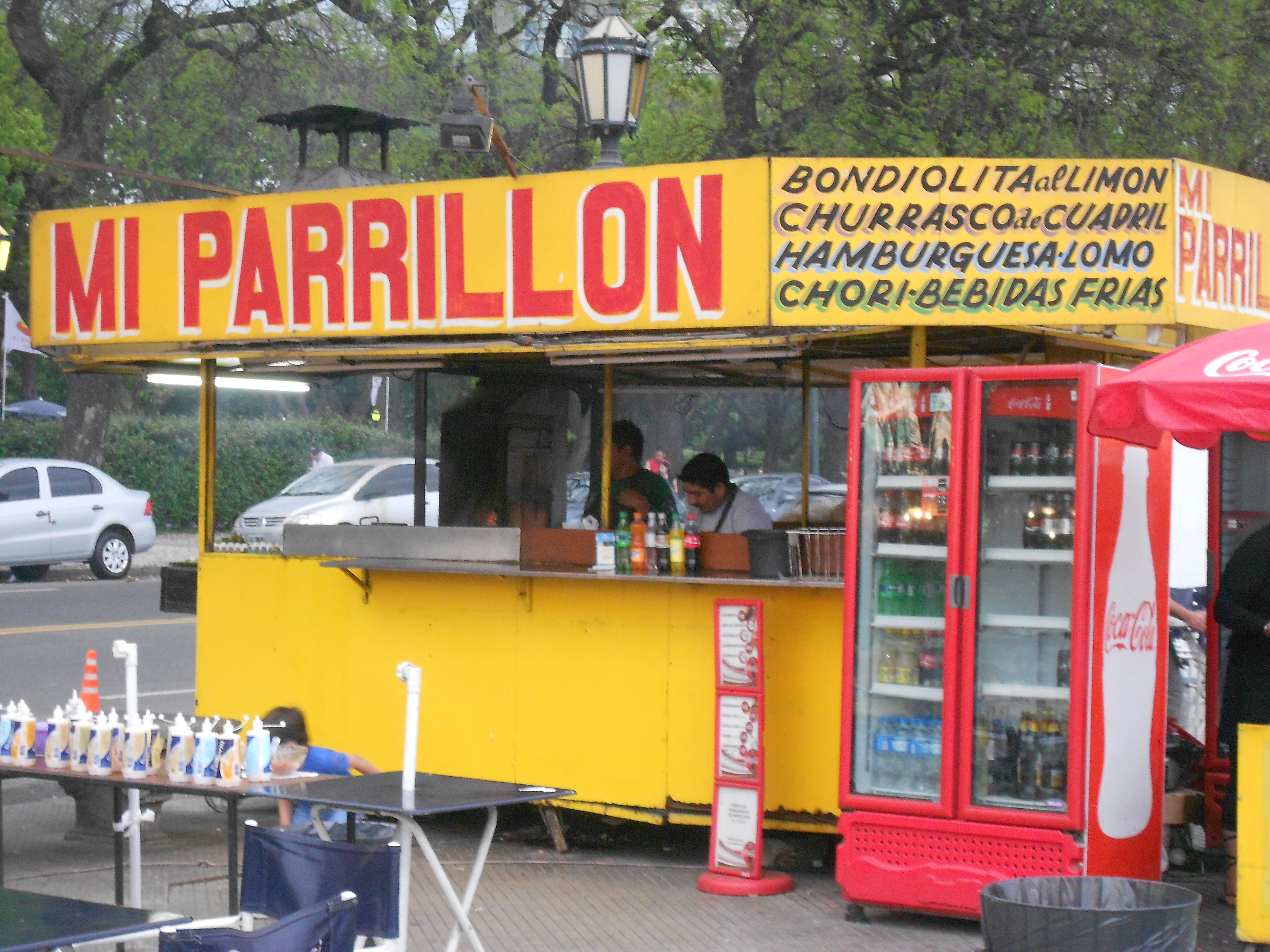
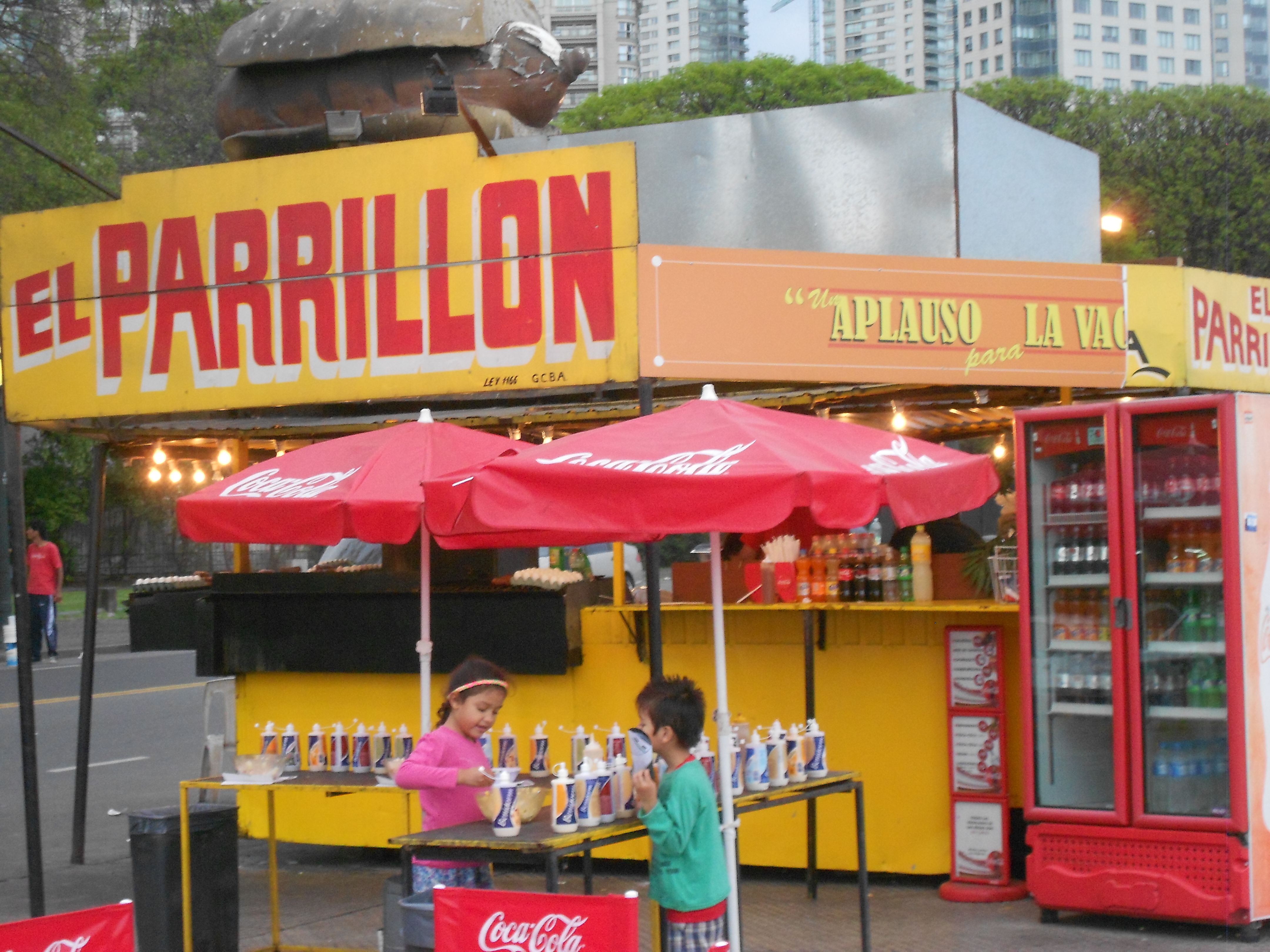
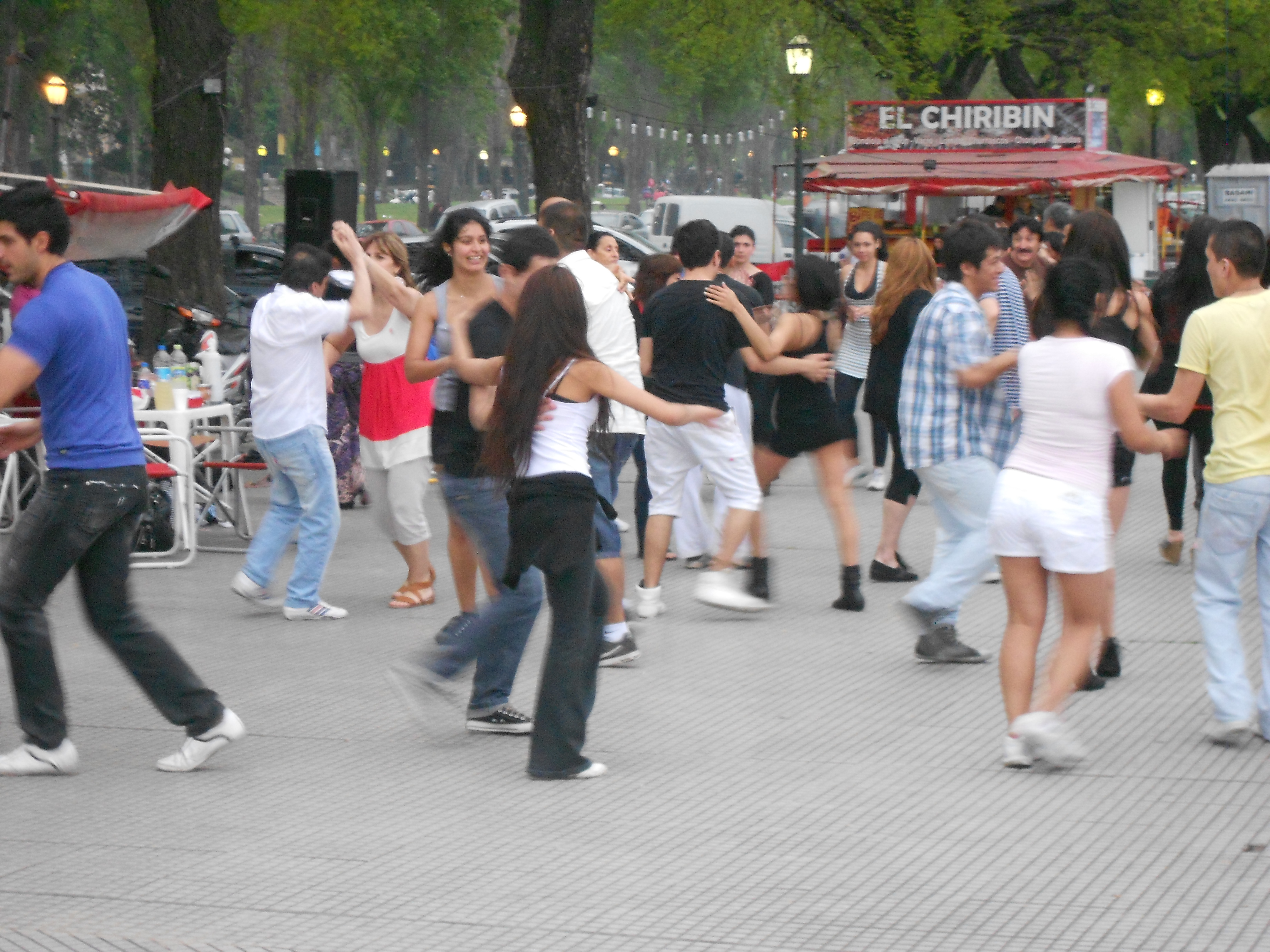
San Telmo has a street fair every Sunday, full of artists and music and crafts.Here is a picture of a small coffee cart that a woman pushes through the fair, selling cups of coffee. We canwalk fifteen minutes from our apartment to arrive at a pedestrian walkway along an open green area that is called the Reserva Ecológica. It´s a haven that borders the Río de la Plata. It is pleasant to walk along the wide walkway. On the weekends, it’s full of people, eating at the parillas and dancing to the music from the boomboxes. After “your parillon” and “my parrillon” here is “the parillon.” This next one also has a partially covered sign, saying, “Let’s have a hand for the cows.”Our apartment has been great. It has everything that we need, namely a kitchen, a place to wash clothes, and a great location.  As we prepare to leave Buenos Aires, we will think of all the people we’ve met, the subway rides, the vibrant music and the late nights, two attempted and unsuccessful pickpocket attempts in the same day, (You can’t take it personally. Details upon request) and our schedule working at the English school and taking Spanish classes, and we´ll miss our apartment. BA has treated us really well. ¡Mi Buenos Aires Querido!  Soon, we’ll be heading for the Uruguayan beaches near the Brazil border, then down toward Patagonia.